The Best of Jack’s Winning Words 1/6/25 – Originally sent October 19, 2021.
“We have met the enemy, and he is us.” (Pogo) After winning a battle with the British Royal Navy in the War of 1812, Commodore Oliver Perry reported: “We have met the enemy, and they are ours.” Cartoonist Walt Kelly changed the last three words, making commentary on the strife going on in America in the 1960’s: Americans fighting Americans. Could it be that something similar is happening in America today? There’s an old saying: “We are our own worst enemy.” I’m not going to win a prize for coming up with an idea for peace but trying to walk in someone else’s shoes for a while might help. Give it a try. 😉 Jack

It is literally and figuratively impossible to walk in someone else’s shoes; however, we can take some time to try to understand the different perspective that someone else is experiencing the world from. If that too proves to be impossible, then at least acknowledging that they see things differently from you and in a way that you don’t understand is a good starting point. Perhaps acknowledging that you don’t understand their pain or anger or position on something will allow you to move on to being more helpful by exploring their feelings and point of view and trying to figure out the best things that you can do to help or comfort them.
This is particularly true when dealing with someone of a different ethnic or racial or sexual orientation background. You may have no idea what it is like to be of middle eastern heritage or to be a person of color or maybe a person who is undergoing or has made a sexual-orientation or gender change. There is little to no understanding of that person that a white, middle-class, Christian person of European ancestry brings to the encounter. So, saying I understand your pain, or anger, or confusion is just B.S. Better that you should say, “I don’t understand how you feel right now or how you got here, but help me understand what I can do to help.” That may at least start a conversation that will help you understand a little bit of the perspective of the person and should help you define with them what things you can do to help, if anything.

So, start to help someone by admitting that you don’t understand their pain. Try to get a better picture of what that person is feeling and what brought them to this state. Don’t rely on your own perspective…it will be wrong. However, your own experiences in similar situations may help you suggest things that worked for you to resolve similar issues that you faced or to deal with pains, disappointments or failures that you have experienced. Sometimes, just providing a shoulder to cry on or an attentive ear to listen to their story is all the help that they need.
Jack wasn’t wrong, but he was speaking metaphorically. Walking in someone’s shoes is really about making the effort to understand their perspective and their problem or issue. Jack was a master at that very thing and helped so many people because he took the time and made the effort to understand them and their perspective before he tried to help them.
You can’t walk in someone else’s shoes, so what will you do when you encounter someone who needs your help?


 Posted by Norm Werner



 sorts of sage advice about walking a mile in the other person’s shoes; and, of course, there is that old saw, “Judge not, lest ye be judged”. The truth is that we all rush to judge the actions and words of others based solely on our own point of view. Even if we pause to ask ourselves, “What could have made them do that?”, it is hard to really understand the perspective from which the other person was viewing the situation.
 the act that I felt I must judge?
 I didn’t realize it at the time, because I hadn’t gone back and liked for a common thread, but there was a theme that ran through all of articles and posts that I had read and referenced in those posts. The theme is the request from all of the people who may be living in any of those groups that they just be accepted.
 appeals to religion or the Bible, sometimes it is just ignorance manifesting itself in fears of catching whatever it is that they find offensive. Many times parental concerns about the influence of these different people on children are sited as the justification for the bad behavior that we call prejudice. Yet that different person is not going to steal the minds of our children or infect the world with their difference; rather they are just standing there and asking you to accept them as they are.
 someone different from you today and maybe you will find that it will allow you to
  and point of view of people self-identifying in those categories. I read a rather scholarly article on the T part of that, which I found on the site
  understand things from our own frame of reference, rather than opening our minds to an entirely different frame of reference and an entirely different way of looking at things. Maybe others, like Lori, have an entirely different way of processing sensory inputs and experiences or a different way of making choices – a different frame of reference.
 others? Well, there’re still a lot of options left. One could start with acceptance. Accepting the person as you find them and not immediately judging them or rushing in to try to change them is a good first step. You could continue by striving for some level of empathy with that other person’s perspective on life. That requires other things, such as patience, sympathy, sharing, openness, kindness, perseverance and a willingness to learn, among others. One may end up quite often saying, “Wow, I never looked at things that way”’; and that’s a good thing. That’s a step towards understanding and so much better than just deciding that the other person’s point of view is wrong, just because it is not the same as yours.
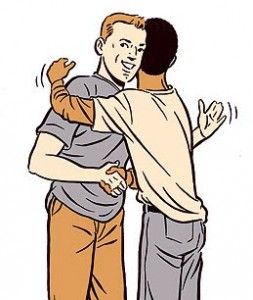 stop myself early enough, before I have caused the damage to the relationship that a judgement can cause; then I still have the option to accept that other person. Perhaps I will never get all the way to understanding that other person’s frame of reference for life, but maybe I can get to the point of accepting and appreciating them for who they are and trying to learn something from their different perspective on life. Who knows; maybe I can make a friend of someone, if I take the time not to make an enemy. Who am I to judge?
 appreciate a beautiful sunset or a bird on your bird feeder or maybe just the loving pet sitting by your side can be rejuvenating and uplifting. Perhaps it’s the pause from the hubbub of daily life or maybe the quick association in your mind between what you are seeing now and a better or more joyous time in your life. Whatever it is, stopping to recognize and appreciate some small beautiful thing or moment is refreshing and perhaps has more meaning than you realize at the time.
 your life; then, you can see God in all things in life and that helps you better understand and appreciate life.
 disagree or who don’t make liking them easy. In this season of heightened political passions it is particularly hard sometimes to be kind or cordial with someone who may be proclaiming the political opposite of what you believe.
 lately, because opposing views have hardened and compromise has taken on an undesirable meaning that is associated more with losing than with everybody finding a win out of the situation. Our political process, especially at the national level has effectively broken down because of the inability of the parties to compromise and the increasing polarization of those we elected to govern. They cannot govern because they cannot compromise. To them politics and the decisions that they control is a win-lose game.
 anxious fears that sometimes drive us to stand back or shy away rather than even try to understand someone else’s point of view. It is our own insecurities that make us cling to old, outdated or bigoted stereotypes, rather than to take the chance of embracing someone new. Perhaps you can meet them half way.
 or something. Jack wrote about that social media phenomenon in his post that went along with this quote. He observed that young people in particular seem to crave the acceptance of “likes” on Facebook or other social media. “Likes” are even a measure of the acceptance of posts to blogs like this one and I must admit that it feels good to have some of my readers take the time to “Like” a specific post.
 t peach in the world.” Understanding that and accepting it will make life much easier and help you avoid getting down on yourself because someone doesn’t “Like” you, which is the pits. Some people are just natural contrarians who find the behavior of happy, friendly people to be offensive. They enjoy being grumpy and resist any amount of effort from you to cheer them up. For them, disliking you is as much a mark of your impact on them as a “Like” might be from someone else.
 anger or frustrations with life by disliking you. Perhaps you have become, as some might put it, “too sweet, too cute or too syrupy” in your approach to others. What that says to them is that you are oblivious and insensitive to their needs or situation and too wrapped up in yourself to make the effort share in their current feelings or needs. To their way of thinking you’ve become the pit and not the peach that you think you are.
 different from where you were looking and they all carry different information and different points of view. Haven’t you ever wondered how things look from their perspective? If you encounter people with backgrounds that vary greatly from yours, maybe an immigrant or a person from a different ethnic group, haven’t you ever been curious how much different their take is on things than yours? Did you ever ask? What did you learn from that? It’s OK to start from the position of “I don’t understand you”; however, it is wrong to jump from there to “and I don’t like you, or I’m afraid of you, because of that.” Why not try to use the experience to learn something about that person. You may be surprised by who they really are.
 relationship with a friend or loved one. Not only can you learn problem solving techniques from each incident, but you also learn something new about yourself and about the other parties involved (and adversities almost always involve other parties). Try to make each encounter with adversity a learning experience.
 NormsMilfordBlog