From a recent post to the Jack’s Winning Words blog comes this bit of sage advice – “We accumulate our opinions at an age when our understanding is at its weakest.” (G.C Lichtenberg).
I took the liberty to add prejudices and bad habits to the list in my title for this post. It is unfortunate that so many young people are exposed to, and influenced by, others to form those opinions, prejudices and habits before they have developed the intellectual capability to make decisions on their own. The recent case of the teenager who decided to go against the wishes of his mother and be vaccinated is an example. His mother’s ill-considered notions that vaccines are bad for children put him at risk and he eventually developed the intellectual capability to see that for himself and decide on a different course of action.
Unfortunately, many never seem to re-look at or rethink things that influenced them at a 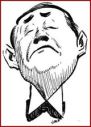 young age to become opinionated or prejudiced about certain things and people. They just continue throughout their lives to jump to conclusions about people or events that are driven by unsupported opinions or prejudices. Some look back at a lifetime of misconceptions with regret when they get older. They finally see how fear or mistrust that was fueled by prejudices held them back from meeting or knowing some really great people with whom they crossed paths in life. They see missed opportunities for friendships or even relationships. There is a melancholy sadness about finally realizing how one’s own ignorance or misconceptions have dulled what could have been a much richer life.
Perhaps you have been living with bad opinions, habits and prejudices and may not even realize it. Take the time to stop and ask yourself a few questions. When I encounter people who are different from me, do I have a reflexive response to draw away or  become concerned and fearful? Why? What is it about their appearance or actions that I find threatening or distasteful? Why? Do I avoid going to certain places or events because I fear encountering “different” people? Why? Do I immediately become “on guard” when encountering people of a certain color or who are dresses a certain way. Does seeing a person with blue or pink hair immediately bring to mind something bad about them? Why? Do I really have an opinion of my own about events or news that I hear or do I immediately call to mind something that I was told by someone else?
Once you stop to think about what drives you to have reactions to people or events you can begin to see which of those reactions are actually yours and which might just be  opinions or prejudices that were “planted” in you by others. That is the first step towards both understanding and towards formulating your own opinions. It is a major step towards taking back control of your life. You can’t do it all at once. Perhaps take the time at the beginning of each week to reexamine a habit or opinion or prejudice that you have fallen into and resolve to either prove or debunk the basis for it. The young man who decided to be vaccinated did a lot of research on the subject and concluded that his mother was wrong in her opinion against vaccines.
There are many things in your life – opinions, fears, prejudices and bad habits – that will not withstand intellectual scrutiny. See if you can be debunk one of those in your life each week and things will become much more pleasant for you. You can still have  opinions, but they will now be informed opinions. You may still have habits, but make them good habits. There is no reason to still have prejudices. Thinking about, and understanding these things in life, will shed light on the dark corners of your mind and drive out the bad things that lurk there. Understanding is the antithesis of the ignorance that drives those behaviors.


 Posted by Norm Werner
  correct some factual error (at least in my opinion) that I think may have just been made in something that is said. Sometimes (probably most of the time) it is better to just let things go, even if you know that what was just said is not correct. Be kind this week.
 view on things, but that’s OK.” Don’t say that out loud, unless you are just spoiling for an argument. Be kind this week.
 stubbornly to a disproved position, it is much better to admit your mistake and move on by embracing the new “truth” of the matter. Perhaps now you will be better able to understand the position that others held all along, which you considered “wrong-headed” until now. You will probably also realize that, had you chosen to be kind rather than right in your position, you would now be in a much better position. Be kind this week.
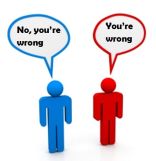 yours. Maybe there is no right and wrong, just two wrongs that will get you nowhere. Life does not have to become as dysfunctional as our current political system, where everything is judged using a far-right or far-left litmus test. There is a win-win middle ground were different opinions and perspectives may be valued for providing diversity to the conversation and where the truth is somewhere in the middle or, perhaps, somewhere else altogether. Be kind this week.
 Recently I read a question in in one of those newspaper advice columns concerning how to get people to accept and form new opinions about someone who apparently acted like quite a “jerk” when he was younger, but who has now matured and is a better person. Many people face that same dilemma in life, especially young men who really did act like jerks when they were younger. Some people don’t seem to be able to give them the benefit of the doubt, once they matured enough to begin acting in a more acceptable manner. Most grow out of that phase. Unfortunately some of those young men get themselves trapped into feeling like that have to continue to act like jerks, because that’s what people expect of them.
 that there is no real reason for motorcycles to have loud, un-muffled and annoying exhausts other than the riders need to attract attention to themselves. They are saying, “Mommy, look at me” by being as noisy as they can be. They never outgrew the need to be a jerk to get attention.
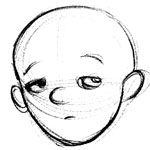 So, maybe Dyer was wrong. Maybe what other people think of me is my business. It certainly is within my control. If I don’t want to be considered to be shifty and dishonest, then I can decide not act in a manner that would lead to that conclusion. If I want to be considered to be dependable and a good friend, then I can be there when needed and be the good listener that is oft needed in times of crisis. If I want to be accepted, I have to accept others, too. If I want to be someone who is loved, I need to give love. What others think of me are opinions that reflect the behaviors from me that they see. And that is my business.





 NormsMilfordBlog