The Best of Jack’s Winning Words – Originally sent Sept 12, 2022.

“Old people just grow lonesome, Waiting for someone to say, ‘Hello in there… Hello.” (John Prine lyrics) The late John Prine was a magician when it came to writing lyrics. “Hello in There” is a poignant song about lonesome old people who have stories to tell…if only someone would listen. Take a look around you. Is there someone waiting for you to say, “Hello?” It isn’t just old people who are waiting and hoping to hear that greeting. It’s surprising what can happen when we speak first. 😉 Jack
OK, in deference to full disclosure, I must admit that I am officially “old”. I have had trouble accepting the characterization of being elderly; however, at age 81 I must accept that I am considered to be “old” by a majority of the population.

My first thought when I read the quote in this post to Jack’s Winning Words is that we are all waiting for someone to acknowledge us and engage with us. Many of us who grew up in the same era were admonished as children not to speak unless spoken to and many of us allowed that advice to carry over into our adult lives. We are not painfully shy, we’re just waiting for someone else to…Speak first.

Jack’s advice to speak first can help anyone break out of the loneliness or silence that they have been living in. It is especially powerful if you can also use the other person’s name in your greeting. People love to be recognized by their name. Speak first.

It is also important to recognize that engaging with someone is a two-way street. They will want to know something about you and your story, too; so, be ready to share information about yourself. But, remember that the person with whom you are speaking really wants someone to listen to what they have to say. Speak first.
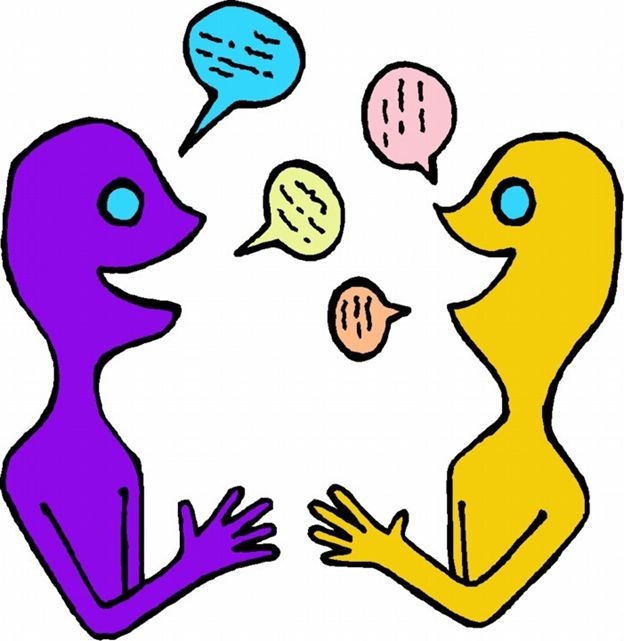
There is a tendency to think that you won’t know what to say after you’ve said, “Hello”. You may wish to have a few “go to” phrases ready as a way to increase the engagement or get to the next steps. You can’t expect someone that you just met to just launch into telling you their life story (nor in many cases would you want them to anyway). Phrases such as, “How’s your day going?” or maybe “Do you live around here?” are good conversation openers. Speak first.

It is really unsatisfying to just sit there looking at someone and hoping that they will speak to you. It gets worse when they get up and walk away and you are left wondering who they might have been and whether or not you would have enjoyed knowing them. Don’t just sit there waiting… Speak first.


 Posted by Norm Werner







 associated with empathy and emotions. Where things like prejudices and hate come from is a mystery, since they defy real logic and certainly don’t express empathy. They are perhaps closer to emotions that are based upon imagined fears. Those feelings live in a dark place in our heads and had to be put there by someone, since they are not innate within people. Fears and prejudices cause us to avoid or hate the things or people associated with them for no logical reason.
 specific instance that you are facing. We tend to hate or fear people in large, blurry groups that we classify as “they” or “them”. It is somehow easier to lump large numbers of people into those prejudiced categories in those dark places in our minds. We think that “all” of a certain type of people present a danger to us; and thus, are to be avoided. We immediately think that everyone who displays certain characteristics of appearance or behavior is one of “them” and by association inherits all of the other characteristics that we have loaded on that group in our minds.
 someone who may become a friend, rather than someone to be feared and avoided. Lead with your heart. Don’t worry, your head will catch up.
 advice from today’s post to the
  I might add, “Before you judge…” I’ll let you fill in the words that should follow that opening phrase. There’s the old Biblical saw from Matthew 7 – “Judge not, lest ye be judged.” It is the rush to judgement that provides the foundation of prejudices and fears.
 you Tweet, reconsider.” The same is true of sending emails or text messages or posting to Instagram. Everything is retained somewhere these days and lots and lots of trials and media stories revolve around the content of those electronic posts that people seem to send off without regard to their future use or misuse.
 posting before opening one opens one’s mouth or before hitting the send/post button. In interpersonal settings, the advice should probably be to listen more than you talk and to carefully choose your words, if you feel the need to express an opinion or to react to something that someone else has said. I recall the quote –
 any of those is better than becoming well known as a prejudiced bigot. It is better to be considered to be somewhat of an enigma than to be well known as a jerk or an idiot.
 ending was, when the jail warden grabbed the gun and shot and killed Newman’s character. Perhaps in today’s world of seemingly weekly police shootings it would not have been so unexpected.
 especially those within a marriage and a family. A failure to communicate is probably the root cause of the breakup most marriages that end in divorce. I’ve written here in the past about the need to have a deeper level of relationship than just the sexual attraction in any marriage and that level is only reached through communications, through sharing and understanding each other’s beliefs, dreams, hopes, and interests openly. It is really a cop-out when one partner says to the other, “Well you should know what I want, I shouldn’t have to tell you.” In fact neither of you will ever just figure things out if you don’t communicate and share with each other – what do you want, what would make you happy, what can I do for you and you for me. It is the lowering of the shields and the baring of the souls to one another through communications that builds the bounds that keep marriages together.
 finding out your ambitions and your willingness to work to achieve them. It also helps you clarify your goals when you have to verbalize them in communications with others.
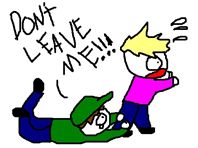 self-centered. It is OK to tell that overly attentive partner that you need some “alone time.” We all need some time to ourselves, times of silence and contemplation. Often it is the need of the partner for constant assurances and attention that drive us apart. Their “clinging” is a sign of insecurity that needs to be discussed in an open honest communication with them.
 NormsMilfordBlog