The Best of Jack’s Winning Words – Reposts from the blog of the late pastor Jack Freed. Originally sent July 1, 2015

“Be tender with the young, compassionate with the aged, and tolerant of the weak, because someday in your life you will be all of these.” (G.W. Carver) Often I can go into a gathering of people and know that I have once been the age of each person. Empathy is the ability to feel as others feel. People would be better able to understand poverty, ageism, homelessness and racism if they had experienced it. If you can’t be empathetic, try to be sympathetic. 😉 Jack
When I Googled sympathy, I got the following response that was generated by the Google’s AI bot – Sympathy and empathy are both emotional responses to another person’s situation, but they differ in the depth of the emotional connection. Sympathy is feeling sorry for someone’s misfortune, while empathy involves understanding and sharing their feelings. In essence, sympathy is “feeling for” someone, whereas empathy is “feeling with” them.

Empathy is the harder of the two, since it requires you to have had the same experience or to imagine what the other person is feeling in this situation. You may wonder what the other person is feeling and experiencing, but you will likely not be able to “put yourself in their shoes”. There are a few emotions that most people experience, like the sadness at the loss of a loved one; so, if the moment at hand is one of those, then you may be able to empathize. More likely, in most encounters moving on to sympathy is the best choice.
The line, ” I know how you feel” is best left unsaid in any case, even if you have experienced something similar in your life. You really don’t know how they feel. That s especially true when you are dealing with cases of discrimination. No matter if it is racial discrimination or discrimination based upon religion, sexual orientation or any number of other examples. If you are not a member of the same class of people who are being discriminated against, you have no real basis for empathy and need to focus upon sympathy.
Expressing sympathy almost always involves offering help in some way. It’s the “is there anything that I can do for you” response. Finding something that you can “do” for the person with whom you are sympathizing helps both them and you. For both of you it involves breaking out of the emotional state that you were trapped in and refocusing upon the present and upon things that are needed to go on in life, things that need to be done.

So, try empathy first, but move on to sympathy and find a way to help. That will help both that other person and you move on with life. Sometimes you may just need to let that person cry on your shoulder for a while. When the crying stops, give them a hug and ask what you can do to help them right now. That may sound a little cold and calculating, but it is one of the best ways to help the person with whom you are sympathetic.

I have purposely left out any mention of prayer because that is something that should not be forced into your response. If you know the person well enough to know whether they have a strong faith that can be tapped into, prayer can be very powerful tool to help. It may help you if you quietly ask God for his help in your own response of sympathy. Perhaps praying aloud for God to bring his comfort and peace to the person that you are trying to help would help reset their frame of mind. Maybe that’s how you can help.


 Posted by Norm Werner





 write that recent studies have shown that people are less happy today than they were in the 1990’s. Although he didn’t mention why that is true, he did echo Dolly’s advice about taking the time to listen to those that you encounter during the day and sharing a smile where needed.
 captured by a device that steals time away from everything else, including our interactions with other human beings. Me may not even notice the frown or sadness on the face of those that we encounter because we are too busy looking at our phones. We certainly don’t take the time to ask what is wrong, and since we can’t Google that, we just move on to the next attention grabber that shows up on our screen.
 down those smartphones and take a good look at what is going on around us. Step two might be to make sure that we put a smile on our own face. I’ve posted here a few times about loving yourself before you can share love with others (see the post
  awkward with a total stranger, but many of the people that you encounter won’t be total strangers. Finding a way to initiate a conversation will allow you to find out what may be troubling them. Even if you can’t really do anything to help in the situation; just giving them an outlet to talk about whatever it is that is troubling them will help. You can be empathetic and supportive, even if you can’t solve the problem. Sometimes they may just need a shoulder to cry on or a good hug of reassurance.
 Put away your smartphone and look around you for those who might need to borrow your smile. When you find them and give them your smile, you’ll find that God immediately puts another smile on your face so you can continue His work in the world.
 associated with empathy and emotions. Where things like prejudices and hate come from is a mystery, since they defy real logic and certainly don’t express empathy. They are perhaps closer to emotions that are based upon imagined fears. Those feelings live in a dark place in our heads and had to be put there by someone, since they are not innate within people. Fears and prejudices cause us to avoid or hate the things or people associated with them for no logical reason.
 specific instance that you are facing. We tend to hate or fear people in large, blurry groups that we classify as “they” or “them”. It is somehow easier to lump large numbers of people into those prejudiced categories in those dark places in our minds. We think that “all” of a certain type of people present a danger to us; and thus, are to be avoided. We immediately think that everyone who displays certain characteristics of appearance or behavior is one of “them” and by association inherits all of the other characteristics that we have loaded on that group in our minds.
 We discover the individual, rather than the group. Our heart takes over and allows us to see the fellow human being that is there, rather than the group characteristics that the prejudices in our head may initially associate with them. That pause allows the head to kick in again and to begin having an intelligent interaction with the person, rather than one driven by fears.
 understand something for which I have absolutely no frame of reference. It is a common mistake when we try to understand things like this from our own frame of reference, our own life experiences and knowledge base. Lori’s descriptions of her sensory perceptions of the world are so far removed from my own that I had trouble even imagining what that must be like, yet it was trying to imagine it that helped me understand how little that I really understand. It also helped expand my thinking about how I react, or might react to others; especially those who might be far removed from my own frame of reference. I intend to follow up by reading more of the posts at the
  and point of view of people self-identifying in those categories. I read a rather scholarly article on the T part of that, which I found on the site
  understand things from our own frame of reference, rather than opening our minds to an entirely different frame of reference and an entirely different way of looking at things. Maybe others, like Lori, have an entirely different way of processing sensory inputs and experiences or a different way of making choices – a different frame of reference.
 upbringing and experiences, my education and knowledge base, my beliefs and my fears and misconceptions. That judgement of others starts with the presumption that whatever I feel or think must be “right” and anyone else that I encounter who deviates from that definition of “right”, must somehow be “wrong”. Different must be wrong. Not acting, and reacting, as I do must be wrong. Not being like me must be wrong. Apparently, not being me is wrong. How wrong is that?
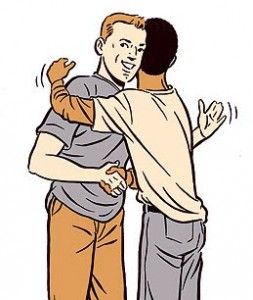 stop myself early enough, before I have caused the damage to the relationship that a judgement can cause; then I still have the option to accept that other person. Perhaps I will never get all the way to understanding that other person’s frame of reference for life, but maybe I can get to the point of accepting and appreciating them for who they are and trying to learn something from their different perspective on life. Who knows; maybe I can make a friend of someone, if I take the time not to make an enemy. Who am I to judge?
 You will meet many people this week and all of them will be people for whom the little quote above applies. Many of them may also be someone who is need of someone else to share their fears or sadness or love with; someone who cares about them and their situation or condition. Maybe that can be you.
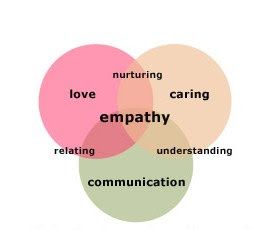 then intently listen to your answers. They will express empathy or sympathy, while also offering support and encouragement. You will also notice that you start to feel better because you found someone with whom you can share things that may have been nagging at you or even overwhelming you. Figuratively (and perhaps literally), you have found a shoulder to cry upon. You’ll feel better and they will too, for having been there for you.
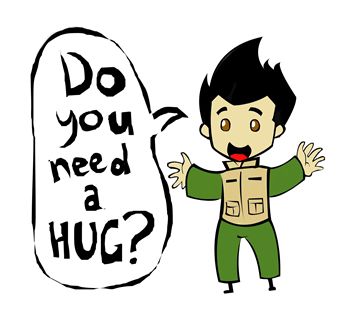 There is a rather famous sports clip of the late Jimmy Valvano running around the court after NC State won the 1983 National Championship game (
 or something. Jack wrote about that social media phenomenon in his post that went along with this quote. He observed that young people in particular seem to crave the acceptance of “likes” on Facebook or other social media. “Likes” are even a measure of the acceptance of posts to blogs like this one and I must admit that it feels good to have some of my readers take the time to “Like” a specific post.
 t peach in the world.” Understanding that and accepting it will make life much easier and help you avoid getting down on yourself because someone doesn’t “Like” you, which is the pits. Some people are just natural contrarians who find the behavior of happy, friendly people to be offensive. They enjoy being grumpy and resist any amount of effort from you to cheer them up. For them, disliking you is as much a mark of your impact on them as a “Like” might be from someone else.
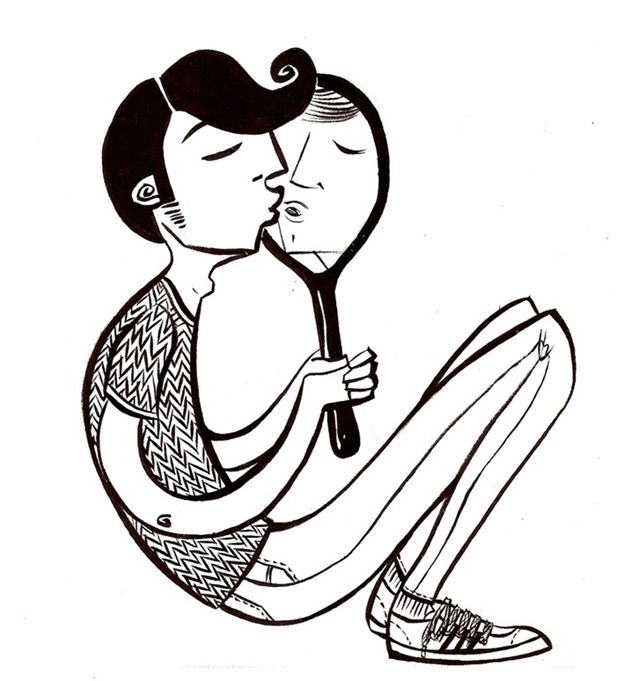 anger or frustrations with life by disliking you. Perhaps you have become, as some might put it, “too sweet, too cute or too syrupy” in your approach to others. What that says to them is that you are oblivious and insensitive to their needs or situation and too wrapped up in yourself to make the effort share in their current feelings or needs. To their way of thinking you’ve become the pit and not the peach that you think you are.


 NormsMilfordBlog