Voting for Huron Valley history…

January 13, 2015

I’ve mentioned this here before and your will see it again before next Monday. I’m the President of the Board of the Milford Historical Society (MHS). We run a small museum in Milford that is open 8 months of the year. The Milford Historical Museum, like many small town museums across America focuses upon local history, in our case the history of the area surrounding Milford – The Huron Valley area. The museum houses memorabilia of various sorts that have been contributed by local residents. It also houses a unique collection of microfilmed copies of the local weekly paper – The Milford Times – going back to its beginning in 1871. The Milford Times like many small town weekly papers, is a great source for historical material on the life and times of Milford and the surrounding area. The ads alone would make a great graduate degree study in the changing tastes of mid-America.

microfilm readerWhen this archive was conceived and created back in the 1970’s the most logical medium to use was microfilm, which is what it is recorded upon to this day. Microfilm has a very long life, but the technology has been supplanted by newer, faster and certainly more useful technologies. The microfilm library that we have is not indexed (other than by start and stop dates on the film reels) and cannot be searched. It is a tedious process to find a specific issue and an impossible task to find all mentions of a specific subject. We hope to change that and make the files searchable, while at the same time moving to a newer technology that will last long into the future.

Our Museum and the Milford Historical Society has joined forces with the Milford Library, the Highland Township Library, the White Lake Township Library, the Commerce Township Library and Historical Societies from Highland, White Lake (and Fisk Farm), and Commerce Township (and Byers Farm) in a project that has been named the Huron Valley History Initiative. This group has joined together to facilitate the project to convert the copies of the Milford times that exist on microfilm in the Milford Historical Museum and at the Milford Library into a searchable database that will be house on a server that will be accessible to the group members. The resulting database will be indexed and searchable. The groups have also committed to the digitization and addition of other of their records and memorabilia, such as old photos, cemetery records, tax records and such. Once done the resulting database will allow a very rich search environment for historians and genealogy researchers.

The tasks that must be completed to realize the vision of having all of this history on line are formidable, but they start with getting the current microfilm library scanned in and converted to digital format. To that end, the group has applied for a grant from the Clarke Library, which is associated with Central Michigan University. Clarke accepts annual grant requests for history-oriented projects from around the state of Michigan and then chooses one request to fund. The choice involves letting the communities that will be impacted by the grant work vote on the importance to the community of the proposed work. The Huron Valley History Initiative is one of the five finalists for this year’s Clarke Library grant. The voting is done within a one week window, from Jan 19 until Jan 25.

vote graphicBeginning Jan 19, members of the community (or anyone for that matter)  may “vote” for the project of their choice by using Twitter to post a Tweet with a unique hashtag (in our case the hashtag is #DigMilford) or they may send in a post card with some Michigan theme or content (a picture of something in Michigan) addressed to Clarke Library, Central Michigan University, Mount Clemens, MI  48859. The postcard should contain the hashtag DigMilford on it to identify it as a vote for our project. You can click here to view the poster that we’ve created and which will be in store window in Milford and in the libraries mentioned. The Huron Valley History Initiative has also created a Facebook page – https://www.facebook.com/huronvalleyhistory ,which you can visit for more information. The Clarke Library also has a web page that will allow you to vote, just remember that our hashtag is #DigMilford.

I encourage all of my readers to Tweet or re-Tweet during the voting window using the hashtag #DigMilford. Admittedly, this is a “cause” that doesn’t pull at the heartstrings like most of the health and welfare causes that we are all bombarded with all of the time. The needs in those areas are great all around the world and I encourage you to do what you can for them and give what you can. In this case, we aren’t asking you for any money, just a few moments to Tweet or re-Tweet something with the hashtag #DigMilford to support our project. Of course, if you do happen to have a Michigan-themed postcard and want to send it in to vote for us, that would be great. Postcards count as 100 votes, so that counts as a lot of Tweeting. Send your cards to – Clarke Library, Central Michigan University, Mount Clemens, MI  48859. For my international followers, perhaps a postcard from your country to the library with something historic in your area would be counted – just make sure to put the hashtag #DigMilford on it.

I’ll post a reminder on Monday, Jan 19 when the polls open. Thanks for your support.


Believe…?

January 11, 2015

One of the most overused words during the last holiday season (and actually all the time) was the word Believe. Put that word next to a sports team logo and you have an ad for the fans. Put it next to a picture of Santa Claus and it becomes a Christmas message and put it under a picture of two people and a baby standing in a stable with a star shining above and it becomes a religious message.  It is abelieve favorite of motivational speakers everywhere. Believe in the product. Believe in the program. Believe in the company. Believe in yourself! There’s even a popular T-shirt with “I believe” on it.

What does it mean to believe? According to the dictionary to believe is to have confidence in the truth, the existence, or the reliability of something, although without absolute proof that one is right in doing so.  Certainly, most those who run around all year with “Believe” T-shirts (or sweatshirts if one lives in the North) on for their favorite sports team believed in their team. Some still do and think that they got robbed of the chance to go all the way to whatever final playoff game or context exists for that sport. We all go through a time in our young lives where we believe in Santa Claus, some more than others out of hope in their desperate situations as much as belief.

thinking womanWe all, at some time or another, also need to take stock in what we believe in the religious sense. I have a hard time fathoming how those who claim to have no religious beliefs at all reconcile the inevitable end of life. They may state that what they believe is that when you die, that’s it, that’s the end, there is nothing else. Wow, talk about a dead-end belief (pun intended). Having no religious beliefs at all also leaves big questions unanswered – the How and Why type questions about life.

The concept of religions almost seems to be an innate human characteristic, something that is inevitable as human beings everywhere and anywhere cope with trying to understand the world that they live in. While I don’t have time here to go into a deep dive on that thought, I will someday. What I would present temporarily, as proof of that statement, is the spontaneous and autonomous rise of world religious symbolsreligious beliefs and the creation of rather complex religious ideologies that grew up around the world within totally isolated groups of humans.

When the first explorers arrived to the New World in North America they found a native population that had developed a complete religion around the concept of The Great Spirit – maker and keeper of all things in nature. To the south the Spanish and Portuguese explorers found very complex and ritual-oriented religious worship of the Sun god (note, not the Son) in place. Obviously those religions grew out of a common need of man to explain things beyond his comprehension and control. Other religions in other parts of the world sprang out of the same need, some creating elaborate hierarchies of deities, but all aimed at the same end – to provide an explanation for what man could not understand or explain himself. Most of these praying in different religionsreligions also had provisions for the concept of a soul or spirit within man and some form of existence after earthly death or even rebirth. People involved with all of these “religions” believed; because to not believe leaves one with nothing – no explanations, no sense of underlying order and no afterlife.

What things do you hold to be true, even though you cannot prove that to be so? It’s OK to have beliefs and even to share them with others.  Joining other people with similar beliefs in organized worship is both a reinforcement of your beliefs and comforting.  We all need to believe in something, because the alternative is unfathomable and frightening.  Every week in my church service we recite a creed that states our beliefs. It starts, “I believe in…”

So, what do you believe in?


Deal with errors, but have no doubts…

January 7, 2015

“Often in error, never in doubt” – A saying about cosmic physicists trying to explain the origins of the Universe, as seen in a recent National Geographic magazine.

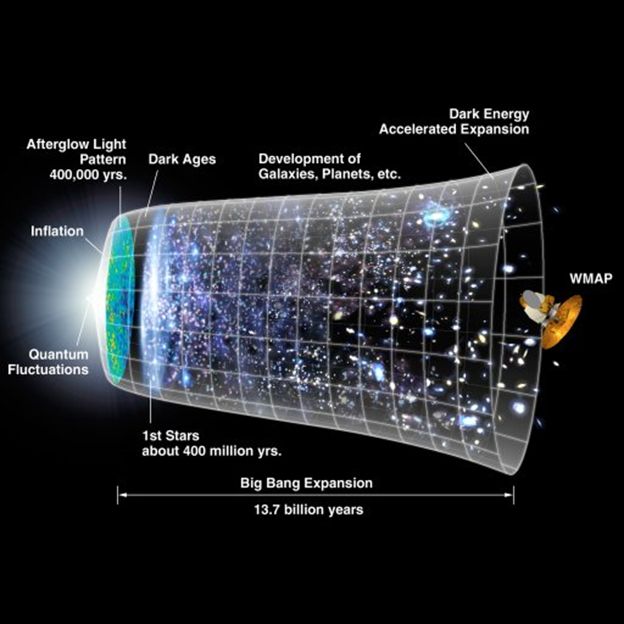
When I saw that little phrase while reading about the efforts of scientists to explain the origin of the Universe, it struck me right away that this could explain a lot of things in life. Just over the span of my lifetime there have been numerous theories put forth about the origins of the Universe as we know it. The most famous is the “Big Bang Theory”, which attributes all of what we see around us for as far as we can see into the Universe and into time to a massive explosion millions of years ago. Various scientific papers have refined and elaborated on that theory; some purporting to trace things back to just an instant after the big bang. According to that theory, the universe has been expanding ever since with a variety of factors causing the formation of the heavenly bodies that we see out in space.

big bangI’m not sure that I have ever read anything that attempted to explain what was there before the big bang. Be that as it may, scientists have ever since nor been in doubt about the initial event – the big bang; but, they have often had to correct errors in their calculations and speculations about what has happened since. Their scholarly explanations were often later proven to be in error, but were never in doubt (until the next new explanation came along). Various acclaimed scientists from Albert Einstein to Steven Hawking have added to, or corrected errors in, the theories and explanations of the origin of the Universe, all without doubts about their views and yet all in error.  The final chapter to that book is yet to be written. Scientists are now hypothesizing about dark matter and dark energy and have no doubts that they will explain everything.

Sometimes our lives can be like that, too. We are not in doubt about things, even though we are in error. Often my wife will ask me about something and I’ll throw out an answer, seemingly without any doubt that it is correct. Quite often she will challenge my response and accuse me of BS’ing. I suppose that is another form of error. My response was the first thing that came to me and in that instant I didn’t have doubts about it. Given more time to reflect I might have answered differently or not answered at all (usually the better choice when one really doesn’t know the answer).

angry coupleOne can apply today’s thought to many aspects of life. People who end up getting divorced might tell you that they had no doubts at the tie that they got married, but that it turned out to be a mistake. Perhaps they committed the error of marrying for the wrong reasons or without having spent enough time to truly get to know the other person. Many people look back on career decisions made without doubts at the time that turned out to be errors – perhaps moves for advancement that didn’t work out or acceptance of assignments that were not good matches and proved to be errors. Sometimes they may have even had doubts at the time that they made those choices.

Have there been events or decisions in your life that you can look back on now and see the errors, even if you had (and maybe still have) no doubt? That’s all part of life. You really can’t live life always doubting yourself and the decisions that you have to make; however, like the scientists trying to explain the origin of the Universe, one must accept that errors will be made and take steps to learn from them, make corrections and move on with life.

A key first step to dealing with life’s errors is not to let life get you down. We use phrases like, “it is what it is” or “stuff happens” or just the throw-away term “whatever”  to let go of errors or disappointments in life, without having to beat ourselves up with self-doubt. Maybe that is also where religion comes into each person’s life. Faith allows the believer the freedom to accept the errors that life throws at us without having to doubt ourselves.  The cynic might say that religion is a cop-out, but the believer will tell you that it is a life-line – a way to deal with the errors of life, without wallowing in self-doubt. women dreaming

At the end of each day, if you believe; take some time to reconcile your life and adjust your plans to deal with the errors that may have occurred. Start by assuring yourself that, “I am where I’m supposed to be. I am headed in the direction that I need to go. I am not alone on this journey.  I have no doubts in my life’s guide. Not my will, but thy will be done.” If you can get to that point each day, the next step is simple; open your eyes, unclasp your hands, raise your head and say, “Bring it on.”

You’ll be fine. No doubt.


Progress without destruction – #DigMilford

January 5, 2015

“You raze the old to raise the new.”  (Justin Chen), as seen on the Jack’s Winning Words blog.  In modern terms this concept is sometimes called creative destruction. The idea seems to be the need to tear down the old to make way for the new. It is applied to buildings and industries and sometimes, unfortunately to relationships.

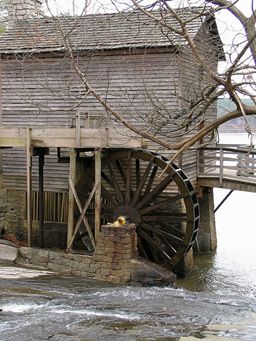
I’m not a Luddite by any means; however, I have a conflict of sorts with this concept, especially the rather cavalier discarding of everything old to make way for the new. I suppose it has something to do with the fact that I’m currently the President of the Milford Historical Society – a group dedicated to preserving and sharing the history of the Milford area.  old millThe name Milford came about because the area provided ample water-power sources and one could easily ford the Huron River at this point in the Huron Valley. Many mills of all sorts were built in Milford, none of which exist today. They were all torn down to make way for progress. Other communities that didn’t do so now have a nice attraction for visitors to see how things were done more than a century ago. All we have now are pictures of the mills in our Milford Historical Museum. Perhaps preserving at least one mill would have been a good idea.

Entire industries also get destroyed by progress and some of that is inevitable. The entire industry built around the horse and carriage as a means of transportation was rendered obsolete and Eire canaluseless by the invention of the automobile. The rise of the railroad industry put a quick end to the nascent industry devoted to building canals to allow for transport by boat. Eventually the railroads, at least as a means of long distance travel, were largely obsoleted by the rise of the airplane and the airliner. The railroad industry shifted almost completely to bulk transporting, which is does better than airplanes.  There are lots of other examples. Of course, not all progress has been accompanied by the demise of earlier industries. In some cases the new didn’t replace anything old; it just allowed new things that hadn’t been done before. One could argue the case for computers or the Internet as examples; although there were some things that were probably displaced by them, too.

Sometimes we allow new relationships to tear down old ones, often due to the demands of either the new or the old. New friends or loves in our lives demand attention, which is often time taken away from an older relationship. That does not go unnoticed and can sour the previous relationship. In the case of your life partner, there can be only one at a time, both legally and practically. Other long-term relationships, especially those of blood, can also get displaced. There’s an old saying that mothers everywhere know is somewhat true – “a son is a son until he takes a wife, but a daughter’s a daughter for all of her life.” Many moms feel displaced by their son’s wife, at least partially; but the woman to women relationship that remains between the mom and her daughter may just get stronger as the daughter matures.

Can there be progress without destruction? Can new things develop without tearing down the old? I think so. There is no doubt that the old will be somewhat displaced by the new; however, perhaps the old can assume a new role and not be completely destroyed. At a minimum, some examples of the old should be saved as part of our history and heritage, so that our children can see and appreciate how things were before the world that they live in came about. That is the role of our museums; a role that should be supported by the community, both financially, so that they can continue to exist, and by the community’s use and participation in their programs.

Our Milford Historical Museum is one tiny repository of history in our little corner of the world. It operates totally on donations, both from the community and from the membership of the Milford Historical Society. You can learn more about it at our web site – www.milfordshistory.org . We are currently involved in a project to preserve a key part of our history by bringing an microfilm readerimportant part of it into the 21st Century. The Milford Historical Society has for some time been collecting and preserving copies of the weekly publication The Milford Times on microfilm. Microfilm is an industry that is ending – displaced by the more modern digital means of storing things. The old microfilm machines are hard or impossible to buy or maintain anymore. So, we have joined several other local historical groups and libraries in the area in a project to have our microfilm library of issues of the Milford Times dating back to 1871 digitized into a searchable dtatbase. This is a valuable historical research resource that will become much more accessible once we get the library digitized, indexed and on-line. The project will go on to digitize images of our Museum’s collection of old photos and other memorabilia.

You can read more about the microfilm digitization project at our web site, as well as how to vote for this project in a grant competition in which we are a finalist. Between January  19 and January 25, any Tweets on Twitter that carry the hash tag #DigMilford will count as a vote for this project. I hope that many of my readers will vote for us and our project to preserve the history of the Milford area. I’ll post another reminder closer to the voting window dates.


Start the year by considering three words, three words and five words…

January 1, 2015

The words to pause and consider are …What it was, what it is and what it yet may be.

The media tend to spend a lot of time at this time of the year looking back on what was and pundits are called upon to look ahead and make predictions (which, of course are reviewed at the end of the next year to see which came true).

What it was – It’s not a bad idea in our own lives to pause and look back at what was, realizing that all of those things (both good and bad) are in the past. The value in looking back is to try to learn from those things and, hopefully, be able to do less of the bad things and more of the good into the future. This is something that should not be dwelled upon for too long.

What it is – Pausing to look at where you are at today gives you the foundation for making thinking hardchanges. Taking the time to do an honest assessment of your current situation will allow you to plan properly for the prospects that you see (or desire) in the future.  The key is to be realistic with yourself.  Don’t BS yourself if you hope to plan to get ahead. Sometimes it is valuable to get some honest third party input on this topic. You may need that to honestly answer the question, “Am I as good as I think I am?” More on why that is important below.

What it yet may be– This is the most important thing to think about and should be is a combination of your hopes, dreams and aspirations. More importantly these should be the thingswomen dreaming that help you set your goals. Being realistic about your goals in life is important, too. I have read many stories about very successful people who were able to set high, but realistic goals, once they let a dose of reality into their planning. It’s great to have a dream of being a major sports star or perhaps a Rock Star; but, if you’re only a mediocre athlete or an average singer in a small garage band it may be time to get real. If you love the industry and want to remain a part of it, perhaps you can focus on being one of the successful industry players around the periphery – sports or music agent or producer or reaching goalperhaps a stage hand or umpiring official. Many people who take those routes end up quite successful and still get to hang around with the sports or entertainment performers that they love.  An important point here is that taking this route may be better for you than abandoning your dreams altogether and looking back later with a bad case of the coulda, woudlda, shoulda’s.

Where do you go from here?

For some the year may have ended in a failed marriage. I hit that a lot in my real estate business. This process of reflection, assessment and planning provides the opportunity to clean the slate and start fresh, perhaps with a new relationship in your future. A clean slate in those cases doesn’t just mean trying to wipe away the memories of the ex-partner. It also means trying to see and old cooupleunderstand the roles that BOTH parties may have had in the failure of the marriage. Once you can see the things that perhaps you did or could have done differently in the partnership to make it work, you are on your way towards maybe having a successful second chance – one that works this time. Trying to go forward with the chip on your shoulder that the fault was all the other person’s is a sure receipt for repeating the disaster. That person is gone. Focus upon fixing the person that you still have with you.

For some, perhaps the year ended in loneliness because of the loss of a life partner. There is no reason that you cannot find happiness and companionship again with another person. There are introductionsocieties in which a widow is expected to live alone for the rest of their life; ours is not one of them. Any partner with whom you were happy would want you to continue to be happy and that means having the companionship of someone new. Appreciate what you had in the past, but move on with life. You needn’t fear having to go back into the dating game. You might be surprised how the “game” has changed, especially if you are a bit older. Maturity does a wonderful job of refocusing people away from the superficial things that seem so important to the young and onto the things that actually provide the foundation for lasting relationships – personality, humor, interests, etc. Modern technologies and social media have also made it much easier to find a new partner.

For most of us the challenges of life as we start a new year aren’t quite as big or dramatic; so, for us this time reflection, assessment and planning is a chance or renewals  or mid-course corrections. Maybe we just need to renew and revitalize our goals, perhaps taking this opportunity to reprioritize some of the plans that we’ve been executing upon. For some, maybe it is time for a mid-course correction. You’ve been working towards your goals for some time and now you’ve facing new daylooked up and assessed. Are those goals still valid? Is that what you really want to achieve; or, do you now see that this either the wrong destination or just a stop on the journey towards where you really want to end up? Either way, it’s good to find that out, so that you can make course corrections. Maybe you got a degree in one thing and now realize that you don’t want to pursue that field as a career. Your degree is still worth something and maybe you can apply some of what you learned in a different field. Maybe it will just provide the base from which you can get further education in the field that you now see for yourself. The important thing is to realize that you need to change courses and go for it.

So, take time as you pause to begin a new year and look back on “What it was”, take a good look at ”What it is” and then spend some time contemplating “What it yet may be.” The past is written in the books; you are living in the present; but, the future is yours to shape. Have a great year ahead – it is yet to be.


2014 in review

December 30, 2014

The WordPress.com stats helper monkeys prepared a 2014 annual report for this blog. Thanks everyone who visited in 2014. I’m enjoying writing for you and I hope that you’re enjoying reading what I post.

Here’s an excerpt:

The concert hall at the Sydney Opera House holds 2,700 people. This blog was viewed about 8,900 times in 2014. If it were a concert at Sydney Opera House, it would take about 3 sold-out performances for that many people to see it.

Click here to see the complete report.


What star are you following?

December 29, 2014

“Even with the best maps and instruments, we can never fully chart our journeys.”  (Gail Pool) – as seen on the Jack’s Winning Words blog.

Most of us can explain where we’ve been (although there are a few nights from my younger days that are still a mystery to me); however, none of us can really predict or chart our futures. We can have hopes, dreams and plans; but life has a funny way of throwing detours into our plans, some small and some nearly impossible to follow. People who are really able to maintain focus upon their goals deal with the changes in plans that come at them and stay on course. Others look back on their twisted journeys and wonder, “How the hell did I end up here?”  Sometimes those are once successful and maybe even wealthy people who are now homeless or living in shelters.

From ancient times sailors have relied upon the stars to guide their journeys. They learned how to read the skies and find the right stars by which to set their courses. We are currently in the period after Christmas that has traditionally been associated with thestar of bethlehemjourney of the wise men (the Magi), who followed the Star of Bethlehem to visit the new born King of the Jews – Jesus. I have a large, illuminated star of Bethlehem displayed on the second floor of my house and one can see it from a good distance. Even when I stop lighting up the rest of my Christmas display I leave the star lit at night for the two weeks after Christmas. I love seeing it lit up as I’m cresting the hill about a quarter of a mile from my house.

I think one could do worse that to fix that star as a guiding light for life. Even with a strong commitment to goals in life, that start can provide an anchor to insure that you don’t wander too far off course. Perhaps if one had such an anchor in their lives they would stop, look at it, and ask, “What the heck am I doing?”, before they got too far into the weeds. Certainly, if they have wandered off course, that is the best star that one could use as a guide to get your life straight again. There is also a case made by many that we already have the best roadmap book for life in the Bible; and, that is good advice, too. I’m not a literalist when it comes to the Bible, but it can and does provide the best philosophical base that I know of for the decision making processes of life. It’s certainly a better place to turn than asking Siri or Googling for an answer when life throws you a curve ball.

So, the bottom line may be that we can never know exactly where we’ll end up in life, but if you base your life and the decisions that you will have to make on following the right star and reading the right map book, at least you can be sure that you’re going in the right direction. Have a great week ahead and fix your life’s direction on the right star.


Do you see what I see?

December 25, 2014

“It’s not what you look at that matters, it’s what you see.”  – Henry David Thoreau.

This time of year we hear a Christmas song with the question – Do you see what I see? I think Thoreau really had something in mind like that when he penned the line in today’s quote. One often hears in stories about crimes that police have eye witness reports that are all different, in other words the various people did not all see what the others saw. How can that be? Do you see what I see?

Without getting deeply existential about it, what we “see” when wedigital thinkinglook at something can be completely different than what another witness to the event saw, because we are both seeing it from different, personal perspectives. Perspective, in this case, is not about camera angles and instant replays; it’s really about how our life experiences and knowledge base filters and colors what we observe into what we “see.” That’s what the question is valid – Do you see what I see?

One witness at a shooting sees a man trying to surrender, while another sees the man making an aggressive move. Which is right? Maybe neither, since both are filtered and colored by the background of the observer. There are such great gulfs in cultures that a gesture made in greeting or friendship in one culture may be crowdtaken as threatening or disrespectful in another culture. Cross-cultural differences often result in awkward moments when decisions about whether to shake hands or give a hug are being pondered when someone new enters the room. I’ve experienced that a lot in family gatherings with our in-laws. They are from an eastern European background, where greetings with a hug and kiss are the norm. More than once I’ve been awkwardly expending a hand while they were approaching with open arms for a hug. We eventually get it right and I am more careful to watch now for their signals as to whether this will be a shake for a hug greeting. Do you see what I see?

But culture isn’t the only influence on what we “see” in our day-today living. The experiences that we’ve accumulated during our lives and the knowledge (hopefully wisdom) that we’ve built up also act as filters for what we see, hear and experience as we go along. There are saying about the loss of innocence as we grow up and that loss is because innocence (or ignorance, if you prefer) is supplanted by experience and knowledge. Some of that knowledge is based upon direct experiences, but quite a bit is based upon the experiences or knowledge of others that is passed down to us. Wetededy bears don’t have to experience a mauling by a real, live bear to “know” that the bear in the zoo is not the same cute and cuddly playmate that our first Teddy Bear was. We begin to “see” bears differently and we attach a certain caution about the potential danger when we observe them, especially if we ever saw them in the wild. Do you see what I see?

Unfortunately, not all of the “wisdom” that is passed between generations is good or even valid. We are not born with prejudices against people of certain color or ethnicity. Prejudice is something that we “learn” from the talk and actions of others (usually our parents and friends) and it impacts how we “see” the people that we have been conditioned to see differently. Are there caution flags that pop up in your mind when you see a person of a certain color or race? How did those get there? Do they always prove to be true? If not, of what use are they for you and how do you get rid of them? Do you see what I see?

It can take quite a bit of effort and time to retrain you mind so that it does not immediately attach false warnings or prejudices to the things that you observe – to see them differently.  A cute little article in the paper on Christmas Day focused upon a question from a child about the color of Santa Claus and an explanation santaused years ago on a TV show to explain how Santa can look like whatever he needs to look like to allow the observer to see what they what to see. Calling upon the magic of the season, the explanation given was that, as he came down the chimney into each house, Santa changed in ethnicity and color as was appropriate for that house. All the children just “saw” Santa. In this explanation, Santa was the perfect answer to the question – Do you see what I see?

But the real story of Christmas is about something that is impossible to observe with our eyes, but which can be seen if we look at it the right way. After all, how does one “see” pure love?  We may be able to observe the birth of a child, but not “see” the pure love of a God willing to sacrifice His only Son for the baby-boy-playing-with-his-footforgiveness of our sins. So, look past all of the decorations and the presents. Look beyond the trappings of the seasons and the staged events both secular and church-oriented. Peer deeply into the eyes of a newborn baby and “see” the pure and unadulterated love that is there. Do you see what I see?


Let your mind loose to play…

December 23, 2014

“Your mind wants to play” – as seen in an ad for Lumosity.com the brain training site.

I’ve written here often about letting your inner child out to play, though actions, dreams or just creative thinking – see “Can I come out and play” or “Let the child out to play again”. Today’s quote from the folks at Lumosity.com reinforces the need to let your brain mapmind have the freedom to explore new ideas, maybe through play and games like those used on their site. The mind needs to be exercised through challenges and play, in order to stay vibrant.

I play a little word game called Bookworm on my iPhone every day and have several other word games that I play on occasion. My wife loves word games, too. We both find that they keep our vocabulary sharp and provide great mental exercise as we get a little older. I think that word and number games exercise a different part of the brain than action and first-person shooter games and maybe help keep us mentally healthier.

Do you have a way to let your mind play? Maybe you don’t sit around doing word or math games, but do you dream or day women dreamingdream? Even that can allow your mind to get out from under the day-to-day toil of dealing with life. It’s not a vacation; more like a trip to the gym. It lets your mind wander off in different directions and that’s a good thing. Most people live life way too literally and way too “tight”. So loosen up and let your mind out to play.


Put on a happy face…

December 22, 2014

“When I see someone who’s grumpy, or looks like he or she is having an awful day, why not brighten their day with a positive song?”  (Ellis Kalomiris) – from the Jack’s Winning Words blog.

I’m not sure that me bursting into song would brighten anyone’s day (maybe after a good laugh); however, I’m pretty sure that putting on a smile and offering a cheery girls hugginggreeting will at least force them to pause from their grumpiness to respond. The same can be said about offering a cheerful “Hello” and your hand to someone who might look lost or afraid at a social gathering. There’s something about seeing someone who is smiling and who looks happy to see you that is disarming and can change your outlook (at least temporarily). So, like Dick Van Dyke in this movie clip, put on your happy face and make someone’s day a little brighter.

If you are the person who is having a bad day, let those in who are trying to help. These are people who love you enough to try to cheer you up, so don’t fight themlistening off; let them help. Drop your defenses and let their smiles or songs and cherry greetings wash over you. Maybe they’ll wash away the thoughts that were making you unhappy.  If nothing else they may be able to get you to look at things from a slightly different perspective and you will realize that you are not alone (which is where being in the grumpy or unhappy dungeon puts you).

Grumpiness, unhappiness, and sadness are all states of mind. Remember this saying from Seneca – A man’s as miserable as he thinks he is.  So, if you can think yourself into misery, you can think yourself out of it, too. Let the people who love you help you find a way out of your unhappy thoughts.

girl with smile pictureA side benefit from sharing your happiness with others is that, the more of it you give away, the more comes back to you. Your happiness will actually increase as you share it with others. Soon you will be surrounded by happy people and what a great place to be. Put on your happy face and share it with others today.

Have a great and happy week ahead!