Someone needs you; will you be there for them?

March 2, 2015

“We need each other, and the sooner we learn that, the better for us all.”  (Erik Erikson)

There was a long story in the Sunday Detroit Free Press about a local woman, whom repairmen discovered dead in her garage a while back. She had been dead for five years and no one had missed her! The story went into great detail about this woman’s background and how something like that could happen. It wasn’t as if the women had no relatives. She had brothers and sisters living in different parts of the country. And this didn’t happen in some out of the way place; but, rather in a nice neighborhood up in Pontiac, Michigan where homes are fairly close together – she had neighbors. The story recounted that she wasn’t really what we might call a hermit, just a very private person, with no friends locally and with a history of not communicating with her family members, sometimes for years. Sadly, her mummified body was found in her own garage, sitting in her own car. The body was so badly deteriorated that the coroner may never be able to determine the cause of her death. One might classify it as death by isolation. It certainly was death in isolation and that is sad.

In the paper’s recounting of this woman’s back story It is documented that she did have friends and co-workers at one time and even showed up for family events on occasion (rare, but it did happen). She was always recognized by everyone who knew her as someone who kept to herself and that in itself isn’t necessarily a bad thing. But she took her need for privacy to the extreme and got to the point where she apparently needed no one. She established this image so firmly in everyone’s mind that there was no one that saw it as unusual that they had not seen her or heard from her in years. She had set her bills up on an auto-payment schedule, so they just kept getting paid after her death until such time as the funds ran out. Eventually her house was repossessed through foreclosure and it was when workmen showed up to repair a hole in the roof that they discovered her body.

Had she taken to heart the little saying from today by Erik Erikson she might still have died, but she would have been missed a lot sooner. We’ll never know if she perhaps could have even been saved by someone who cared and became concerned about her when she didn’t show up somewhere or wasn’t seen for a while.

Gristly stories like this account aside, there is more to Erik’s statement than just watching out for each other. While humans aren’t classified as “pack animals”, we are normally social beings. We depend upon social interactions for reinforcement, feedback and self-assurance. It is important that we learn to like ourselves, but it is also critical thatfriends holdi hands we have the interactions with other humans that confirm who we think we are or help us to become the person that we would like to be. At its most intense and important level this human interaction is with our life-mate. I can no longer even imagine life without the one in my life who completes me. Perhaps that is why the loss of a husband or wife can be so devastating and really why those left behind often seek that level of companionship again.

Another obvious reason that we need each other is that we are all dependent upon the work and contributions of others to supply almost everything that we need. I haven’t seen anything but the trailers for the movie about “The Last Man on Earth”, but I can imagine that initially one could run around breaking into stores for whatever is needed; however, that supply is finite and since no one else was around, there would be no new supplies of anything. Systems such as the power grid that are fairly highly automated might run for some time, but event hey would faultier and quit after a while if there was no one around. So the things that everyone else is out there doing is important to me and what I do somehow is important to them, too.

From time to time we may be in situations where it feels like we’re alone. Maybe we are away from home, maybe even in a fairly isolated location. It is important in time like that to savor our memories of loved ones and friends and woman workingperhaps even to take advantage of modern technologies like Skype to reach out and touch them, if only for a moment. Texting also has a feel of immediacy that is somehow comforting; at least you know that the person on the other end of a texting exchange is there and aware of you. There’s nothing wrong with feeling that sense of loneliness and reaching out to someone for relief. There’s no great honor in being known as a loner and it is no proof of your independence to shun friends and family when you could use help.

On the flip-side of this coin, it is not the right thing to do to allow this to happen with someone that you know. Being concerned about them is not being nosy. Taking steps to communicate with them, even if they have not made thecaring effort with you is reaching out, not reaching in to their lives. It’s not snooping when it’s driven by love or concern, so don’t let your friends or relatives become hermits. Sometimes, if the secrecy and withdrawal of a loved one is caused by factors like drugs or alcohol it is only through your aggressive actions to communicate that you might be able to save them from themselves.  Make them see you and then help them see themselves. Remember that we need each other. Help them see that and we’ll all be better off.


Wandering back and forth across the line…

February 27, 2015

“Starry-eyed dreaming isn’t all it’s cracked up to be.”  (Gabriele Oettimgen), as seen on the Jack’s Winning Words blog. Jack went on to write – G.O. has written a book, “Rethinking Positive Thinking.”  In it she is saying that ”wishing will not make it so.”  There are obstacles when it comes to turning dreams into reality…home, work, life in general.  She suggests that we set for ourselves a desired future and then work at setting a path toward achieving it.  

man daydreamingI suppose that there is a fine line somewhere between optimism and starry-eyed dreaming, just as there is between realism and pessimism on the negative side of life. Gabriele’s advice, which might come under the heading of common sense,  wanders back and forth across the big line between the positive and the more negative (some might say the realistic) and that’s OK because I believe that we spend our lives wandering back and forth across that line. The trick is not to wander too far one way or the other.

There are dangers at the extremes of both attitudes – positive and negative. At the edges of optimism is the trap of starry-eyed dreaming, which wastes our time and accomplished nothing; and on the other side of the big line, just beyond the realistic is pessimism, which can lead to depression or worse. One could, I suppose, make a case for starry-eyed dreaming being less dangerous than pessimism; however, both are a waste of energy, mental and otherwise. Unlike the rules about not crossing the solid line on the pavement while driving, it’s OK to wander back and forth across the line between optimism and realism, just don’t go too far and get off into the ditches of starry-eyed dreaming or depressing pessimism.

Gabriele’s advice to envision a desired future and then lay out a plan to get there is consistent with every other piece of advice from so-called life coaches that I’ve ever reaching goalseen. Whole books have been written about how to do that, so you can read Gabriele’s book or find tons of others in the “Self-Help” section of the bookstore or library. Most of us tend to prefer the positive side of things, so we might gravitate towards the books based upon more optimistic points of view. Books written by scientists tend to hew a line closer to the middle; while books by survivalists and other fringe groups from the negative side might focus upon strategies to make it through the predicted apocalypse.  If Utopia is the envisioned destination of optimists, then Armageddon seems to be the predicted future for pessimists. While neither extreme outcome is likely, I’d sooner be striving towards Utopia than the alternative.

I might sum up much of this advice (at least from the more positive side of things) by stating that it is important to take control of your life, have a plan and work towards your goals. If you do those three things with a positive attitude in general, you will find yourself wandering back and forth across the line between optimism and realism but reward
your journey will always be guided by the bright star of hope rather than the dark star of fear.  It’s not that you will become a starry-eyed dreamer, but rather that you will become an unstoppable do-er. You will become known to friends and family as a problem-solver, a go-to guy/gal, the one who will succeed. Friends, family and co-workers will see you as someone to be emulated. Have you ever heard that about a pessimist? I haven’t.

So, go ahead and have your dreams; just make sure that you also have a path laid out to get to the ones that you have converted from dreams to goals and a positive attitude of hope to guide you along the way. Hopefully I’ll meet you along the way. Maybe we’llWomen dancing even be going in the same direction and be on the same side of the line between optimism and realism. And if you see me headed for the ditches on either side, hook your horn to wake me up; I’ve obviously wandered too far. I’ll do the same for you.

Have a realistically optimistic day!


Is walkability important to you?

February 26, 2015

How walkable is the area that you live in? Is walkability important to you in your choice of a new home? How do you find out how walkable a location is? I can’t answer the middle question, but I can help you find the answer to the first and last questions. There is a great site now owned by Redfin – https://www.redfin.com/how-walk-score-works – that rates neighborhoods all across the country. If you go there you can put in an address – either where you live now or where you are thinking about moving to – and find out its Walkscore.

walking manThe Walkscore web site gives grades on a scale of 1 to 100 for the walkability of the area surrounding the address that you provide. The site looks at a lot of different factors, but it all boils down to evaluating what you can walk to within a reasonable distance. Things that the site looks for are stores, restaurants, libraries or other cultural venues within walking distance and what that walk might involve. The Walkscore will be higher is there are sidewalks and a good layout, such as the grid structure that is found in most large cities vs. the lack of sidewalks and  winding streets with lots of cul de sacs that are found in  most modern subdivisions. You can go to the Walkscore site for a more complete explanation of the factors that they evaluate to come up with a Walkscore for any given area.

In the past (through the 1950’s at east) most cities and towns were laid out in grid patterns and had sidewalks. The advent of the suburban subdivision in the 1950’s changed all of that.  Many of the early subs still had sidewalks, but those eventually went away, too. People moved further out and became much more dependent upon getting into their cars and riving to get to anything. Subdivisions quickly evolved from any sibilance of a grid structure into free flowing curves and cul de sacs. The term “bedroom communities” was coined to refer to these developments where the only thing that one could do there was sleep; anything else meant getting into the car.

There are still great walkable cities like New York, Boston or Chicago available; wherecity street with people living quarters are interspersed with businesses, stores and amenities and where one can still walk to a great many things. Newer cities tended to be built mainly for business and seem to empty out at night, leaving little to walk to for those who might live there. It’s actually kind of eerie at night or on weekend in many of those cities – like being in a ghost town.

So, why is all of this of any importance? I suppose one could start by pointing out the obvious health benefits of getting out and walking to things; but there is also an environmental benefit – you’re not driving and creating pollution or using up fuel. There is also usually a social a side benefit. When you are out walking you will likely encounter others in the neighborhood doing the same and, because you are walking, it is easier to stop and say “hi” to them and maybe even have a conversation. Try that while driving your car.

You may be much more likely to make use of local libraries, museums or other cultural amenities if it’s a short walk, rather than a drive, to get to them. Walkable areas usually also have lots of neat little restaurants and locally owned shops. You may find that you don’t have to jump in the car and drive to the mall to get what you need. A side benefit is mostly psychological –  you don’t feel trapped in walkable areas, because you know that, even if you’re without a car, you can just walk to most things if you want to.

Skippy and Sadie for calendarI moved from one of those “bedroom communities” in the suburbs that had a Walkscore of 15 into Milford, Michigan, a small village where I’m just 2 blocks from downtown; and I see a Walkscore of 62 when I check it. I can literally walk to most that I need, with a few exceptions where I would have to get in the car and go to a mall or superstore. It’s great and we love it. Plugging in downtown addresses in neighborhoods in Boston, New York or Chicago might turn up Walkscores that are
Front of Palatemuch higher than that. Try it and see what the Walkscore is for your current home’s location.

So, if you’re in the market for a new home, how important is the walkability of an area to you? If you have 3-4 areas that you are considering for a new home location, plug them in to the Walkscore.com site and see what their Walkscores come out to be. You don’t necessarily have to move back into an urban setting to get into a walkable, but it is more likely that small towns offer more walkable environments than most suburban subdivisions. If you happen to be looking in Southeastern Michigan, call me and I’ll help you find a great walkable area to live in.


What’s the “Next Play” in your life?

February 20, 2015

A recent post on the Jack’s Wining Words blog had this – “Next play!”  (Mike Krzyzewski)  A recent article in the Detroit Free Press told of how Duke basketball coach “K” has a ritual of saying to his team after every play (good or bad), “Next play!”  No matter what’s happened, focus on the task at hand. 

We all tend to spend too much time on regrets about the past or worrying about the future when we really need to be more in the moment and focused upon the “Next Play.” Life is not like a chess game where you can plan several moves ahead; it is much basketball playerstoo dynamic and has too many variables for that. Rather it is more like that basketball game with you as the point guard. You go brig the ball down trhte court for the next play and try to quickly assess what you are facing (what the defense is doing ) and make adjustments. You don’t have all day to make your decisions (the shot clock is running) and sometimes they are wrong, just like in life; so you keep adjusting and trying again. Sometimes even a well-executed play doesn’t work and sometimes life throws a foul on you.

But, before we get too far into the weeds with sports metaphors for life, let’s backtrack to the main thought of today’s little saying and that is to stay focused in the moment and what is right ahead in life. While we would all like to think that we can multi-task, in fact all we usually end up doing is multiple things badly, instead of any one of them well. Letting one’s mind wander off to the past or focus too much out into the future means taking it off of the tasks at hand and life is far too complex to be doing mental texting to yourself while trying to live (drive).

eye on worldFocusing upon the present will allow you to see the whole court (back to the basketball analogy). What are the decisions that must be made? What are the options that are available to you and what are the possible outcomes of each option. That’s actually the approach that the IBMers took with the Watson computer that they built to play chess. They programmed Watson to look fairly far out at the possible moves and countermoves at any point in the game. We usually don’t need to go as deep into the possible future in real life, but we do need to recognize that every decision and action has a consequence. Hopefully we are guided by a good moral compass and strong common sense.

The Next Play in a game coached by Mike Krzyzewski is seldom something crazy or planningoff-the-wall, but it is one that he makes sure his whole team understands and is ready to execute. If you don’t understand how to execute your Next Play, call a mental time out (as coach K would call a real one in the game) and think it out. Does it make sense to you? Are you capable of executing that Next Play? If the answers are “no” then step back and come up with a different play.

What’s the Next Play in your life? Are you ready for it? Are you focused upon it?


Life lived looking up…

February 18, 2015

“We’re all so focused upon looking down to make sure that we don’t step on some ice and slip that we miss what’s going on around us.” – heard on a newscast recently.

Even those who are totally focused upon the task of not slipping will occasionally hit a patch of ice that was hidden and slip anyway.  Do you go through life constantly
dispairlooking down to avoid the danger of slipping and falling? Many people focus too much on trying not to slip or fail, so they miss what’s going on around them.

It is all too easy I life to get completely focused upon not slipping – not making mistakes. When that happens we take no chances, because those chances represent the danger that we will slip and fall. We no longer think about getting back up if that happens, we are consumed by making sure that it doesn’t happen. We are essentially paralyzed by the fear of falling (the fear of failure).

It is important, therefore; that we do not let ourselves become so risk averse that we
turtle stop living life and just end up existing in a safe, boring cocoon. Each risk not taken represents a potential reward not earned, a new friend not made, a promotion or raise not awarded a new feeling of accomplishment not realized. There is safety in not taking rises, but there is a boring sameness to live lived in that manner, too.

So, raise you head and look around. See the opportunities and the risks that are all about. Maybe you need to start with something that only has a small risk, something that may not hurt you all that much, should you slip and fall. Maybe that is just proudintroducing yourself to someone new, in hopes that you might forge a new friendship. Maybe it’s taking on new tasks at work or a new project as leader, in the hope that a good outcome will bring some recognition or rewards. Perhaps it is taking the risk to go serve food in a soup kitchen in a part of town that you would normally avoid. You know that this will make you feel better and it really isn’t likely to get you harmed.

Almost every time that I have forced myself outside of my normal comfort zone to do things like mentioned above, I have ended up enjoying it and asking myself why I didn’t do it earlier. As I looked back at the fears that had kept me focused upon my feet I realized just how unfounded and stupid they were or how selfish and self-centered the resistance to trying those things had been.  I realized, too, how often had I ended up doing nothing; because I was afraid that I would miss something even more fun to do. It’s funny how many weekend nights were spent waiting for those “fun things to dreamsdo” calls that never came.

The bottom line in life is that you will slip and fall from time to time. The important thing is to get back up when you fall, dust yourself off and go on living. Don’t become so afraid of falling (failures) that you spend your life starting at your own feet, trying to avoid the slick spots, instead of looking around you for new adventure and new people to meet.  Raise your head and enjoy life!


Holding on to the ones we like…

February 17, 2015

“There aren’t many people that you just ‘click’ with, and when you find those people, you don’t just let them go.”  (Unknown), as seen recently on the Jack’s Winning Words blog.

Today’s thought concerns those that we meeting in life who we just immediately like and want to spend time with. These people may end up being our BFF’s. We enjoy
freinds - 3them and, if we’ve really “clicked”, they like us, too. For women these may be the few that you share everything with, your hopes and dreams, your fears and concerns and your crushes and loves. For guys, the relationship may seem a bit less open and may involve a bit of drinking before anything is shared, but these are the few with whom you could watch the movie Brian’s Song together and both cry at the end.

The concept of “clicking’ usually has a lot to do with finding someone with values and beliefs that are in sync with yours, which you will discover over time. Many times the initial attraction of this new friend will be fairly superficial – mannerisms, how theyfriends holdi hands speak or how they conduct themselves in public. As you get to know them better, you may start to see a lot of yourself in them or them in you. That may be the real “click” here; the fact that you and they are so alike. It’s sort of like hugging yourself and we all seem to find satisfaction in confirming our own beliefs and values.

The old saw about opposites attracting may also come into play here; although I have my doubts about the strength or longevity of such a friendship. Occasionally I’ve seen people who hung out with other people who seemed to be their complete opposites. Usually one of the two was either brash and loud or maybe just odd couopleproudly and defiantly different; while the other was the image of the prim or proper person who would never appear like their friend or do what they do. I’ve never been able to figure out whether those were symbiotic relationships in which both gained something, somehow; or whether they were just instances of lives someone (or both) trying to live vicariously through someone else. Somehow they’ve clicked.

There’s an old saying “it was love at first sight”, and certainly today’s little saying would apply there, too. Most often the initial “click” that you might have with someone of the opposite sex is physical and based almost solely on appearances. That is usually short lived and if there is nothing below that initial surface reaction to like the click can quickly turn into a clank. Did you ever see someone that you thought, “Wow, I’d like to meet them” and when you do and they open their mouth and speak you immediately try to find the quickest way out? The old saying might be better phrased as “it was lust at first sight” in those cases.

Then there are the cases where someone who was standing there all along and young couplesuddenly snaps into sharp view when they say something that you know that you can relate to or identify with. Sometimes those insights are the first real sight that you have of them and you may find that you love it and them.  Women seem to develop the ability to look passed the physical in order to find the true beauty of the person inside; while men, especially younger men, often have great difficulty looking at anything other than the physical. It is then very fortunate that women also develop patience and tolerance for the younger men that they meet, undoubtedly in the hope that they will eventually mature and catch up. Some do. Hold on to those that do.


Don’t fear success…

February 16, 2015

“Most people we encounter fear success, not failure” – Brian Buffini – from a post on Inman News.

Brian is founder and chairman of Buffini & Company, a life coaching company. It seems counter intuitive that people might fear success more than failure, but Brian went on to make some points about people not doing what they know they need to do afraidin order to be successful. It’s not necessarily that they are lazy or don’t want to succeed, but rather that success to them actually represents the great unknown in a world of failures that they’ve come to know and embrace. For some it’s a matter of not having anyone to hold them accountable for achieving the things that they claim that they want to achieve; which is, of course, where a life coach comes in handy.

As perverse as it sounds, people who fear success might go into situations expecting failure and welcome it as the outcome because they’ve become comfortable with failure. They take the attitude of, “I know I won’t win”, at the start, so the end is pre-ordained and is usually the outcome. That allows them to wallow in the misery that eeorethey had anticipated to begin with. Do you know people like that? They are the eeores of life. Perhaps, in their cases they have attached this tail of constant woe and failure to their own backsides with an emotional pushpin, sort of like eeore’s tail is attached to his rear.

(Ed. – for those unfamiliar with eeore, click here for more on this Disney character in the Winnie the Pooh stories.)

As we start a new week, are you setting off in search of victories and success or do you begin the week sure that it will bring nothing but five more days of failure?  Do not fear success and do not embrace failure as your fate in life.  Rather look at your successes as grand new adventures, taking you places that you’ve never been before. After all, you’ve seen enough of failure, so there must be a better view from somewhere else.

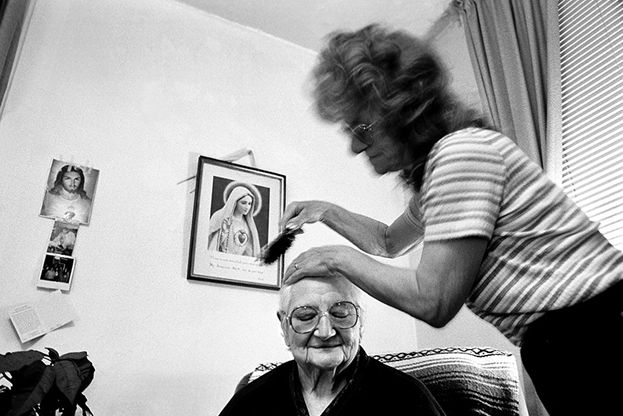
Success can come in many forms from the many experiences that we might have in everyday life. We might start a successful new relationship with someone by simply saying “Hi, how are you” to them, instead of lowering your heading and hurrying by them. You might have a satisfying success during the week by offering to help someonecaregiver with something. It could be something small; like holding a door open for a person behind you that has their hands full or combing the hair of someone no longer able to care for their self. Maybe success will come in the form of making a great presentation at work or doing really well on a test at school. When those successes occur, embrace them and get used to how they make you feel. That good feeling can be yours more often if you approach everything with success in mind, instead of the fear (or expectation) of failure.

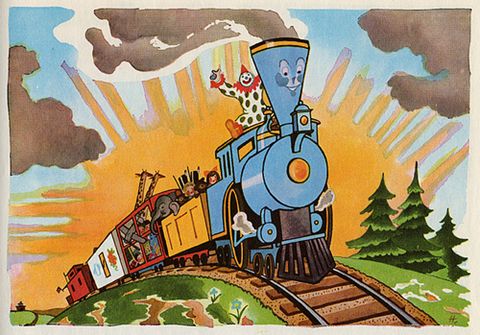
Remember the childhood story of the Little Train that Could. He didn’t succeed by littel train that couldapproaching the hill saying, “I know I can’t, I know I can’t.” You need to approach the ups and down in your life with the same philosophy as that little train – “I think I can, I think I can.” After a while that will change to, “I know I can, I know I can” and then a reassuring reflection of “I knew I could, I knew I could.”  I’ve written here before about believing in yourself – see First Believe in Yourself. If you can get there, then you will not fear success, you will expect it of yourself. See; I knew you could, I knew you could.

Have a great and successful week ahead.


Dive into the deep end of life…

February 15, 2015

When you’re a young child and your parents take you to the swimming pool, they might start you out in the kiddie pool – it’s shallow, it’s warm and feels good and it’s kiddie poolsafe for you. You can splash around there and the security of mommy being nearby is reassuring. As you grow older you eventually step over the little wall that separates the pools and enter the big pool. Still you stay down at the shallow end. The water is deeper and maybe you can actually swim a little now; however, it is comforting to know that if you tire, you can put your feet down and stand up.

Still later in life, most eventually venture into the deep end. Maybe you have floatees or swim noodles on the first time into those uncharted water, but you soon cast those off, embarrassed to require them now that you are swimming with the big boys. In the deep end, you must be able to swim because you can no longer touch the bottom with your feet. It is in this end that you can get into real trouble. It is in this end that your struggles and panic can drag others down with you. This is the deep end. This is life.

People grow and mature in body and mind at different rates, especially when looking at emotional maturity. The swimming pool experience provides a good metaphor for life. Some never leave the kiddie pool emotionally or perhaps don’t venture any further into emotional relationships than the shallow end where they can safely stand up and walk back away. A few never want to lose track of mommy and some cling to their emotional floatation devices forever. Listen to groups of teenage girls or even women
swimming pool
talking about their relationships and you’ll soon hear a litany of descriptions of boys and men who are still in the kiddie pool emotionally or who refuse to go beyond the shallow end in their relationships. These are usually frustrated women who are looking for guys who are willing to commit to the deep end of life with them, ready to discard their insecurities (and floatees) and commit to swimming together with them in a deep commitment to life together.

Sure they could go back to the shallow end and enjoy some meaningless physical relationship and maybe even have some fun for a time. Some do from time to time. And maybe they’ve had an experience with an insecure partnert clinging to them and trying to drag them down when they ventured into the deep end and struggled to keeplovers on the beach afloat. Eventually one finds that partner who is not afraid in the deep end and who provides the mutual support to help keep both of you afloat. That requires an ability to let down one’s guard and to be emotionally open. Like the game where you turn around, close your eyes and fall backwards, trusting that your partner will catch you and not let you be hurt; swimming in the deep end means swimming together with that level of openness and trust. That’s a hard, hard thing for many guys and for many women, too.

As you assess where you are in life emotionally, especially if you are in a relationship that is at that step-off point to the next level; ask yourself if you are ready for the deep end with this person? Are you willing to take off the floatees that you have been comfortable with – the guarded independent image that you have of yourself, the rock, the island image (Simon & Garfunkel had a song about that) – and instead open your heart and your mind to allow the new experiences dive inthat wait in the deep end of life. One cannot truly experience life until he can let go of “me” and fully embrace the concept of “we”. That’s what defines the deep end of life. Once you have tasted life at its fullest in that end of the pool of life, the shallow end will never be anything but that – shallow. Dive into the deep end of life!


Three little words – Be my Valentine

February 14, 2015

‘Tis a day to dismiss the pithy or snarky and focus upon the import of the moment – Valentine’s Day. I recall this day from my youth as one of great hope and sometimes dashed dreams. It was the day when you saved your biggest and best Valentine card at school for the one that you secretly loved (or so you thought). Valentine cards were valentine kidsexchanged by walking around dropping the cards into the little bags on each other’s desks, in hopes that there would be some in your bag when you got back. As I got older it became a time of the year to try to impress the girl (or girls) of my dreams or perhaps to ask them out. All too often that resulted in finding an empty bag, too. Won’t you Be my Valentine?

Once I had found my life mate the day became one of giving something special to show my love and appreciation – sometimes candy and flowers, sometimes jewelry or other special or sparkly things. As we both grew older the day refocused upon our children and making it a special day for them. By the time we became empty-nesters again the holiday had taken on such a commercial air that it became tedious and boring, something to be largely ignored. After all, the Valentine’s candy and stuff had been out on the store shelves since mid-January in many cases. One can only look at so many frilly, heart shaped boxes before getting sick of them; especially the ones with the words Be my Valentine.

Still, it is a time for the young to chase their dreams of romance with the unapproachable apples of their eyes and for the Tween and teens to try to quench their burning hormones in chocolate. It is th time to see if a huge bouquet of flowers or a nice piece of jewelry will atone for a year’s worth of working too late and not having time for your mate. Hopefully you can take the time away from other distractions to helping handsask honestly that your life mate Be my Valentine.

If you take the time to pause and engage in a meaningful conversation, you might find that the answer to your request that your life mate be your valentine is something like, “Just be here” or “Pay attention to me” or perhaps even “Be who you were when we met.”  Valentine’s Day should be used for that pause and that reflection with your significant other and if you do say Be my Valentine, it should be felt and said with the same passion and dedication that got you together in the first place. So, rather than asking them to do something for you, perhaps you should ask them for permission for you to Be their Valentine.

Use Valentine’s Day not for gift giving and cutesy cards, but rather as a time to re-kindle the love that brought you together. A long hug and a lingering kiss that brings back memories will last longer and have a greater meaning for you both than all of the happy valentines dayflowers and candy you could buy. You will never have to be disappointed by an empty bag on your desk if you take the time to show love to the one that has chosen to spend their life with you. So grab a couple glasses of wine and snuggle down in front of the fire and raise a toast together that you both will always Be my Valentine.


Doing the right thing is never wrong…

February 13, 2015

There’s a song with lyrics that say, “If loving you is wrong, I don’t want to be right.” That’s a touching claim to make, especially around Valentine’s Day; however, another saying that I saw in a recent post from the Jack’s Winning Words blog contained this piece of advice:

“Never do a wrong thing to make a friend…or to keep one.”  (R.E. Lee)

That is particularly hard advice to live by for many confused and anxious young people, especially in their tween and teen years. It is also hard for many even after getting kids at schoolthrough the years of raging libido and crippling insecurity that sometimes define those tween and teen years. Even, so-called “grown-ups” often suffer from enough insecurity to do things that they realize later were out of character at best and just plain stupid at worst, all in the name of trying to “fit in” and make new friends.

The most basic problem with doing the wrong things to make a friend or to try to keep one is that your change of character is always just temporary and the burden of living the lie that you have created is not one that can be borne for long. The eventual revelation and correction of whatever that wrong was does not only take way any temporary advantage that you may have thought that you had gained, but also damages forever your credibility with that “friend.” They will realize that they can’t trust you to be honest about yourself or about them.

What is so hard about just saying “No, I can’t do that or won’t do that” in the face of the temptation to do the wrong things? Is it a lack of understanding of what is right or listeningwrong; or is it a fear of being rejected because you do understand that difference and chose not to do the wrong thing? How can that be bad? More important, perhaps; why do you want to be friends with someone who is urging you to do the wrong thing? What will that friendship be based upon? How can you grow that relationship when you can start off on such questionable grounds? Which direction will that friendship go from such a beginning – further down the path of wrong?

I don’t think that there is any valid argument that can be made that you are going into such a friendship in order to save that other person by compromising yourself and your values first. If you cannot get a positive reaction to someone accepting you for who you are and what you believe is right and wrong, then turn and walk away. That is not a relationship worth having.  I have only read some of the reviews of the book and the movie (disappointing according to most); but I suspect that at the core of the story of 50 Shades of Grey is a choice that was made by the young lady, perhaps out of naive curiosity as some reviewers have written, that was out of character for her. She friends at schoolabandoned her values for the thrill the unknown and the friendship (some may say the mentor-ship) of Mr. Grey. In the end, was that the right thing to do?

Sometimes we are faced with what can be even harder for us – doing the right thing in the face of a challenge or request from someone who is already our friend or loved one for all of the right reasons (or so we thought).  I have bailed friends out of jail or picked them up from hospitals when they had done something stupid; but I have also refused to hide someone who was on the run after doing something stupid. I tried to talk them into turning themselves in or to seek professional counseling help to avoid any more stupidity – I was not always successful at that. I lost some friends that way and I’m OK wioth that. I felt bad at the time, mainly for them; however, I felt good about not compromising myself or my values long after the incidents were over. Let’s face it, friends come and go, but you have to live with yourself forever and that’s a long time to be someone that you no smiling manlonger like. The old saying “to thine own self be true“, comes to mind.

So, as we head into another weekend, resolve to stay true to your values and not to do anything stupid or wrong just to try to impress someone so that they will be your friend. In fact, if you really want to be a valuable friend to them, make the effort to talk them out of doing those stupid or wrong things, too. Think of it this way: would the next lemming in line go ahead and jump off the cliff if his friend right behind grabbed him and suggested that they go get a Starbucks instead. They could have a lively discussion about what might be at the bottom of the cliff instead.

Have a great weekend and be a good friend…