Pastor Freed used this quote from Alan Alda today – “Listening is being able to be changed by the other person.” (Alan Alda)
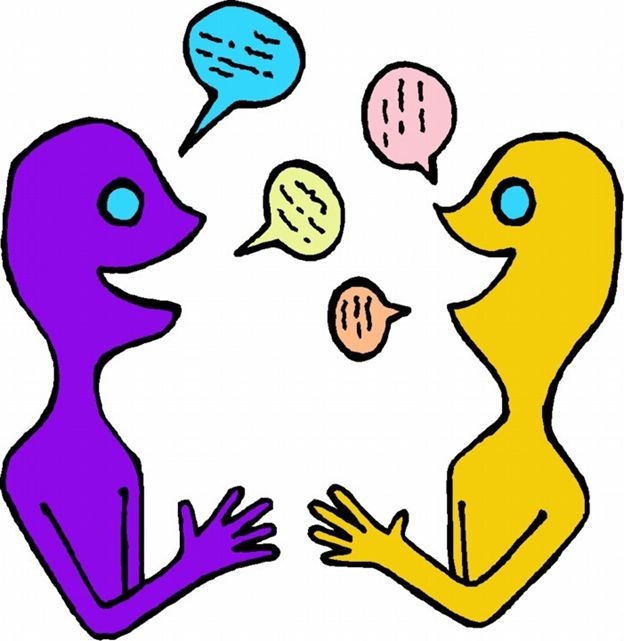
Hearing is probably step one, but it does not carry with it the acknowledgement that you have recognized anything other than that some sounds are being made. When one moves from hearing to listening, the change is both a recognition of the speaker and a focus upon understanding what is being said. Just saying ,”I hear you”, does not mean that you are really listening to what the other person is saying. The listening that Alda was probably referring to goes well beyond just politely waiting for your turn to speak. Too many people spend that polite time focused more upon what they want to say next, rather than really listening to what the speaker is saying and evaluating their position or arguments.

Alda used the words “being able to be changed” in his quote. I would prefer “being open to be changed”. It is important to keep an open mind, to be willing to re-evaluate your position and current opinions on something, based upon new information. Many times such an encounter will not require a major change in your position, but taking the opportunity to listen to different points of view and opinions will give you a better understanding of those who hold different points of view. That will perhaps allow you to better prepare yourself for those encounters.
Assuming that you have moved through steps one and two, you now are faced with step three – evaluating what to do with, or about, this new information. In some cases, the information may be so ridiculous that your reaction may have to be to stifle a laugh; however, remember that this new point of view was just put forward by someone who may deeply believe what they just said. Excusing yourself and beating a hasty retreat may be the best course of action in that case.

Let’s assume that what you just listened to is, in fact , a valid alternative point of view to your own, based either upon different information than you had on which to base your position or a different interpretation of the same information. That’s when you must be open to change. You must be willing to look at the situation from that other person’s point of view and make a decision on whether to stand firm in your belief or change towards the other person’s belief. That forces you to examine what it was that caused you to form your opinion. Was it really based upon facts or did preconceived notions and prejudices creep into your decisions and opinions?

We hear often about systemic racism these days in the news, That refers to policies and behaviors within government and business entities that are based upon and driven by prejudice. In fact, those prejudices all start within the individuals that make up that entity. Systemic problems are codified within the entities but they start within us all. Being open to change forces us to face our internal systemic issues like racism, sexism, homophobia and others.
Once you have listened with an open mind, and faced down the systemic issues within yourself, you must decide how and where to add this new knowledge into what is called your wisdom. If you decide that you do need to change, some old thoughts and opinions will have to be swept away. Some fears will need to be buried. Some actions and activities may have to be abandoned. You will have a new point of view and the world will look different to you. That’s a good thing, You have grown by being open to change. I think you will like the new view that you see because you will be more consciously aware of and more comfortable with your vantage point.
You listened, you learned and you changed. Good for you! Good for us all.


 Posted by Norm Werner


 young age to become opinionated or prejudiced about certain things and people. They just continue throughout their lives to jump to conclusions about people or events that are driven by unsupported opinions or prejudices. Some look back at a lifetime of misconceptions with regret when they get older. They finally see how fear or mistrust that was fueled by prejudices held them back from meeting or knowing some really great people with whom they crossed paths in life. They see missed opportunities for friendships or even relationships. There is a melancholy sadness about finally realizing how one’s own ignorance or misconceptions have dulled what could have been a much richer life.
 become concerned and fearful? Why? What is it about their appearance or actions that I find threatening or distasteful? Why? Do I avoid going to certain places or events because I fear encountering “different” people? Why? Do I immediately become “on guard” when encountering people of a certain color or who are dresses a certain way. Does seeing a person with blue or pink hair immediately bring to mind something bad about them? Why? Do I really have an opinion of my own about events or news that I hear or do I immediately call to mind something that I was told by someone else?
 opinions or prejudices that were “planted” in you by others. That is the first step towards both understanding and towards formulating your own opinions. It is a major step towards taking back control of your life. You can’t do it all at once. Perhaps take the time at the beginning of each week to reexamine a habit or opinion or prejudice that you have fallen into and resolve to either prove or debunk the basis for it. The young man who decided to be vaccinated did a lot of research on the subject and concluded that his mother was wrong in her opinion against vaccines.
 opinions, but they will now be informed opinions. You may still have habits, but make them good habits. There is no reason to still have prejudices. Thinking about, and understanding these things in life, will shed light on the dark corners of your mind and drive out the bad things that lurk there. Understanding is the antithesis of the ignorance that drives those behaviors.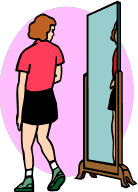
 same frame of reference that we have. Yet the same idea holds true for all of the people around us; we just don’t give a break to those that we see as coming from environments that we believe are the same as ours. But are those environments really the same? We can change that person that we see in the mirror.
 becoming a better person and will likely find that your life becomes much more satisfying. It’s like moving from a monochromatic view of the world into a full Technicolor world. Living without the fears and prejudices that were dictating your life will allow you to embrace the diversity around you and learn from the different backgrounds of those that you encounter. We can change that person that we see in the mirror.
 So, don’t worry about changing others. Look in the mirror and try to get that person straightened out. You’ll be glad that you did. We can change that person that we see in the mirror…and they will be a better person for that change.
 people who hold some negative opinion or dislike for some group or groups of people and who are unable or unwilling to consider a different point of view. That is not to say that you have to agree with those people or practice whatever behavior it is that offends you that they display. But, it is to say that you at least try to understand that they have a different view of the world and come to peace with the fact that those differences exist. So long as the differences in appearance or behavior are not destructive or disruptive, what real difference does it make? Keep an open mind.
 likely presents no threat to you. In fact, study after study in the business world has shown the benefits of having a diverse workforce with a rich diversity of ideas and approaches to the same issues, as opposed to having a homogeneous workforce that s all driven by the same set of beliefs and standards (and prejudices). Keep an open mind.
 WWJD on it. That stands for What Would Jesus Do and is a good way to pause and think about things before letting some preconception or prejudice dictate you actions. The bible says – “Do not be conformed to this world, but be transformed by the renewal of your mind, that by testing you may discern what is the will of God…” – Romans 12:2 Keep an open mind.
 Keeping an open mind will mean getting out of your comfort zone. Comfort zones are often defined by pre-conceived notions and even prejudices. Comfort zones have walls that are built at the edges of understanding, beyond which lies our fears, uncertainties and doubts. Comfort zones start at our mental dawn and runs until dusk, with everything beyond them hidden in the dark. You must be brave enough to venture into the dark in order to discover new things, have new experiences, make new friends and expand your knowledge. Rosa Parks put it well when she said – “I have learned over the years that when one’s mind is made up, this diminishes fear.” Make up your mind to Keep an open mind.
  world differently because we look at it through the distortions caused by the “lenses” of our experiences and knowledge, our fears and prejudices, or our hope and optimism. Some people look at it through the dark lenses of depression. Others see nothing but rainbows through the rose colored glasses of optimism. Some may see danger lurking behind every bush and tree, while others see opportunities around every corner or behind every door.
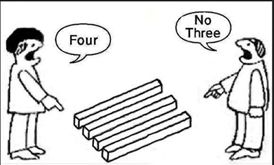 immediately see danger in the situation; but walk into a room filled with the same number of people, but one in which they are all very different from you and you might see danger and threats. For most white Americans seeing a policeman approach may cause them to pause to think if they’ve done anything wrong; but, they don’t “see” it necessarily as being threatening. However, ask a resident of Ferguson, Missouri about that scenario and you’ll get a different answer. Perhaps that is because the eyes that they see that policemen through are filled with so many tears from the past.
 based upon prejudices or misinformation. We don’t stop to really “see” the person standing n from of us because we are blinded by the labels that flash up in our minds. Our ability to “see” the good, the beauty and the interesting things about that person are obscured by our proclivity to “see” only the things defined by the labels that we have already associated with them. Our vision has joined in the wider conspiracy that we call bigotry.
 were removed he could see clearly and it was a bright, bright, sunshiny day. Maybe if you can clear away the obstacles (labels) in your mind you will see more clearly, too; and you too will have a brighter day. Perhaps you’ll even be able to “see” things from the point of view of others and that will make your day and theirs better, too.
 judgments. Yet, if we used our brains, we might ask ourselves, upon what basis of facts, other than color am I basing these feelings or opinions? Have I even talked to this person? Do I even know their name or anything about their life story? How can I have jumped to a conclusion of fear or mistrust, based solely upon the one input of color? Yet many do. Use your brain.
 perverted it through our prejudices into “guilty until they can prove themselves to be innocent.” If, instead of thinking (with our minds) that every person of color or language difference that you meet is somehow out to do you harm; it might make life more interesting and rewarding, if you went into each meeting with a new person in the frame of mind that you were going to get to know them and see what interesting things that you might learn from them. You can do that if you, Use your brain.
 prove themselves to you somehow. They may have also jumped to conclusions about you, based upon what they see or hear from you. They may have fears about you and what you may do to them, especially if you happen to be wearing a police uniform. You might immediately say how could they think that about you? Well, duh; use your brain; what’s on the news all too often these days. “If they only got to know me”, you might think; “they wouldn’t be afraid of me.” OK, so why is the opposite not true? Use your brain.





 NormsMilfordBlog