I believe that these two quotes both came from the Jack’s Winning Words blog, but I know that the last one did because it was from today.
“It is better to know some of the questions than all of the answers.” (James Thurber)
“The greatest enemy of learning is knowing.” (John Maxwell)

Both quotes point to the danger and foolishness of thinking that you know it all. In fact, most of us haven’t even scratched the surface of the questions, much less finding the answers.
Many readers may know someone who is a “know-it-all”, the person with all of the answers. Not surprisingly most of what that person “knows” is wrong or based upon bad information, or even worse upon bad assumptions.

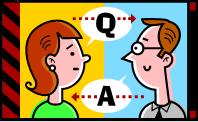
Instead of concluding that you know all there is to know about anything, it is better to spend some time asking yourself what questions about the topic remain unanswered. A good place to start when considering any “fact” is where did that fact come from – what is its source. Most of the so-called conspiracy theories have no basis in fact and no real source other than rumors or conjecture. Any argument that starts with “I heard that…” should be immediately challenged by “Heard from who or where?”
But enough about current events and politics, let’s focus more generally upon how one learns and creates their knowledge base. It is upon that base that wisdom is eventually built.

One grows in knowledge by continually questioning. What just happened? Why does something happen? What causes something to happen? How does that something happening affect me and do I need to do something about it? Is this something new? If not, how can I make sense of it by connecting that something and my understand of it to anything else that I might already know (note: that turns understanding into knowledge)?
All of those questions and the thought processes that go with them are important to increasing your knowledge and wisdom. That is why shutting down those processes by thinking that you already know everything dramatically decreases your learning. Accepting without questioning is the cornerstone of building conspiracy theories.
So, always ask yourself, “what don’t I know about this?” Keeping that question in mind will mean that you keep learning.

Even in the realm of religion there is always room to learn more, as Pastor Freed mentioned in his blog today (follow the link about to read the blog post). Instead of trying to know all about God, start by knowing God through Jesus.
Now, what are your questions? Refer to your textbook (the Bible) for the answers.
Keep learning because now you know that you don’t know.


 Posted by Norm Werner


 I suspect that many of us when through a “change the world phase” in our lives, maybe more than one. It is only later in life that we realize that we were trying to make the world over into something of our own desires and not necessarily for the betterment of humankind. Of course, at the time we firmly believed that what we wanted was for the good of humankind. Hubris always seems to precede humility in life.
 an come to love yourself, the more able you will be to love others. I posted “
 constantly “Google” things we are emptying the ocean of knowledge into our heads, one bucket-load at a time, at least that’s a rationalization that I like to think justifies my constant use of my smartphone.
 Internet and Google; however, if the results that you needed were on page 10 of the Goggle search results you may never find them. At the library we were shown how to use the card catalogue and the Dewey Decimal System to look up various books (undoubtedly now available on a computer at the library). Today we have to learn how to formulate the right inquiry for a search engine, in order to find what we need.
 and music and video – which, if managed properly can be good things. All-in-all the smartphone is a great bucket to be carrying around with us, so long as we do not let it turn into a crutch that replaces thinking and good decision making or a master to which we become enslaved.
 that they are being taught; however, many things that are taught in school are taught within the context of a process and understanding the process is as important as understanding any single fact or equation. Most of the so-called STEM subjects fall into that category. Some subjects are lumped into a broad category called “enabling knowledge”, which is meant to establish a context in which the world can be better understood. Those topics may include social studies and history. Finally, a few may be classified as “enrichment” topics, such as art classes; which are meant to broaden or enhance our perceptions of the world around us. In truth, epecially once we get out of school, George Whitman put it well when he said – “All the world is my school and all humanity is my teacher.”





 NormsMilfordBlog