The Best of Jack’s Winning Words – Originally sent Sept 17, 2018. Reposts from the blog of the late Pastor Jack Freed.
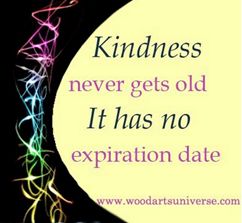
“If you have to choose between being kind and being right, choose being kind, and you will always be right.” (Sent by Tara Kane) My friend Tara teaches more than public safety to college students. She explains to them (as illustrated in her quote) the importance of knowing how to get along with people. Whether it be a police officer, a fire fighter, or an ordinary citizen, knowing how to be kind to others is an important skill. Keep your eyes open today to “see” kindness….and let others see yours. 😉 Jack

It is interesting to read that Jack called being kind an important skill that one needs to develop. Being kind is not an emotion caused by something (someone) or even a reaction to something happening. You don’t get kind, like you might get happy or sad and you don’t become kind like you might become afraid. Kindness is an action word; you have to be kind. It requires you to act (or react) in a certain way. Being kind requires a conscious effort or response on your part. That means you have to think about it, whether you realize it or not. Develop the skill of kindness.
I think being kind is based upon making the conscious decision that you wish to be kind in all that you do. That may not be obvious to you, but there are certainly people that you will encounter who have not made that decision. They are sometimes thought of as being cruel. I may call them jerks (sorry, that wasn’t very kind), but I’m sure you have your own name for them. These are the people who cut you off in traffic, who make negative remarks about people or who may call others who are in need losers. They are not being kind. Develop the skill of kindness.

So, how does one develop the skill of being kind? It starts by being more aware of the fact that you are reacting to and making decisions about how to act on everything that is happening to you and around you. You must develop the ability to stop and think, if only for a moment, before you act or react. You must ask yourself the question, what is the right thing, the kind thing to do in this situation? Just that split-second pause will allow you to regain some control over what might have been a knee-jerk reaction. In the next split-second your brain will be able to evaluate the situation and decide between the right and wrong response – the kind response. Develop the skill of kindness.

If you have made the conscious decision to be kind, the actual decision to do so will be easier in any situation, and you will do the right thing. Sometimes that is just catching yourself before you do the wrong thing, making matters worse. Sometimes being kind means doing nothing at all. Even then, being kind means doing so with a smile or a friendly gesture. Putting that smile on your face will make you feel better and may even make others feel better, too. Perhaps adding a line to your daily prayers – Lord help me to be a kinder person today than I was yesterday – would help reinforce kindness for you. Develop the skill of kindness.

Jack advised us to keep our eyes open for acts of kindness by others and let others see your kindness. You can learn new ways to be kind by observing others. Others will see your acts of kindness once you stop just having kind thoughts and start doing kind deeds. Work on being more cognizant of the opportunities to be kind that you may encounter during the day and then act with kindness on those opportunities. Develop the skill of kindness.
Have a great and kindness filled day… Develop the skill of kindness.


 Posted by Norm Werner

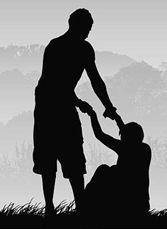


 something for someone else that needs to be done. Opening a door or smiling and saying hello are example s of very small acts of kindness. Those aren’t just empty gestures and they are usually acknowledged by the recipient. There is no expectation of reward or even reciprocation, but even those small acts can make one feel better about themselves and about their fellow man. They are overt acts that say, “I see and acknowledge you. I see your need and I am happy to help.”
 So, take the opportunities that you are given each day to extend an act of kindness towards someone else. Your gesture of kindness are not wasted, even if they go unacknowledged at the time. Showing kindness to total strangers is a big part of what bonds us together as humans. Remember the words of Jesus as he taught his Disciples in Matthew 25:40 – “Truly I tell you, whatever you did for one of the least of these brothers and sisters of mine, you did for me.”
 higher by climbing over the backs of others. They see others as losers or obstacles to be overcome, defeated or discarded. Theirs is truly a sad existence.
 The inverse of being nice to others is most often causing them some hurt, whether it be just their feelings or otherwise. Dismissing the abilities and contributions of others is hurtful to them and, in the long run, to the efforts of the team. Ignoring others points of view or their questions about your point of view on things is missing valuable feedback. If nothing else, a questions that seems to be based upon not understanding what you have in mind clearly points out that you have not been able to articulate your point of view or plan. If the person questioning your plan has those doubts or misunderstandings, then others will too and you need to rethink either the plan itself or how you explain it to others. That is a valuable insight that you need to take into consideration.
 health of the participant. These were games in which you could find things that improved your health or things could happen to you which took away from your health. You could always tell whether something happening in the game was adding to or detracting from your health.
 disagree or who don’t make liking them easy. In this season of heightened political passions it is particularly hard sometimes to be kind or cordial with someone who may be proclaiming the political opposite of what you believe.
 initial visual impression that they make, helps me. It is that initial pause from making some immediate judgement that allows that ability to be kind to kick in. It’s not always easy; because I carry around the weight of a lifetime of fears and prejudices, as we all do. It takes a conscience effort and I am not always successful; but I have found that the rewards from making that effort far outweigh the alternatives, which almost always lead to regrets later. Making a new friend is much better than adding a new fear or enemy in life.
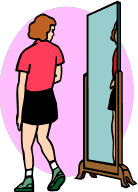 Some people take great pride in always being “truthful”, even it it may be unkind, such as truthfully answering the question, “Do these pants make me look fat?” What value is there in your truthfulness in that situation, if it is unkind or causes pain.
 how small, is ever wasted.” The same cannot be said about the truth, which often falls upon deaf ears. So, perhaps today you will have one of those choices to make – to tell “the truth” to someone or to be kind. What will you do? Why did you make that choice? Do you think that telling the truth will somehow make the situation better, make the other person feel better or just make you feel better?
 cloth yourself with those virtues before you begin encountering people and situations that will challenge you for a response. You’ll feel much better that the end of the day if you have responded with kindness, rather than smugly responding to all questions and situations with what you perceive to be “the truth.” So, the best answer to the question in paragraph 2 is that “those are really nice looking pants and they look great on you.”
 How many times after an event or encounter have you had to say to yourself, “Oh crap, I shouldn’t have said that or I shouldn’t have done that?” You erred on the other side of kindness and you know it. So, now you have to figure out a way to apologize and make it right.
 chance. Perhaps that’s where some yoga training could come in handy.
 So, err on the side of kindness and take action in defense of what is right and you will seldom have to apologize later. You might also find later that you are quite proud of yourself; as well you should be, you did what was right and that is never an error.
 home, or perhaps taking them some food, maybe some Christmas cookies, or maybe even seeing if you can take them somewhere to get some shopping done for other errands. Don’t spend time lamenting your coulda, woulda, shoulda’s later, when it is too late to help or to visit.
 intentions.” Of course you had every intention of visiting with them and helping were you could, but life got in the way. You became more than a distracted driver; you were living a distracted life. The distractions of work and family and everyday life pulled you so many directions that heading in the right direction and doing what was right became impossible. So, you put many of those things off until later. Until you realize that it is too late. Later is when you lament – “I know I should have…”
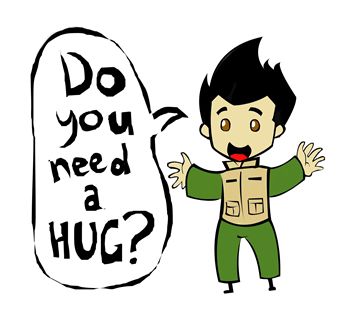 are acts of kindness and sharing and loving that you’ve been meaning to do, turn your thoughts into actions. Make that phone call or go make that visit. Give that special person in your life that hug that you’ve been meaning to give them and pause to tell them that you love them.
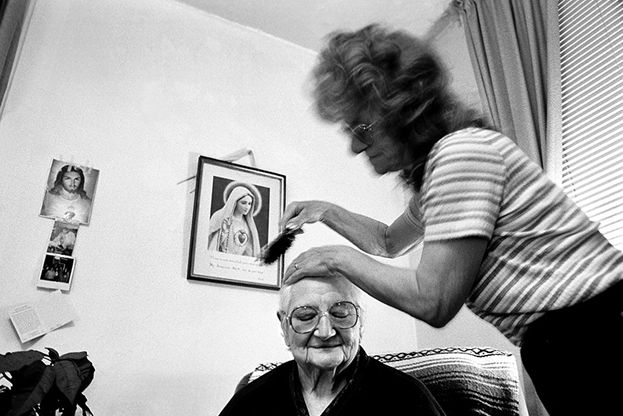 know of someone who has lost a loved one and may need some special words of hope and encouragement this Holiday – call them or go visit with them. Maybe, if you call the local retirement homes in your area and ask you’ll find that there are residents there who have no one to visit with them over the Holidays, and that will provide you with your opportunity to show kindness and compassion.
 you’ve accomplished; rather than lying there saying, “I know I should have…” Will your act of kindness change the world? No, but it will change the world for that one person towards which you showed the kindness; and it will likely change the world for you, too. It’s not too late to start today.
 NormsMilfordBlog