“Do not call for black power or green power. Call for brain power.” (Barbara Jordan) – as seen on the Jack’s Winning Words blog. Jack went on to add his comments about Black History Month, which is what Barbara Jordan was alluding to in her quote.
It’s interesting that the brain helps us distinguish between colors, but it is the mind that assigns tags to those colors. Those tags may include fear or mistrust or prejudices, based solely upon color. For some that is enough for them to form opinions or to make  judgments. Yet, if we used our brains, we might ask ourselves, upon what basis of facts, other than color am I basing these feelings or opinions? Have I even talked to this person? Do I even know their name or anything about their life story? How can I have jumped to a conclusion of fear or mistrust, based solely upon the one input of color? Yet many do. Use your brain.
There is an old piece of advice that is widely circulated in signs and sayings that goes: “Engage brain before engaging mouth.” It might also apply that one should engage their brains before making up their minds, especially about other people. Color is just one differentiation between people; it just happens to be the easiest to spot. Use your brain.
Language and the way people speak is another differentiation that many use to jump to  discriminatory opinions. We have had such an influx of immigration from so many foreign countries that it is almost impossible not to overhear others speaking in a language that we do not understand or with an accent that is noticeable. There is also the street slang (sometimes labeled Ebonics) that is used by a portion of the African-American population. Any of these cues can kick off an immediate reaction that is just as powerful as the recognition of the color of the individual. Those reactions are often not favorable and lead to conclusions that are just as wrong as those based solely upon color. Use your brain.
The best advice against letting these or any other differences that one might notice lead you immediately to some conclusion or reaction is to engage your brain. Think before you act or react. Learn to control your mind. The first thing that most will have to do is to calm the perception of that person somehow representing a threat to you. Unless someone walks up to you with some sort of weapon in their hand, why do you perceive them to be a threat? Is it their color? Is it the way they speak? Is it how they are dressed? Why are any of those things a threat to you? Use your brain.
The key to using your brain is to let it work without a preconceived overlay of prejudice or fear. We have turned the old saying “innocent until proven guilty” completely around and perverted it through our prejudices into “guilty until they can prove themselves to be innocent.” If, instead of thinking (with our minds) that every person of color or language difference that you meet is somehow out to do you harm; it might make life more interesting and rewarding, if you went into each meeting with a new person in the frame of mind that you were going to get to know them and see what interesting things that you might learn from them. You can do that if you, Use your brain.
I suspect that the people that you jump to conclusion about get awfully tired of having to  prove themselves to you somehow. They may have also jumped to conclusions about you, based upon what they see or hear from you. They may have fears about you and what you may do to them, especially if you happen to be wearing a police uniform. You might immediately say how could they think that about you? Well, duh; use your brain; what’s on the news all too often these days. “If they only got to know me”, you might think; “they wouldn’t be afraid of me.” OK, so why is the opposite not true? Use your brain.
As you go about your day and the upcoming weekend, try to be more cognizant of the  frequency in which you let some preconceived prejudice in your mind take control of you and shape your reactions to people. The more you become aware of it the easier it might become to at least stop and try to Use your brain.
You’ll be glad that you did.


 Posted by Norm Werner
  So, today’s saying by Father Basil, one of two Detroit guys who started a monastery in a remote spot in Michigan’s U.P. that was recently featured in a Detroit Free Press feature article, may provide us all with a small starting point to making a better world for everyone. If each of us resolved to become a better person – kinder, gentler and more caring for others – perhaps a tsunami of goodness would sweep across the world and it woud become a better place for us all.
 prayer. Not all of us can just get up and go live in a monastery in the U.P.; however, all of us can take some time to pray each day. Perhaps if we focused out prayer not on things or needs and upon asking for God to make us better people our worlds would become better places. Maybe if instead of asking for God to give you this or that, you could ask him to help you make better decisions in your life and do the right things. I’ve occasionally prayed when I bought a lotto ticket not that God let me win, but that if I should win that God help me do the right things with the money. So far, I guess I haven’t change enough to be given that responsibility.
 opportunities to actually be a better person as your day goes on. Don’t hesitate in front of the man on the sidewalk who is obviously down on his luck; stop and ask how you can help. And, if you reach in your pocket and give him the money that you had set aside for your latte or perhaps your lunch; keep in mind that you may be providing him with the means to buy the only meal that he may get today. You were a better person and the world is better for it.
 In some marriages the phrase “I’m sorry” is used more often than the phrase “I love you.” Those marriages don’t usually last long. Saying “I’m sorry” is easy. In fact Brenda Lee had a hit song titled,
  a throw-away that we toss in to situations without making the personal investment of actually being sorry.
 Maybe of you start of each day and pause to think about not doing things that you’ll have to say “I’m sorry” about you’ll have a better day and you’ll spend a whole lot less time saying and being sorry. But, then; maybe you don’t buy any of this and will just go on being the way you’ve always been – you’ll probably end up sorry about that.
 Those secrets take on a life of their own. The life of Herbert Philbrick sometimes became very complicated as he worked to make sure that the secret life that he was leading for the FBI didn’t somehow spill over or disturb the other lives he led and a family man and a businessman. Our lives can get like that as we try to juggle the “facts” of the various lives that we might be leading. It is trying to keep track of the facts verse the lies that becomes complex when you lead multiple lives. It is an oft-used phrase that, “my life is an open book”; however, it is often a book with a few chapters that the speaker chooses to leave out.
 point at which we start thinking about the “end game” in our own lives. For most people it is something that is there, in the back of your mind for years, which slowly works its way forward until it demands some thought time and attention.
 you are a Christian, you understand that the only way to enter the place that is there for you is through your belief in Jesus Christ. For all who truly embrace Jesus there is a lifting of the fear of death, for it was His promise that, through his death on the cross, He had forever banished death from those who believed in Him.
 they embrace the saving grace of Jesus. For some there is a new sense of purpose and a desire to share the good news. For a few there is a sense of mission that leads to a new way of life. For all of those people the starting point to that new life is the removal of the fear of death.
 comfort zone, building walls to keep others out. The trouble is that those same walls keep you held in; you become trapped in who you are and never get to explore who you could be, if only you tried some new things. Your comfort zone becomes your personal prison.
 with a great variety of people. Choosing to live life with few, if any, close friends is like sitting down with a coloring book and having only one or two crayons. It can get pretty dull pretty quick and you can lose interest. Making friends and understanding their different points of view fills you crayon box with many colors and makes the pictures that you do much more interesting.
 do that is to try to meet someone new each day. Each new person that you meet adds a new crayon to your box and allows you to add a new shade or color to your life story.
 or after work. Try something new, a different route to or from work or maybe a stop on the way to or from work that we don’t normally make. Maybe you can try something completely different on a weekend; go someplace that you’ve never been or try a new activity that you’ve never tried. You don’t have to go out and try sky diving, but maybe something as simple as going to a sports event that you’ve never been to or actually participating in a sport that you’ve never tried.
 become more than you were then because you did something that you didn’t know that you could do. And, unless this all happens on a desert island, you will also find that you now know more people than you’ve ever known, because you put yourself out there where they were, too.
 that are not of our own making. How we react to them and our ability to go to our happy place in times of stress or pain determines how well we make it through those times.
 A key thing that both yoga and meditation focus upon is helping you find a way back to your happy place, so that you can let go of the stress and let your body’s natural ability to heal itself make you well again. Of course there are lots of other things involved, but being able to get to that happy place is central to both. It is also a key to a happy and healthy life, whether you practice those disciplines or not.
 even seek out a good hypnotherapist. Talk with the instructor/therapist and let them know that you are there to try to recapture the ability to put aside the day’s stresses and get to that place that gives you peace. They will understand. Then, focus upon the process that they take you through to relax and let go and begin your search for that happy place that is still there, somewhere in the deep recesses of your mind. You knew it as a child and you can find it again. When you do find it; you will know that “everything’s gonna be alright”.
 out why they always seem so calm and happy. They are at peace with God and themselves and that is a happy place to be, indeed.
 place is out there waiting for you and you know that you can get back to it when you want to – and that’s a good thing …a happy thing.
 constitutional amendment to the Michigan Constitution that would protect the GLBT community from discrimination. Patterson is a well-known Republican conservative, but has also recognized the ugliness and hate that comes with discrimination. He is basically saying – respect other people’s way of living.
 general. Our modern day pharisees are the moralizing, so-called Christian evangelicals who seem to spend more time criticizing the lives of others than putting their own lives in order. Like the high priests and pharisees of old, these modern day pharisees are sure that they occupy the moral high-ground and that their way is the only right way to live. And like those hypocrites of old, they try to take actions to correct or discriminate against those who choose to live differently. In modern times this holier-than-thou group uses political power to try to legitimize their discrimination through laws (or lack of laws) aimed at those who are “different.” They wrap themselves in a false morality that does not – respect other people’s way of living.
 people who were immigrants escaping religious persecution due to the fact they the religion that they practiced at the time was different from the prevailing religion in England and Europe. It is convenient also to forget about the threat that their immigration to America posed to the Native Americans who were already here. They essentially took the country from those who owned it at the time. Imagine if the Native Americans had enacted a law stopping the flow of these refugees from religious persecution from entering America because they posed a threat. Maybe that would have solved everything. The early settlers obviously did not – respect other people’s way of living.
 us in return, no matter what lifestyle they choose to live. In the end, wouldn’t that make the whole world a better place in which to live? It would, because it would be a place in which we all would – respect other people’s way of living
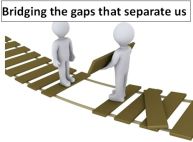 responsibility, much less worrying about how others live. We need to focus less on others and more on doing the right things ourselves to make sure that we aren’t becoming modern day pharisees and discriminating against those with lives that are different from ours. So, as we begin a new week maybe, before we leave the house today we can resolve to – respect other people’s way of living.
 wedding day, the birth of our children, maybe a big job promotion or the day we closed on our first house; but it is often the little, private moments that result in the most enjoyable and lasting memories. I may be a tender moment between husband and wife or maybe a quiet time of love shared with a child. It is perhaps that final little squeeze of the hand with a loved one right before they pass away or the hug that says I need you and I trust you from an injured loved one.
 Maybe that does not have to be. Perhaps, if we take the time to think about the little things in our lives that happen every day, we can revel in the moment. We can go to the ball game or the dance, instead of working those extra hours. We can pause to say, “I love you” every night, instead of taking our partners for granted. We can heighten our awareness of the little things (to us) that mean so much to others and make the effort to participate in and celebrate those moments.
 knocking and trying to help me, but I won’t let Him in. The free will (it might also be called ego) that God gave mankind can also act as a door to keep Him out when we most need him. We toil through life trying to solve things ourselves, letting our egos get in the way; rather than letting Him take our burdens and help.
 ve all problems without help. I remember the “big boys don’t cry” admonishments as a child and the “shake it off” advice for almost any hurt while growing up and the “suck it up” guidance for dealing with pain or disappointments. I suspect that athletics in general contribute greatly to that self-image of being able to live with pain.
 seriously grew out of the macho “shake it off” creed of athletics. So, I wonder if female athletes, especially those engaged in contact sports (which include soccer) develop a more insular approach to life and religion because of the stoicism required for those sports. Do they hear God knockin’ but they won’t let Him in? I suspect that it is not the case, as it is with men.
 a time to look at what happened in a manger over 2000 years ago and Believe.
 compassion and sharing, and all of the other attributes which flow out of a heart filled with the love of Jesus. A mind focused upon the work of God has no time for cleverness or deceit or hatred or anger or prejudice. A soul committed to faith has no time for deceitfulness, spitefulness or hatefulness. A body engaged in good works in God’s name can do amazing things, endure unbelievable pain and overcome overwhelming odds; if we Believe.
 kinder and gentler side. In the moments ahead, when you may be standing in church somewhere singing Silent Night, amidst the glow of the flickering candles of all who have come to worship; don’t analyze, don’t question and don’t overthink things – just Believe.
 NormsMilfordBlog