Imagine a different future…

July 14, 2025

The Best of Jack’s Winning Words 7/14/25 – Reposts from the blog of the late Pastor Jack Freed – Originally sent March 2, 2021.
Picture of Jack Freed

“Laugh when you can; apologize when you should; and let go of what you can’t change.” (Posted by Carrie Goldring) Carrie is a friend of mine and writes regularly about how to cope after divorce. Divorce can be a roller coaster ride, creating stress, anxiety, and fear. Relaxed exercise helps keep a mind ready for making decisions. While it’s certainly hard to abandon a dream, sometimes the moment arrives to imagine a different future. 😉 Jack

 I always get inspiration from Jack’s posts and today’s repost is a great example of why. Jack’s posts almost always related something about how the saying for that day can be used in our daily lives. He also almost always threw the ball back into the reader’s court to figure out how it related to their life.  Imagine a different future.

I’ve posted here quite often about letting go of the past and moving on, but I like the way that jack put it – “sometimes the moment arrives to imagine a different future.” Many of us spend too much time lamenting things from the past or imagining all of the things that could go wrong with something in the future. Imagine a different future.

If you would like to read my advice for letting go of things, please refer to:

https://normsmilfordblog.com/2022/08/03/dump-your-ego-and-find-peace/ or maybe https://normsmilfordblog.com/2020/08/12/let-it-go-spit-it-out-taste-the-joy/

In sports this is called visualization. Professional athletes, especially pro golfers spend some time before each shot visualizing (imagining) how the shot will go – the trajectory, the landing and the backspin. They “see” the shot before it happens and then they try to execute the shot as they have imagined it. Imagine a different future.

Many motivational speakers will tell you that you can do the same thing in your daily life. Whether it is attending a meeting or making a sales call or just how you will react or act when encountering someone else socially or on a date; you can imagine that event and see it as you would like it to occur. This “preloads” the desired outcome into your mind and prepares you to keep things moving in the desired direction by making good decisions that support your desired outcome, in case there are any glitches.  Imagine a different future.

Perhaps we can best sum up what Jack found helpful in Carries quote by adding Jack’s thought to it to make it read – Laugh when you can; apologize when you should; let go of what you can’t change; and imagine a different future. When you do that, if you can do that, your life will change for the better. Life can be what you imagine it to be if you let it. Imagine a different future.


Are you stronger than your excuses?

May 7, 2025

I saw this little Zen saying on one of the word games that I play on my phone – “I am stronger than my excuses.”

That little saying resonated with me because I realized that often I am not stronger than the excuses that I come up with and that results in procrastination or paralysis. You can substitute “imagined negative outcomes” for excuses, if that makes more sense to you.

Humans are blessed with great intellectual abilities (as compared to other species) and imagination, out of which comes great ideas and inventions. But, with that ability to think and imagine also comes the liability of imagining all of the possible negative outcomes of any situation – those become the excuses for doing nothing.

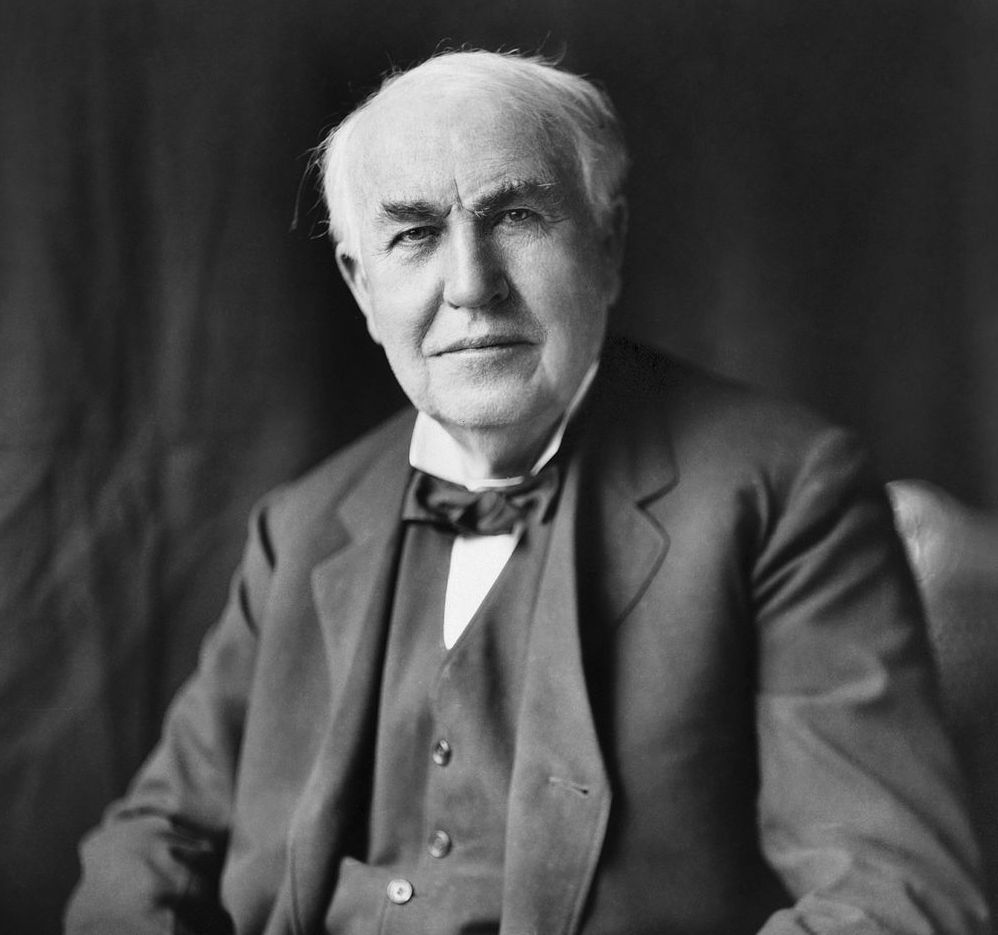
One of the traits that often define some of the greatest thinkers and inventors in history is the willingness to try and fail at something and then try again and again. Thomas Edison once said, “I have not failed. I’ve just found 10,000 ways that won’t work.” Imagine how many great inventions we would not have had if Edison had let the fear of failure stop him from trying. He was stronger than his excuses.

It is in substituting the word “fears” for the word “excuses” that the saying reaches its full potential. Excuses are just rationalizations for our inability to overcome our fears. Those fears cause us to stop and maybe never venture a step further. We may even have some understanding that as George Addair said, “Everything you’ve ever wanted is sitting on the other side of fear.” Yet, many just make excuses for not moving forward and trying to get to that “other side”.

Are you stronger than your fears (excuses)? What fears have you let stop you? Are you really happy with the excuses that you’ve created? What can you do about that?

Perhaps a start to overcoming the fear that paralyzes you is found in this quote – “Fear is only as powerful as the attention you give it.” ― Glody Kikonga

Think about the news stories that you see from time to time about someone rescuing an injured driver from a burning car. Often when they are interviewed later someone will ask the hero of the story, “Weren’t you afraid of getting burned or of the car exploding?” Often the answer will be something like, “I didn’t think about it, I just saw the need and acted.” The hero didn’t stop to give those fears any attention. Action overcomes fear by pushing it aside and focusing your mind upon the tasks at hand.

man jumping off cliff

So, maybe the key to being stronger than your excuses (fears) is to jump into action, rather than sitting there thinking about all of the ways that you could fail. Once you are in motion, taking actions, you will find that your amazing mind refocuses upon problem solving, rather than excuse creation. You may initially fail, but you will learn from that failure and setting out on another try will be that much easier.

Allow yourself to try and fail and try again. You are stronger than your excuses, so let yourself do whatever it is that you have been making excuses for not doing.


Imagine it, invent it…

December 6, 2022

“No amount of skillful invention can replace the essential element of imagination.” (Edward Hopper)

Invention is basically the application of engineering to something that is first imagined. Architects imagine structures that have never existed before, and builders engineer ways to actually build them. Inventors must first imagine something before that set out to invent it. It’s not that Thomas Edison was just tinkering with a random set of parts that were lying about his shop when he invented the phonograph. Edison first imagined that there must be a way to capture and later play back sounds.

Sometimes one person has the imagination to dream up something, but another person actually makes it happen. Many of Edison’s inventions were implimentations of ideas that someone else first imagined. Quite often there may be two or more implementations of an imagined idea resulting from different inventive tracks – witness the inventions of HVS and Blue-ray video recording and playback technologies. Factors other than the best engineering result also often enter the picture to determine which invention eventually wins in the market.

How do we apply these thoughts to our lives? One way is to spend some time imagining a better you. What would that look like and how would it feel? There is certainly enough help available in the marketplace to allow one to “engineer” a better looking you. Just think of all the products that we are bombarded with on TV and in social media that claim to allow women to look thinner or more beautiful. Men are certainly not left out of that market with many products that proposed to make us more attractive or at least less offensive to women.

But, how do we “engineer” a better person, a kinder, gentler and more intelligent and thoughtful human being. Where is the instruction manual for inventing that person? I would point to the Bible and the instructions that Jesus left with his disciples on how to live their lives.

At the heart of Jesus’ teachings is the concept of moving from selfishness to selflessness – to love your neighbor as you love yourself. If you can get to that base, the rest of the attributes that might be used to define a better person just seem to fall into place. Rather than try to identify specific scriptural passages that make this point, just read one of the major books of the New Testament. Jesus left lots of instructions which, if followed, will result in a better you.

The new you that you can invent was there all along. It just takes your imagination and a few helpful instructions to bring out (invent) that person.

Imagine that and then invent that.  


Try imagining success…

August 22, 2022

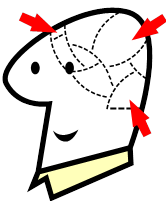
As this graphic points out, we are oft limited by our own imaginations.

If you imagine failure instead of success, you will probably achieve what you have imagined.

I have written many times about how professional athletes, especially golfer, use a technique called visualization to rehearse and “see” a successful shot before they actually executing it. I suspect than none who use this technique imagine themselves dubbing the shot or hitting a “duck hook” instead of the perfect drive. Many amateurs, on the other hand approach their shots with disaster in mind and  achieve that imagined result more often than not.

Limits are barriers to further progress or success. Sometimes there are very real limits, governed by things that cannot be changed, no matter how hard or long one may try. Much of time, however, the limits that you “see” are self-imposed figments of your own imagination.

Resolve to imagine success instead of failure and most “barriers” become just challenges for which you can imagine a solution. See yourself overcoming those challenges instead of being stopped by them.

There was a story on the national news recently about a man who was born with no arms and only stubby little legs. The story was not about the powered wheelchair that he uses to move around the house, but about him driving a car for the last 15 years. Think for a moment about how many obstacles he had to overcome to achieve that. Put some of your own challenges up against that and you might see how small they really are. With the help of some very inventive people who specialize in modifying cars for the disabled, he was able to realize his vision of driving himself around.

For most of us, who are not so severely handicapped, we can find help in overcoming life’s challenges by enlisting the help of a very imaginative God who will find ways for us to persevere and overcome life’s challenges. Sometimes God changes the destination and outcome rather than helping us achieve some imagined goal, but He always helps us see how to be happy with where we end up.

So, starting out this week, don’t waste time imagining limits for yourself. Rather, visualize the success that you hope to achieve and set out to realize that vision. Reinforce that vision of success by soliciting God’s help. If you believe in God there are no limits. Believe that instead of imagining limits.


Just beyond reason and logic…

November 22, 2021
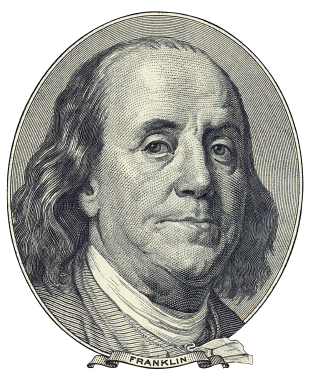
Portrait of U.S. statesman, inventor, and diplomat Benjamin Franklin as he looks on one hundred dollar bill obverse. Clipping path included.

I seldom see quotes from Ben Franklin that I disagree with, but this is one – “The way to see by faith is to shut the eye of reason.”

Perhaps Franklin meant to advise us not to let reason get in the way of faith. Many great scientists and thinkers, including Albert Einstein, have resolved any conflict that they might have had between faith and reason.

“The more I study science, the more I believe in God.” (Einstein)

I prefer to think of it this way. Faith lies just beyond the boundaries within which reason and logic try to constrain our imagination. Hope also lives in that nether land that is, by definition, beyond our ability to comprehend using logic and reason. In fact, it is hope that brings faith into focus and allows us to see what we do not need to understand to believe.

I think that one can use reason and will logically arrive at Faith as the only answer to the great questions of life – the Why’s and How’s and What happens next questions. At some point one accepts that there are no earthly answers to those questions and realizes that all logical paths lead back to the same place – faith in something that we cannot comprehend but which must exist in order for us to exist.

At the beginning of each episode of the TV show The Twilight Zone the narrator said – “You’re traveling through another dimension, a dimension not only of sight and sound but of mind. A journey into a wondrous land whose boundaries are that of imagination. That’s the signpost up ahead – your next stop, the Twilight Zone!” Faith goes well beyond the twilight zone because takes us beyond the limits of our imaginations.

So what Franklin might have said, instead, is, “The way to see by faith is to look beyond what we can see with the eyes of logic and reason and to use hope as your lens to focus upon what is important.”

Open your eyes to faith. See your future through the lens of hope.


Impossible is a state of mind…

April 19, 2021

“Impossible is potential.  Impossible is temporary.  Impossible is nothing.”  (Muhammad Ali) That was the quote in today’s installment to the Jack’s Winning Words blog. Pastor Freed when on to write about all things being possible for God.

I think that what Muhammad Ali was referencing was more along the lines of the headline for this post – that impossible is a state of mind and not an absolute. Impossible just means that you don’t see how it can be done, yet.

Our minds serve to empower us, but sometimes they hold us back, due to our limited imagination. Things become impossible because we can’t imagine them being possible.

I’ve written about a little trick with the word impossible before, but it bears repeating. If you just move the first two letters one space away from the rest of the word and insert an apostrophe between them, the word impossible becomes the statement “I’m possible”.

It was once impossible to conceive of a man walking on the surface of the moon, yet today we know that it is possible. Getting from Europe to Asia without going around Cape Horn was once thought to be impossible, yet today we have the Suez Canal which makes that possible. And joining the Atlantic and Pacific Oceans – impossible. Hello, Panama Canal.

Things that were impossible were made possible by someone having the imagination to fuel the thought “What if?” Asking “What if” challenges the impossible by exploring new alternatives and refusing to be stopped by “conventional wisdom”.

The same is true in our everyday lives. We limit ourselves by defining things to be impossible – a job, a date, a new house, whatever. We don’t allow our minds to imagine it being possible. We don’t ask, “What if?” Or maybe, every time we ask what if, our imagination quickly goes negative, and we only imagine bad outcomes. We can be like mimes, stuck in an imaginary box of our own making.

We would be much poorer, indeed, if people like Robert Fulton, Thomas Edison, Henry Ford or Steve Jobs, had let negative thoughts and even early failure stop them from imagining that the things that they wanted to do were possible.

So, rather than give up your hopes and dreams as being impossible; let you imagination loose and start asking “What if?” Take your huge dream, that seems so impossible all at once, and break it down to smaller steps that you can imagine accomplishing one at a t time. I don’t imagine that the first shovel of dirt dug out of the path of the Suez Canal (or the Panama Canal for that matter) was a big thing, but shovel after shovel turned the impossible into, I’m possible.

Figure out what step you can accomplish today towards making your dream a reality. Look at that little step and say, “I’m possible”, and get it done. Step after step, day after day, you will be on your way to making your impossible dream a reality. Impossible is a state of mind and you’ve changed your mind on it. You are now thinking “I’m making it possible.”

If you need a little help getting into that positive frame of mind, just ask for it in your prayers. Once you have God on your side it is easier to imagine that all things are possible (especially for GOD).

Have a great day and a week full of possibilities. Make I’m possible out of your impossible.


Just imagine…

October 30, 2020

In today’s post to his blog, Pastor Freed used this quote – “Where there is no imagination there is no horror.”  (Arthur Conan Doyle)

Halloween is a time when we let our imagination of scary things run amuck. Our imaginations can also take us to good places and provide the fuel for hope for a better future. Sometimes we call imagining without any particular direction in mind daydreaming. We let our imaginations run away with us.  John Lennon challenged our ability to imagine things in his song – Imagine.

There is an interesting, and one might say necessary, interplay between imagination and faith. Indeed faith cannot become strong in someone’s life without imagination. Religion is built upon things that we cannot physically see; rather we must believe and try to  imagine what God and Heaven and other major part of our religious beliefs must be like. That is both good and bad – good because our imagination allows us to wrap our heads around what would otherwise be enigmatic, but bad because it confines our understanding to the pitiful limitations of our own imaginations.

We are told that we will experience a peace in the afterlife that is beyond understanding and then we try to imagine what that must feel like. We are told that Jesus has gone to prepare a place for us in his Father’s hose, a place with many rooms and we imagine a giant Motel 6. We buy into the cartoon images of people with wings standing around talking to each other and the thought that we will again “see” everyone who has gone before us, as if we are at a vast family reunion.

Like most, I have tried to imagine what joining all of the souls that have gone before in the afterlife might be like. The best image that I can conjure up is the final scene for a character from a sci-fi TV series. The character I remember is Odo. Odo played by René Auberjonois, is a fictional character in the science fiction television series Star Trek: Deep Space Nine. He is a member of a shapeshifting species called Changelings and serves as the head of security for the space station Deep Space Nine on which the show is set. In his final scene at the end of the series, Odo rejoins the “great link” a vast ocean of shapeshifter souls, each a tiny drop in the is ocean and yet all joined together to make up the formless body of the “great link” ocean. He dives into the ocean and is gone, but still there. Imagine your soul joining all of the souls that have gone before in heaven (the “great link”) where you are nowhere and everywhere at once, all connected, yet each separate. Imagine that.

What do you imagine when you think about God and heaven? I know that you are imaging for something better than a Motel 6.


Imagine that…

May 8, 2020

From today’s post to the blog Jack’s Winning Words, comes this quote – “The best use of imagination is creativity.  The worst use of imagination is anxiety.”  (DeepakChopra)

It is hard not to be anxious these days. Every unmasked stranger that we pass by, we imagine is a COVID-19 carrier who is exposing us to the virus. Every surface that we touch might have last been touched by an infected person, so we wash our hands or use sanitizer. Every night the reports on the news shows reinforce our worst anxieties. What are we to do?

For one, we can turn our imaginations to being creative about staying safe. We have already seen people being creative about making their own facemasks and many have had to become creative about other things like gloves or making their own hand sanitizer. While we are staying home, we must use our creative side to avoid becoming bored, especially if we have younger children who must be kept busy ot occupied.

We can turn our imaginations towards finding ways to communicate with those whom we cannot visit right now. One doesn’t have to use technology to sit down and write a letter or pick up the phone and make a call to someone that we can’t visit with. Some have used their imaginations to create innovative posts to social media.

So, let’s all use our imaginations in positive ways to get through this crisis. Let’s be creative about how we protect ourselves and others. Let’s create our own “new normal”, rather than just being anxious about it. As Jack pointed out in his blog, we have a God who has advised us – “Be not anxious, for you have a God who cares for you and will never leave you.” 

Imagine that!


So, use your brain already…

June 25, 2015

“Humans are distinguished from other species by a massive brain that enables us to imagine a future and influence it by what we do in the present.”  – David Suzuki

brain mapHumans may not have the most massive brain in terms of pure mass; although I’m not sure what other species I could point out that might have bigger brains. Certainly some dolphins have sizeable brains and one would think that some apes have brains that are nearly as large. It’s hard to imagine what the size of an elephant’s brain may be. Both apes and dolphins show a developed intelligence and ability to learn that is quite impressive; however, it’s that part about imagining a different future and then making that future happen through or plans and actions that really sets us apart.

In a recent post I talked about visualization as a technique to achieve success. Visualization involves not only imagining the future but also imagining how to get there – the plan and the execution of that plan. Visualization lets us imagine the perfect execution and the perfect result; it lets us practice in our minds.

Planning and problem solving are also parts of influencing the future to achieve the future that we have imagined.man daydreaming Unlike visualization, which focuses on the execution; planning focuses on the preparation. Planning is the process whereby we fill in the details and beak the journey to that imagined future state into small, executable steps. Problem solving involves adjusting those plans when we encounter the unexpected or when the expected doesn’t go as expected. While problem solving is part of the execution step it involves little side trips back to the drawing board to react and re-plan in order to overcome setbacks. A massive brain helps with those things, too.

Of course, also lurking in that massive brain for many are such things as fear, uncertainty and doubt. There probably are parallels to those things in other animals. We have likely all seen animals cower in fear or stop in their track, uncertain as to whether to proceed. Other things that impact our ability to get to the future that we’ve imagined may involve our emotions, which also reside in that massive brain. Sometimes emotions blind us to obvious cautionary signs or perhaps egg us on when caution would be the better course of action. woman thinkingSome emotions help and some hurt our efforts to get to the imagined future, but all probably have some impact on the speed at which we advance.

An interesting evolutionary quirk is that our massive brains seem to produce a cumulative positive effect on further brain development .As we invent things to get to that better imagined future we continually make out present better and easier. Our massive brains allowed us to evolve from hunter-gathers focused almost solely upon survival into what has become an information-driven society. We created things to do the hard work involved in surviving and that allowed us more time to spend thinking about that different future and the other things that we needed to make. What has a dolphin or an ape ever invented? They may be smart enough to adapt tools from things that they find in their environment, but they never go to the next level. Sure they have “social structures” within groups of their own species, but those are mostly rudimentary hierarchies based upon survival or mating habits.

So, here we are with our massive brains; what do we do with them? Our calling is to use them to imagine a better futureaha moment and then make it happen. Do you spend time every now and then just thinking about the future that you would like to have? What do you do then? Do you just write that off as wishful thinking and go back to your “normal” life? Why? Why not take the next steps and turn your imagination loose on the “how” and not just the “what” of your imagined future. Don’t just imagine something that floats out in front of you like a mirage; image also the road to get to that dream future. See the steps and lay out a plan. Then you can begin using visualization to practice executing those steps. It’s all in there somewhere, in your massive brain, if you will just take the time to use it.

Have a great day and take a little time to imagine what you want and where you want to be in 2 years or 5 years or 10 years. That’s the future that you want to imagine. Then imagine a way to get there. Imagine that.


Reclaim your ability to play…

June 15, 2015

Wow! Some things just hit closer to home than others and this post on tickld.com hit very close for me –

http://www.tickld.com/x/this-guy-just-changed-the-way-we-seecalvin-and-hobbes

This post changes how you see the old favorite comic strip Calvin and Hobbes.  I loved that strip and was bummed, like so many others, when it was discontinued. More importantly, I could relate to the scenario that was the premise for the strip. I suspect that we all had some imaginary friend like Hobbs when we were little. As an adult I find myself “voicing” responses in conversations with my dogs Sadie and Skippy. They are my current Hobbs’es.

I’ve written here before about losing the ability that we had as children to play and to imagine things and friends to play with. I love the saying, “We don’t lose our ability to play because we get old; we get old because we lose our ability to play.” The story above about Calvin on his deathbed reestablishing the ability to see Hobbs as a real live lion again and then passing Hobbs on to his grandson is poignant and touching.  I literally can’t read this story without tearing up.

pillow fightThere is much more than just the loss of innocence that occurs when we “grow up”. We are taught how to suppress the things that allowed us to have the type of fun that is a part of childhood, to be silly and to summon our imaginary friends when we needed them. We are forced to “fit in”, to “act like an adult” and “be serious.” Soon we lose the ability to giggle and laugh out loud at funny things that happen in life, because that wouldn’t be proper. We learn to “keep a stiff upper lip”, to “deal with it” and to “shake it off”. What we lose in that process of growing up is our sense of wonderment in the world around us and our ability to play without keeping score.

As I get older, things like this little story take on greater meaning. I try not to get hung up on the inevitability of death, but rather to recapture some of the freedom of being a child and being able to play or imagine things without regard to what others may think. I go to the gym most days and, even though I’ve discovered that I can no longer do many of the things that I once could do, I keep trying.  I may get a few people saying, “Look at that old fool; what does he think heboy imagining is, a kid again?” Don’t I wish.

Now, you’ll have to excuse me; I’ve got to go have another grand adventure with Sadie and Skippy. We have such great talks on our walks.