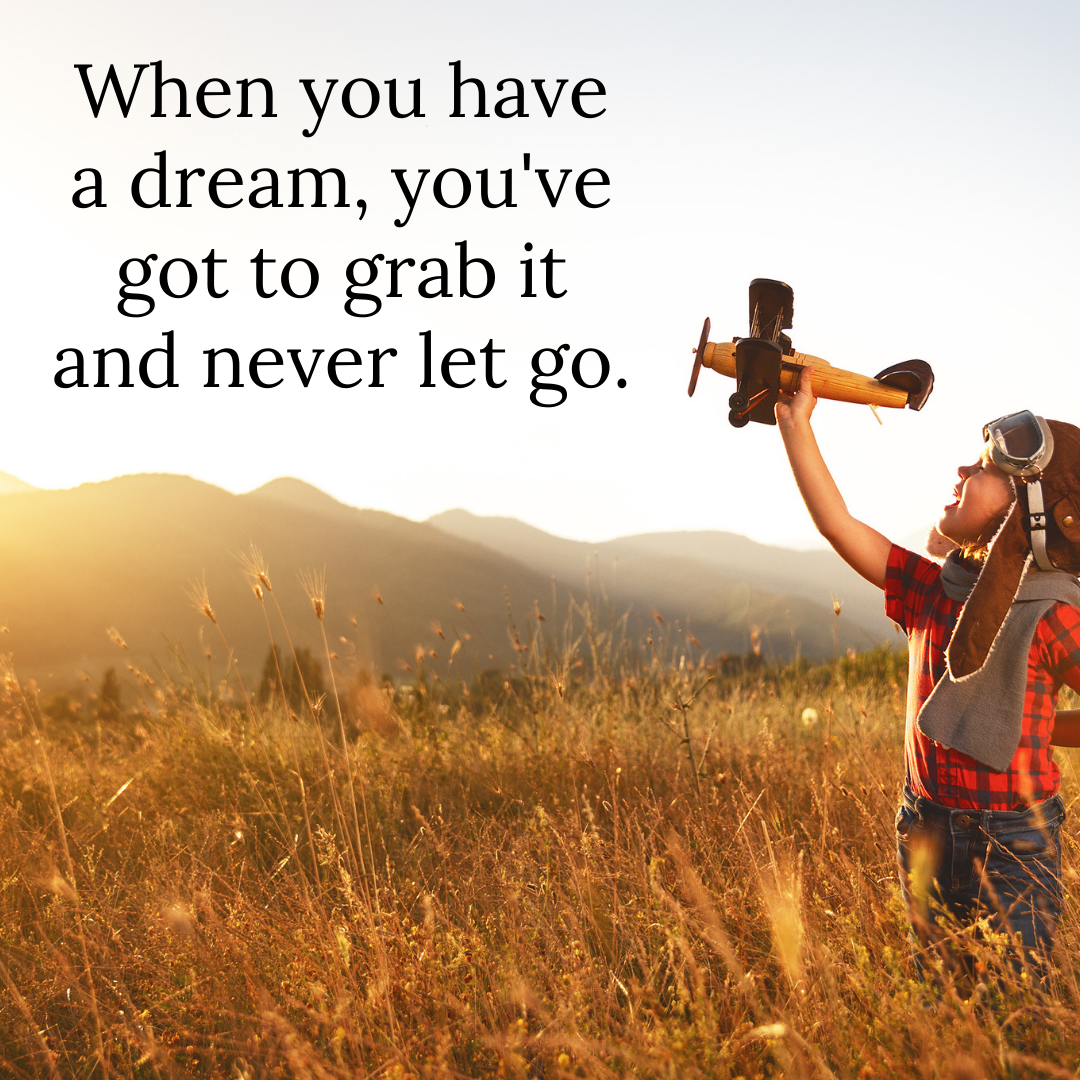
In my role as a Realtor® I get a daily email with an inspirational graphic in it. Sometimes I’ll notice that a couple of them just seem to go together to create an entirely new inspirational thought. Such is the case today.
These two graphics came to me weeks apart, yet they just seem to work together –
-AND-
I think the glue that holds these two thoughts together is faith.
One can have dreams that are mere idle musings and it is easy to let go of them. Life changing dreams are seldom so casual and often involve appeals to God for help in achieving them. That brings the second graphic into play. One must have faith to keep pursuing their dreams, even in the face of long delays or temporary setbacks.
Dreams are seldom accompanied by detailed plans and an exact timetable. Initial prayers are seldom requests for the patience and perseverance needed to achieve one’s dreams, yet that is what is most often required. Instead of questioning God as to why he hasn’t helped you achieve your dream yet, it is better that you should thank him for helping you get as far as you are and try to understand the guidance that he is giving you. If nothing else, at least acknowledge that it is not over yet, so your dream is still alive. Keep praying for the patience and perseverance to continue pursuing your dream.
We are told in the Bible –
“Blessed is the one who perseveres under trial because, having stood the test, that person will receive the crown of life that the Lord has promised to those who love Him.” (James 1:12)
That quote from James also alludes to the real payoff of faith; not so much the achievement of earthly dreams, but the realization of eternal life through Jesus. Perhaps that points out to us that we have not been dreaming big enough.
If you haven’t realized that yet, don’t worry, it’s not over yet.
In his post this Monday to his blog, Jack’s Winning Words, Pastor Freed used this quote – “Doubts are the ants in the pants of faith. They keep it awake and moving.” (Frederick Buechner) Pastor Freed went on to say that even he has doubts from time to time; however, he has found those doubts to be things that actually strengthen his faith.
How can having doubts about your faith make it stronger? I think the answer is that doubts throw you off-center; they trouble your mind and spin you away from the beliefs that your faith is based upon. Doubts are distractions and sometimes major events in one’s life can cause very big doubts and major distraction from our beliefs. This is especially true when we lose a loved one or when a major event causes seemingly catastrophic disruption to our lives. Think of the doubts that people in Ukraine must be gong through right now. Many times those doubts center around the thought “How could God let this happen to me?”
So, there you are, spinning further and further away from your faith. How do you reestablish your faith, re-center yourself and regain control? How do you actually make your faith stronger in the face of doubts? I think Jack answered that question in an earlier post using a quote sent to him by one of his followers –
“Your life becomes a masterpiece when you learn to master peace.” (Sent by RVB)
We say “peace be with you” often in church or maybe “be at peace” during a conversation, but how does one master peace? It all gets back to faith. The reason that one has ants in their pants is their inability to control things, to solve the unsolvable problem or face the reality of a temporary failure. We spend sleepless nights agonizing over the “coulda, woulda, shouldas” of life instead of accepting what has happened and moving on.
The quickest way to move on is to acknowledge your faith and accept that you need God’s help. I use the little prayer, “Not my will but thy will be done”, but you can use a prayer as simple as, “Yo God, a little help here.” The point is not to create long, flowery prayers, but to surrender your life to God and let him take control. Giving up the futile fight to control everything puts you back in control of your life by putting you back in control of how you react to the events of life. It puts you at peace.
So, Pastor Freed is right that those doubts actually strengthen one’s faith by forcing us to keep returning to that faith as the best and only answer to life’s challenges. If your life feels like you are standing on an anthill, circle back to your faith and ask God for his help.
“And the peace of God, which surpasses all understanding, will guard your hearts and your minds in Christ Jesus.” (Phillipians 4:7)
I like a quote that I saw today – “Don’t try to figure out what other people want to hear from you; figure out what you have to say.” (Novelist and poet Barbara Kingsolver)
Too many people spend way too much time trying to figure out what they think others want to hear from them, rather than thinking about their position on things and what they have to say about it. Perhaps they have a well thought out position, but the real issue is whether or not they need to (or should) say anything at all.
It’s a good idea, before you share you opinion or view on something, to ask yourself two questions – 1. has anyone asked for my opinion or view on this; and 2. will sharing what I have to say have any positive impact on things? If no one has asked for your opinion; or if stating it is just going to add to an already negative situation, then consider just saying nothing.
Silence is often misconstrued as wisdom; so It is better to keep your mouth shut in situations, where people might consider anything you say to be an indication of your ignorance or prejudices, than to open your mouth and remove all doubts.
Figuring out what you have to say about something forces you to confront and hopefully re-examine the basis of whatever beliefs you have about it. It is better to admit, “I really haven’t thought about that” than to spout off some ill-conceived response just to have something to say.
It is interesting, and somewhat alarming, that so many politicians do exactly what Kingsolver warns about. They change their position of things, or at least how they state their positions, to fit the moment – the speech they are giving or the interview they are doing. They are often called out on that and then the real weasel-wording starts.
In our personal lives it is important to give thought to our beliefs and positions on things before expressing ourselves and to stick with those beliefs and positions unless further thought or evidence proves that we were wrong and need to reconsider. And, if we have nothing to say, then don’t say it.
As a Realtor® I have often written blog posts on my real estate blog about the three C’s of real estate – Condition, Clutter and Cleanliness. Those three things are critical factors in determining the price and speed at which a property will sell. In days past I would also usually also write about the three-P’s that that I advise the sellers about – Price, Patience and Perseverance. In these days of low inventory and rapidly rising prices the Three-P’s advice seems to matter less, but the three C’s still have a big impact on how quickly a property will sell and for how much.
In today’s post to his blog, Jack’s Winning Words, Pastor Freed uses this quote from one of his followers – “The 3 C’s of life: You must make a CHOICE to take a CHANCE, or your life will never CHANGE.” (Sent by Kathy M)
Certainly, that is good advice. One must stop and think about the direction that life is taking them in and make thoughtful choices about changing that direction by taking a chance on a different direction. Each day, when you wake up you arrive at that inflection point of continuing down the path that you are on or making changes in your direction.
I will submit that there are also three P’s to life which you can also use to control your future – Patience, Perseverance and Prayer.
The first two P’s are often in short supply in today’s fast-paced world of instant gratification; however, events in our lives often unfold at a pace that can be frustratingly slow. Perhaps that’s what makes the third P so important.
As you start each day, if you take time for a little prayer, it will give you the opportunity to ask God for the Patience and Perseverance that are required in life. It may also allow you to recognize that, whatever the small amount of progress that you made yesterday, it was still progress towards your goals. Be thankful for that and ask God’s help to make even more progress today.
I have posted here in the past that one does not have to compose long, windy prayers. God understands your needs, so a little prayer that I like to use, “Not my will, but thy will be done” can work. Even using a sports phrase like, “A little help here” works with God. The important thing is not how you ask but THAT you ask for God’s help. We have been told – “Ask, and it will be given to you; seek, and you will find; knock, and it will be opened to you.” (Matthew 7:7)
So, take to heart the advice from Kathy M and implement the three C’s in your life; but also practice the three P’s of life. If you have the courage to take the chance to make the changes that you see need to be made in your life, also have the faith to practice the three P’s.
Have faith in your new direction. God is with you.
This quote from the Jack’s Winning Words blog got me to thinking about how we learn from the past.
“How we handle what’s ahead of us will be determined by what we learned from everything that’s behind us.” (Craig Lounsbrough)
The key word in that quote is “learned”. All of us have some time behind us, some of us more than others; but, did we learn from the things that are in our past. Some are destined to repeat the mistake of their past simply because they did not take the time to try to learn from those mistakes.
Learning is not necessarily an automatic process. There are some things that our brains process without us giving it a lot of thought, like not touching a hot stove because it will burn us. Most things that we should be learning from do require that we stop ad think about what just happened and what we can learn from it.
Some things that we learn from also require that we admit that we were wrong in our decision making process and require us to examine the “knowledge” that we had at the time upon which we based those decisions. That can be an ugly process because t often brings us face-to-face with our prejudices and baseless fears. Learn from that.
If you stop and think about a situation and the answer to your questioning about why you reacted as you did is ”I did not trust that person or I feared that person because their skin is a different color than mine”, then you have come face-to-face with your own prejudices. Learn from that.
Maybe, when you think about something that just happened that went wrong, you will find that you made some bad assumptions or based your decision on inaccurate or untrustworthy data. Learn from that.
The key to learning is always to stop and think about it. Often you will find that your knee-jerk reaction to a situation is not what you would do once you have had time to consider your response. Maybe just learning to take the time to think is the real learning in that.
Maybe it would help if you actually made time each morning to think about the things that happened yesterday or the day before and ask yourself, “What can I learn from that?” Perhaps you should just add to your morning prayers, “God, please help me learn from the past, so that I might be a better person in the future.”
Never stop learning and never stop trying to learn from your own past. That way you will be better prepared for what is ahead today.
Two recent quotes from the Jack’s Winning Words blog this week seem appropriate to use together –
“It’s hard to measure ‘almost’ because ‘almost’ doesn’t matter.” (Rip: Yellowstone/season 1 episode 4)
“You are capable of more than you know.” (Glinda, the Good Witch)
The word “almost” has got to rank right up there with “Coulda, Woulda, Shoulda” in life’s list of often used laments.
At least those who “almost” won at whatever they were doing have the satisfaction of having tried, maybe even having tried their best and just fallen short whereas those who coulda, woulda and shoulda didn’t even try.
That effort to attempt something makes “almost” actually matter. Out of most cases of “almost” often comes the resolve to keep trying. The recently concluded Winter Olympics featured television story after story of those who trained for years for the chance to compete yet didn’t win. An oft heard ending to those stories was the phrase, “I’ll be back.” In many cases, even though they did not win, the athletes achieved person bests and proved to themselves that they could compete at that level. In those case, “almost” strengthened their resolve to keep training and keep trying.
That brings us to the second quote from Glinda the Good Witch in The Wizard of Oz. The people who continue the pursuit of their dreams even in the face of “almost” embrace the thought that they are capable of more.
There was a story on the local news last night about a boy from Mumford High School in Detroit finally winning what he has been working toward for four years. He is a wrestler and began wrestling as a freshman because his coaches saw more in him that he saw in himself at the time. He did not make the state wrestling championships that year, but the next the year he went to the State competition and came in 8th. Last year, as a Junior, he went to States again and finished second – he almost won. He kept at it and this year was the State Champion in his weight class – the first wrestler from Mumford to ever win a state wrestling championship. He bought into the faith that his coaches initially had in him.
The lesson today is not to let the disappointment of “almost” drag you down into the morass of “coulda, woulda, shoulda”; but, rather, to use it as motivation and take Glinda’s advice to continue to strive for those things that you didn’t know you are capable of. In life that can mean going for that job that you didn’t think you could get or maybe asking that person out who you didn’t think would accept.
Wayne Gretzky famously said – You miss 100 percent of the shots you don’t take.” So, take your shots in life; especially if you almost made it last time. You are capable of more than you know. Keep trying.
A post to the Jack’s Winning Words blog some time ago popped up in my mind again today and I decided it was time to write about it.
“Do the best you can until you know better. Then when you know better, do better.” (Maya Angelou)
Angelou has often been called America’s conscience for the advice that she provided in her poetry and writings.
Most of us go through life making decisions based in part (sometimes in large part) on things that we believe rather than things that we know.
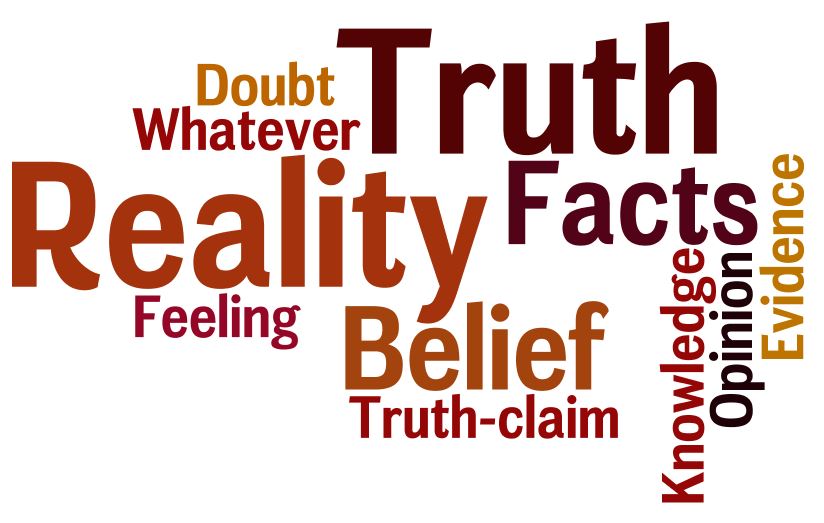
I think we all carry around baggage with us of beliefs that we mistake for facts. In recent years we have become more sensitive to the fact that others may be distorting the facts in order to channel our beliefs in a direction favorable to them – it is standard fare in politics were the phrase “Fake News” has gained traction. That is one reason that it is important to always challenge whether things driving our decisions are just based upon beliefs and not proven facts.
Every time you start a thought or start talking with the phrase “I know”, stop and think about that. Do you really “know” based upon observation or proven facts, or do you just believe, based up something that you heard from someone else or maybe saw on the Internet. Much of the time you may discover that you don’t really “know”, you just have believes. Most fears are based on beliefs rather than facts. Those baseless fears are the foundation of prejudice and hate in many.
There are many (if not most) things in life that we cannot prove for ourselves, but we can at least chose to believe (know) things that come from a proven source with direct knowledge or proof from scientific testing. It is tragic that so many people have died during the COVID pandemic because they believed some cockamamie things they saw on the Internet or heard from someone who was not a health care professional. All the while there was validated advice from health experts that those so-called cures or preventatives were just like the snake oil; of old – total BS.
Maybe the best advice is to stop yourself every time that you start to think or say, “I know”, and think about whether you really know or just believe that what you are thinking or about to say is valid. An even worse start to any thought or thing to say would be, “I assume(d)”. Assumptions are not only unproven they are literally things that you made up yourself, without any evidence to support them.
So, when you challenge what you “know” and take the time to sort out the truths from the beliefs, you actually end up knowing better. Angelou’s advice then makes more sense and is easier to heed. Why would you continue to make bad decisions based upon bad beliefs when you now “know” better?
There are idle musings called “daydreams” which one never really expects to come true; but they are a fun way to pass the time. Then there are the dreams that define your aspirations in life, the things that you hope (or maybe wish) you can accomplish to have a better life. For some, those aspirations never become reality because they fail to take any action to realize them. Others overcome seemingly impossible odds to achieve their dreams. We often see stories about such people on the nightly news shows.
Most of us are somewhere in the middle. We have dream and aspirations and most of us take some action to turn those dreams into reality. Some lack the resolve to stick with the pursuit of their dreams when times get tough. Others make whatever sacrifices are requited to keep making progress. Persistence seems to be one personality trait that dictates which group you identify with. Calvin Coolidge put it this way –
“Nothing in this world can take the place of persistence. Talent will not: nothing is more common than unsuccessful men with talent. Genius will not; unrewarded genius is almost a proverb. Education will not: the world is full of educated derelicts. Persistence and determination alone are omnipotent.”
I would add patience to this list of traits. The impatient seldom stick with things that don’t provide immediate gratification.
A big part of the “action” needed to achieve ones dreams is thoughtful planning. Taking time to plan allows you to look at a seemingly big challenge and break it down into small, more easily achieved steps. It also allows you to prioritize the use of your time. Tackling those small steps one at a time also allows you to pause and congratulate yourself along the way, which encourages further action.
So, look at the achievement of your dreams as a journey and plan your itinerary as you might plan a real trip. Imagine that journey like you might plan a bicycle trip across the United States. It is a long trip, but one that can be accomplished in smaller, manageable steps, with segments of riding (action) followed by stops to rest, evaluate and reset if needed, and then more riding. Just as you might on that imaginary bicycle trip across the U.S., you can also pause to enjoy the places that you pass through along the way. You might even keep a journal of your progress, so that you can see your successes.
No matter what analogy you choose to use for the actions needed to achieve your dreams, never lose sight of the final goal. As you make progress, you may find that a slightly different final goal makes more sense for you and that’s OK. I know a young woman who started out with a dream of being a physical therapist and then, as she better understood the health care field, decided to dream instead of being a nurse. She actually when on to become a registered, neo-natal care nurse and has dreams that go beyond that.
Never stop dreaming and never stop taking actions to achieve those dreams. Only you can make your dreams come true.
Life is a continuous process of discovery and our reactions to those discoveries. A quote from legendary basketball coach, John Wooden seems to be the most appropriate way to react to the twists and turns of life.
“Things work out best for those who make the best of how things work out.”
Railing against things that have already happened or denying them is a gigantic waste of time and changes nothing. Rather, spending your time internalizing recent events and making necessary corrections in your life to move forward seems a much better course of action.
In today’s post to his Blog, Jack’s Winning Words, Pastor Freed used this quote from Jane Goodall –
“Lasting change is a series of compromises. And compromise is all right, as long as your values don’t change.”
So perhaps we could combine the two thoughts and surmise that things work out best for those who are able to compromise and go on with life. But, what about that “values” part of Goodall’s quote. What if it is your “values” for which you need to seek compromise?
There is no generally applicable set of universal values or core beliefs in almost any society today. That is because most modern societies are not made up of people all from the same ethnic, religious or geopolitical backgrounds. The diversity of the population that brings strength to modern societies also dilutes the “values” of any one group. This results in the need for compromise even in the values upon which judgements are being made. If in no other way, it forces us to consider that someone else may have a completely different point of view on what is right and wrong in any given situation, based upon a different set of core values.
At the root of many of today’s seemingly intractable issues, such as LBGTQI rights, abortion and the role of government in our lives are differing sets of values which make compromise seem difficult. When you spend time trying to think about issues like that, you may quickly arrive at the correct conclusion that how you act or react to those issues is your decision and your decision alone. What “everybody knows” or “everyone says” has no real bearing. It is your personal responsibility to decide how you will act or react to the situation. That forces you to examine what you think are your “core values”.
If you are honest with yourself in that evaluation of your values, you may realize that there is not a value at the core of some of your actions/reactions at all; but, rather, that fear is the driving force in your decisions. Even ignorance in any situation leads to fear of the unknown as the driver for reactions.
The step after becoming more aware of what values (if any) are controlling your action is to examine whether compromise may be needed. That is really the reaction that Wooden was alluding to in his quote – making the best of how things turned out. Every fear-driven, knee-jerk reaction is just a “jerk” reaction. You need to stop and think before acting or reacting.
Maybe if you stop and at least think, “I have the power to control how I react to this”, it will force a better response. At a minimum, you will have avoided a knee-jerk reaction and at best you will react based upon your values rather than your fears. If it still doesn’t turn out for you, maybe then is the time to reexamine your “values” and perhaps seek a compromise.
How are things tuning out for you? Who decides? Perhaps one last quote will put you in the right frame of mind to answer that question –
“The most common way people give up their power is by thinking they don’t have any.” (Alice Walker)
You have the power to decide how things turn out for you. Use your power.
I saw this quote on-line somewhere and decided to save it – “It takes courage to grow up and turn out to be who you really are.” – E.E. Cummings
It seems to pair nicely with one that I saved from the Jack’s Winning Words blog – “The thing about chameleoning your way through life is that it gets to where nothing is real.” (John Green)
Too many young people try to chameleon their way through life, emulating the look and life of their favorite rock or movie star or maybe just someone else at their school or in their circle of friends. Some fear being unpopular of they allow others to see them as they really are or maybe they just don’t think who they really are is very interesting. It takes a while for the young, or any of us, to discover and understand themselves. It may take even longer to accept that understanding and have the courage to be who we really are.
Another quote that I’ve had hanging around for quite some time seems appropriate to this post – “If the shoe doesn’t fit, must we change the foot?” Gloria Steinem
Obviously, the foot is who you really are and the shoe is who you have been trying to be (or to be like). You must have the courage to be who you really are and to learn to love being that person. I’ve posted here a few times on loving yourself, which means loving who you are. If you can’t love who you’ve become, work on becoming a better you, someone that you can love, not on trying to be like someone else.
So, stop being a chameleon, get real and summon up the courage to be who you really are. You’ll feel better about yourself and I think you’ll find that others feel better about you, too. Those “friends” who only liked the person that you were pretending to be weren’t really your friends at all. You will find new friends who are attracted to and like the person you really are, and they are your true friends.


 Posted by Norm Werner














 NormsMilfordBlog