From a recent post to the Jack’s Winning Words blog come these words of wisdom – “Right or wrong, make a decision. The road of life is paved with flat squirrels.” (Anon)
The Anon family has provided some of life’s best quotes and written material (see my post on Anon). Today’s quote is undoubtedly from a modern decedent of the Anon family, since the phenomenon of flat squirrels on the road didn’t occur until the invention of the automobile. We have probably all encountered the occasional squirrel who runs out in front of our car, stopped and then can’t decide whether to go on or go back. That moment of indecision unfortunately seals its fate all too often and a flat squirrel results.
 Some people have the ability to make snap decisions in any situation, while others (and I count myself in this number) seem to hesitate while they try to gather more information upon which to base a decision. Many times an opportunity will pass us by while we are pondering the alternatives. To an extent, we have become flat squirrels, because we couldn’t decide whether to go on or run back to safety.
The need for more and more information before making a decision is really based upon the inability to deal with the uncertainty that is usually found in any decision; but you must develop an ability to accept that uncertainly. Andy Stanley put it this way – “There will be very few occasions when you are absolutely certain about anything. You will consistently be called upon to make decisions with limited information. That being the case, your goal should not be to eliminate uncertainty. Instead, you must develop the art of being clear in the face of uncertainty.” Failing to act or acting without clarity of
purpose will result in you becoming a flat squirrel.
Arianna Huffington offers this helpful advice – “We need to accept that we won’t always 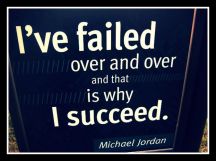 make the right decisions, that we’ll screw up royally sometimes – understanding that failure is not the opposite of success, it’s part of success.” For many the fear of failure is stronger than the perceived rewards of success, so doing nothing seems to offer the safer path. The view of the flat squirrel is that of a flat earth, with no ups or downs but also with no dimension. We may not always be right, but we don’t always have to become the flat squirrel.
Perhaps Wayne Dyer’s advice on choosing first what your attitude in life will be is most import. Dyer said – “One of the most important decisions you’ll ever make is choosing the kind of universe you exist in: is it helpful and supportive or hostile and unsupportive? Your answer to this question will make all the difference in terms of how you live your life and what kind of Divine assistance you attract.” Choosing to live in an  optimistic and supportive world can help prevent us from become flat squirrels.
Living in a helpful and supportive environment doesn’t mean delegating your decision to others, but rather, when needed, seeking their advice and support for the decisions that you have to make. Many insecure people seek to base their decisions only on the advice from others. Thomas Sowell saw the danger in that when he said – “It is hard to imagine a more stupid or more dangerous way of making decisions than by putting those decisions in the hands of people who pay no price for being wrong.” Imagine if you will a bird sitting in a tree beside the road telling the squirrel, “Go that way. No, wait! Go the other way.” If the squirrel listens to the bird, he ends up flat on the road of life. And what about the bird? Well he say’s “that stupid squirrel made the wrong decision” and then flies away. The bird paid no price for heeding the advice he was giving.
It is almost as bad to base your decisions too heavily upon how you think others wil l react – Heath Ledger said – “If you make decisions based upon people’s reactions or judgments then you make really boring choices.” How many times have you looked back on bad decisions in your personal life and realized that you were just “going along to get along” or maybe you’ve said to someone else (or at least thought), “Gee,
I thought that’s what you wanted.” Those are the words of regret from a flat squirrel who couldn’t make a decision on his own.
In the end, one may ask for and receive advice and knowledge from others, but the decision making is always a very personal and lonely process. That’s not necessarily bad. Thornton Wilder pointed out – “The more decisions that you are forced to make alone, the more you are aware of your freedom to choose.” The insight that you have that freedom; that your decisions need not be based upon what others tell you to do or what others may think of your decisions, eventually leads you to the next great  insight – “Our life is the sum total of all the decisions we make every day, and those decisions are determined by our priorities.” – Myles Munroe. If you can get your priorities straight and base your decisions upon those priorities; you will go a long way towards avoiding becoming a flat squirrel in life.
Nike has used the same catch phrase for years – “Just do it.” Perhaps in the end that is the simplest and most straightforward way to look at the decisions that you have to make in life. If your life is proper ly centered and based upon the priorities established by a strong faith, the decisions that you have to make will come more easily and are more likely to have good outcomes. Steven Covey was quoted as
saying about business – “The main thing is to keep the main thing the main thing.” That is good advice in life if you keep your faith as the main thing. Do that and you won’t have trouble making decisions and you won’t end up as a flat squirrel.
Keeping a balanced life and keeping the main thing the main thing takes work and sometimes some help or guidance is needed. Local author and life coach Norma Nickolson  of Wise Owl Enterprises has just published her latest book that can help with that – Living a Balanced Life Journal . You can visit her website at https://wiseowlenterprises.org/ for contact information for Norma. Both the book and the web site benefit from Norma’s collaboration with Marla Schalow of of Jademar Design. Norma and Marla are accountability partners who regularly meet and hold each other accountable for the things that they tell each other they are committed to doing. You should try that with someone, too. Perhaps, if you feel accountable to someone to get done the things that you said you would do, you won’t end up as a flat squirrel on life’s road.
Have a great and decisive rest of your week.
 and the requests that we make for someone to “Friend me”. I don’t think we really put on a special face for each of the people on our “friends” list on Facebook. Those special faces are reserved for people with whom we have a real friendship, such as that described by Aristotle – “Friendship is a single soul dwelling in two bodies.”
  a spouse or partner in life. Marriages (partnerships) that last a lifetime have that longevity because of that ability to share your soul.
 In church services there is an oft-used line from Number 6:24-26, “may God’s face shine upon you.” Perhaps that is what Jack meant when he wrote “God is like that”. When God is your friend, He shares his soul in our bodies and it shines through on our faces. If that doesn’t put a smile on your face, nothing will.
 to
to


 Posted by Norm Werner
 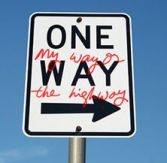 protect us from some common danger or to provide some common good for all. Sometimes obeying a specific law may seem to be a personal inconvenience, given whatever circumstances brought you to the point of having to make a decision about obeying them or ignoring them. Stop signs, no turn on red signs and don’t walk until you are told you can walk instructions are examples of widely ignored rules (laws) that people make conscious decisions to ignore from time to time.
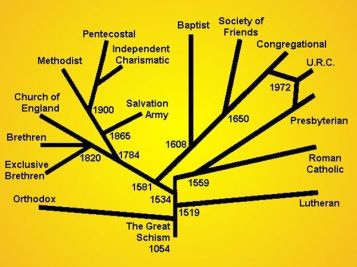 denominations base their beliefs, has been subject to repeated changes and interpretations by various tribes within the Christian religion. There is a common core of beliefs that runs throughout Christianity; but, upon that core various tribal split-offs have imposed their own set of rules and interpretations. There is Yiddish proverb that I saw on Jack’s blog that probably applies to that – “God created a world full of many little worlds.” Maybe that proverb was created to describe the fragmented little tribes that Christianity has evolved into.
 years) almost everyone hits that point where they start to rebel against some things that they are being told to do or about being told how to act. For some that rebellion may manifest itself in their appearance and for some in their choice of friends or behavior when in tribal (societal) settings. For some the rebellion never really takes hold and the mantra of “go along to get along” becomes their way of life. For all of us, the need to continually make personal decisions on the choices that life presents means that we are forever evolving as individuals.
 world try to compartmentalize one as for or against something and allow little to no room for a middle ground. The decisions about which worlds to live in are what we struggle with to define ourselves as individuals. Those same decisions contribute greatly to what we call character in people.
 rebellious phase often experience hard bumps into those boundaries and learn lessons about life “the hard way.” We all will continue to bump into laws, rules, ordinances, restrictions and other barriers to doing whatever we want to do as we age. If we are civil about those encounters we will likely be able to find a way to be happy as individuals and stay within the tribe.
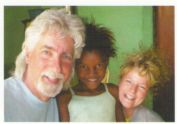 it than just feel sorry for them. They have a long background in providing foster care of children in need of the love and discipline of a stable family environment. Now they are in the process of realizing a long-held dream to do more. They are behind a project to build an orphanage in India as part of the Angel House program there, which provides safe refuge for hundreds of children across India.
 The Angel Hose that John and Lisa are building will begin construction in June of this year and is scheduled to open in the first week of December. Once it is built and open the on-going maintenance and operational costs will be picked up by a local church in India. John and Lisa plan on traveling to India in December of 2017 for the opening of their Angel House and to meet the 50 children who will live there.
 e your prayers and financial help. You can see more about the Angel House Program please visit their web site at
  have religious beliefs that are different from those in power here right now. The picture of them on their knees, shoes off, bowed down and praying in an airport is apparently frightening to those who see their religion as a threat. Of course these same “leaders” see people pursuing different lifestyles as a threat, too; enough so that they spend an inordinate amount of time trying to pass laws about what they can and cannot do, with whom and where they can do it.
 of the very values that made America the great country that it is. Instead of continuing to welcome newcomers who will carry forward the wonderful story of success that our diverse history is based upon, the new leaders are trying to shut off the flow of people who strive to be a part of the American Dream. They would have us build walls instead of bridges. They would single out and discriminate against whole nations of people because of their religious beliefs. Where have we seen that idea before?
 In my real estate world there many cases where the answer to a question starts with “it depends…” Lawyers tend to answer questions like that, too, because they know that so much in the law is open to interpretation. Much what has been said lately by #POTUS, #Tweeter-in-Chief seems initially to be straightforward, until one starts to think about how the simplistic answers that fit into 140 characters will actually be implemented. The devil is in the ambiguity of the details.
 giving in to ambiguity, we have come to the conclusion that we will not let it ruin our lives, that we will acknowledge it and choose to live with the fact that some things are unresolved and unresolvable. The catch phrase “it is what it is”, was probably invented by someone who had just accepted some ambiguity in their life.
 Since we live in a world that surrounds us with many ambiguous situations and we are now under a leadership that now supplies us with “alternative facts” to almost any situation, I suppose Chekhov’s insight is now more important than ever – we are what we believe. Perhaps #POTUS has discovered a new way to deal with ambiguity – just believe something and it becomes true, it becomes an alternative fact upon which we can build the rest of our lives.
 “fact”. Obviously, for some, it is not a fact if you don’t believe it is a fact; and, even less so if you choose to believe an “alternative fact”.
 information from articles that I read about why businesses lose clients and employees. The main reason in both cases was that the client or employee didn’t feel that they were appreciated. I think saying a few “thank you’s” and giving some compliments in both cases could go a long way to preventing those losses and the costs to the business that goes with them.
 your day a little brighter if someone says that you look great today or perhaps even “that color looks so good on you.” A boss or even a fellow worker who recognizes and thanks you for the good work that you’ve been doing is reward enough to make your day. One of the articles that I had read on this had the line “people don’t work for companies; they work for other people.” That drives home the point that workers are looking for positive reinforcement from the people that they work for and with; they’re hoping to be recognized and complimented by the boss and co-workers.
 garded as America’s finest hour when the goodness that is in people found a common cause in the fight for what is right and just and compassionate in the battle against the insensitivity and the self-serving, closed-mindedness of the current political regime in our nation’s capital. Have no doubt about it, this is not a one-man problem, but a systemic assault being waged on the very values that the country was founded upon by a group of frightened politicians who are fighting the inevitable tide of change and diversity that the country is undergoing.
 nation out of the morass that is now finds itself in. I don’t know who that will be, but I would not be surprised if it another strong woman. It is well past time for that to happen and perhaps the country has never needed the difference in approach to governing that a woman could bring to bear than now (or four years from now).
 nical mechanics of the last election were such that they allowed the minority to win. That can and will be overcome with the proper effort and commitment on the part of the majority. There is absolutely no need for this to be anything more than a short–term anomaly for our country and perhaps a one-term Presidency.
 campaigning for their candidate started. They had several much better choices at the beginning, but those candidates allowed themselves to be bullied out of the way. The Democratic Party seemed to believe that it was entitled to win and chose a candidate that allowed herself to believe that, too. After all, how could she lose to that Republican candidate? The Democrats discarded the only candidate that might have defeated that Republican’s choice when they conspired to block the one candidate who was not beholding to the party elite. What a hoot that Presidential campaign would have been to witness.
 the right and left litmus tests that the parties try to apply to their candidates. Perhaps it will be another populist, but one this time who espouses diversity, inclusiveness, compassion and a more centrist approach to things. I’m old enough to remember when moderate Republicans were allowed in that party and when there were fiscally conservative Democrats. Both have joined the Dodo bird in the Smithsonian display of extinct species.
 howed us how effective having a majority in Congress can be to blocking everything that the President wants to do. It’s the game that both parties would rather play than focusing on getting the people’s work done. You have two years to be ready to effect change. Don’t waste that time lamenting what went wrong this year, focus on what you can help go right the next time and the time after that. It all starts with me. That’s what good can come out of this.
 article upon the tendency in business to recommend (even demand) that women act more like the men in the business, in order to be successful and to be taken seriously. She makes a good case that diversity of thoughts and opinions, in this case letting women be women in business, makes more sense and leads to better decision making.
 people like themselves. Many social clubs and churches are good examples of that tendency in practice. The same stagnation and self-serving, if wrongheaded, decision making that Krawcheck says can occur in businesses because of a lack of diversity also sets in at those more or less homogeneous clubs and churches over time. Due to the changing demographics in the general population, these insular organizations eventually wither and die, due to the inability to attract enough people “just like us” to sustain the organization. More successful organizations embrace diversity and thrive because of the wider pool of potential members that comes along with diversity.
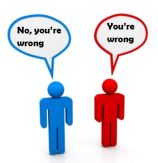 can be perceived as threats to our own view of things. We see the admission that someone else’s’ opinion about something being accepted as “right” must mean that our opinion is “wrong”. A more correct way to look at things is that both opinions or points of view have merit and should both be taken into account when making decisions. In business, to do any less is potentially to immediately discount an entire segment of the population and possibly to lose them as customers. In life, to do so is to ignore some solutions or answers and to limit the possible solutions to a problem. You may even discover that having the insight of another person’s point of view (especially someone not like you) will lead you to the conclusion that something that you saw as a threat or problem was not a problem at all, but rather an opportunity for you to grow as a person.
 building a good team (at work) or support group (in life) can be thought of like building a good basketball team. In her words – “it’s hard to build a national championship team if your players are all point guards.” The same is true of the teams that you might be on at work. You need different skills and different points of view in order to make good decisions. I life you need a diverse set of friends around you as a support group for your life decisions and crises.
 develop. Many times we might avoid people who seem to be different from us and our normal friends, because they are unusual – not like us. Maybe they look different or dress differently. Maybe they have a nose ring or spiked hair. Perhaps they are a different color or perhaps speak with an accent that is unfamiliar to us. For whatever reason, we choose to avoid them and go with what we know. How sad for us.
 introduced to a different set of life experiences than we had, which shaped their view of the world. We may even discover how insular and one-dimensional our lives have been, compared to the experiences of others.
 people trooped by you, so that you can meet them. You have to get out in the community and go places and do things that are different.
 to shut-in through the Meals-on-Wheels program, or volunteering at a local soup kitchen or an organization like Community Sharing. Whatever the job, it does get you out of the ordinary and expose you to things and people that you would not ordinarily meet. Whether you realize it at the time, or not; your life is richer for the experiences.
 NormsMilfordBlog