Just say it…

June 16, 2021

In yesterday’s post to his blog, Jack’s Winning Words, Pastor Freed reminds us not to hesitate to say nice things to people with this quote – “Why do we have to wait for special moments to say nice things or tell people we care about them?”  (Randy Milholland)

I suspect that we are embarrassed, or think we would be, if we just blurted out a complement to someone that we met during the day (t least men might be). Telling someone that they look nice or that they are wearing a nice outfit shouldn’t be embarrassing to you or to them. Nike uses the tag line, “Just do it”; perhaps, if a compliment comes to mind when we are with someone, we should all use the tag line, “Just say it”.

We don’t seem to be embarrassed asking them the largely rhetorical question, “How are you?” or maybe “How’s it going?” Those are certainly more intrusive questions into the person’s personal life than just saying, “You look great today.” Just say it…

Of course, men have to be careful with complements that could be taken the wrong way by a woman. She may think that he is fliting with her or hitting on her. It is even more difficult to express that we care about a woman friend or acquaintance in a way that cannot be mistaken for an inappropriate remark. Things have gotten much more difficult of late, with all the revelations in the news about inappropriate behaviors, but we cannot let that stop us. Just say it…

Parents shouldn’t wait for special moments, like a graduation ceremony to tell their children that they are proud of them. We toss off air kisses and “I love you” without putting a lot of meaning behind either. We should take every opportunity that we can to let our kids and grandkids know that we recognize their accomplishments and that we are proud of them. Just say it…

Husbands and wives also need to be more cognizant of and appreciative of their mates and let them know it through compliments. Everyone loves to be appreciated, especially for the little things that they do that usually go unnoticed or at least not verbally recognized.  Rather than just sit there at the dinner table wolfing down the meal, take a moment to thank your mate for making it and maybe mention how nice it is to come home from work to them each day (now that we actually get to go to work again). Just say it…

Make it a habit to find something each day to compliment your significant other about. That will force you to stop, think and take notice of them and your home environment. It may even cause you to think about how you can help them with some of the things that they (and wouldn’t that be a good thing?). Just say it…

If you make it a practice to find something nice to say to or about each person that you meet during the day, I suspect that you will find life to be a much brighter and happier experience. Just say it…


It’s all in how you see it…

June 12, 2021

Pastor Freed recently used this quote in his blog, Jack’s Winning Words“Be thankful for closed doors, detours and roadblocks.  They protect you from paths and places not meant for you.”  (Sent by Kathy M)

Kathy’s view of things that might be in your way is one way to look at those things. Many people choose to see them merely as challenges to be overcome.  For them, Kathy’s view would need to be changed to read at the end, “not meant for you right now (or yet)”

Both views reach the same conclusion about what just may have occurred – it happened, let it go, move on. In Kathy’s view one just accepts what happened and moves on without worrying about it further. In the other view one accepts it, tries to learn something from it and then formulates a new plan to get to the goal that was just shut out by what happened.

Neither view is necessarily right or wrong. So long as the second view does not turn from persistence into an obsession, there is nothing wrong with trying again in the face of an initial failure.

When you think about it, we pray thanking God for preventing something from happening maybe as often as we pray to Him asking for help to make something happen. In those prayers of thankfulness, we are often thanking him for putting some roadblock in our way to prevent us from a making some horrible mistake.

Whichever view you take, in the end it comes down to accepting, “Thy will be done” when praying to God. If you can get to that mental state, you can remove fear and self-depreciation from your life.

So, stop beating yourself up or living in fear or doubt of your every move. Let God take control of things. For every door that he has closed, He opens another; perhaps to a much better choice for you.

You will never know the answer to the question “What if?”, so stop wasting time on it and start looking for “What’s next”. Trust in God’s plan for you, accept it and enjoy life.

Oh, look; there’s a roadblock ahead. I wonder what I’ll find on the detour that God has planned for me.


Maybe surprised, maybe shocked, always saddened…

June 11, 2021

The front page headlines this morning screamed “Bo knew”. The story, which had already broken on the TV news shows was about testimony given by one of Bo’s sons – Matt – and several former U of M football players. In their testimony they recounted being sexually assaulted by former team doctor Robert Anderson. The most damning of course was that of Matt Schembechler, who recounted that he was only 10 yeas old when first assaulted by Anderson. When he told his dad what had happened, fully expecting that BO would go after the doctor and get hi fired, he was instead reprimanded and told to “toughen up” by Bo.

There was no satisfactory answer in the stories to the question of why Schembechler reacted this way and continued to fail to do anything about Anderson in the face of other accusations of sexual assaults made by other player on his teams. We will never know the answer to those questions.

I have posted here before about the baseless esteem in which we hold famous people, whether they are in athletics, entertainment, or politics. Whatever their fame or position is based upon we somehow give them a pass on things that we would otherwise be more apt to hold them accountable for. We believe that their fame somehow also makes them good people who make good life decisions. We are all to often proven wrong in those thoughts.

One has only to look back over the past few years to find case after case of fallen hero’s that we once held in great esteem, The sexual assault cases of Anderson and Larry Nassar leap immediately to mind; however, joining Bo in sex-oriented scandal there is also Joe Paterno at Penn State, Harvey Weinstein and Bill Cosby from the entertainment world and financier Jeffery Epstein. The list goes on and on.

The breach of trust that we place in people who have achieved great fame, wealth or power was also proven in the recent convictions of UAW Presidents – Gary Jones and Dennis Williams.  Of course, the unions have a storied history of corruption that took some of the surprise off those revelations.

So, what are we to make of all of this? Should we become hardened cynics who assume that anyone that appears to be successful must have somehow cheated or gamed the system? Are we to look askance at all in the professions of these mis-doers? Must we become always on guard and mistrusting of people?  I think not. For the most part I really believe that people are not all out to somehow do me harm or trick me into some mistake. I will make the exception that the lady who keeps calling me about extending the warranty on a car that I no longer own may not be working in my best interest and hanging up is an OK response to her calls.

There is nothing wrong with being cautious, but it would be wrong to start every interaction with someone else with the assumption that they are somehow bad or out to put something over on me. One can miss the opportunity to get to know a person who may turn out to be a good friend if they start with the assumption that the other person is a crook or a bad actor. That is also the roadblock that prejudices put in the way of interpersonal relationships. Starting out in fear or loathing is not the way to begin a relationship.

So, it’s OK to be surprised or shocked when we learn about the misdeeds of a person that you had admired. Better that you should be saddened, not for yourself, but for them. It is also OK to find forgiveness in your heart for them. Maybe you will not forget the disappointment that they have caused you, but you must find room for forgiveness and move on.

Recall the words of Pope Francis and ask yourself the question that he posed when asked about his position on gays seeking the Lord – “Who am I to judge?” The disgrace of the revelations that may have already come out about these famous people who have breached our trust is enough. There is nothing to be gained by piling on. Yes, be surprised and saddened, but then forgive and move on.


Imagine that…

June 10, 2021

The quote in the Jack’s Winning Words blog today is one that cannot be read without a mental image flashing to mind – “Don’t let people discourage you.  Just fluff out your tutu and prance away.”  (Sent by Virginia P)

If any readers have ever been to a dance recital and watched the youngest age group doing their ballet number in their little tutu’s, you know how cute and, at the same time, funny that performance can be. Jack’s advice that we fluff our tutus and prance away from unpleasant people and events is good advice. Rather than engaging in a no-win conflict situation, especially in the arenas of religion or politics, just fluff your tutu and prance away.

I would advise that you keep whatever mental image it is that comes to mind for you when you read that quote in the back of your mind and call it up as needed. It may be a confrontation at work or perhaps in a social setting where someone is obviously trying to provoke you or start and argument. Recall that mental image and just fluff your tutu and prance away.

Sometimes it may be easier (and funnier) to imagine the other person taking that action. It will bring a smile to your face that will probably perplex them, given their state of mind if you imagine that, instead of representing a threat to you or accepting their invitation to argue you, you imagine that they are about to just fluff your tutu and prance away.

Life throws many opportunities to use this advice at us, from disappointments at work, to conflicts in marriages, to the deaths of friends or family. While the gravity of some of these events might be huge, it is important that we find a way to put them behind us and move on with life. Don’t let life get you down. Perhaps you should say to yourself just fluff your tutu and prance away.

As Jack pointed out, life is too short to waste time on confrontation and arguments with others. Use the time that you have wisely to enjoy life. When things get dark or stormy in your life, just imagine that God has turned the spotlight on you and introduced you in a solo performance of your faith. Show the world that faith in action – just fluff your tutu and prance away.

Have a great day. Nice tutu, by the way.


Don’t lost sight of what is important…

June 9, 2021

In his blog, Jack’s Winning Words, Pastor Freed today used this quote – “I started concentrating so hard on my vision that I lost sight.”  (Robin Green) 

Free reported that the Robin Green who is credited with this quote is at Hendrix College in Conway, Arkansas, and helps the blind. Jack opined that the quote is about sight and insight, which I agree with. The quote also points to a problem often experienced by middle-aged men who have focused upon their careers.

It is all too easy to become so focused and intense on the pursuit of career goals that all else drops “out of sight”, including family. Some men become so focused and intense in their pursuit of career success that they develop a kind of tunnel-vision, seeing only what is directly ahead of them in their next career goal. They sacrifice family time by tell themselves that they are doing this for the family; when it is all about themselves and the intense focus that they have on success at work.

Most men do define themselves largely by their careers and the work that they do, more so than the things that they do with family. The answer to the question, “What do you do?” is seldom answered, “Well, I’m a husband and a father”, as the initial response.

It is certainly important to find a career or work that provides sufficient income to support the family; however, the work itself should always remain a means to an end and not the end in itself. Those who get too intensely focused upon work success lose sight of the importance of why they are working.

If you find yourself “working late” every night or working when you get home, instead of sharing time with family, you are probably too intensely focus upon work success. If you miss most of the games and plays and recitals of your children, you are probably too intensely focused upon work success. If you can’t remember that last time that you went somewhere with just your wife or perhaps with the whole family and had fun, you are probably too intensely focused upon work success. If you can’t remember how old your children are or the last time that you went to one of their birthday parties, you are probably too intensely focused upon work success.

Working harder and harder to try to earn more and more money is meaningless if you don’t spend time with family. Time spent with them is more important than the shiny new things that the money might buy. In the end, the kids will be grown and gone, and the luster will have faded from the shiny things and you will be left with stuff instead of memories. If you are lucky, your long-suffering wife may still be there; although, overly intense work focus is the root cause of many divorces.

So, pause every now and then and ask yourself if what you are doing, what you are so intensely focused upon at work, is really what you want out of life. Question the decision to work late rather than go to your son’s ball game. Recall when the last time you told your wife that you love her was and wonder why you don’t take time to do that more often. Challenge the thought that that next promotion at work will be the thing that makes you happier, rather than that next trip to the zoo or going on a picnic with family.

Try to imagine yourself in the end game of life, when you and your spouse are rattling around in your McMansion, surrounded by stuff that now longer matters, and ask that person if it was all worth it?  Imagine what happened to the wife and kids while you were so intensely focused. They when on in life. The kids grew up and moved away. Maybe the wife developed other interests to fill her time or made new friends to fill in for her missing spouse. You’ll find that you can’t imagine much about that, because have no memories of those things happening – you weren’t there to see them.

The good news is that you may still have time to change your focus back to what is important in life. Go to your daughter’s dance recital rather than staying late to work on the next deal. Hire a sitter if needed and take your wife out to dinner (and don’t spent the evening looking at your phone). Reset your definition of success to be measured in happy family time, rather than a raise or promotion. You may, in fact, not advance as quickly at work or make quite and much money; however, I know that you will feel more fulfilled and be happier because you have refocused upon what is important in life.


Pay attention to show respect…

June 8, 2021

“It’s hard for me to answer a question from someone who really doesn’t care about the answer.”  (Charles Grodin)

That was today’s quote in the Jack’s Winning Words blog. Jack when on to relate a story about a remembering seeing a woman in his congregation elbowing her husband to keep him awake during the sermon.

I’ve written here a few times about being a good listener. It is a mark of respect for the speaker that you pay attention to what they are saying and not spend that time thinking about how you will be replying. Grodin’s quote points out a second benefit from paying attention – you can figure out from how the speaker is talking where they are coming from and whether or not they really care about what your opinion is on the topic.

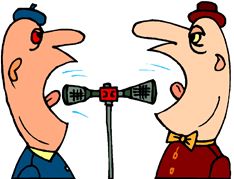
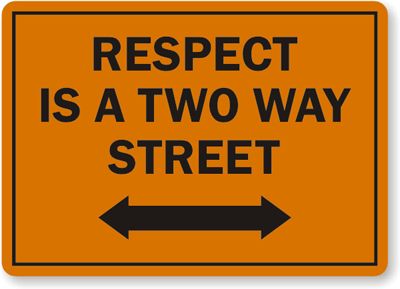
Showing respect for the speaker doesn’t mean that you are agreeing with their position. It merely means that you respect their right to have an opinion and to express it. Too many people these days don’t show even that level of respect; rather they shout over the speaker, hoping to drown out the expression of the opinion that they disagree with.

With so much misinformation and disinformation circulating in our society it is sometimes hard to have a civil discourse on controversial topics. When one bases their point of view on things upon the base of bad information or untruths it is hard to discuss it with them and the conversation quickly turns into arguments about the source of their “facts” upon which they base their beliefs. The old hack, “I saw it on the Internet, so it must be true” is the only base that many have to stand upon.

An even more disturbing trend of late is the rather fluid definition of the term “facts”. Over the past year or two we have seen many TV interviews in which it was asserted that facts aren’t facts or that there are “alternative facts”.  The term “facts” has morphed from describing an accepted absolute into describing a belief, subject to change. I guess the relative term there is the word accepted. If one doesn’t accept a “fact”, there is a tendency to make up an alternative and call it a fact, when really it is a belief or point of view.

That leads me back to a variation on Grodin’s quote – It’s hard to argue the truth of a statement with someone who doesn’t care about the truth.

If one is not paying attention to what is being said in a conversation it is relatively easy to be drawn into an argument about the wrong thing. Instead of arguing against a belief one could inquire about the basis for that belief – the facts upon which it is based. It is not enough to just say, “That’s not true.” Remember that the person speaking believes it is true, but that they may have never taken the time to question the source of that belief. A discussion about the basis for that belief may be more productive than just a direct challenge to it. Of nothing else, maybe you can plant a seed of doubt in their mind about the basis of their opinion.

So, show respect for the right of others to have and to express an opinion. You may not agree with it and perhaps your knee-jerk reaction is to talk over it or to quickly move from conversation mode into an argument about it. Don’t go there. If you are paying attention, you will realize the futility of arguing the point with that person.   Better that you should add a note to your mental file about that person on their position on this topic – a topic perhaps to be avoided in the future.  If that file gets too big, this may be a person to avoid in the future.

In the end, showing enough respect for the other person to understand where they are coming from also shows respect for yourself by stifling the knee-jerk reaction to argue with them. You just saved yourself a frustrating waste of time. Respect yourself.


Don’t lose hope…keep the faith…

June 7, 2021

“We must accept finite disappointment, but we must never lose infinite hope.”  (MLK Jr)

That was the quote used by Pastor Freed in today’s post to the blog, Jack’s Winning Words. It pairs nicely with a sign that I have in my yard right now – “Difficult and painful as it is, we must walk on in the days ahead with an audacious faith in the future.”

Hope and faith are often paired, and one could argue forever about which one comes first or which supports which. Does faith give us hope or does hope lead us to faith? I think that they are so intertwined that the one cannot exist without the other.

Life is filled with small and large disappointments or setbacks, yet a person of faith never loses hope for better days ahead. When faced with disappointments, we search for answers to the question – Why? – but a person of faith learns to accept what has happened, trusting, and accepting that it was God’s will and moving on.

The key to never losing hope in the future is found in the King quote about living with an audacious faith in the future. How can we have that audacious faith? The answer is that we have already been promised a future of everlasting life by Jesus. The trials and tribulations that we suffer here on earth pale in comparison to the promised eternity with God after life here.

The dictionary definition of audacious is bold, daring or fearless. In the context of the events of his day, I suspect that King’s quote was using the fearless definition. That is also a good definition to use for people of faith. Certainly, faith will not prevent the disappointments in life from happening; however, when the fear of death is replaced by faith in life everlasting, one can step into the future with a confident stride. One can audaciously look life in the eye and say, “bring it on”, I’m ready for you. You have faith in God and an unshakable hope for the future.

So, start each day by praying that God recharge your faith and renew your hope. Remind yourself that your faith has already cemented for you an infinite future with God, and you will see the trials and tribulations that you might face today within the proper context, and they will melt away. Hope is a great thing, but your faith is the greatest thing of all.

Be audacious in faith today.


Don’t go there…

June 5, 2021

A quote I recently saw while searching for something else caught my attention, so I saved it as a possible future blog post topic.

“Conflict cannot exist without your participation.” – Wayne W. Dyer

There are many things in life that one can “get caught up in”, but conflicts are not one of them. One cannot claim to be an innocent bystander if one enters into a conflict with someone else. Judge Judy likes to use the word kerfuffle to describe a conflict that escalates beyond a difference of opinion and into actions from one or both sides. Life is full of mental conflicts, only a few of which turn into kerfuffle’s. Don’t go there.

Road rage incidents have been in the news lately when they have escalated into kerfuffle’s that involved guns. Usually yelling and a few choice gestures suffice in road rage incidents, but occasionally they go well beyond that and sometimes result in crashes or worse. Don’t go there.

Conflicts in marriages are inevitable, but usually are resolved without rage or kerfuffle. When things go beyond just disagreeing, it can result in the marriage turning into cases of domestic violence. It is a sure sign of immaturity and lack of self-control when one of the partners resorted to physical violence to deal with conflicts. I heard a shocking statistic on the news recently that more people (mostly the women) died last year due to domestic violence involving guns than died from all diseases combined, including COVID-19. Don’t go there.

Since it takes two to tango (or tangle as we are discussing here), it is easy to understand how you can avoid conflicts and kerfuffle’s – just don’t go there.  That is relatively easy to say; but for most of us, much harder to control. Much of our response to things that happen around or to us is a knee-jerk reaction. The initial reaction may be one of surprise or fear and we draw back; however, anger may quickly replace fear and then we lash out. One may have only a split-second between the initial surprise reaction and the action response of striking back. Don’t go there.

How does one prepare for the unexpected or unwanted, such that we do not allow ourselves to participate in conflicts and kerfuffle’s? I submit that it has to do with being in the right frame of mind and being at peace with yourself and the world around you. If your mindset is to forgive the person who cuts you off in traffic, rather than flip them the bird or try to speed up and get past them again, you will avoid conflict.  If you show pity for the person who is so enraged that they push their way past you at the door, rather than push them back, you will avoid conflict. If you refuse to ”rise to the bait” of an insult or a slight from someone that is obviously aimed at provoking a reaction, you will avoid conflict. Don’t go there.

But why should you be the one to give in and turn the other cheek? There is an obvious answer in the Bible about turning the other cheek; however, there are also these passages –

AND

“Put on then, as God’s chosen ones, holy and beloved, compassionate hearts, kindness, humility, meekness, and patience, bearing with one another and, if one has a complaint against another, forgiving each other; as the Lord has forgiven you, so you also must forgive. And above all these put on love, which binds everything together in perfect harmony.”  (Colossians 3:12-14 )

“And the Lord’s servant must not be quarrelsome but kind to everyone, able to teach, patiently enduring evil, correcting his opponents with gentleness. God may perhaps grant them repentance leading to a knowledge of the truth, and they may come to their senses and escape from the snare of the devil, after being captured by him to do his will.”  (2 Timothy 2:24-26)

Perhaps then, the way to get into the right frame of mind and avoid conflict and kerfuffle’s is to start each day with a prayer that asks God to stay with you during the day and to intercede in that spit second between action and reaction to keep you at peace. If you take that split-second to ask God for His advice before reacting to that incident, He will say – Don’t go there.

Have a peaceful and conflict free weekend!


See it…believe it…achieve it…

June 4, 2021

Pastor Freed used a quote from Yoda of Star Wars fame this morning in his blog, Jack’s Winning Words“Difficult to see…Always in motion…Is the future.”  (Yoda) 

Freed talked about Yoda as a mentor, helping Luke Skywalker see and get to the future. He also discussed his own role mentoring others and about being mentored himself.

Do you have a mentor? Maybe you just have a role model – someone that you try to emulate because you see them as someone that you would like to be like.  In our society, lots of young boys and girls take sports heroes as role models. Some may take movie or TV stars as role models or perhaps the characters that they play.

One technique that many successful sports stars use to “see” the future is called visualization. Golfers especially will focus on “seeing” the shot that they are about to hit in their imagination. They visualize the trajectory and the landing of the shot. They can “see” (they hope) how the ball will role on the green, once it gets there.

Many business coaches also teach visualization as a method of rehearsing for an upcoming meeting or presentation. They help you “see” how to handle the objections that may come up and visualize your success in the event, thus building confidence.

Visualization is not a bad technique to use to turn a dream or wish into a plan for success. Trying to visualize that success and the road to achieve it forces one to also “see” the challenges that must be overcome along the way to the goal and formulate plans for dealing with them. Sometimes that is where having a mentor come in the handiest, because they often can point out the challenges and recommend solutions, based upon their own experiences.

Much of the time in golf, and in life, the future plays out differently that one might have visualized. That is understandable, since we can only imagine (see) so much, and life is full of variables that escape our view. The fact that it doesn’t quite play out as we thought (hoped) it would doesn’t mean that the time spent visualizing a desired outcome was wasted. In fact, that time probably saved us from making many mistakes that we could have made and did put us in the right frame of mind for both success and for dealing with any setbacks.

Though we may not think to call on Him when we are visualizing about things in our day-to-day lives, we always have a mentor at hand in God. Whether you stop to ask yourself the question “What would Jesus do?” or just pause and think “what is the right things to do?”, the fact is that God is there to answer those questions and help you “see” the right thing to do. It won’t always be the most convenient or easiest things to do, but it will be the thing that leaves you feeling good about yourself at the end of the day.

Use God as your mentor each day. Ask for His help and advice each morning before you start out and visualize the events of your day playing out with God at your side. Then review the events of the day each night with God, remembering to ask for forgiveness for those instances where you made mistakes in judgement or actions. I suspect that, if you start doing that every day, you will also start to “see” a much better future – one that you can believe and achieve.

Another quote from Yoda seems appropriate to use in closing this post – “You fail because you don’t believe.”

See it…believe it…achieve it…


Who am I to judge?

June 2, 2021

In the post to he blog, Jack’s Winning Words, to day Pastor Freed used this quote sent to him by a reader –“You’ll never look into the eyes of a person who God doesn’t love.”  (Sent by Pr Jennie) 

Freed went on to comment about God’s grace – forgiveness without recompense – and the fact that there is no sliding scale for sins or forgiveness. So, we don’t have big sins and little indiscretions, just sins. And God does not use a scale from 1 to 10 to measure out his grace.

As he usually does in his blog, Freed challenged the reader with a question – Paul, the one we call a saint, referred to himself as the “chief of sinners.”  Would you ever say such a thing about yourself?

I seldom stand in front of the mirror admonishing myself as a sinner; however, I realize the sins that I have committed in the eye of God and stop occasionally to ask for God’s forgiveness and His help in not committing them again. Sometimes it is hard to look that guy in the mirror in the eyes and forgive him his sins.

I used the line from Pope Francis as the headline today because I think it is important within the context of all of us being sinners that we stop and ask that question of ourselves when our tendency to judge the sins of others takes over. The phrase “rush to judgement” comes to mind. We rush to overlook our own sins and focus on the sins of others. And, our focus is not to forgive them, but to shame or condemn them for those sins. We place ourselves in the roles of judge and jury and sometimes of executioner.

I have posted here before about the most striking examples of people following the example of God’s grace and forgiveness. One of those examples was reported on the news shows when parishioners from Emanuel African Methodist Church were interviewed after the shooter was arrested and convicted. The Charleston church shooting (also known as the Charleston church massacre) was a mass shooting on June 17, 2015, in Charleston, South Carolina, in which nine African Americans were killed during a Bible study at the Emanuel African Methodist Episcopal Church. The surviving members of the Bible study group when interviewed all said that they had forgiven the shooter and were praying for him. That’s just hard to wrap one’s head around. Yet, that is the level of forgiveness that God shows all.

So, while we may have a sliding scale of sins from 1 to 10 in our minds, they are all sins in the mind of God and he loves us so much that he forgives them all. God’s love and forgiveness is always a 10. So, who am I to judge the sins of others? My role should be to find a way to forgive and love them, too; even that guy that I see in the mirror.

Let us all take this piece of advice from Luke – “Judge not, and you will not be judged; condemn not, and you will not be condemned; forgive, and you will be forgiven.” (Luke 6:37)

Have a great and forgiving day!