“You can change your world by changing your words.” (Joel Osteen) – from some time ago on my favorite source of inspiration, the Jack’s Winning Words blog.
I don’t recall what Jack said about this little quote at the time, but I knew that I wanted to save it and write something about it later. I’ve posted here a few times about attitude and how having a positive attitude can change things in your life. The words that one chooses to use can both spring from that attitude and impact it at the same time.
It may seem to you to be a simplistic view of life that your words matter so much; however, if you choose to use upbeat and positive words to describe the things and people around you it will reinforce your positive attitude about life. If your words are harsh or critical, things will look a lot darker around you. People might start avoiding you, because they don’t want to be dragged down by your words or they may approach you in an argumentative way, because they find your words to be offensive or hurtful.
It may take a conscientious effort to choose to use positive and upbeat words, rather than just throw out the first words that come to mind; but, after a while, you will notice that the words of encouragement and thanks and praise come more naturally. It also requires more thought about the way the words that you use are received and perceived by those with whom you are speaking. I was recent sent a link to an article on the use of words in business for use as an educational topic at an upcoming referral network group meeting. The article was entitled Phrases Smart People Refuse To Use In Conversation by Dr. Travis Bradberry. One example from this article demonstrates how the words you use about the same topic can be taken by the listener as either hurtful or positive.
Bradbury wrote this about the words not to use with someone who has lost weight –
“Wow, you’ve lost a ton of weight!” Once again, a well-meaning comment—in this case a compliment—creates the impression that you’re being critical. Telling someone that she has lost a lot of weight suggests that she used to look fat or unattractive.
Instead say: “You look fantastic.” This one is an easy fix. Instead of comparing how she looks now to how she used to look, just compliment her for looking great. It takes the past right out of the picture.
You can see how even an innocent comment that is meant as a compliment can be taken the wrong way by the listener. So, it’s not just positive vs. negative words that one needs to be concerned about, but rather how all of the words that we use to try to communicate will be received.
 Using the right words requires attention and concentration. One of the aspects that I most admired about outgoing President Barrack Obama is his very measured, thoughtful and precise use of the language. You can tell by watching him speak that he is carefully choosing the words that he uses to make sure that they get his points across in an unambiguous manner. Let’s all hope that the incoming Tweeter-in-Chief can indeed “act Presidential” as he claimed during his campaign and do a better job of communicating his thoughts when he has to use more than 140 characters.
So, resolve to take the time and make the effort to choose your words more wisely and to use positive and upbeat words wherever you can today. See if that doesn’t have a positive impact on you and the people around you. Your words can paint a picture of you as Eeyore the sad donkey in Winnie the Pooh or as the happy, dancing Snoopy in the Peanuts comic. Which would you rather be perceived to be?
Speak happy, be happy! Change your world today.


 Posted by Norm Werner
  Isn’t it amazing that the wisdom of so long ago, such as that of Homer, is so applicable in today’s world. One wonders if William Shakespeare was somehow channeling Homer when he said – “It is not in the stars to hold our destiny but in ourselves.”
 jumping into it? How have you prepared for the future? Have you been sitting in fear contemplating all that could go wrong or confidently striding forward in anticipation of all that will go right?
 health and many do fit that description; however, the lonely can be of any age, sex or ethnicity. Many of those older people that we tend to stereotype in this group are still living in their own homes and tend to disappear behind closed doors. They may get visits by family members, if any are local; however, many spend hours or even days without anyone else to talk with. I’ve heard stories from many Meals on Wheels drivers about the fact that the elderly that they serve are as “hungry” for somebody to talk with and for interaction with other human beings as they are for the food that is being delivered. Be that somebody.
 the strange language being used all around them and they may have just come from a dangerous and violent environment. While we think that they should be happy to be here, they might, in fact, be shared to death by their strange surroundings and the many people who always seem to be staring at them. They need somebody to trust and to care and to listen to them. Be that somebody.
 are part of the community that is labeled GLBTQI (or whatever the latest string of letters may be). Just the fact that there is a label assigned demonstrates a societal need to separate them from the “rest of us” and that can, and for many does, lead to feelings of isolation and loneliness. That is especially true for those in the stage before coming out in public about the issue. That can be a time of deep emotional conflict and insecurity that can cause them to be withdrawn and lonely. At that stage, they just need somebody to talk to about the conflict going on inside of them. Be that somebody.
 through ignoring them, as best that we can; when all that they really want is to be accepted and talked to and treated like everyone else. You can break the mold that society might want to cast you in by accepting them and treating them just like you would treat anyone else. Maybe they just need to have somebody “straight” to talk to about the issues created by their sexual choice or gender conflict. Be that somebody.
 other things, but also by people in need of companionship or friendship or just someone to talk with. Oft times we don’t see that need or we don’t recognize it when we see it. It is easy to see the need of the guy standing on the corner with the cardboard sign that reads “Homeless, will work for food”. There aren’t people sitting next to him with their own signs that read “Isolated and lonely, need somebody to talk with”. Be that somebody.
 word or with tongue, but in deed and truth. – John 3:17-18
 can remember the years of annual goal setting exercises that I went through at various technology companies that I work for back then. While they might have commanded my attention and thoughts for a while and certainly required my energy, they never really inspired my hopes. If anything the achievement of those goals might have served as an enabling step towards achieving my hopes.
 There’s a fine line between hopes and dreams. I suspect that most people’s hopes are centered more on life goals than on work goals.
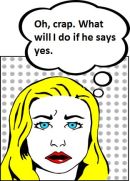 need to be proactive and action oriented and not reactive and defensive. You are much more likely to be successful if your start out with the positive attitude that says “I’m going to be open and friendly with those that I meet in hopes of finding Mr./Ms. Right”, than it is to start out by saying” I’m going to be cautious and guarded around others so that I don’t take the change of getting hurt”.
 prejudices or left over anger or regret that causes us to fail in our resolutions to do better in the future. Look closely at that picture to find help with letting go. Or perhaps it is the focus and content of the resolutions themselves that doom us to failure. Maybe we are too self-centered in the topics of our resolutions and maybe the baggage that we drag with us from the past does get in the way. Or, maybe we make resolutions that are too vague or too grandiose. What would be so bad about making a resolution like this one –
 happening to benefit you, but rather doing things that will benefit others. You would benefit from that too; I think. Maybe time spent worrying about others will take our minds off worrying about ourselves. Maybe “doing the right things” in business and in life will cause the right things to happen for you. Resolve to be there for others.
 your life, get yourself an accountability partner for that resolution; someone that share the resolution with and then with whom you can meet regularly and share a progress report about that resolution.
 new email or message or Instagram has just arrived. There is a sense of immediacy about it that demands me attention. My wife finds that to be both disturbing and sad. I agree when I sit and think about it, but so far cannot overcome the urge to see what is happening that caused the alert sound.
 through the phone are amazing, they do not contain the other sensory cues that real experiences contain and are thus somewhat one-dimensional. The sights may be wonderful, but the sights, sounds, smells and feel of actually being there and in the experience are far more wonderful and lasting.
 reach out to you for help or to show affection. You cannot really love your phone, nor can it show you love back. Besides that, real life doesn’t need to be recharged every 8-12 hours. Your significant other shouldn’t need to tape your phone to their forehead (see Jack’s post) in order for you to look at them, nor will seeing a Facebook post about your children’s sports events really be the same as being there for them. Put the phone down and pick up life again.
 Recently I read a question in in one of those newspaper advice columns concerning how to get people to accept and form new opinions about someone who apparently acted like quite a “jerk” when he was younger, but who has now matured and is a better person. Many people face that same dilemma in life, especially young men who really did act like jerks when they were younger. Some people don’t seem to be able to give them the benefit of the doubt, once they matured enough to begin acting in a more acceptable manner. Most grow out of that phase. Unfortunately some of those young men get themselves trapped into feeling like that have to continue to act like jerks, because that’s what people expect of them.
 that there is no real reason for motorcycles to have loud, un-muffled and annoying exhausts other than the riders need to attract attention to themselves. They are saying, “Mommy, look at me” by being as noisy as they can be. They never outgrew the need to be a jerk to get attention.
 So, maybe Dyer was wrong. Maybe what other people think of me is my business. It certainly is within my control. If I don’t want to be considered to be shifty and dishonest, then I can decide not act in a manner that would lead to that conclusion. If I want to be considered to be dependable and a good friend, then I can be there when needed and be the good listener that is oft needed in times of crisis. If I want to be accepted, I have to accept others, too. If I want to be someone who is loved, I need to give love. What others think of me are opinions that reflect the behaviors from me that they see. And that is my business.
 I didn’t realize it at the time, because I hadn’t gone back and liked for a common thread, but there was a theme that ran through all of articles and posts that I had read and referenced in those posts. The theme is the request from all of the people who may be living in any of those groups that they just be accepted.
 be like us or would somehow be better off if they were more like us. That belief is based upon the rather egotistical viewpoint that we represent “normal” and be definition those who are not like us mus be sick or somehow are abnormal. So, we jump in to try to “help”; but that help carries demands for change and conformity to what we see and define as the norms of our group, for which we have usurped the title “society”. Behavior that is not like ours is defined as somehow being anti-social and wrong. We feel that we must do something about that. While all the while, the person that we are trying to “help” is saying:
 appeals to religion or the Bible, sometimes it is just ignorance manifesting itself in fears of catching whatever it is that they find offensive. Many times parental concerns about the influence of these different people on children are sited as the justification for the bad behavior that we call prejudice. Yet that different person is not going to steal the minds of our children or infect the world with their difference; rather they are just standing there and asking you to accept them as they are.
 someone different from you today and maybe you will find that it will allow you to
  need and trying to reach out for help. Sometimes, as Hugh Elliott said, all they need or want is for someone to listen to them. In our society today we are far too distracted by other things to really listen or perhaps far too focused on what we want to say next to pay attention to the person speaking to us.
 people have trouble finding the right words to get across what they are trying to express, but the fears and concern or maybe the pain that is driving the conversation will come through if you just listen. You might also be able to pick up on the level of guardedness that the person is using, which may be an indication that you are not yet truly a trusted adviser. That should cue you to try to build that trust.
 they are speaking. The opportunity to verbalize their issue to someone else helps clarify it for them, too. Sometimes they might just need someone to say, “It’ll be alright” or “you’ll make it through this.” Maybe your time and attention is all that they needed to reassure themselves.
 ourselves. The time you spend listening too and helping other is just paying back or paying forward for the help that you will need and receive some day.
 of videos from Sesame Street skits to pop songs that all have that same title and theme. The string that runs through them all is that you should be happy to be the person that you are and not try to be someone else.
 hung up on how they look for dress or act in public and who they hang out with (or are not invited to hang out with). It’s hard to be happy with yourself if you don’t see yourself as being “cool” or being a member of the “in-crowd”. I posted here about that in a blog
  that time in our lives. Being in those groups is like being a fish that is swimming in sync with a large school of fish. One can look around and feel a sense of security and belonging that feels good. Just go with the flow and everything will be alright. You’ll be cool.
 hout depending upon the approval of a group to bring happiness. They discover that they are “happy to be me”. We tend to identify people who are at that stage in life as being self-confident. People who have not yet arrived at that level of self-aware comfort with themselves are sometimes be said to be “phony’ or perhaps “fake”.
 to remain focused upon being as good of a you as you can be and not get distracted by desires to be something or someone else.
 NormsMilfordBlog