Don’t abuse yourself…Get the help that you need!

October 4, 2019

In today’s post to the Jack’s Winning Words blog, Jack used this quote –

“Take care of your body.  It’s the only place you have to live.”  (Jim Rohn)

One of our local Chamber of Commerce members is Nancy McDaniels, who is a personal trainer. Nancy uses a tag line that is similar – “Remember that your body is the only place that you have to live.”

While today’s post title may sound like I’m talking about active self-destructive behavior in which you abuse your body, it is just as much about just letting your body (or mind) go to pot as anything. Doing nothing is a popular option when contemplating following the proper diet and doing the exercise that you should be doing routinely. However, doing nothing is not a benign option; it is a destructive choice that too many people allow to rule their lives. Doing nothing is as abusive as doing obviously harmful things.

The body needs regular exercise to maintain muscle tone and to retain balance and flexibility. Up until he was on his deathbed, my grandfather had a daily morning routine in which he ran through a series of stretching and movement exercises to maintain his body. He lived to be 98. My father did not follow that example and only lived into his mid-70’s. Unfortunately, lately I have been more like my father than my grandfather. I need to get back to a regular routine of exercising.

Sometimes we all need someone else to prod us into doing the things that we should be doing. In the case of your physical health that somebody is often a personal trainer. Just joining a gym or health club isn’t really enough, just like buying an exercise bike for your home isn’t usually successful either. Both are easy to blow off when you have no one to hold you accountable. That’s one of the roles of the personal trainer.

In addition to abusing your body by not exercising regularly, one can abuse themselves mentally by getting down on themselves all the time or allowing themselves to be mentally overwhelmed into a state of depression. Often the root cause of alcoholism this feeling of being overwhelmed and seeing alcohol as the way to feel better. That is not the answer!

I’ve also posted here a few times about the importance of loving yourself – See https://normsmilfordblog.com/2019/02/18/start-your-day-with-love-and-the-rest-will-take-care-of-itself/ or

https://normsmilfordblog.com/2019/04/25/look-within-first/

The point of these posts, and others that I’ve done on that topic, is that you must deal with your own self-image and get comfortable with who you are, in order to keep yourself mentally healthy.  Only then will you really be able to deal with the things that life throws at you that initially may seem to be overwhelming.

The feeling of being overwhelmed can quickly spiral into depression if you can’t deal with it. Depression can be as debilitating as an injury or physical illness.  Dealing with depression requires that you have some ability to identify it and I posted about that.

See – https://normsmilfordblog.com/2016/11/24/what-does-depression-feel-like/

Depression is seldom something that you should try to deal with alone; so, knowing when and how to ask for help is important. Maybe you will be on the other side, providing that help.

See –  https://normsmilfordblog.com/2016/12/12/get-help-give-help/

The take-away from all of this is that one needs to be proactive in managing both their physical and mental health. In both cases, there is positive impact to be had from engaging an outside party as your coach or councilor. Both your physical well being and your mental state can severely impact your body and that really is the only place that you have to live.

Don’t continue to abuse yourself; get the help that you need to keep your mind and body in great shape, whether that is a personal trainer or perhaps a mental health counselor.


Burst your own bubble…go beyond

September 28, 2019

The news these days is full of stories that reflect the clash of value systems as much as anything. In most cases the parties involved believe, some fervently, that they are in the right and the other parties are wrong. They believe that they are right because they are looking at things from within their own value systems. Let me explain.

Let’s begin by defining the term value system –

value-system

Noun

(plural value systems)

1. A hierarchy of values that all moral agents possess, demonstrated by their choices. Most people’s value systems differ, making the imposition of a singular value system by the state a source of constant social warfare. This is an individualistic concept. One’s value system is molded by one’s virtues or vices.

2. A person’s standards and self-discipline set, based on the common sense and wisdom of knowing what the proper moral rules and discipline are, and the amount of willingness to see themselves and others abide by them.

While a person’s value system is a very individual thing, the way that most people form their values is strongly influenced by the external factors that surround them where they live. Thus, ones values are often regional in nature. You can see this, if you look, when you travel from region to region in the United States or if you get the opportunity to travel or live in a foreign country. Not only is the language (or dialect) different from place to place, but many of the core “values” that impact how people act and interact may be dramatically different. It is more common, in the casual interactions that may occur, to notice the speech differences than to see the value difference.

One would almost have to be blind not to notice the difference in how people from various ethnic backgrounds and races interact in Canada, verses in the US. Based upon my admittedly limited travel experiences in Canada, there just seems to be more of a natural acceptance of people without any of the fears or prejudices that are prevalent in the U.S. jumping in the way before you’ve even had the chance to interact with them. That starting point provides the base for a much more civil and satisfying interactions.

Differences in religion and the role and importance of religion in the lives of people can have a major impact on their value systems. Although the United States has tried to maintain a secular governmental environment, a number of the most basic elements of our country’s collective value system and even our laws were based upon Christian values of right and wrong that the founders had when they declared independence from England. That is not the case in other countries, although religion does pay a major role in the value systems of many countries, especially those in which the population is primarily Islamic.  

I had the opportunity to live for a couple of years in Iran in the Middle East, prior to the Islamic Revolution. During that time, I got to know a few Iranians fairly well and was at least exposed to some of the influence of their Islamic religion. Religion plays a huge role in forming the values systems of the people in that country and in the region in general. I got an interesting and first-hand insight into how a value system that is based upon a completely different set of religious principals works. It is not something that can be easily understood, when viewed from the perspective of a base of Christian values; but, it drives the day-to-day behavior of believers in Islam as certainly as the values and beliefs of Christians drives their behavior.

So, we all live in our own little value systems and view the rest of the world through lens that are tinted by those values. That value system also defines the boundaries or limits of our world – – the places where we now stop or pull back because we are afraid to go beyond those points. Those boundaries are often marked by confusion, fear, loathing or hate. They define our pre-conceptions and prejudices. They are things that we don’t do, or people that we don’t interact with or places that we don’t go, because… There is seldom anything real after the “because” and that is because we don’t really have a reason for those reactions.  They are just part of the value system that we have accepted for ourselves – the little bubble that we live in.

If we are conscious of the fact that our actions and reactions are driven by our own value system, we can begin to change that value system by pushing beyond the boundaries that currently define our comfort zone. We can try new things, meet new people and form new opinions, based upon actual experiences and not limit ourselves to doing what our old value system defined as proper.  The challenge then is to think outside of the bubble that your value system has defined for you, to go beyond your comfort zone and push the boundaries of your value system. Find out for yourself.  You may find that “those kinds of people”, which your old value system labeled as dangerous and to be avoided, are actually quite interesting and fun to be around. You could discover that adventuring into places where “we don’t go” or doing “things that we don’t do” because of your old value system are actually quite fun and add to your knowledge base.

I am not espousing that you abandon all of your values; just that you continue to question any that may serve mainly to keep you from trying new things. Question your current fears, try to recognize your prejudices and be brave enough to push beyond the current limits of the bubble that you have built for yourself and experience new things, new places, new people. I think you will find the feelings of discomfort or fear are soon replaced by the delight found in experiencing rather than fearing, meeting rather than avoiding or seeing new places rather than being trapped in the same old ruts.

Have a great day pushing out the boundaries of your value system. Burst your own bubble and go beyond.


What do you see in your mirror?

September 25, 2019

“Let us be thankful to the mirror for revealing to us our appearance only.”  (Samuel Butler)  – that was the quote used in the Jack’s Winning Words blog. Jack went on to write that is was good that the mirror just reflects what we let the outside world see and does not show our thoughts or feelings or fears. It just shows us what we look like to others. 

However, for some, even that is not true. They look in the mirror and see their imperfections or maybe they see an overweight person when a truly thin person is standing there. They actually distort the reflection much as a caravel mirror might. Some famous actresses, who are considered some of the most beautiful people in the world, have said in interviews that they considered themselves to be ugly, or at least not very attractive, when they were young. They didn’t like what they saw in the mirror, even if the rest of the world disagreed. People suffering from bulimia have a distorted view of themselves as being fat, when in fact most are rail thin.

Can you imagine how we all might look if the mirror reflected what is in our minds and hearts? Would that be an ugly image, filled with fears, anxieties, distrust, hate, bigotry and other things that we try not to let the world see? Perhaps, it would be the image of a loving, caring, intelligent and inquisitive person who is too timid to act upon or show those feelings. In all likelihood, it might look a bit like the cartoon characterizations of people with a devil on one shoulder and an angel; on the other. There seems to be a little of both in most people, with most able to keep the devil at bay, in public at least. That is sometimes called “being politically correct”.

So, what do you see in your mirror? Look deeper than just the reflection that you see. Can you see the flaws that lurk back there in the darker parts of your mind – the unfounded fears and prejudices, the feelings of superiority or entitlement, the lack of self-love and self-confidence, the uncertainly about death and your unanswered questions about your own mortality? For many, the reflections brought on by prayer provide a mirror for their lives. They look beyond the superficial image that than one can see in a real mirror and see the reassuring hand of God in their life and in the world, the goodness in the people that they’ve encountered, and the wonders of the world that He has created all around them. They are able to visualize, in that mirror of prayer, the rewards that await them in heaven? What do you see in your mirror when you stop to pray?

As you get ready to leave for your day today, stop and look in both of your mirrors.  The one on the wall that will let you see the physical image that the world will be seeing and allow you to adjust your hair and clothes and the one in prayer that will let you adjust what you really want the world to see – the hand of God in your life. You’ll look better throughout the day because you checked both mirrors.

What do you see in your mirror? Which one are you looking at?


Find your way to peace in the present

September 21, 2019

In today’s post to his Jack’s Winning Words blog, Jack used this little saying that he saw on a Burger King crown –  “No one’s happy all the time…and that’s OK.” 

Jack must have seen that crown in May of this year, when Mental Health Month was celebrated in the United States. We see mental health advice or tips in many places, mostly in cheery little messages that are trying to chase the blues away. It is more realistic to say, as Burger King did, that we all have ups and downs and that it is OK to be down a little, so long as you don’t allow yourself to spiral all the way down into depression. In fact, poking a little fun at being down can often help relieve some of the tension that comes with being down.

A down feeling can result from many causes – a failure or defeat at work, the loss of a loved one, the end of a relationship and many other causes. In most cases the thing that you are down about was always out of your ability to control, but was all have a tendency to think that we could have done something different to effect the outcome and change history – we get down on ourselves.

That feeling of guilt stems from the thoughts that we could have done something different noticed something sooner or made a different choice or decision. Those thoughts can keep us awake at night going over and over the scenarios in our minds that will forever remained as options that we did not choose.

Sometimes our down mood is not about the past, but about the future – we play out option after option in our mind, fearing that the worst that we can imagine is going to happen. We spend restless nights in mental anguish fearing things that will never happen.

Chinese philosopher Lao Tzu had this bit of philosophical advice –

“If you are depressed you are living in the past.

If you are anxious you are living in the future.

If you are at peace you are living in the present.

Lao-Tzu  was a Chinese philosopher believed to have lived in the 6th Century BC and is credited with founding the philosophical system of Taoism, which stresses being in harmony with nature.

The best way that one can be at peace in the present is be at peace with God. Accept that God’s will has been done in the past and trust that it will be done in the future. Rather than lament what is past or fear what is in the future, marvel at what God is unfolding for you in the present.

Focus your attention on the wonderful people that he is causing to cross your path, so that you might experience them. Become more aware of, and thankful for, the wonders of nature that God has put all around you. Be thankful for the challenges that God is presenting to you to keep your life interesting. Make use of your time to learn and to increase your knowledge. Put 100% of your mental and physical effort into the moment at hand, rather than wasting either on things that are past or which may be in the future. 

Many find the Bible to be the best guide book for life and in the Bible we find these words –

“Peace I leave with you; my peace I give to you. Not as the world gives do I give to you. Let not your hearts be troubled, neither let them be afraid.” –  John 14:27

Find your way to peace in the present.


Are you in good hands?

September 9, 2019

Today’s headline is the tag line from the Allstate Insurance commercial. If nothing else, it begs the questions of who or what controls your fate. Some people profess a belief in Karma –

kar·ma

noun

(in Hinduism and Buddhism) the sum of a person’s actions in this and previous states of existence, viewed as deciding their fate in future existences.

Others see their future actions as being somehow predetermined by destiny or fate. Some have the hubris to believe that they, alone, will determine their own future.

A Christian knows that his/her future is in good hands, because they have entrusted it to God. Whether they use these exact words or not when they pause to pray before the start of the day, they are secure in the thought – “Not my will, but thy will be done.” They can focus not upon railing against the event of the day; but, rather, figuring out how to act or react to what God has put on their plate.  They are also comforted by the thought that God has promised not to give them things that they cannot handle and to always be there with them.

As you start a new week, how will you answer the question, “Are you in good hands?” IF you already know the answer, then you are in the best hands.


What meals do you remember?

September 4, 2019

In today’s entry to the Jack’s Winning Words blog, Jack writes about his childhood memories of meals at home and used this quote – “As a child our family’s menu consisted of two choices: take it or leave it.”  (Buddy Hackett)

Of course, Jack’s post brought back a flood of memories from my own childhood and the meals that we used to get back then. On today’s restaurant menus, what passed for a salad in our house would be called a Wedge Salad; although when my mom was served it back then, itlettuce wedge only came with a spoonful of mayonnaise as a dressing. Chopping a wedge out of a head of lettuce was a quick and easy way to have a salad. Most of the time the salad might have consisted of orange Jell-O with shredded carrot in it or perhaps the always-popular canned mixed fruit (one always hoped to get the cherry slices).

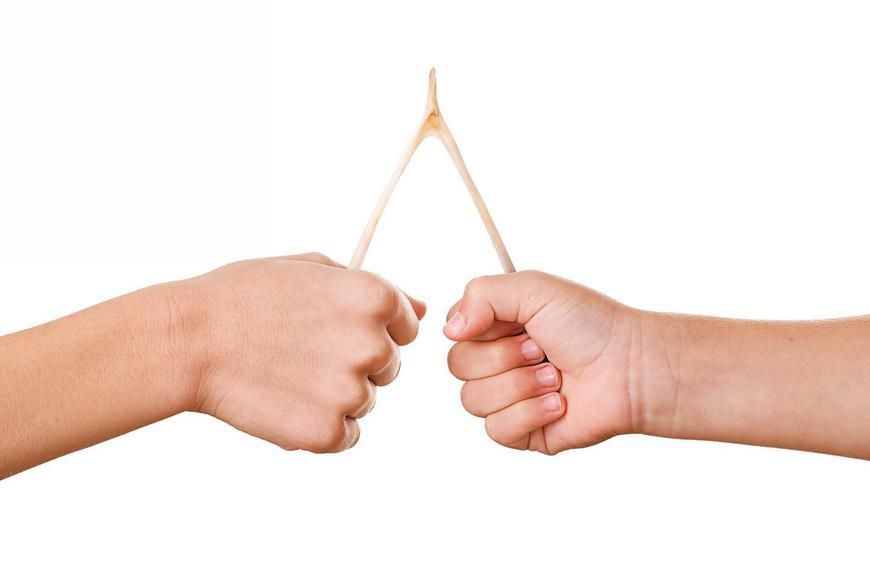
Jack mentioned liver and onions and that was big at our house, too; although as a child I hated it. My dad was a hunter and during rabbit and bird seasons, there was sometimes game on the table – mostly rabbit. It was always a joke that whoever got a piece of bird shot in their portion won the prize for the night. If we had chicken, it was always a whole bird and there was always a “wishbone” to be pulled. My sister and I would each take an end and pull until it broke. Iwishbone have discovered later in life that there are two different interpretations of who wins when the wishbone breaks. At our house, it was the short piece that the rules declared was the winner and the loser could hang their piece on a doorknob. In other houses it was apparently the longer piece that won.

Vegetables that were served with meals were most often canned – corn, peas, green beans, mixed peas and carrots, black-eyed peas, butter beans and the ever popular creamed corn. During the summer, we might actually have some fresh vegetables, especially snap beans or butter beans, and corm on the cob was a favorite. Occasionally, mom might cook up some greens (collard greens or spinach with bacon grease) as a nod to her southern heritage.

Desserts were rare, with Jell-O cubes again being a favored go-to for mom or occasionally ice cream – it seemed almost always to be Neapolitan. Of course there was the occasional pie or cake (angel food or pineapple upside down cake seemed to be the favorites at our watermelonhouse. In the summer months, a watermelon often served as dessert and we had fun spitting seeds to see who could launch them the furthest. The fall usually meant pumpkin pies and the occasional mincemeat pie or a shoofly pie (my dad was Pennsylvania Dutch, so that was a favorite of his). If all else failed, mom would just shift the canned fruit salad from the salad course to the dessert course.
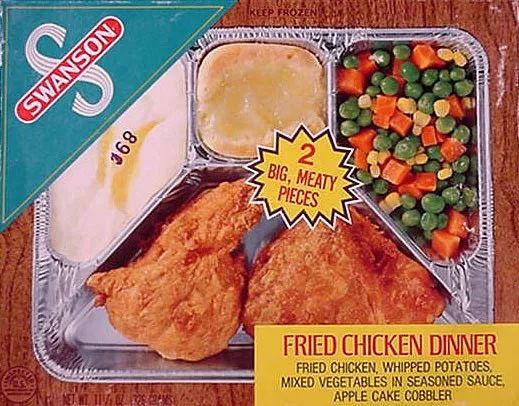
What meals do you remember from your childhood? Do you remember when TV dinners were introduced and became a big thing? Have you ever eaten a TV dinner?How about fish sticks ( the go-to for fish for myTV dinners mom)?  Can you remember back before pizzas were available everywhere? What was your favorite “take out” family meal back then? Do you recall what it was like for the whole family to gather for dinner and not have a TV going or everyone looking at their phones?

Many of us have fond memories or maybe just vivid memories of childhood meals – loved or hated. What meals do you remember from your childhood?  As a matter of fact, how many of you even remember Buddy Hackett? Thanks Jack, for bringing back fond childhood memories.


Don’t hurt, get help.

August 30, 2019

The Jack’s Winning Words blog recently used this quote – “Hurt people hurt people!”  (Aubrey Fontenot)

Jack went on to write about people who were bullied themselves sometimes turning into bullies and shared a “feels-good” story about a bully who was befriended by the person that he was trying to bully.

In the broader sense, people who are hurt quite often take their hurt out on others by abusived wifetrying to hurt them – they share their pain. Hurts can come in many forms – a social snub, a painful breakup of a relationship, bullying by others, the sudden loss of a loved one and many other personal tragedies that hurt. Many of those forms of hurt can be passed on to others by the one is is initially hurt. Don’t hurt, get help.

The most common reactions to a threat or hurt are fight or flight. The ones who hurt timidothers because of their hurt are exercising a form of fight – they are lashing back at the world and those around them. The alternative is often flight, which can lead to withdrawal and depression in some people.  Don’t hurt, get help.

So, what is a third alternate? Maybe the best thing is to get help. That help can come in the form of professional help – a counselor or therapist – or it may just come from a trusted friend with whom you can share the pain or from your pastor. Inbeing kind 1 any case, having someone to talk with about the hurt can immediately help. It takes away the loneliness aspect of the pain. Don’t hurt, get help.

If the hurt is bullying, most schools and businesses now have programs to report such behavior and get help resolving the problem. There is no shame in reporting a bully. You are helping both yourself and that person when you do so. Don’t hurt, get help.

If the problem goes beyond bullying, or maybe involves inappropriate sexual behavior and work, school, in athletics or at church; there is now heightened awareness of those issues and certainly no longer any social stigma involved with being brave enough to angry womanreport it to authorities. There is no need to remain quiet or to be embarrassed about reporting someone for inappropriate behavior. The #MeToo era has removed the stigma and ushered in an era of empowerment for victims.  Don’t hurt, get help.

The loss of a loved one can often result in the person who is left behind becoming withdrawn and maybe even depressed about life without the departed. The pain of the loss is real and It needs to be acknowledged. A period of grief is natural; however, life goes on and it is important to put the memory of the person in its proper place in your mind and move on. Often people find the help that they need after churchsuffering the loss of a loved one in their faith. Your pastor may be the best person to turn to for that help.  Don’t hurt, get help.

What all of these examples have in common is that they do not involve you turning your hurt into pain for others. They don’t involve lashing out or bullying others. They don’t involve sharing your pain or loss by hurting others; and they are not about withdrawing into a dark place. They do all involve getting help with the pain. Don’t hurt, get help.

A first step to getting help is often admitting to yourself that you need help. A few quietwoman-praying moments spent in prayer is often the best time to make that admission to God and to yourself. Perhaps something as simple as, “God, I cannot deal with this alone. Give me the courage and strength to seek the help that I need to deal with this hurt.” With God at your side it is much easier to seek the help that you need. Don’t hurt, get help.

A surprising outcome for those who get the help that they need to deal with a hurt is that many end up helping others.  They find satisfaction and fulfillment working with people who are going through what they went through and passing on the message. You often see news stories about parents who lost a child to some accident or disease or other helpercause creating foundations to work to prevent or cure those causes of loss and pain. They have progressed beyond getting help to giving help. They are living the message – Don’t hurt, get help. 

For them the message has become Helped people, help people.


Look for good and focus upon it…

August 29, 2019

The quote that Jack used in his Jack’s Winning Words blog today is this short phrase – “Focus on the Good!”  (The Christophers)

Yesterday I wrote about putting a smile in your voice to make your day better and Jack left this comment – “SOMETIMES////EASIER SAID THAN DONE”. I suppose that I could return his comment as a comment on his post this morning.

It is sometimes very hard to focus upon the good because there is so much noise made about the bad. The evening news casts provide a prime example. Both local and national news shows seem to be focused upon telling us about all of the bad that has occurred. Locally it’s about who shot who, who robbed who, who carjacked who and on and on. At fire burning homethe national level it’s about large scale disasters or foreign wars (trade wars or shooting wars) or plane crashes or other bad news.

The national news organizations often fly their talking head to the scene so that he/she can stand in the devastation and report. The dumbest and most insensitive thing that all of the newscasters do, including Lester Holt, is to thrust a microphone in the face of a grieving person at the disaster scene and ask, “How does it feel to lose your entire family?” Just once, I wish someone would tell them to get the hell out of their face and leave them alone; but that response probably wouldn’t be shown on the newscast.

Some local newscasts and even at the national level, have been trying to balance things out a bit by taking a minute or two at the end of the newscast to show a good news or feels good story. It’s a start, but one has to endure the first 25 minutes to get to that part at the end.

smiling manHow does one focus on the good? It begins by resolving to look for the good – in situations and in people. There are many situations that are real or perceived setbacks in life – things that didn’t go as planned or as hoped. It is too easy to just see the bad in those situations and get down on life or on yourself. However, if you look hard enough there is good in even those situations, usually to be found in what didn’t happen or in the knowledge that you have gained.

A friend taught me a valuable lesson for life when he said, in response to me expressing my disappointment over something that had gone wrong with an event that we were responsible for running; “Well, at least nobody died.”  He was right. I was beating myself up for something that, in the great scheme of things, didn’t really matter all that much. Nobody died. I was focusing upon the bad and not all of the good that came out of the event. Now my wife and I both use that little phrase to stop ourselves from wasting too much time worrying about or regretting something that happened or didn’t happen that we probably had no control over in the first place.

What steps can you take to allow yourself to focus upon the good? First, you have to be looking for it. Go into every situation and every new relationship with someone looking for the good in it or in them. Second, you need to recognize the good. Sometimes the only good to come out of a situation is the learning that you get from it. If that is it, so be it. Learn from it and move on.

Finding the good in people is sometimes harder because it is difficult to put aside your preconceptions and prejudices. A good example is encountering someone that you don’t girl with nose chainknow who has visible tattoos or maybe a nose ring or perhaps just purple colored hair. Picture that and get a feel for your immediate reaction. Was it “Oh, wow, that’s so cool. I want to get to know this person better” or did you have a defensive reaction that caused you to shrink back from meeting that person? How will you be able to find the good in that person if you can’t even bring yourself to meet them and look for it?

How can you get in the right frame of mind to focus upon the good? Perhaps it is something as simple as asking God each morning to, “Help me see the good man prayingin all things and in all people today.”  At least you will start out the day looking for the good.  You may have to remind yourself several times during the day and maybe even remember that “at least nobody died” when you have a setback; but, I’m pretty sure that you’ll find some good in the things that occur and the people that you meet if you focus upon it. And that’s a good thing.

Have a great and focused day. Find the good!


Be happy; put a smile in your voice…

August 26, 2019

A recent post to the Jack’s Winning Words blog featured this quote – “Smile when you answer the phone.  The caller will hear it in your voice.”  (Unknown)

Jack went on to write about trying to smile when he answers the phone, even if it is a sales call or a robo call. He even tries to have a pleasant conversation with sales call operators, with mixed results. I must admit that the flood of robo calls has probable taken the smile off my face when I answer the phone; but, I try not to be rude. Sometimes, just hanging up is the only solution to a persistent sales pitch.

The tone of your voice conveys a lot about your attitude at the moment. That is why people will ask if you’re OK when you mumble a frowney face greeting in return toEmoji_Face-with-Pleading-Eyes their cheery, “Hello.” It might just be that you were distracted and lost in thought when they encountered you or perhaps you were thinking about something unpleasant. Whatever the reason, you didn’t have a smile on your face or in your voice.

It takes a conscious effort to wear a smile on your face and to have one in your voice. Most of us have “at rest” faces that are much less inviting that we know. It’s not that we are unhappy or mad, it’s just that we aren’t making the effort to smile, to be happy.

You may ask, what do I have to be happy about; why should I smile? Well, for one; you woman-prayingwoke up again this morning. The alternative might be worthy of a frown. Second, the things and people that God has put into your life again surround you. Surely, those loved ones that you still have bring a smile to your face and fond memories of those that have departed can add to the reasons to smile. Perhaps starting your day with a brief prayer of thanks to God will put that smile on your face. Whatever it take, try putting that smile on each day before you venture out. Your day will go much better for that effort made first thing in the morning.

People with a smile on their face and in their voice seem to attract other people with theanimated-light-bulb-gif-22 same attitude and that leads not only to a more pleasant day, but often to a much more productive and successful day. Most of us prefer doing business with smiling friendly people, rather than some sourpuss sales clerk or co-worker who seems put out by having to talk to us.
So, take the time this morning to thank God for another day and all attitude-2of the things that He has provided. Ask that He stay with you during the day to provide you with what you need. Then, put on a smiley face and let it seep into your voice.

It’s going to be a great day!


What will you do with the ball?

August 20, 2019

A recent post to the Jack’s Winning Words blog used this sports quote – “The man with the ball is responsible for what happens to the ball.”  (Branch Rickey)

Another sports saying, probably from tennis, is the familiar, “the ball’s in your court.” Others include, “you’ve got the ball”, “give me the ball” and the ever popular, “don’t drop the ball.”

Sports metaphors are often used in inspirational speeches because they are easy to relate baseball glove and ballto and usually simplistic. Most people grew up playing sports of some sort and can quickly relate to how “life is like (fill in your favorite sports metaphor here). Many sports involve a ball of some sort and size, so metaphors that involve a ball are common. When we succeed, we got the ball over the goal line or in the goal; however, when we fail we dropped the ball.  What will you do with the ball?

man relaxingHaving the ball is much different from just being a spectator and watching the ball. Some tend to approach life as if they are a spectator. They sit back and watch rather than take the ball and do something with it. Yet life often thrusts the ball into our hands and we are forced to do something with it. We can pull back and drop the ball or we can take it across the goal line. What will you do with the ball?

Your faith is the ball that God hands off to you. You can take it and run with it, living football playeryour life in such a way that you get the ball over the goal line or you can fumble the ball. Just as the football player with the ball may have to break a few tackles to get to the goal line, you will likely have to endure some obstacles and things that want to bring you down on your way to the end zone. Hold strong to your faith (the ball) and you will reach the goal line. Your end zone is eternal life and you have the ball. What will you do with the ball?

woman-prayingSo, to slightly modify Mr. Rickey’s quote – The man with faith is responsible for what happens to that faith. What will you do with your faith?

You have the ball. What will you do with the ball?