“All of us, at certain moments of our lives, need to take advice and to receive help from other people.” (Alexis Carrel)
Of course that little quote came from the Jack’s Winning Words blog that I get 5 times a week. Jack went on to write – Sometimes the advisers suggest “consult a pastor.” There truly are problem situations out there in the real world. Fortunate are those people who have someone “to lean on.” 😉 Jack
Jack is the retired pastor of the church that I attend and I’m sure many people have found him to be a comforting pillar to lean on over the years. I have always found Jack’s calm, yet warm, presence and reassuring words to be a comforting touchstone to which I could look for reassurance that things would be alright if I continued to put my trust in God.
Asking for help or advice for others is hard for some people. They were probably told not to be a cry-baby when they were growing up and to “suck it up” and face things themselves. They may be embarrassed to be in a position to need help. Many want help, but just don’t know how to ask for the help they need. There are also people who seem to decline help of any sort from anyone. They push away those who are seeking to help them or stubbornly refuse to ask for the help they need, even in the face of certain failure. Of course there are also people who are so blissfully ignorant of their situation that they don’t realize that they need help.
We live in an interconnected world and it is important to realize that our problems do not occur in a vacuum, nor will the solutions to those problems be found in a vacuum. Problems may be caused by, or may impact, others around us. We are not alone in this problem space and we may be able to get advice or help from others, based upon their experience with the same problems. It is also important to share our problems with loved ones, so that they understand what may be causing us to act as we are and not think that they are the cause of those actions.
In Jack’s post, he mentioned a couple of the advice columnists in our local paper and, certainly, that is one way to seek advice. A quicker way is to turn to those around you that you know and trust and just ask, “if this happened to you, how would you handle it?” For those problems that are too big or too embarrassing to discuss with casual friends, one may need to turn to trusted sources, often a relative or very close friend and sometimes a pastor, priest, rabbi or imam. Keeping problems that are gnawing at you inside just makes them seem bigger and scarier. The key is to get it out there and ask for their advice or help.
Sometimes, just summoning up the courage to share your problem with a trusted friend is  enough to release the pressure that had been building up inside of you. Even if that friend doesn’t have a whole lot of advice to give you, the fact that you got it out there and found a way to verbalize what has been bothering you many time allows you to take a whole new look at the problem yourself. You may realize that what you thought was the problem wasn’t what was causing all of the anxiety or concern, so much as how you were reacting to the problem. Stating the problem clearly also may allow you to take the step of saying to yourself, “So what?”
Years ago I wrote a post here about being able to say “So what” to life’s problems. That post was based upon some advice that I had received from a friend and neighbor, John Hussy. John often used the phrase “So what” when dealing with many of life’s issues and he advised me to stop and look at things the same way. If you can look at what has happened or what may happen and say, “So what? Did (or will it) it kill me?” Then you can put the problems into perspective. So what if I got turned down for the date or that new job. So what if I had a meltdown in public or at work? So what if I’m not in the “in crowd” at school or at work? So what if some people see me as “different” and don’t understand or accept me? Did any of those things kill me? If not, then why am I letting them dictate my life now? You may realize that it is not the perceived problem that is causing you the pain; but, rather your reaction to it. It’s time to say “So what” and move on. You’ve got better things to do with your life than worry about those “So what” problems.
The take away here is not to keep things bottled up. Seek help or advice from others. Then listen to their advice and sort through what makes sense to you to try or accept their help and get on with the task. Many times the path to a solution will become apparent just because you had to explain to someone else (and in the process to yourself) what you  perceive the problem to be. Don’t forget God in your search for help, since talking to Him is often the best way to resolve things. I have written several times here about the calming and healing effect of the simple prayer, “Not my will but thy will be done.” Try it some time. Give God your problem. You may discover that giant weight is removed from your mind after saying that little prayer and believing that it will happen.
Learning how to seek and accept help is just part of learning how to live in our interconnected society. Another part is learning how to give help to those who reach out to us. So many times we get off on the wrong foot by starting out with some statement like, “I know how you feel”. No you don’t, so don’t just say that and expect a good reaction. It is better to say, “I don’t know how you feel, but I accept that you are in pain; how can I help.”
Acceptance is the foundation to being a good source of help. Start with the mentality that says I accept you as you are, not like I would like you to be. Then ask them to share the source of their pain and listen (don’t talk). Being a good listener is the key to being a good helper. Sometimes you will hear things that the speaker doesn’t even realize that they are saying. It may be in how things are phrased or emphasized that gives you the clue to the real root of their problem. It’s hard to listen that intently if you are talking or thinking about what you will say next.
Another key to being a good advice giver is not to offer advice only within the context of  your own life experiences. If your advice starts with, “Well, if it was me, I’d…” it is likely to be ignored. It’s not you and the person who you are trying to help isn’t going to react as you think you might. If you start off with, “Wow, I can’t imagine how that must feel”; but maybe here are some things you might try; at least you’ve gotten off on a better foot.
Having the ability to be a good listener and offering good advice only works for the other person if they perceive that you are willing to help. It’s hard enough for them to ask for help, much less trying to seek that help from someone that they perceive to be self-centered, aloof or uncaring. Being perceived by others to be a caring and open person, with whom they can discuss things, takes work. It means greeting others as if you are happy to see them and are interested in their lives. It means asking about then before telling them about things in your life. It means listening when they talk, instead of focusing upon what you want to say next. It means picking up on what they are saying and how they are saying it and asking follow-up questions. It means opening up your shell and dropping your shields first, so that they feel comfortable doing the same with you.
Being there to share their pains and to give help or advice is not for everyone and not for every situation or person that you may encounter, but it is critical for those in your life with whom you share bonds of love or true friendship. There is no greater calling or responsibility than to become a trusted adviser to your friend or loved one. Treat the role with the respect that it deserves.
 Sometimes the little prayer that I referenced above is a good way to bring both of you to a humble, open starting point from which to honestly discuss a solution to the problem. Nothing exposes your own vulnerability and honest concern for them more than asking the other person, “Will you pray with me?” If they cannot or will not respond positively to that request, then perhaps they are not yet ready to accept your help.
So, my friends, as we venture into a new week ahead; don’t be afraid to seek the help you need and be ready and open to give the help that you can to others. In either role, never be afraid to bring the power of God into the conversation. That may be the best advice of all.
 can remember the years of annual goal setting exercises that I went through at various technology companies that I work for back then. While they might have commanded my attention and thoughts for a while and certainly required my energy, they never really inspired my hopes. If anything the achievement of those goals might have served as an enabling step towards achieving my hopes.
 There’s a fine line between hopes and dreams. I suspect that most people’s hopes are centered more on life goals than on work goals.
 need to be proactive and action oriented and not reactive and defensive. You are much more likely to be successful if your start out with the positive attitude that says “I’m going to be open and friendly with those that I meet in hopes of finding Mr./Ms. Right”, than it is to start out by saying” I’m going to be cautious and guarded around others so that I don’t take the change of getting hurt”.


 Posted by Norm Werner
  prejudices or left over anger or regret that causes us to fail in our resolutions to do better in the future. Look closely at that picture to find help with letting go. Or perhaps it is the focus and content of the resolutions themselves that doom us to failure. Maybe we are too self-centered in the topics of our resolutions and maybe the baggage that we drag with us from the past does get in the way. Or, maybe we make resolutions that are too vague or too grandiose. What would be so bad about making a resolution like this one –
 happening to benefit you, but rather doing things that will benefit others. You would benefit from that too; I think. Maybe time spent worrying about others will take our minds off worrying about ourselves. Maybe “doing the right things” in business and in life will cause the right things to happen for you. Resolve to be there for others.
 your life, get yourself an accountability partner for that resolution; someone that share the resolution with and then with whom you can meet regularly and share a progress report about that resolution.
 Recently I read a question in in one of those newspaper advice columns concerning how to get people to accept and form new opinions about someone who apparently acted like quite a “jerk” when he was younger, but who has now matured and is a better person. Many people face that same dilemma in life, especially young men who really did act like jerks when they were younger. Some people don’t seem to be able to give them the benefit of the doubt, once they matured enough to begin acting in a more acceptable manner. Most grow out of that phase. Unfortunately some of those young men get themselves trapped into feeling like that have to continue to act like jerks, because that’s what people expect of them.
 that there is no real reason for motorcycles to have loud, un-muffled and annoying exhausts other than the riders need to attract attention to themselves. They are saying, “Mommy, look at me” by being as noisy as they can be. They never outgrew the need to be a jerk to get attention.
 So, maybe Dyer was wrong. Maybe what other people think of me is my business. It certainly is within my control. If I don’t want to be considered to be shifty and dishonest, then I can decide not act in a manner that would lead to that conclusion. If I want to be considered to be dependable and a good friend, then I can be there when needed and be the good listener that is oft needed in times of crisis. If I want to be accepted, I have to accept others, too. If I want to be someone who is loved, I need to give love. What others think of me are opinions that reflect the behaviors from me that they see. And that is my business.
 I didn’t realize it at the time, because I hadn’t gone back and liked for a common thread, but there was a theme that ran through all of articles and posts that I had read and referenced in those posts. The theme is the request from all of the people who may be living in any of those groups that they just be accepted.
 be like us or would somehow be better off if they were more like us. That belief is based upon the rather egotistical viewpoint that we represent “normal” and be definition those who are not like us mus be sick or somehow are abnormal. So, we jump in to try to “help”; but that help carries demands for change and conformity to what we see and define as the norms of our group, for which we have usurped the title “society”. Behavior that is not like ours is defined as somehow being anti-social and wrong. We feel that we must do something about that. While all the while, the person that we are trying to “help” is saying:
 appeals to religion or the Bible, sometimes it is just ignorance manifesting itself in fears of catching whatever it is that they find offensive. Many times parental concerns about the influence of these different people on children are sited as the justification for the bad behavior that we call prejudice. Yet that different person is not going to steal the minds of our children or infect the world with their difference; rather they are just standing there and asking you to accept them as they are.
 someone different from you today and maybe you will find that it will allow you to
  need and trying to reach out for help. Sometimes, as Hugh Elliott said, all they need or want is for someone to listen to them. In our society today we are far too distracted by other things to really listen or perhaps far too focused on what we want to say next to pay attention to the person speaking to us.
 people have trouble finding the right words to get across what they are trying to express, but the fears and concern or maybe the pain that is driving the conversation will come through if you just listen. You might also be able to pick up on the level of guardedness that the person is using, which may be an indication that you are not yet truly a trusted adviser. That should cue you to try to build that trust.
 they are speaking. The opportunity to verbalize their issue to someone else helps clarify it for them, too. Sometimes they might just need someone to say, “It’ll be alright” or “you’ll make it through this.” Maybe your time and attention is all that they needed to reassure themselves.
 ourselves. The time you spend listening too and helping other is just paying back or paying forward for the help that you will need and receive some day.
 of videos from Sesame Street skits to pop songs that all have that same title and theme. The string that runs through them all is that you should be happy to be the person that you are and not try to be someone else.
 hung up on how they look for dress or act in public and who they hang out with (or are not invited to hang out with). It’s hard to be happy with yourself if you don’t see yourself as being “cool” or being a member of the “in-crowd”. I posted here about that in a blog
  that time in our lives. Being in those groups is like being a fish that is swimming in sync with a large school of fish. One can look around and feel a sense of security and belonging that feels good. Just go with the flow and everything will be alright. You’ll be cool.
 hout depending upon the approval of a group to bring happiness. They discover that they are “happy to be me”. We tend to identify people who are at that stage in life as being self-confident. People who have not yet arrived at that level of self-aware comfort with themselves are sometimes be said to be “phony’ or perhaps “fake”.
 to remain focused upon being as good of a you as you can be and not get distracted by desires to be something or someone else.
 kit is described for those who need “relief.” It contains a rubber band (be flexible), a candy kiss (everyone needs a kiss–encouragement), a life-saver (be a helper), an eraser (we all make mistakes) and a toothpick (pick out the good things in others and in yourself). Other stress relievers: Eat wisely, breathe deeply, shake and dance…and watch TV (not the news). 😉 Jack
 kit reminds me of Snoopy of the Peanuts cartoon. Snoopy often would break into his care-free happy dance, much to the chagrin of Lucy. Eventually his infectious joy would crack even her facade of stressful seriousness. We all need more Snoopy-like happy dancing in our lives.
 may find comfort in the words of Philippians 4:6-7 – “Do not be anxious about anything, but in every situation, by prayer and petition, with thanksgiving, present your requests to God. And the peace of God, which transcends all understanding, will guard your hearts and your minds in Christ Jesus.” If you can get to that peace, you will realize that the stress is gone. So, make sure that a Bible is in your stress relief kit.
 interesting story about the sign on Truman’s office and the origin of that phrase at the
 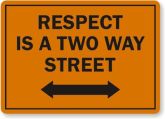 thought that it really isn’t just about the buck stopping here, with me (or you); but, also the fact that the different behavior that is needed to combat that lack of respect and civility must start with me, too. It starts with me showing respect for the opinions of others, even if I don’t agree with their option or point of view on things. There are ways to respectfully disagree without resorting to screaming or name calling. Rather than waste my time and yours trying to denigrate you and your position, I need to focus upon doing a better job trying to understand your position and searching for some common ground upon which we might be able to find compromise.
 cheek. (Where have we heard that before?) Maybe, instead of just blurting back, “You’re wrong”, we could say instead, “I see that we have different opinions on this; is there anything about it that we can agree upon?” There may not initially be any apparent common ground; but, just changing the situation from a confrontation into a conversation may defuse what otherwise might escalate into something that you both regret later. We can start by respecting that we have differences and being civil about it. See how that works..
 have happened in our everyday lives, especially in the aspects that deal with politics.
 own opinions by looking through the lenses that are held up by others or by choosing our own lens and view of things. If we really need an external lens to look through, we might do better by looking through the lens of the Bible and the “truths” that we will find there, rather than the “truths” that we see in a political ad or a tweet.
 would be enough “I’s” being respectful; and civil to others that it would turn us into “we” and then everything would be better. “We” would be living in a more respectful and civil world. I like that; and it starts with me.
 Sometimes having a good cry is the best immediate response to something that has happened in our lives, both sad and happy things. Letting go for that moment and allowing yourself to weep provides a needed release from the unnatural control that we are all taught as we grow up. That same need for self-control also dulls the joy that we might otherwise feel from good things in our life. As Golda Meir once said – “Those who do not know how to weep with their whole heart don’t know how to laugh either.”
 torment of tears into perspective within their life. Tears caused by pain, loss or sorrow most often involved another person and our memories of them. Perhaps the pain was caused by a snub or by bullying or by someone making a harsh or unfeeling remark to your or about you. In any case, life goes on and you must, too. “There is an ancient tribal proverb I once heard in India. It says that before we can see properly we must first shed our tears to clear the way.” – Libba Bray
 almost always something or someone to forgive, even if you realize that it is yourself. I have witnessed people crying in anger at a deceased life partner because they felt like they left them here alone. They later have to forgive themselves for that selfish display. Perhaps the term forgive should include the thought of healing, too.
 to make the best of that future.
 So, go ahead and have that good cry; whether it be in sadness or in joy, forgive and then realize in the words of John Vance Cheney that – “The soul would have no rainbow had the eyes no tears.” Find the rainbow after the tears and move on. God will keep track of those tears for you and makes the rainbow to show you the way forward.
 NormsMilfordBlog