Admittedly, I’m one of those people who worry and agonize over things that I’m doing or planning to do. That’s especially true if the task that I’m worrying about is something that I signed up to do for others or for an organization. How many of you can identify with that?
Sometimes it involves things like organizing an event on behalf of an organization or maybe it’s a personal commitment to someone, like taking them somewhere or watching their houseplant while they are away. Whatever it is; if you are like me, you may have a tendency to overthink it, over analyze it and over become overly critical of yourself, if things go awry. You may also become overly critical of your performance of the task after the fact.
Earlier this year, I was one of the two people who organized and presented the annual  Fourth of July parade in our little Village. There are lots of tasks and decisions needed to organize and pull off a parade and lots of places where one can look back and think that they might have done a better job. After what was by all measures a successful parade, I was following my natural tendency to be critical of myself for what we accomplished and what we could have done differently. My cohort in the effort listened to my laments for a while; but, finally, he just looked at me and asked, “Did anybody die?”
As I stopped to think about answering that question, it finally became clear to me that I was agonizing over things, most of which couldn’t be changed and which weren’t life  threatening or even all that important in the grand scheme of things. Just taking the time to think about that question changed how I looked at the situation and that has served to keep things in my life in better perspective. I’m reminded of a little quote in a recent post to the Jack’s Winning Words blog –
“When you change the way you look at things, the things you look at change.” (Wayne Dyer)
So, if you. too, let the day-to-day things in life that you face become worries or concerns, maybe asking yourself, “Did anybody die or will anybody die?” because of this decision or your ac tion. You may quickly find that the decisions that you’ve been agonizing over, while important to you and others at the time, are not life threatening. Your life and theirs will go on. Given that revelation, you can then focus on doing the best that you can in the situation. Instead of beating yourself up over not doing something or not making a different decision, be happy that you did your best.
No one died! Get on with your life.


 Posted by Norm Werner
  planning and piece-by-piece work that goes into building a physical bridge. Achieving most dreams/hopes/goals is like that. One must spend some time in the planning stage ( I sometimes call it the “fixin’ to” stage) and break the actions that are needed down into smaller, achievable pieces. It is then possible to start accomplishing those little pieces and to
  celebrate little milestone on the way to the goal.
 something for someone else that needs to be done. Opening a door or smiling and saying hello are example s of very small acts of kindness. Those aren’t just empty gestures and they are usually acknowledged by the recipient. There is no expectation of reward or even reciprocation, but even those small acts can make one feel better about themselves and about their fellow man. They are overt acts that say, “I see and acknowledge you. I see your need and I am happy to help.”
 So, take the opportunities that you are given each day to extend an act of kindness towards someone else. Your gesture of kindness are not wasted, even if they go unacknowledged at the time. Showing kindness to total strangers is a big part of what bonds us together as humans. Remember the words of Jesus as he taught his Disciples in Matthew 25:40 – “Truly I tell you, whatever you did for one of the least of these brothers and sisters of mine, you did for me.”
 “We’ve always done it that way” a lot. The same can be said about most churches and their services. I’m on the church council at my church, too. Both represent organizations that need to make changes to the way that things have always been done; but both also represent organizations that are in danger of being held hostage to tradition.
 against modern times, changing tastes and new traditions. Empty and abandoned churches abound as do defunct little community organizations that time has passed by.
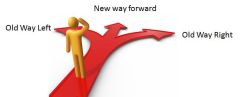 I think the key to solving these problems in the church and in little local organizations starts with the advice of Somerset Maugham. We (they) must not become slaves to tradition, locked in the past. Rather we must figure out how to honor those traditions while changing with the times. The “good old days” are behind us, but there are still good times ahead for those organizations willing to explore new approaches and new ideas.
 Those are small steps, but they are steps in the right direction – the direction of change. Perhaps they are not so much breaking with tradition as they are adding new traditions into the mix. In either case, tradition is no longer a jailer.
 erroneous assumptions and conclusions by the intelligence community – essentially fake truths. The real truth later came out that there were no weapons of mass destruction found in Iraq. So, was that fake news? Not really. It was news fabricated out of false or bad information (fake truth) that was provided by normally reliable sources and embellished a bit by politicians eager to justify a decision that likely had already been made. The news media, always hungry for a good story, took it and ran with it.
 intelligence reports and more of them are bound to come out as the truth struggles to the surface. It is not hard to imagine a bunch of Russian hackers (be they military, the intelligence community or civilians) deciding to see what they could do to influence the election or undermine our concept of democracy. It is also not hard to imagine that a contact within the political apparatus of any of the candidates would find a receptive ear to anything that might give them an advantage. After all, politics is not practiced to the highest of moral standards. However, it might prove to be as false as the weapons of mass destruction news to jump all the way to conclusions about collusion or conspiracy. Stupidity, yes. Poor judgement, most certainly. Self-serving, of course.
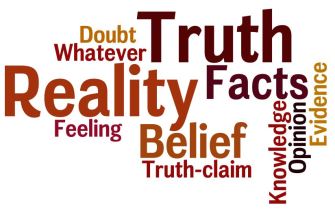 first two definitions before we form our beliefs about what the truth really was. The good news is that Buddha and William Shakespeare were both right and we will eventually see the truth come out. Let’s all hope that Jack Nicholson was wrong in the movie
  required skills. The allure of power is very compelling and apparently sufficient to overcome common sense, personal morals and a sense of good taste in most of the political candidates. One almost feels sorry for those unwilling to lower themselves into the pit that is our current political arena. There is no way in this era of dark-money, PAC-based, mudslinging that their good names will not be dragged down to the level of their opponents.
 out and vote for those candidates with whom we can best identify in the never-ending “Us vs. Them” battle of self-interest. Since those battles are almost always based upon fear, the candidates who can best feed upon and amplify those fears often get our attention and our votes. The poor candidate espousing doing what is “right” is seldom heard above the shouts of “protect what is ours.”
 often filled with unsubstantiated accusations that one of the candidates was somehow unfit to serve. The Chicago Tribune did an interesting article about the history of political mudslinging during the last presidential election – see
  see the good that is within those for whom we vote, since their opponents and their PACs have covered them with so much mud. And, remember that this primary election is like one of the undercard matches at a WrestleMania extravaganza. We haven’t seem anything yet. Wait until the main event, when the real fireworks start going off. You want mud? We got mud. Let the real mudslinging begin!
 advice from today’s post to the
  I might add, “Before you judge…” I’ll let you fill in the words that should follow that opening phrase. There’s the old Biblical saw from Matthew 7 – “Judge not, lest ye be judged.” It is the rush to judgement that provides the foundation of prejudices and fears.
 you Tweet, reconsider.” The same is true of sending emails or text messages or posting to Instagram. Everything is retained somewhere these days and lots and lots of trials and media stories revolve around the content of those electronic posts that people seem to send off without regard to their future use or misuse.
 posting before opening one opens one’s mouth or before hitting the send/post button. In interpersonal settings, the advice should probably be to listen more than you talk and to carefully choose your words, if you feel the need to express an opinion or to react to something that someone else has said. I recall the quote –
 any of those is better than becoming well known as a prejudiced bigot. It is better to be considered to be somewhat of an enigma than to be well known as a jerk or an idiot.
 They wish things were better and blame the fact that they aren’t on things that they feel like they can’t control. Yet others who had the same starting point in life take the path of hard work and a dedication to bettering themselves and their situation. They work at a job and go to school. They work at a job and raise a family. They work. And, it works for them.
 better future provides the foundation for the desire to achieve that dream. As Napoleon Hill once said –
 that experience. The obvious bridge role is with our own children who watch us as they are growing up for cues and clues as to how to act and how to react to things as they happen. Others whom we might not even be aware of also look at our actions for some guidance – for either what to do or what not to do. So, for them, we are a bridge to their own future.
 closed-minded, prejudiced and angry? Do I appear to be a person that others would like to get to know or someone to avoid? Do I take the time to listen and understand the other person or do I jump to a conclusion based upon some preconceived notions or prejudices? Am I willing to consider a different point of view or am I hunkered down in a fixed position and unwilling to even consider something different? Am I displaying the behavior and attitude that Jesus would have displayed in this situation?
 world and the generations that follow you a bridge to understanding, acceptance and love for your fellow man.
 Searching for one’s identity or getting comfortable with it, once it becomes apparent, is a rite of passage for all kids growing up. Some never seem to end that search or perhaps just carry it a bit further into adulthood. You may have met someone in their 20’s or even older who tells you that they are still trying to find themselves. At the opposite end of that spectrum are the precocious kids who have made up their minds at an early age about who and what they are and have set about to pursue their dreams and fulfill their destinies. No matter where you are on that journey of self-discovery – It’s OK to be you.
 around others. Whatever the reason for their discomfort, many of these people (mostly young people) try to disguise or hide their true self by emulating others and by joining groups of other misfits into which they can blend and disappear. They may alter their appearance or dress in a specific manner to try to fit in with the group that they have chosen. Eventually most see that It’s OK to be you.
 in his song, “
 many people value knowing you for being who you are – for your different outlook on life and your opinions on things. Eventually, you will find that soul mate who has been looking for someone exactly like you and maybe then you will finally accept and understand that It’s OK to be you.
 NormsMilfordBlog