It’s that time of the year when our thoughts turn to the changes and renewals that we hope for in the coming year. We codify our hopes in New Year’s resolutions, many of which don’t make it past the first week before they are broken or forgotten. But, why is that?
“New Year’s resolutions often fail because toxic emotions and experiences from our past can sabotage us or keep us stuck with the same old thoughts, patterns and regrets.” – Debbie Ford
Perhaps it is our inability to let go of the past, to purge our minds of the poison of  prejudices or left over anger or regret that causes us to fail in our resolutions to do better in the future. Look closely at that picture to find help with letting go. Or perhaps it is the focus and content of the resolutions themselves that doom us to failure. Maybe we are too self-centered in the topics of our resolutions and maybe the baggage that we drag with us from the past does get in the way. Or, maybe we make resolutions that are too vague or too grandiose. What would be so bad about making a resolution like this one –
“Let our New Year’s resolution be this: we will be there for one another as fellow members of humanity, in the finest sense of the word.” – Goran Persson
I’ve posted here in the past about being there for others. See Don’t try to understand and don’t judge, just be there… and Be there for someone today… or Just be there…
A common theme through all of those posts is the important role that you can play in the lives of others by being there for them to listen, to hug, to reassure, to forgive (if necessary) and to accept them.
We could spend some time discussing what Persson meant by “in the finest sense of the word”; however I think you probably get that and get that it isn’t about something  happening to benefit you, but rather doing things that will benefit others. You would benefit from that too; I think. Maybe time spent worrying about others will take our minds off worrying about ourselves. Maybe “doing the right things” in business and in life will cause the right things to happen for you. Resolve to be there for others.
A second observation that I have about many New Year’s resolutions is that they don’t contain any commitment to accountability. Maybe that’s why we make many of them in private and then don’t share them with others. David Brin said – “When it comes to privacy and accountability, people always demand the former for themselves and the latter for everyone else.” Resolutions made in private carry no accountability. We might be ashamed that we have to resolve to lose weight or quit smoking or drinking or quite some other bad habit or behavior; but unless we state it in public and have others to hold us accountable it is all too easy to let the resolutions slip away, at first into tomorrow and then into never. If you are serious about making a resolution to change some aspect of  your life, get yourself an accountability partner for that resolution; someone that share the resolution with and then with whom you can meet regularly and share a progress report about that resolution.
My final bit of New Year’s resolutions advice is to shorten the time frame of your resolutions dramatically. Don’t make grand resolutions that are supposed to play out over the entire year. Take Henry Moore’s advice – “I think in terms of the day’s resolutions, not the years’. If you start out each day with resolutions for that day perhaps the “resolve” to actually accomplish them will be fresh enough and strong enough to actually be successful. Maybe instead of resolving that you will stop smoking this year, you could start by resolving that you will quit smoking today. If you do that today and tomorrow and the next day, before you know it the grander resolution will also be accomplished. After all it’s just for today, right?
I’m not personally a fan of New Year’s resolutions, but for many the New Year provides an artificial point in time from which to try to move in new directions. More power to you if that is the case for you. I hope that you find some value in the advice that I tried to give above and good luck to you with your resolutions. Have a Happy New Year!


 Posted by Norm Werner
  new email or message or Instagram has just arrived. There is a sense of immediacy about it that demands me attention. My wife finds that to be both disturbing and sad. I agree when I sit and think about it, but so far cannot overcome the urge to see what is happening that caused the alert sound.
 through the phone are amazing, they do not contain the other sensory cues that real experiences contain and are thus somewhat one-dimensional. The sights may be wonderful, but the sights, sounds, smells and feel of actually being there and in the experience are far more wonderful and lasting.
 reach out to you for help or to show affection. You cannot really love your phone, nor can it show you love back. Besides that, real life doesn’t need to be recharged every 8-12 hours. Your significant other shouldn’t need to tape your phone to their forehead (see Jack’s post) in order for you to look at them, nor will seeing a Facebook post about your children’s sports events really be the same as being there for them. Put the phone down and pick up life again.
 Recently I read a question in in one of those newspaper advice columns concerning how to get people to accept and form new opinions about someone who apparently acted like quite a “jerk” when he was younger, but who has now matured and is a better person. Many people face that same dilemma in life, especially young men who really did act like jerks when they were younger. Some people don’t seem to be able to give them the benefit of the doubt, once they matured enough to begin acting in a more acceptable manner. Most grow out of that phase. Unfortunately some of those young men get themselves trapped into feeling like that have to continue to act like jerks, because that’s what people expect of them.
 that there is no real reason for motorcycles to have loud, un-muffled and annoying exhausts other than the riders need to attract attention to themselves. They are saying, “Mommy, look at me” by being as noisy as they can be. They never outgrew the need to be a jerk to get attention.
 So, maybe Dyer was wrong. Maybe what other people think of me is my business. It certainly is within my control. If I don’t want to be considered to be shifty and dishonest, then I can decide not act in a manner that would lead to that conclusion. If I want to be considered to be dependable and a good friend, then I can be there when needed and be the good listener that is oft needed in times of crisis. If I want to be accepted, I have to accept others, too. If I want to be someone who is loved, I need to give love. What others think of me are opinions that reflect the behaviors from me that they see. And that is my business.
 I didn’t realize it at the time, because I hadn’t gone back and liked for a common thread, but there was a theme that ran through all of articles and posts that I had read and referenced in those posts. The theme is the request from all of the people who may be living in any of those groups that they just be accepted.
 be like us or would somehow be better off if they were more like us. That belief is based upon the rather egotistical viewpoint that we represent “normal” and be definition those who are not like us mus be sick or somehow are abnormal. So, we jump in to try to “help”; but that help carries demands for change and conformity to what we see and define as the norms of our group, for which we have usurped the title “society”. Behavior that is not like ours is defined as somehow being anti-social and wrong. We feel that we must do something about that. While all the while, the person that we are trying to “help” is saying:
 appeals to religion or the Bible, sometimes it is just ignorance manifesting itself in fears of catching whatever it is that they find offensive. Many times parental concerns about the influence of these different people on children are sited as the justification for the bad behavior that we call prejudice. Yet that different person is not going to steal the minds of our children or infect the world with their difference; rather they are just standing there and asking you to accept them as they are.
 someone different from you today and maybe you will find that it will allow you to
  need and trying to reach out for help. Sometimes, as Hugh Elliott said, all they need or want is for someone to listen to them. In our society today we are far too distracted by other things to really listen or perhaps far too focused on what we want to say next to pay attention to the person speaking to us.
 people have trouble finding the right words to get across what they are trying to express, but the fears and concern or maybe the pain that is driving the conversation will come through if you just listen. You might also be able to pick up on the level of guardedness that the person is using, which may be an indication that you are not yet truly a trusted adviser. That should cue you to try to build that trust.
 they are speaking. The opportunity to verbalize their issue to someone else helps clarify it for them, too. Sometimes they might just need someone to say, “It’ll be alright” or “you’ll make it through this.” Maybe your time and attention is all that they needed to reassure themselves.
 ourselves. The time you spend listening too and helping other is just paying back or paying forward for the help that you will need and receive some day.
 to open up to others, but you cannot allow yourself to become an island, set apart from others, unapproachable and cold. Man, by nature, is a pack animal. We want to belong to a pack and run with a pack. We are social animals and being social means touching others and letting them touch us. The fact that every now and then, even though we might be being careful, we break something doesn’t mean that we stop trying, stop interacting and being social.
 cases of people who are not touched by others, because of their reticence. If you see someone like that, make the effort to reach out and touch them. They need that interaction and you may be surprised that they actually have the potential to make significant contributions to the conversation, once they are pulled out of their protective, “don’t touch” shells.
 consumed that food spreading a smile to the many people that he meets that day. His smile is then passed on to another person and from them to yet another.is smile is then passed on to another an then from them to yet another. How nice it would be if we could see the kind word of greeting that we speak or the smile that we share being spread from person to person throughout the day. Maybe we have to use our imagination, but the ripple effect of you smile or you friendly “Hi, how are you?” does spread far and wide.
 and that they have an impact on your life, on the decisions that you make and on how you feel about yourself. We all seek the approval of others, but what we are really seeking is to be touched by them – to allow our souls to feel the touch of sharing with another’s soul. The feeling that it really is a wonderful life doesn’t take place unless you allow it to happen by reaching out and touching others and them allowing them to touch you.
 of videos from Sesame Street skits to pop songs that all have that same title and theme. The string that runs through them all is that you should be happy to be the person that you are and not try to be someone else.
 hung up on how they look for dress or act in public and who they hang out with (or are not invited to hang out with). It’s hard to be happy with yourself if you don’t see yourself as being “cool” or being a member of the “in-crowd”. I posted here about that in a blog
  that time in our lives. Being in those groups is like being a fish that is swimming in sync with a large school of fish. One can look around and feel a sense of security and belonging that feels good. Just go with the flow and everything will be alright. You’ll be cool.
 hout depending upon the approval of a group to bring happiness. They discover that they are “happy to be me”. We tend to identify people who are at that stage in life as being self-confident. People who have not yet arrived at that level of self-aware comfort with themselves are sometimes be said to be “phony’ or perhaps “fake”.
 to remain focused upon being as good of a you as you can be and not get distracted by desires to be something or someone else.
 spaceship or serve as a politician, but class is rare—something lacking in this crassest of American eras.” (Ted Rall in Forbes) Jack went on to write – John Glenn was classy! He was humble, well-mannered, intelligent, who never tried to build oneself up by tearing others down.
 worlds it seems the second definition is getting harder to find. George Clooney is often mentioned as a modern classy actor, although the ultimate classy Hollywood actors will always be Carey Grant and Gregory Peck; and actress Meryl Streep might be called classy today, though not on the level that we used to think of Katherine Hepburn.
 You see them in the local newspapers doing good deeds and helping out in their communities. They run or work at non-profit volunteer organizations, like Community Sharing or the Village Fine Arts Association. They support local civic projects. Many are leaders in youth organizations like the boy or girl scouts or in organizations focused upon youth, like the Optimists Clubs. Without these “classy” people our local communities would be dreary places indeed.
 difference. It’s not enough to just send in a check. No one ever said, “what a classy giver his is”. They appreciate the donations of money, but they see real class in the donation of time and effort.
 kit is described for those who need “relief.” It contains a rubber band (be flexible), a candy kiss (everyone needs a kiss–encouragement), a life-saver (be a helper), an eraser (we all make mistakes) and a toothpick (pick out the good things in others and in yourself). Other stress relievers: Eat wisely, breathe deeply, shake and dance…and watch TV (not the news). 😉 Jack
 kit reminds me of Snoopy of the Peanuts cartoon. Snoopy often would break into his care-free happy dance, much to the chagrin of Lucy. Eventually his infectious joy would crack even her facade of stressful seriousness. We all need more Snoopy-like happy dancing in our lives.
 may find comfort in the words of Philippians 4:6-7 – “Do not be anxious about anything, but in every situation, by prayer and petition, with thanksgiving, present your requests to God. And the peace of God, which transcends all understanding, will guard your hearts and your minds in Christ Jesus.” If you can get to that peace, you will realize that the stress is gone. So, make sure that a Bible is in your stress relief kit.
 interesting story about the sign on Truman’s office and the origin of that phrase at the
 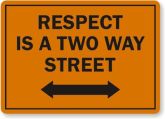 thought that it really isn’t just about the buck stopping here, with me (or you); but, also the fact that the different behavior that is needed to combat that lack of respect and civility must start with me, too. It starts with me showing respect for the opinions of others, even if I don’t agree with their option or point of view on things. There are ways to respectfully disagree without resorting to screaming or name calling. Rather than waste my time and yours trying to denigrate you and your position, I need to focus upon doing a better job trying to understand your position and searching for some common ground upon which we might be able to find compromise.
 cheek. (Where have we heard that before?) Maybe, instead of just blurting back, “You’re wrong”, we could say instead, “I see that we have different opinions on this; is there anything about it that we can agree upon?” There may not initially be any apparent common ground; but, just changing the situation from a confrontation into a conversation may defuse what otherwise might escalate into something that you both regret later. We can start by respecting that we have differences and being civil about it. See how that works..
 have happened in our everyday lives, especially in the aspects that deal with politics.
 own opinions by looking through the lenses that are held up by others or by choosing our own lens and view of things. If we really need an external lens to look through, we might do better by looking through the lens of the Bible and the “truths” that we will find there, rather than the “truths” that we see in a political ad or a tweet.
 would be enough “I’s” being respectful; and civil to others that it would turn us into “we” and then everything would be better. “We” would be living in a more respectful and civil world. I like that; and it starts with me.
 NormsMilfordBlog