“Enjoy the little things in life, because one day you will look back and realize they were the big things.” (Kurt Vonnegut) – as seen on the Jack’s Winning Word blog.
We all revel in the big moments in life at the time they occur – our  wedding day, the birth of our children, maybe a big job promotion or the day we closed on our first house; but it is often the little, private moments that result in the most enjoyable and lasting memories. I may be a tender moment between husband and wife or maybe a quiet time of love shared with a child. It is perhaps that final little squeeze of the hand with a loved one right before they pass away or the hug that says I need you and I trust you from an injured loved one.
The big moments in life are often filled with so much hoopla that they often just become something that you remember going along with rather than something that you really had the opportunity to enjoy. If you are fortunate you may have recorded some of the little moments in pictures, so that you can look back on them with that prop to help heighten the experience; but for the most part these are incidents or times in your life that were very private and in which taking pictures was the last thing on your mind. Fortunately that same mind is where they now reside and can be recalled.
What makes these seemingly unremarkable moments in your life so important? It is probably the fact that they occurred in unscripted, 
unguarded and totally open and honest moments of your life where your soul touched another soul and shared an experience or a moment. Think back on the moments in your life in which you experienced those “Ah, ha!” moments of love or understanding and sharing with a loved one or a good friend. Those are the memories that you will take with you to the end, because they were really the big things.
The sad thing about Vonnegut’s quote is the truth that it is only later in life that most really understand this, many times after it is too late to go back and relive it with the other person involved. We remember these moments after our parent are gone. We relive them after our friends have passed away. Our children are grown and gone and out on their own before we realize the significance of the important moments that we had with them. It is unfortunate that we have to look back and finally realize that they were the most significant moments of our lives.
 Maybe that does not have to be. Perhaps, if we take the time to think about the little things in our lives that happen every day, we can revel in the moment. We can go to the ball game or the dance, instead of working those extra hours. We can pause to say, “I love you” every night, instead of taking our partners for granted. We can heighten our awareness of the little things (to us) that mean so much to others and make the effort to participate in and celebrate those moments.
Why is this important? Because, you don’t want to end up, as Vonnegut’s quote would have it; “looking back” and realizing how much of life that you missed, because you didn’t recognize the little things in life that were really important. Life is too short to miss all of the little things. Take the time take them in and realize that they are really the big things in life. They are the things that connected you to another human being in a moment of shared joy – and that’s a great thing.
In your final eulogy; far more important that any recital of all of your
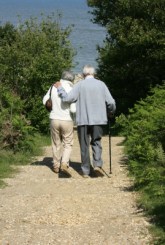
“Image courtesy of Simon Howden / FreeDigitalPhotos.net”.
business achievements will be the personal remarks from family and loved ones – “I’ll miss my spouse/parent/grandparent/good friend and the things that we used to do together.” Those were the little things that were important in the life that you lived. So, enjoy the little things in your life, because you don’t have to wait to look back some day to see that they were important.
Have a great weekend and enjoy those loved one that are around you


 Posted by Norm Werner
  knocking and trying to help me, but I won’t let Him in. The free will (it might also be called ego) that God gave mankind can also act as a door to keep Him out when we most need him. We toil through life trying to solve things ourselves, letting our egos get in the way; rather than letting Him take our burdens and help.
 ve all problems without help. I remember the “big boys don’t cry” admonishments as a child and the “shake it off” advice for almost any hurt while growing up and the “suck it up” guidance for dealing with pain or disappointments. I suspect that athletics in general contribute greatly to that self-image of being able to live with pain.
 seriously grew out of the macho “shake it off” creed of athletics. So, I wonder if female athletes, especially those engaged in contact sports (which include soccer) develop a more insular approach to life and religion because of the stoicism required for those sports. Do they hear God knockin’ but they won’t let Him in? I suspect that it is not the case, as it is with men.
 probably have a hard time “turning off” our minds so that we can sleep at night, rather than tossing and turning all night wrestling with some problem or perhaps our fears about some upcoming event. It’s hard not to think about things that have happened and how we should react to them or not to run over and over all of the worst case scenarios that we can imagine about some upcoming event.
 an upcoming event. While we are fully awake, most of us have the discipline to focus our minds on the tasks at hand in some organized way. It is when we lie down to sleep that we may find that given nothing else to occupy it our mind starts to run wild and in many directions at once (creating that “ruffled mind” that Charlotte Bronte referred to).
 mentally fight it sometimes and I may have to repeat that prayer several times before I really can let go and trust that everything will be OK if I just put things in God’s hands.
 “As I walked out the door to my freedom I knew if I did not leave all the anger, hatred and bitterness behind that I would still be in prison.” (Nelson Mandela), as seen on the
  we are carrying this heavy sac of stuff around. The weight of anger, hatred, prejudices and bitterness weighs us down and pulls down the corners of our mouths, causing us to look pained, angry or unpleasant at the least. The furrowing of our brows at the thoughts of those things causes wrinkles on our faces and the invectives that may spew from our mouths make us uninviting friends or guests indeed.
 me to me, all of you who are weary and carry heavy burdens, and I will give you rest.” Once you have found peace through your faith and
 their lives through the resolutions that that make? Well, maybe it could provide that new beginning; but only if you really want to change.
 Instead, start backtracking from that goal and try to “see” the steps that are necessary to get to that goal. Those steps become your intermediate goals; the little things that when all are completed will result in you achieving your goal in life.
 someone, announcing their plans to them and then asking them to hold you accountable for achieving those plans helps keep them on track. One cannot let one’s self off the hook as easily when you have to report back to an accountability partner why you did not do what you said you were going to do. The other benefit is that it gives you someone to celebrate those small victories with once you have completed a step in the process.
 goals? Do you have the needed prerequisites – education or training/skills or tools – to be able to achieve those goals. If not; should acquiring those prerequisites be an intermediate goal?
 So, here we go into 2016. What have you got planned for this week and next that are steps along the way towards your goals? As you achieve those intermediate steps, don’t forget to take time to congratulate yourself on your progress. Also take time every month to review your plan to see, based upon your new experience, if you need to add some things to your drawing. That’s not a setback. That’s experience turning into wisdom and a wiser you is much more likely to achieve those goals.
 NormsMilfordBlog