“It’s hard to hate up close.” (James Comey, FBI Director) – re-blogged from the Jack’s Winning Ways blog. Jack went on to write – Do you remember the song from The King and I?…“Getting to know you, Getting to know all about you. Getting to feel free and easy When I am with you.” Director Comey believes that police and citizens should have more face to face contact. Studies show that most of us have a racial bias and use mental shortcuts when meeting “different” people.
Today’s blog title comes from the old ABC Sports coverage on TV, where they would get “Up close and personal” with various athletes that they were covering. It was a way of letting their audience know the life story behind the athlete – to get to know them.
I find Director Comey’s observations on prejudice and hate to be especially true. It is so easy to sit at home watching news events unfold on the evening news and to form  prejudicial thoughts about people that you see on the screen, especially people who are “different”. Sometimes when a story about a crime starts on the news I find myself having pre-conceived notions about what the perpetrator will look like if they show a picture later in the story. Many times I am wrong, but my own prejudices have taken over.
Perhaps we all allow something like that to happen in our lives. Maybe we see someone coming towards us and notice a tattoo or a nose ring or lip bead or maybe blue or purple hair; and, without any personal knowledge to go on about  that person, we form an opinion about that person; an opinion that prejudices our feelings about them without a word being spoken. Does something like that ever happen with you? You may pick your own set of visual cues.
Those instances in our lives are probably the times when we should try our hardest to put those prejudices behind us and get up close and personal with the person that we’ve just encountered. Life doesn’t always give us that opportunity; however, each encounter is an opportunity for you learn from and better control your own reactions.
Make it a practice to ask yourself after each unjustified negative reaction why you feel that way. Ask yourself what do you know about this person that would cause you to automatically fear or hate them? If the only thing that you come up with is that they look different and somehow menacing, then you have encountered prejudice within yourself and need to focus some time and prayer on resolving that personal flaw.
One of the better ways to work on prejudices that you may have is to take the ABC Sports approach and get up close and personal – take the time to really talk with and understand the other person – their background and point of view. Maybe it would help to star by saying to yourself that everyone you meet is someone’s child or parent, someone’s mate or friend, someone’s brother or sister, someone. Until you know who that someone really is, you really don’t know them well enough to form an opinion about them – to hate them or fear them.
Once you do that, you may find that Director Comey is right. It’s hard to hate someone
that you have met up close and personal. You are far more likely to have empathy with their life situation, or perhaps be ready to offer help, than you are to just hate them for  what and who they are. In fact you may end up loving what or who they are and the free spirit within them that gives them the freedom to be “different.”
So, today, take the time to get up close and personal with someone that you may have avoided in the past or someone that you may have had a prejudicial reaction to when you first met. Understand them as a person. Listen to their story and see if you still feel the same about them now that you have gotten up close and personal. You may find that the opening quote is true – It’s hard to hate up close.


 Posted by Norm Werner
  world differently because we look at it through the distortions caused by the “lenses” of our experiences and knowledge, our fears and prejudices, or our hope and optimism. Some people look at it through the dark lenses of depression. Others see nothing but rainbows through the rose colored glasses of optimism. Some may see danger lurking behind every bush and tree, while others see opportunities around every corner or behind every door.
 immediately see danger in the situation; but walk into a room filled with the same number of people, but one in which they are all very different from you and you might see danger and threats. For most white Americans seeing a policeman approach may cause them to pause to think if they’ve done anything wrong; but, they don’t “see” it necessarily as being threatening. However, ask a resident of Ferguson, Missouri about that scenario and you’ll get a different answer. Perhaps that is because the eyes that they see that policemen through are filled with so many tears from the past.
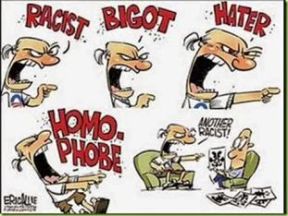 based upon prejudices or misinformation. We don’t stop to really “see” the person standing n from of us because we are blinded by the labels that flash up in our minds. Our ability to “see” the good, the beauty and the interesting things about that person are obscured by our proclivity to “see” only the things defined by the labels that we have already associated with them. Our vision has joined in the wider conspiracy that we call bigotry.
 were removed he could see clearly and it was a bright, bright, sunshiny day. Maybe if you can clear away the obstacles (labels) in your mind you will see more clearly, too; and you too will have a brighter day. Perhaps you’ll even be able to “see” things from the point of view of others and that will make your day and theirs better, too.


 NormsMilfordBlog