Is God your Obi Wan?

January 6, 2020

Jack used this quote from Star Wars in today’s post to his blog, Jack’s Winning Words“Help me, Obi Wan Kenobi, you’re my only hope.”  (Princess Leia)

For many the entire Start Wars saga was always a thinly disguised tale of faith and religion. The battle of good vs. evil and the mysterious “Force” seeming to take their cues from various religious beliefs. It does not take a giant leap to imagine substituting the word God for Obe Wan Kenobi in the quote above or using “God” instead of “Force” in the phrase “May the Force be with you.”

Jack asked the question in his post, “Who is your Obe Wan?” Within the context of characters in the Star Wars movies, he chose Yoda as his Obe Wan. Many men might identify with Obe Wan, or perhaps Luke Skywalker or maybe Hans Solo. Jack did write that Princess Leia was the most popular character of all.  

In creating the Star Wars universe and saga, George Lucas took advantage of our need to find a way to equate God to things that we can see and experience. He turned our faith into the Force and gave faces to characters who might otherwise have been angels or spirits. He created the epic struggle of good vs. evil by creating a host of fallen angels that he called “the Dark Side.” Whether the Emperor or Darth Vader represented the Devil is open to question, since both were portrayed as evil personified.
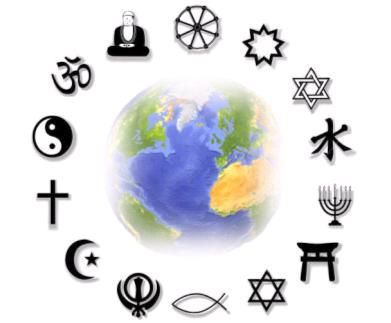
The whole Star Wars phenomena is just one example of man’s need to try to put God and faith into some smaller, more familiar context that he can understand.  The whole of religion is really man’s attempt to explain God and faith by creating structure, rules, and pageantry that the common person can relate to and practice. Most religions have developed elaborate explanations of what life after death will be like. There are many names for where we supposedly go – Heaven, Valhalla,  Swarga Loka, Nirvana, Jannah, and Tiān are just a few of the places where people believe that souls go after death.

Man’s imagination is so limited that he must couch things like heaven in familiar terms and descriptions that he can understand. It is that mental barrier between what we can understand and what we can just accept and believe that holds man back from a better relationship with God. If, instead of Obe Wan Kenobe, we said and truly believed, “Help me God, you are my only hope”; we might experience the relationship with God that He has in mind for us. Trying to understand God and putting Him in our own small context is a manifestation of our own egos.  It is that leap of faith that we take when we finally admit that “I don’t understand, but I believe” that clears the way for a direct relationship with God. One cannot understand “the peace that passes all understanding” by continuing to struggle to understand it. Just accept it.

So, make God your Obe Wan and the Force will be with you. Have a great week ahead. May God be with you.


Epiphany, what’s Epiphany?

January 4, 2020

Monday, January 6, is Epiphany, a day to remember the three wise men who journeyed bearing gifts  to see the baby Jesus. If you Google Epiphany you will get lots of information about how it is celebrated in other countries, some with parades of people dressed up as the Wise Men. Not so much in the United States. In fact, I’m surprised that some merchants aren’t advertising Epiphany sales, since they seem to take every opportunity to have a sale.  

If you Google Epiphany, one of the suggested definitions is for the term “epiphany moment”, which is more how we use the word today, From the Google definition –  

Epiphany is an “Aha!” moment. As a literary device, epiphany (pronounced ih-pif–uh-nee) is the moment when a character is suddenly struck with a life-changing realization which changes the rest of the story. Often, an epiphany begins with a small, everyday occurrence or experience.

 For Christians, that small, everyday occurrence was the birth of Jesus. That event certainly changed things in our lives.  Churches will celebrate Epiphany this weekend, but few of us in the pews probably give it a lot of thought. After all, there are no Epiphany decorations that we can put up and Monday isn’t even a national holiday. It is however, the end of the 12 days of Christmas and does provide us with yet another opportunity to pause and thank God for sending us His Son – that was our “epiphany moment”

I have found a way to at least acknowledge Epiphany at my house. Every year, as part of our  Christmas decorations, I light up a large star of Bethlehem decoration that is placed on the second floor of the house. It can be seen from quite a distance. So, even though I took down the rest of the Christmas decorations yesterday, the star remains lit up at night, through Epiphany. It is a symbol of the star that guided the Wise Men to the manger in Bethlehem. I  hope that it give pause for reflection to those who see it as they come over the hill towards my house.

How do you celebrate Epiphany? Did you even know or remember that Monday is Epiphany? Does one say Happy Epiphany as a greeting? On Easter Morning we greet other Christians by saying, “He is risen”; maybe for Epiphany we should greet others with the phrase, ”He is born”. Was the birth of Jesus so long ago an epiphany moment in your life? Maybe Monday will be different from all other Monday’s this year, if you pause to reflect on that epiphany moment so long ago that lives on today.

Let Epiphany change your life.


A new year…A new you?

January 1, 2020

I saw a quote on the music channel recently that seems apropos for today-

“Many of us crucify ourselves between two thieves – regret for the past and fear of the future.” – Fulton Oursler

If that description fit for you, perhaps it’s time for a change. Today is the perfect day to start changing your life. Yesterday was a day to look back on the events of the past year. Today is the day to look ahead to the New Year and resolve to make the changes that are necessary in your life to make it better. Why? Because what happens next is really up to you. It’s your destiny.

William Jennings Bryan said it best – “Destiny is not a matter of chance; it is a matter of choice. It is not a thing to be waited for; it is a thing to be achieved.”

I also like this quote attributed to Unknown – “One day your life will flash before your eyes. Make sure it’s worth watching.”

So, use today as your starting point. Take note of your current situation, not with regret; but, so that you can measure your progress as you move in that new direction. Don’t let yourself think that it’s too late for you to change. Bikram Choudhury said -“Never too old, never too bad, never too late, never too sick to start from scratch once again.”

A big roadblock to change for some is just recognizing the things that need work – that need to change. What to change in order to make a difference in your life is often as simple as adjusting your attitude, your outlook on life. There is a fine line between being realistic and being pessimistic. The pessimist sees the challenges ahead and admits defeat before he even starts. A realistic person sees those same challenges and begins formulating a plan to overcome them. The line that separates the two is called optimism. It is better to be an optimistic realist than a pessimist any day.

Maybe you can decide today that you are going to start each day looking forward to what is to happen, rather than dreading it. A big part of looking forward is having goals that you are working towards. Those goals may be short or long term and most will usually have multiple steps along the way, so chose a step that must be taken and make that your goal for today. Another part is confidence that, no matter what comes your way, you are prepared to deal with it. That confidence comes when you develop a good problem solving method and stick to it. See my post on Problem Solving 101 for a start on that.

You will quickly find that the world is a much better place when you approach it with a positive, upbeat attitude. People will enjoy being around you and in many cases that leads to more success in business, as well as in life. Not only that; you will actually enjoy life more when you spend less time in the dark dungeon of despair and more time in the sunshine of happiness. That will happen when you decide to heed the advice of Anthony J. D’Angelo –  “Wherever you go, no matter what the weather, always bring your own sunshine.”  Once you decide to do that, you will not spend time in the darkness of despair because, as Helen Kellor once said – “Keep your face to the sunshine and you cannot see a shadow.”

So, use today to reset your outlook on life. The choice of what to do in the coming year is really a no-brainer. Find an optimistic happy place and vow to stay there this year. Don’t dread what life throws at you; rather, relish the opportunities to overcome adversity and learn from your mistakes on your journey to your goals.

Have a great New Year by becoming a new you!


Be grateful on New Year’s Eve.

December 31, 2019

In today’s post to his blog, Jack’s Winning Words, Pastor Jack Freed used this quote – “Thank you God for this good life, and forgive us if we do not love it enough.”  (Garrison Keillor) 

Jack went on to write about being thankful for our lives on New Year’s Eve. I went looking for more quotes about being thankful and found these thought provoking gems –

“Be thankful for what you have; you’ll end up having more. If you concentrate on what you don’t have, you will never, ever have enough.” -Oprah Winfrey

Many people use New Year’s Eve to look ahead and hope for things that they don’t have. Better if pause to they look back a bit, not in nostalgia, in thankfulness for the life that God gave them in the past year.

“If the only prayer you ever say in your entire life is thank you, it will be enough.” -Meister Eckhart

For some it is hard to see what they should be thankful for at the end of the year. Perhaps they don’t stop to consider that they made it to the end of the year. That is especially true of people living in war zones or under duress.

Habeeb Akande expressed his gratitude for making it thorugh another year this way – “I may not be where I want to be but I’m thankful for not being where I used to be.”

So this New Year’s Eve, express your gratitude to God and anyone else who is there to listen. Not to do so is like –

“Feeling gratitude and not expressing it is like wrapping a present and not giving it.” -William Arthur Ward

Be thankful and be happy. Express your gratitude. Give the present of your gratitude.

“Gratitude unlocks the fullness of life. It turns what we have into enough, and more. It turns denial into acceptance, chaos to order, confusion to clarity. It can turn a meal into a feast, a house into a home, a stranger into a friend.” -Melody Beattie

Gratitude is a thing to be given and to get from others, sometimes when you need it the most.

“At times our own light goes out and is rekindled by a spark from another person. Each of us has cause to think with deep gratitude of those who have lighted the flame within us.” -Albert Schweitze

The pass on that spark by sharing your gratitude with others.

“Make it a habit to tell people thank you. To express your appreciation, sincerely and without the expectation of anything in return. Truly appreciate those around you, and you’ll soon find many others around you. Truly appreciate life, and you’ll find that you have more of it.” -Ralph Marston

So, use this New Year’s Eve, not only to look ahead, but also to look back in gratitude on the blessings of the past year. At midnight say, “Thank you” to God for the life that He has given you.

“‘Thank you’ is the best prayer that anyone could say. I say that one a lot. Thank you expresses extreme gratitude, humility, and understanding.” -Alice Walker

I for one am grateful to be here on another New Year’s Eve and to be able to share with you my gratitude that you read my humble blog.

Have a great New Year!


You can’t get by without the BY…

December 30, 2019

It’s that time of year when confetti and resolutions fill the air and both often have the same consistency. Making New Year’s resolutions is an amusing pass-time for most, especially for those who enter into the process with little intent to carry out those resolutions. They make no effort to differentiate between dreams, wishes and resolutions. However, for some this is a time of serious reflection and the setting of new personal goals for the coming year. For them, the dictionary definition of resolve is the base upon which they make their resolutions –

Resolvenoun

  1. firm determination to do something.

Do you have resolve in your resolutions? Most resolutions that people make are about changing themselves or the way that they interact with others. One might resolve (again) to lose weight or perhaps to finally pursue a job change. Maybe the resolution is to be a better parent or partner. Perhaps the goal is to be more tolerant and open to new ideas and different people. The key there is that these are all goals. Without a commitment to plans and actions they will remain unfulfilled goals until next year’s resolution setting time.  

What turns a wish or dream or goal into a real resolution is the addition of a statement on how you will achieve that goal – the BY part of the resolution.

“I resolve to lose XX Pounds in 2020 , BY…”

The … part can be a list of actions that you commit to take in order to achieve that goal. It may be things like joining a weight loss support group, signing up for a weight loss food program, increasing your daily exercise by joining and using a gym or work-out program. Whatever it is, it should be achievable, measureable and have some time constraint imposed upon getting it done. It cannot use the word “try”. It must use the words “will” and “by”. It is that will, or firm determination, that you are keeping track of with the time constraint.

So, take a look at your resolutions for 2020. To separate the dreams and wishes from the things that you are really committed to get done, see which ones have a BY list. Do those things have a time constraint? Those are the things that you need to focus your resolve on getting done in 2020. Those are your real resolutions.

The next step may be to break your “BY” list down into smaller, more achievable increments, so that you can tackle and achieve the goal little by little. It is important to reinforce your resolve throughout the year by winning the small victories that achieving another step can bring. It is not unusual that larger goals or steps may have to be preceded by smaller, preparatory steps that you didn’t initially think of when  creating your BY list. Those aren’t setbacks; they are opportunities for more small victories on your way to success.

Having a good BY list for your resolutions also helps you stay on track by giving you something to look back upon as well as things to look ahead to doing next. You can find encouragement to continue towards your goals when you can look back and say to yourself, “Look at all that I’ve already achieved.”  

So, take a look at your 2020 Resolutions list before New Year’s eve and separate out those that you really resolve to achieve. For those, if you don’t already have one, create a BY list of steps and the times to achieve those steps to which you are willing to commit.

There is one last step to take, if you are serious about those resolutions. Put the resolution and the BY list on paper and find someone to be your accountability partner. Give that person the paper and ask them meet with you regularly to check on your progress and  to make sure that you are achieving the steps on your BY list. Sometimes we just need that last little push of having to report to someone else on the progress that we are making or not making. It reinforces our resolve.

Have a Happy New Year. May you achieve all of your resolutions BY…


It takes discipline…

December 28, 2019

“The hardest thing is to take less when you can get more.”  (Kin Hubbard) – quote used in the Jack’s Winning Words blog some time back.

People taking more when they eat, instead of taking less, is the root cause of a much of the current obesity problem in America. The proof of that is the success of the various weight loss programs and products, all of which impose some discipline on the practitioners. I recall my mother saying to me, on occasions when I took too much and couldn’t finish a meal, “Your eyes were bigger than your stomach.”  If one does that often enough, the stomach grows to accommodate the eyes.

The same quote might be used  for many things in life. Many have the tendency to take as much as they can get, rather than leave some for someone else or to share with someone else. In basketball, a player might be called a “ball hog”, if he/she consistently tries to score themselves, rather than make a pass to another player who might be open for a shot. In business, one might be thought of as a “grandstander”, if he/she takes all of the credit for what was a team effort. In life in general, it is the willingness to share, to give to good causes or to make sacrifices so that others might benefit that defines taking less. It is somewhat rare for small children to share what they think is theirs and some never grow out of those feelings of possessive greed.

As Christians, we are called (indeed instructed) to take less and give more. When the rich man asked Jesus what he need to do to get into heaven and Jesus told him to sell everything that had and give the money to the poor, he wandered away in dismay, because he could not give up what he had. We are not called upon to give up everything that we have; yet, in a way, we are. We are called upon to let go of the need to have everything and to refocus instead upon doing good wherever and whenever we can. We are called upon to have discipline and compassion and to let them guide our actions, instead of greed.

So, maybe we should recast Hubbard’s quote to read – “The hardest thing is to keep less, when we should be giving more.”

Jesus never said it would be easy to follow Him; but he did promise the greatest reward of all, if you do. Do you have the discipline to take less?


Whom do you exclude?

December 16, 2019

A Welch Church sign provided Jack’s quote of the day in his Jack’s Winning Words blog today – “At the end of the day, I’d rather be excluded for who I include, than be included for who I exclude.”

It is a sad commentary on our times that there are those who exclude anyone who includes members of the LBGQTI community in their circle of friends. Some churches and entire denominations have put out the welcome mat to members of that community by declaring themselves Welcoming churches – the Southeastern Michigan Synod of the Evangelical Lutheran Church in America is one such welcoming synod. Other churches or entire denominations continue to exclude, rather than include.

Do you have a list of “those people” whom you explicitly exclude from your circle of friends? Have you ever rally stopped to ask yourself why? When you were a child, you may have excluded a few other children for reasons that you couldn’t really explain. Maybe someone said that they have “cooties” and you just accepted that without even knowing what “cooties” were. As adults we sometimes exclude people based on nothing more substantial that the adult equivalent of “cooties” – some vague, unexplained, and unsupported rationale that we picked up somewhere. It could be something as trivial as how they dress or look. Maybe it’s how they act or talk. Whatever the reason is they are put into the “THEM” group of people that we avoid or, at least, don’t accept within our circle of friends.  

Of some, an unspoken fear of those who do not accept and welcome people who are different from them is that, somehow, by welcoming the, you may become “infected” by whatever it is that makes them different. For a while, in the 90’s, that “infection” from the LBG community took on the very real concern about the AIDS epidemic  that swept through that community. That fear has subsided as treatments become more effective in controlling the disease; however, for many, there is still an unfounded fear of those in the LBGQT community somehow “infecting” our children and causing them to choose that lifestyle.

Others may choose to exclude based upon race or ethnicity. People and groups to exclude the unwanted have used even social standing or wealth. Most of the time the criteria used to exclude has no bearing whatsoever on what type to person is being excluded, it’s just that they are one of “THEM”.

The sad truth is that we are shortchanging ourselves more than we are hurting THEM. We are limiting ourselves to the narrow point of view on things that is defined by those whom we have decided to include. We allow our narrow, excluding view of the world to define all sorts of things that could enrich our lives, if only we knew about them. Instead of a life full of rich sights, sounds, tastes and experiences, we confine ourselves to the grey, muted and bland world defined by our prejudices. We think we are being safe, but in reality we are just being dull and boorish.

So, start your week out by examining your list of people that you exclude – you avoid or you choose not to associate with – and ask yourself why? Other than some imaginary case of “cooties”, what reason do you have for excluding someone that you’ve not even met? What are you afraid of?  Is there the possibility that this person might prove to be fascinating or provide you with new information or insights?  Is there a different point of view on things that this person might introduce into your thinking? Have you ever considered things from that perspective? Is your inability to deal with the differences that you encounter protecting or limiting you?

Wouldn’t you really rather be defined by who you include than who you exclude? Do you really want to go through life using only the 3-4 colors that you now allow yourself to see; when God has put the entire box of Crayons in front of you and invites you to see and experience the entire spectrum of life that He has created?  Life can be so much more beautiful when you are inclusive, rather than exclusive.

Whom do you exclude? Why?


Whining about it is a waste of time…

December 11, 2019

In today’s post to the Jack’s Winning Words blog, Jack used this quote – “Realize that if you have time to whine and complain about something, then you have the time to do something about it.”   (Anthony D’Angelo)

Whining about things seems to be a favorite pastime for many, maybe because it is the easiest things to do when faced with a roadblock or setback or calamity. Whining is sometimes a cry for sympathy or help, but most often ii is just a convenient excuse for doing nothing about whatever it is that troubles the whiner. For them, it seems to take less effort to whine about it than to do something about it. Whining about it is a waste of time…

Now, sometimes having a good cry about something is a healthy emotional release. Once the tears stop, the next step should be about getting on with life and not about going into whining mode. There is an old saying that “misery loves company”, but nobody really likes to be around a whiner. That is why people try to avoid the “Debby Downer” types at work or socially. No one really expects, or hopes, to hear a long list of ailments or health complaints when they say to someone, “How are you?” Whining about it is a waste of time…

So, how do you implement the second half of today’s quote and do something about whatever it is that is bothering you? If it’s a problem that has you down, trying some of the problem solving steps that I’ve written about here many times (to start see my Problem Solving 101 post). If the issue concerns your health, the loss of a loved one or the end of a relationship, there are other steps that you can take to deal with it, rather than just whining about it. Whining about it is a waste of time…

Issues with one’s health can be particularly difficult because the initial reaction to bad health news is that there is nothing that you can do – it is what it is. The fight or flight reaction sets in and many use whining as their flight response. They seek comfort in someone else’s response to their bad news. Those people seldom appear in the nightly news stories about survivors of various forms of cancer or other ailments or afflictions. The people who appear in those stories chose to fight instead of whining. Instead of using what time you may have been told you have left whining about it, why not choose to fight instead and use that time finding a way to prove the prognostication wrong. You will find that many more people rally around a fighter than those who choose to commiserate with a whiner. Whining about it is a waste of time…

For those instances of the loss of a parent, child or life mate, the choice is more focused upon getting on with life and putting your memories of that person into proper perspective. For some, whose loved ones were taken by preventable circumstances; instead of whining about it they turn to doing something about it. That is how M.A.D.D. got started and how many worthwhile charities got started. The people left behind decided to try to do something to prevent the recurrence of the tragedy that befell them, instead of just whining about it. Whining about it is a waste of time…

The end of a relationship can also lead to whining or to actions. Step one is always accepting the fact that the relationship has ended. That is difficult for some and can lead to bad actions or disaster. For most, it is a matter of putting more time into answering the question, “What now?”  It is a time for some self-reflection. The breakup of a relationship is seldom a completely one-side decision. The importance of taking a little time for self-reflection is to understand the role that your own actions or reactions played in the end of the relationship. It is not a time to beat yourself up; but, rather, to understand what you might do differently in a future relationship. Whining about it is a waste of time…

So, did I mention that Whining about it is a waste of time…


What pain will you turn into a strength?

December 7, 2019

A post to the blog, Jack’s Winning Words ,not too long ago used this quote – “Life is very interesting.  In the end some of your greatest pains become your greatest strengths.”  (Drew Barrymore) 

You could substitute other words like challenges or tribulations or roadblocks or setbacks for the word “pains” in the quote, and add the word “overcoming” right before the word “some”. If you did that, I think you would have what Barrymore was trying to say.

At the time that they are occurring, trials and tribulations don’t feel good and you usually don’t think about how you will look back on the events that are unfolding as a learning and growth experience. However, extraordinary events, especially bad events, force us grow by forcing us outside of our comfort zone and into problem solving mode.

My wife and I often use a little phrase between ourselves as a tension breaker, when we’ve hit a hiccup in life. We say, “someday we’ll look back on this an laugh”. We’ve had a lot of laughs in our 53 years of marriage, much of it over things that felt bad when they occurred. To a certain extent what we end up laughing at is not the event; but, rather, how we reacted to the event.

So, how does a pain, a failure, a setback in life become a strength? It has to do with building your store of wisdom and your character at the same time.  Wisdom and character don’t just happen or increase on their own; they happen and grow because you have been “through” something – some adversity or new experience. They can both grow from good things happening as they do from dealing with the bad things in life.

I’ve posted here many times about problem solving, so I won’t repeat that advice. What I want to add to that advice is that you make a conscious effort while going through the problem solving process to learn from it and to find a new strength in the solution. Maybe you can use a slight variation on the little saying that I use with my wife and say to yourself, “someday I’ll look back on this and appreciate what I’ve learned from it.” You will have learned things about both the event and about yourself and how you reacted to it. Both add to your wisdom base.

Life’s pains can seem to be overwhelming. Take some time each day to think about the “pains” in your life and how you are dealing with them. While you are in that introspective mode, take a moment to ask for God’s help with them. Trusting in God to help with your pains allows you to step back a little bit and gain some perspective on them. Oft times, that ability to “see” the pain in the broader perspective of life will allow you to regain enough control to be able to effectively apply the logic of problem solving. No matter what the pain, dealing with it can be broken down into a series of manageable, solvable steps. Step 1 is to get God involved.

It is interesting that some of the best motivational speakers on problems like drug addiction or human trafficking or other horrible pains in life are recovered addicts, or people who were sex trafficked themselves. They have found ways, not only to overcome the pains, but also to turn them into strengths in their lives.

What pains are you facing? How can you turn them into strengths? Have you asked for God’s help yet? Take step 1 and  turn your pains into strengths.


 [N1]


How will you handle the crises in your life?

December 1, 2019

In today’s post to his Jack’s Winning Words blog, Jack Freed used this quote from John F. Kennedy  – “When written in Chinese the word ‘crisis’ is composed of two characters—one represents danger and the other represents opportunity.” 

We will all face a few crises in our lives or at least situations that we feel are crises. How we react to them perhaps depends upon which of the Chinese characters we see. Do you see only the danger in a crisis or can you see the opportunity. We see and hear on the news almost daily about “heroes” who spring into action to rescue someone who is experiencing a crisis moment – perhaps involving an accident or fire or some other calamity. I’m sure that those heroes see the danger involved, but they choose to take the opportunity to help.

More important for most of us is how we, ourselves, with handle the crises that life throws our way. Those who see only the dangers involved may seek relief by hiding or withdrawing into their own protective shells. It is all too easy to let fear take hold and paralyze us from taking any actions. Maybe we don’t step in when we see bullying taking place or perhaps we cross the street to avoid the person with whom we have a disagreement. Maybe we refused to believe that a mistake that we have made has ended a relationship. In the realm of “fight or flight” reactions, those are all flight responses to crises.

The response that sees opportunity in the crisis is not necessarily a “fight “response so much as it is a “take action” response. These people see the opportunity in the situation – the opportunity to do something in response.  People who see opportunity in crises immediately go in to problem solving mode, whether it’s jumping into action and quickly figuring out a rescue plan at an accident or conflagration, or assessing what needs to be said or done to defuse and calm a personal conflict. It’s not so much that they don’t see the danger in the situation (after all the burning car right in front of them is hard to miss), it’s just that the opportunity to help, to do something , overrides their fear of personal danger. They NEED to act – to seize the opportunity.

For most of us, life is quite a bit less dramatic than encountering accidents with people trapped in burning cars or, maybe,  having to react in an active shooter incident. Our “crises” are usually the result of interpersonal conflicts or misunderstandings and certainly the “danger” involved is usually not immediately  life threatening.  For some, however, the anxiety or depression that can result from these crises is life threatening in a very real way. Setbacks or dissapointments may become crises because of their inability to deal with the events that occur in their lives. Those “crises” may represent an opportunity for you to jump in to save the life of your friend or loved one; but, that’s a topic for a future post.

What is a crisis? There is an interesting article on the Marking 91 web site that classifies 8 different types of crises –

  1. Technological
  2. Financial
  3. Natural
  4. A crisis of malice
  5. A crisis of deception
  6. A Confrontational crisis
  7. A crisis of organizational misdeeds
  8. Workplace violence

Who knew that crises could be so neatly categorized? Go read the article and see if there are any other categories that you might add.

No matter what the crisis the key thing is how you deal with it. I’ve posted here a few times on problem solving, so I won’t repeat all of the at advice. Just search problem solving to see the posts.  What this post is focused upon is the recognition that one is in a crisis situation and the considered decision to deal with it rationally. It is not unusual for crises to occur at a fast pace and perhaps in a confusing environment. That makes it all the more important to be able to step back for an instance, recognize that you are dealing with a situation that requires that you take some action and then formulate a quick action plan. Just that moment of clarity is often enough to snap you out of panic and into problem solving mode. In that moment, you have regained control, not of the situation, but of yourself.

Some people actually think ahead about what they might do in a crisis situation. Airline pilot Chesley Sullenberger said in his post crisis interviews that he had been thinking hew entire career about what to do if the plane that he was piloting suffered a catastrophic failure of both engines. He certainly didn’t think that he would ever have to put those plans into action until the day that he had to land his crippled plane in the Hudson river. I have also posted here in the past about not overthinking (called worrying) about all possible outcomes for some future event, especially those involving personal confrontations. There is a big difference between doing some planning and just plain worrying about things.

So, how will you handle future crises? It is OK to recognize the danger in the situation. That keeps one from becoming foolhardy. Rather, try to keep calm and focus upon the opportunity that is also there. There ae good, bad and ugly possible outcomes in all situations and you can find he good outcome if you just look for it. If you are a person of faith, take heart in this passage from Philippians 4:6-7 – “Do not be anxious about anything, but in everything by prayer and supplication with thanksgiving let your requests be made known to God. And the peace of God, which surpasses all understanding, will guard your hearts and your minds in Christ Jesus.”

Imagine how much better you could handle the crises in your life if you approached each one with the Peace of God in your heart and mind.

Be at Peace and see the opportunities.