Today’s quote is one that I saw on the Jack’s Winning Words blog recently – “The happiest people don’t have the best of everything, they just make the best of everything.” (Tiny Buddha)
I would have added the words “they have” to the end of that quote. It is the human tendency to covet what we don’t have that causes dissatisfaction and dissention in our lives. Perhaps the most over-abused term in our modern language is the word “right”, as in it is my right to have (put in anything that you have heard lately using that phrase). Many people feel that they are entitled to or have a right to things that they don’t have and they somehow come to the conclusion that the society that they live in have some sort of obligation to provide them with that things or service or whatever it is that they feel entitle to. In fact, this feeling has become so prevalent in America that news casts often capture people characterizing things like access to health care or a clean water supply as “basis human rights.”
Let’s be clear. There are no such things as basic human rights or entitlements. One has only to journey to the wilds of the South American Jungles or the jungles of Africa to find primitive tribes living hard-scramble subsistence existences to find examples of people living in the most natural state of human rights. Anywhere else, where people are given, or have free access to, things above the subsistence level by the society they live in, is an example of privileges being extended by that society and not examples of people having rights to those things.
Those people living without entitlements in the wilderness are very happy when the tribal hunters return from a successful hunt or when what crops that they might plant bear fruit. They may wish for an easier life, but they may also be happy with what God has provided them from the land around them, even if their concept of God is somewhat murky.
No one wants to return to a crude, subsistence level of living in the jungle; however, all of us could learn to be a little more thankful and happy with what God has provided and be less focused upon what we don’t have. That is not to say that we need put up with cases of overt discrimination or criminal activities, such as happened in the Flint water crisis; however, we should couch our response to such activity in the proper terms. It was not that the Flint residents had a basic human right to clean water so much as it was that the residents who were paying for water to their houses had the right to expect that the water would be clean and safe to drink and use. That was not the case in Flint and is perhaps not the case in other locations in America. In some cases, it involves ineptitude on the part of the governmental bodies that supply the water and in others it involves criminal conduct by those who knew that they were doing wrong, such as in Flint.
 One can get in the right frame of mind about life by starting each day with a little “thank you” prayer to God for allowing you to awaken to another day. You weren’t even entitled to that day, so right away you have been given a gift to enjoy. Everything beyond that is just something that you should enjoy and be thankful for having. So, take the advice from today’s quote and make the best of everything that you have; rather than spend your time and energy worrying about things that you don’t have. God has just given you the most precious thing that money can’t buy and which isn’t a right – time. Use your time today wisely; be thankful and happy and make the best of what you have.


 Posted by Norm Werner
 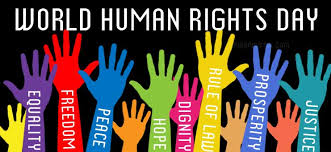 Day site, here is a little background –
 Rights are often considered fundamental to civilization, being regarded as established pillars of society and culture, and the history of social conflicts can be found in the history of each right and its development. According to the Stanford Encyclopedia of Philosophy, “rights structure the form of governments, the content of laws, and the shape of morality as it is currently perceived.”
 extend them to us. In the world in which we live, slavery and human trafficking still exist in almost every country on earth. Poverty exists and robs people of their rights. A lack of health care (affordable or otherwise) still robs people of their health and well-being. People are still being killed for their religious beliefs and people are being shunned for their lifestyles. Racism and prejudices continue to hold sway over opportunity and access to jobs, housing and other basic needs/rights.
 rights. The same society that grants us those rights usually imposes some restrictions or rules on the exercise of those rights and in many cases agree to pay (usually in the form of taxes) to make sure that they and you can exercise those rights. It has become somewhat normal to hear people claiming all sorts of “rights”, when in reality they are talking about needs or desires. Needs and even desires may eventually turn into “rights” if enough people in the society agree that everyone should have them and give the extension of those needs or desires the weight of law. That is especially true in those things that we classify as our civil rights.
 on of those rights do not become so onerous as to render the rights moot.
 inclusive as we extend rights and the rules that govern them.
 NormsMilfordBlog