I save many of the little quotes that Jack Freed uses in his daily blog Jack’s Winning Words. I save them because I know that sometime in the future they will inspire me to write something. Sometimes I notice that two or three of them just seem to go together and reinforce or strengthen the message behind the quotes. This morning, as I perused my collection of quotes from Jack’s blog these three just seemed to jump out as belonging together.
“If you could stand in someone else’s shoes, would you treat them differently?” (Whitney Hess)
“Don’t judge some just because they sin differently than you.” (From Katie Wiese)
“Everything that irritates us about others can lead us to an understanding of ourselves.” (Carl Jung)
In one way or another they all speak to the topic of judging others and doing so only from our own perspective. When we see people of different ethnic backgrounds, perhaps 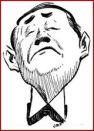 we begin to question. Do they look different than me? Do they dress different than me? Do they speak different from me? Do they act different from me? Do they have opinions that are different from mine? Do they sin differently than me?
Since the answer for many, if not all, of those questions that we quickly run over in our minds may be yes (at least in our opinion); we rush to a judgement that they irritate us or worse that we should fear and hate them. Perhaps they have done nothing more than stand in front of us, but we have rushed to a judgement based solely upon what we can see and our preconceived notions about what that  means.
If we took a moment to really think about what was happening we would see that the shiny mirror of judgement was showing us an ugly reflection of our own sins and shortcomings. Perhaps we would even make the leap of understanding that Jung was alluding to in his quote and “see” the things in ourselves that need to be corrected.
Why do the clothes than someone is wearing or the color or style of their hair irritate you? Why does their accent when they speak bother you? What possible difference does it make to you if they have tattoos or nose rings or other things that you might not have? Unless they have a weapon and are aggressively approaching you, why do you feel threatened or uneasy with their presence? In what way does their sexual orientation or preferences impact you directly?
All of the things that you may notice about others and which may for some reason irritate you or may cause you to rush to a judgement are things that you should be asking yourself, “What different does that make?” Those things have nothing to do with what kind of person that individual may be and they may not be any more offensive than the look, clothes, and speech that you present to the world to anyone but you.
Can your rush to judgement withstand the spotlight of the question “Why”?
 Why does that make me uneasy? Why am I offended by something that they have done or maybe not done? Why am I irritated by their accent with which they speak? Why does the color of their skin immediately make a difference to me? Why do I immediately fear them or hate them, when I don’t even know them?
Maybe you should be asking, “What is it about me that makes me feel this way?” What prejudices or preconceived judgement has caused me to jump to this conclusion.? What can I do to avoid jumping to a judgement before I even know them.
Any pause for self-reflection, before you jump all the way to a conclusion, is a good thing. It gives you the opportunity to reexamine old prejudices and forces you to see them for what they are. It also give you the opportunity to adjust your attitude before you act. It allows you to use the shiny mirror of judgement for some quick self-examination. Maybe it will allow you to put a smile on the face that you see there to replace the scowl that was there.
So, before you judge others; stare into the shiny mirror and look within yourself.
 I’ve posted her a few times about not ending up with a bad case of the “coulda, woulda, shoulda’s” in your life. Most of those posts concerned making good decisions in life. Most of those decisions involve being able to distinguish good from bad, right from wrong or maybe constructive vs. destructive behavior.
 it rather starkly when he said – “you either believe or you don’t believe, there ain’t no in between.”
 So it is in life; you either walk with God or you walk alone. You may both turn to God for help with your decisions, and trust in the direction that He takes you; or you have nothing to turn to for help and find no happiness in your decisions, no matter how things turn out. In the end, will you be looking back and saying, “I wish I had found God in my life”, or will you be saying “I’m glad that I had God in my life to guide me?”


 Posted by Norm Werner
  bad things are or how bad you are for doing what you do is the stepping off point for depression. Compunction helps you identify the things that you should and could be doing differently in order to change your life. Taking actions on those insights is what causes the changes to happen.
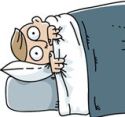 So, if compunction is keeping you awake at night; do something about it. Change your life. Get up in the morning with the resolve to take actions to stop going in the direction that is causing you the anxiety or remorse that keeps you awake at night. Many times that only requires small changes in your life; how you act towards and react to others; how you prioritize the use of your time; or maybe just doing the things that you’ve known all along that you should be doing, but just didn’t have the time.
 are in charge of things, that you can change things and that it is only through your own efforts that they will change. Take the time to pause and utter the little prayer that I’ve recommended here many times, “Not my will, but Thy will be done.” Just saying and believing that little prayer will release you from the need to feel compunction about the things that you’ve done and left undone in your life. It will free you to move on to the action steps that are needed. It will change your life for the better and you will sleep better at night.
 actions are trespasses that many of us commit every day, without giving it any thought until later (if at all). Sometimes, it is yourself that you have to pardon, maybe for your thoughts or actions. Getting down on yourself really doesn’t help, but that pardon should also come with a resolution not to make that same mistake again, whether it was an act of prejudice or just one of insensitivity or neglect. Pardoning yourself is the first step to bettering yourself.
 baggage. Do not let their actions change the course of your life. Pardon their trespasses and get on with life. They probably don’t even realize their trespass and they certainly don’t understand that you’ve forgiven them; but you do and that sets you free from those trespasses.
 to things and events. Trying to maintain the delusion that we are in control just causes frustration, anger and self-destructive depression.
 always go the way that God intended. Sometimes we have to step back from things and try to discern the lesson or good that can come from the outcome.
 painful if you turn to him early. It’s not really that God misses lots of opportunities to be early, it’s usually that we don’t turn to Him until it’s almost too late. So, pray early and pray often. God is standing by to answer.
 something for someone else that needs to be done. Opening a door or smiling and saying hello are example s of very small acts of kindness. Those aren’t just empty gestures and they are usually acknowledged by the recipient. There is no expectation of reward or even reciprocation, but even those small acts can make one feel better about themselves and about their fellow man. They are overt acts that say, “I see and acknowledge you. I see your need and I am happy to help.”
 So, take the opportunities that you are given each day to extend an act of kindness towards someone else. Your gesture of kindness are not wasted, even if they go unacknowledged at the time. Showing kindness to total strangers is a big part of what bonds us together as humans. Remember the words of Jesus as he taught his Disciples in Matthew 25:40 – “Truly I tell you, whatever you did for one of the least of these brothers and sisters of mine, you did for me.”
 that experience. The obvious bridge role is with our own children who watch us as they are growing up for cues and clues as to how to act and how to react to things as they happen. Others whom we might not even be aware of also look at our actions for some guidance – for either what to do or what not to do. So, for them, we are a bridge to their own future.
 closed-minded, prejudiced and angry? Do I appear to be a person that others would like to get to know or someone to avoid? Do I take the time to listen and understand the other person or do I jump to a conclusion based upon some preconceived notions or prejudices? Am I willing to consider a different point of view or am I hunkered down in a fixed position and unwilling to even consider something different? Am I displaying the behavior and attitude that Jesus would have displayed in this situation?
 world and the generations that follow you a bridge to understanding, acceptance and love for your fellow man.
 questions inward and start directing your search for help in the only direction that always offers comfort and help – towards God. In times of crisis, it’s time to pray to God for help. While you could ask God to fix this for you; but, what you really need to do is trust God and ask Him instead for His help to get through whatever it is that He has put on your plate. I like a quote from Mother Teresa on this –
 us to suspend disbelief for that brief amount of time and allow ourselves to believe in the premise of the movie. The movie becomes “real” to us, if only for a few hours. Faith is somewhat the same. You must be able to suspend your disbelief (most often rooted in reason and logic) and allow yourself to believe in something that is beyond human logic and reason. In the case of faith that belief lasts and takes on a meaning and impact in our lives that changes our lives forever.
 feel like that – it is a step (some might use the term leap) of faith.
 NormsMilfordBlog