 “It’s good to shut up sometimes.” (Marcel Marceau) – as seen on the Jack’s WinningWords blog some time ago.
Enough said!
“It’s good to shut up sometimes.” (Marcel Marceau) – as seen on the Jack’s WinningWords blog some time ago.
Enough said!
 Leave a Comment » |
  Pure fun | Tagged: #inspiration, silence |
  Permalink
 Posted by Norm Werner
“You can change your world by changing your words.” (Joel Osteen) – from some time ago on my favorite source of inspiration, the Jack’s Winning Words blog.
I don’t recall what Jack said about this little quote at the time, but I knew that I wanted to save it and write something about it later. I’ve posted here a few times about attitude and how having a positive attitude can change things in your life. The words that one chooses to use can both spring from that attitude and impact it at the same time.
It may seem to you to be a simplistic view of life that your words matter so much; however, if you choose to use upbeat and positive words to describe the things and people around you it will reinforce your positive attitude about life. If your words are harsh or critical, things will look a lot darker around you. People might start avoiding you, because they don’t want to be dragged down by your words or they may approach you in an argumentative way, because they find your words to be offensive or hurtful.
It may take a conscientious effort to choose to use positive and upbeat words, rather than just throw out the first words that come to mind; but, after a while, you will notice that the words of encouragement and thanks and praise come more naturally. It also requires more thought about the way the words that you use are received and perceived by those with whom you are speaking. I was recent sent a link to an article on the use of words in business for use as an educational topic at an upcoming referral network group meeting. The article was entitled Phrases Smart People Refuse To Use In Conversation by Dr. Travis Bradberry. One example from this article demonstrates how the words you use about the same topic can be taken by the listener as either hurtful or positive.
Bradbury wrote this about the words not to use with someone who has lost weight –
“Wow, you’ve lost a ton of weight!” Once again, a well-meaning comment—in this case a compliment—creates the impression that you’re being critical. Telling someone that she has lost a lot of weight suggests that she used to look fat or unattractive.
Instead say: “You look fantastic.” This one is an easy fix. Instead of comparing how she looks now to how she used to look, just compliment her for looking great. It takes the past right out of the picture.
You can see how even an innocent comment that is meant as a compliment can be taken the wrong way by the listener. So, it’s not just positive vs. negative words that one needs to be concerned about, but rather how all of the words that we use to try to communicate will be received.
 Using the right words requires attention and concentration. One of the aspects that I most admired about outgoing President Barrack Obama is his very measured, thoughtful and precise use of the language. You can tell by watching him speak that he is carefully choosing the words that he uses to make sure that they get his points across in an unambiguous manner. Let’s all hope that the incoming Tweeter-in-Chief can indeed “act Presidential” as he claimed during his campaign and do a better job of communicating his thoughts when he has to use more than 140 characters.
So, resolve to take the time and make the effort to choose your words more wisely and to use positive and upbeat words wherever you can today. See if that doesn’t have a positive impact on you and the people around you. Your words can paint a picture of you as Eeyore the sad donkey in Winnie the Pooh or as the happy, dancing Snoopy in the Peanuts comic. Which would you rather be perceived to be?
Speak happy, be happy! Change your world today.
Leave a Comment » | Inspiration, politics, Pure fun | Tagged: #inspiration, speaking, thoughtful, words | Permalink
Posted by Norm Werner
In a 1997 movie called “Flubber”, an absent-minded professor, played by the late Robin Williams, invents a super bouncy rubber product that is the central theme in the comedy movie. More recently a phenomenon called phubbing has swept the land. Jack Freed wrote about it in his blog Jack’s Winning Words recently. ‘Phubbing’ was coined in 2013 and is a mix of words ‘phone’ and snubbing’ It is the act of snubbing someone in a social setting by looking at a phone. P-phubbing is the act of ignoring a partner by being distracted by tech. Snubbing your partner by checking your phone can cause them to become depressed and anxious.
Jack’s post was titled “Stop looking at your phone. Look around you.”
I must admit that I’m a bit of a phubber these days. I have a really hard time not taking my phone out to see what just came in, if it dings or make any other sound to indicate that a  new email or message or Instagram has just arrived. There is a sense of immediacy about it that demands me attention. My wife finds that to be both disturbing and sad. I agree when I sit and think about it, but so far cannot overcome the urge to see what is happening that caused the alert sound.
I’m not sure that my behavior actually fits the definition of Phubbing, since I am not overtly trying to snub those around me, although I am ignoring them while distracted by my phone. Perhaps it is more like the epidemic of distracted driving that has caused so many accidents since he rise of the smartphone. I guess one might call this phenomenon “distracted living.”
Whatever it is, the advice that Jack’s blog contained to stop looking at your phone and start looking at (and interacting with) those people and things around you is sound. One cannot have a relationship with a device and even though the visual experiences available  through the phone are amazing, they do not contain the other sensory cues that real experiences contain and are thus somewhat one-dimensional. The sights may be wonderful, but the sights, sounds, smells and feel of actually being there and in the experience are far more wonderful and lasting.
Some people think of this activity as “multi-tasking”; however, I think that might be best described as “doing multiple things poorly at the same time.” If you don’t focus upon the things and people at hand you don’t really understand what is happening around you or catch the clues from the people that carry the real messages that they are trying to get across. Perhaps the most important message is the request – “Look at me.” You cannot be there for someone if your eyes and mind are focused somewhere else, like on your phone.
Don’t let distracted living rob you of the truly important moments in life when others  reach out to you for help or to show affection. You cannot really love your phone, nor can it show you love back. Besides that, real life doesn’t need to be recharged every 8-12 hours. Your significant other shouldn’t need to tape your phone to their forehead (see Jack’s post) in order for you to look at them, nor will seeing a Facebook post about your children’s sports events really be the same as being there for them. Put the phone down and pick up life again.
Oh, sorry, I’ve got to go; I just heard a ding from my pocket.
Leave a Comment » | Inspiration, Pure fun, Uncategorized | Tagged: #inspiration, distracted living, phones, phubbing, real life | Permalink
Posted by Norm Werner
The only difference between an extraordinary life and an ordinary one is the extraordinary pleasures you find in ordinary things – Veronique Vienne.
It seems to me that the key to that quote from Veronique Vienne is the word “find”. It is an action word that assumes that one is not sitting there waiting for things, and the associated pleasures, to come to them; it says that some overt effort is being made to seek out those pleasures.
The opening quote is really a variation on the old saw, “Stop and smell the roses.” It is stopping and making the effort to discover the extraordinary that is to be found in all things that brings the pleasure to life. While it is pleasurable to enjoy things like roses or great works of man or even other species of living things; I would submit that the saying might be much more meaningful and rewarding if it were phrased, “Stop and meet the people.”
 It is in meeting other people that we have our most profound experiences of the extraordinary, because we can relate to their life experiences as if they were our own. We can imagine ourselves living their stories. It is really impossible to imagine yourself as a fish or maybe even living as a lion or elephant; but, one can imagine the life of the fisherman or living in Africa alongside the animals through the stories of other humans who live those lives. One only hears stories like those and imagines those extraordinary adventures if one makes the effort to stop and meet the people.
There was an old late 50’s and early 60’s TV show called Naked City and it’s closing tag line was something like, “there are a million stories in the Naked City and this has been one of them.” There are billions of people on earth and millions within this country and every  one of them has a story, some of them quite extraordinary. Each of those stories allows us to escape the capsule of personal experiences that we live within and imagine new and different experiences, many of them extraordinary indeed.
Imagine meeting a refuge family from Iraq that just moved into your town. As you talk with them about their experiences you are whisked away in your mind to Aleppo, huddled in a bomb shelter or just taking cover under some rubble, with bombs dropping all around you. After the bombing has stopped, you are amazed to see children emerge and start kicking around a ball made of wadded up paper and tape; improvising a game of soccer in the midst of this chaos. How extraordinary is that?
Perhaps you meet an immigrant from an impoverished African country and you suddenly find yourself imagining walking across vast stretches of the plains and desserts in search of food and shelter. In their stories you experience living in the squalor of a refugee camp while awaiting your turn to apply for safety in another country and then the wonder and amazement, along with the fears and uncertainties, of coming to a country where there is  food and shelter for all in need, but where you don’t understand the language or customs. What an extraordinary journey.
Maybe your travels bring you in contact with Native Americans and they share stories of their heritage and traditions. Perhaps you stop and take the time to talk with an African American who is protesting that black lives matter. You might encounter a member of the GLBTQ community and turn towards them to learn, instead of away from them to shun. It could be that just finding time to share your thoughts with a loved one – your hopes and fears, dreams and disappointments – is an extraordinary experience for you. Make the effort.
In each of these encounters there are people to meet, stories to be listened to and things to be learned. So, stop and meet the people and fill your life with the extraordinary pleasures found in sharing life experiences with others. Making that effort will certainly result in expanding your thinking and may even make you a better person for having listened to, and hopefully considered, that other persons point of view.
Stop and meet the people today and you will have an extraordinary life.
Leave a Comment » | faith, Inspiration, Pure fun | Tagged: meeting people, sharing | Permalink
Posted by Norm Werner
“Unfortunately sometimes one can’t do what one thinks is right without making someone else unhappy.” (W.Somerset Maugham) – from the Jack’s Winning Words blog.
Maugham might have gone on to say that not doing what you know is right may end up making everyone unhappy. Have you ever known someone who tried to make everyone happy all the time and ended up just making everyone unhappy? Those are people who straddle the fence and refuse to take a side or make a decision for fear of making someone unhappy.
What this type of person doesn’t realize most of the time  is that their waffling actually satisfies no one and can make things worse. They have a tendency to say to both sides in any disagreement whatever it is that they think they want to hear. Both sides temporarily think they have the support of that person for their point of view, until there is a showdown and they realize that the waffler doesn’t really support either side. Then everyone is unhappy.
People who waffle all of the time can seldom make firm decisions on just about anything.  They always have doubts and are torn by FUD – fear, uncertainty and doubt. Their real problem for most of these people is a lack of self-confidence. Since they don’t feel good about themselves, they can’t get comfortable with any of the decisions that they have to make. It is just easier for them to go along with whatever way the wind in blowing at the time and to agree with the position of whomever is standing in front of them.
Many of these people seem to be analytical types – people who tell themselves that they  are looking at both sides of the argument and analyzing the arguments before making a decision. The problem is that they never get to the decision point. They spend all of their time analyzing and looking at both sides. There is certainly nothing wrong with being open minded enough to see both sides of an issue. After all the opposite is to become bull-headed and
 rigidly set in your beliefs, no matter how wrong they have proven to be.
The key for an analytical person is to set a deadline for them self to bring closure to the analysis and make a decision based upon the facts that they have in hand at the time. That’s hard for an analytical person, but necessary to avoid ticking off everyone. Being an analytical person myself, I find that stopping to make a little Franklin chart of the “facts” at hand helps. Sometimes that also forces the re-evaluation of whether a known “fact” is actually a fact at all or just a rumor or hearsay. Usually going through that little exercise makes the choice clear.
 Today is Election Day in America and we all have to stop waffling and make a decision in the voting booth. About half of the country will not be happy at the end of the day. I can’t do anything about that. I have my little Franklin Chart done and have made my decision. Hopefully, tomorrow we can all at least be happy that this “Silly Season” is over. I can’t wait for ads about laxatives and erectile dysfunction to once again take over the diner time TV ads. I think we can agree on that.
Get out and vote!
Leave a Comment » | Inspiration, Pure fun | Tagged: #inspiration, analytical, decsions, voting | Permalink
Posted by Norm Werner
“…people of accomplishment rarely sat back and let things happen to them. They went out and happened to things.” – Leonardo da Vinci
I saw that or something just like that on a little inspirational poster somewhere lately and liked it. It seems to be a much more upbeat and positive thing to be out there happening to things than to be sitting back and waiting for things to happen to you. It’s also better advice than just being ready to react when something happens to you or in your life. I’ve written a few times about handling problems or crises in our lives, but that is still a reactive thing and not a pro-active thing as is suggested by today’s quote from da Vinci. Are you happening to things?
The thoughts that one conjures up when you think about going out and happening to things are images of power and control, of planning and execution and of guiding one’s own destiny. One can’t really get to those thoughts without also giving some thoughts to what it is you want, where it is that you want to go, and the goals that you are striving for.  When you are comfortable with those issues and plans and know where you are going you can swing into action. Are you happening to things?
Successful people also spend a little thought time on looking at the alternate outcomes of what you are about to make happen. They visualize what is to happen and “see” themselves in a successful outcome. They spend a little time considering alternate outcomes and how to  react to them; but truly successful people seldom let themselves get bogged down in over analyzing the situation at hand. Rather than expending much energy on planning for failure, successful people put their efforts into making success happen. Are you happening to things?
Among the goals of most people are the inner personal relationships that they want or need to have in order to achieve success. Those may be relationships at work or of a more  personal nature; and those relationships start by something happening – a chance meeting or a planned introduction. In either case, successful people always take the initiative; they don’t sit back and wait for it to happen; they thrust out their hands first and introduce themselves; they happen to the other parties in the meeting. Are you happening to things?
So, in the week ahead, try to take da Vinci’s advice. Don’t wait for things to happen to you. Go out and happen to people and things. I think you’ll end up liking the things and people that start happening to you, too. Are you happening to things?
Leave a Comment » | Inspiration, Pure fun | Tagged: #inspiration, happening, life | Permalink
Posted by Norm Werner
From the Jack’s Winning Words blog comes this post, which I have re-blogged in its entirety –
“I used to use the word diversity all the time. Now, I’ve learned to use the word inclusiveness.” (Oprah) I live in a community which is very diverse…over 60 different languages spoken in the homes of our high school families. Oprah reminds us that it’s possible to be diverse without being inclusive. “Inclusive” is an action word, to reach out and welcome in. We are not really a community, a church, a neighborhood without being inclusive. 😉 Jack
The change noted in Oprah’s quote is one of perspective. Instead of being “outside looking in” at how things are, as the word diversity allows us to do; the word inclusiveness forces the perspective of being inside and taking action to be a part of what is going on all around us.
 Pivoting is the term de jure in business and political vernacular this year. Literally it is used to mean making a change in direction or opinion about something, but is used to make the speaker seem somehow more businesslike or serious. In politics pivoting allows a candidate to change directions without seeming to be wishy-washy on something. The candidate can say that, “I didn’t change my mind on that, I pivoted.” Whatever, it is still a change of direction or mind.
One reason that some diehards are finally pivoting from the use of diversity to espousing inclusiveness is that inclusiveness allows them to remain somewhat relative and influential in the conversation or events that are happening, rather than being labeled as old fashion or accused of fighting a rear guard action against the inevitable demographic changes that are happening in our society. They have realized that they can join the movement or be by-passed by it, if they are hunkered down in their foxholes trying to resist the changes. In U.S. politics those foxhole resisters are the ones gerrymandering political districts to try to avoid being overrun by the demographic changes. Those “safe districts” are their foxholes and they are hunkered down in them.
Jack points out that it is possible to be diverse without being inclusive. It is pretty much impossible these days to be inclusive without also being diverse. There are certainly communities and even whole countries that have populations that are relatively homogeneous in their ethnic makeup; however, even in those cultures there is both some diversity (whether it be in class or religion or other characteristics) and most have achieved some level of inclusiveness. Some have not and we have seen the use of “ethnic cleansing” in many of those places, whether it is driven by differences in ethnicity or religion.
 Events around the world and the massive movement of people throughout the world constantly force the reexamination of the characterization of people using the terms “Us” and “Them”. More and more of “Them” are joining the ranks of “Us”, such that the “Us” population is rapidly growing while the “Them” population is becoming smaller and less relevant. The sooner we get to an understanding that it all of “Us” that have to learn to live together the better.
So perhaps, instead of building walls to keep “Them” out; we should be working on strategies and programs to help all of “Us” have better and more productive lives. We need not only to pivot to using the word inclusiveness; but, also to start living inclusive lives. Just keep an eye out for the foxholes dwellers. There are some really frightened and angry people living in those holes. The challenge for Us is to figure out a way, not to by-pass Them, but to include them, too. Sometimes it ain’t easy being inclusive, but in all times that is better than the alternative. Let’s keep expanding “Us” until there is no more “Them”.
Have a great and inclusive week ahead.
2 Comments | Inspiration, politics, Pure fun | Tagged: diversity, inclusiveness | Permalink
Posted by Norm Werner
From recent posts to the Jack’s Winning Words blog come these two quotes –
“The young man knows the rules, but the old man knows the exceptions.” (Oliver Wendell Holmes)
“Wisdom is the quality that keeps you from getting into situations where you need it.” (Doug Larson)
 We all gain knowledge over time; or at least we are exposed to situations from which we could/should learn and gain knowledge. We may or may not gain wisdom from those experiences. One definition that I found for wisdom is – Wisdom is the ability to think and act using knowledge, experience, understanding, common sense, and insight.
So, wisdom is actually the display of the use of all of the knowledge and experiences that one has had in life, combined with some thoughtful insight and some common sense. One can take from that definition that a person displaying wisdom will know when to use those exceptions that apparently come from living long enough to have discovered or experienced them. More importantly that same wisdom will help that person avoid those situations that would require the use of that wisdom. No one ever said at the end of an episode of the TV show Jackass that the participants were wise; although they might painfully be a bit more knowledgeable at the end of the episode.
Perhaps the secret to wisdom is found in the last three characteristics in the definition  above –understanding, common sense and insight. All of us go through life experiencing things and learning things, but not all take the time to reflect on what we’ve learned and our experiences to understand them and gain some insight from them. Some also may suffer from a deficit of common sense. Another saying from a recent post that Jack made was this – “To read without reflecting is like eating without digesting.” (Edmund Burke). Perhaps to have experiences without learning is the same and is caused by the same lack of reflection.
Just taking time to think at the end of an event or experience in your life is helpful. Ask yourself, “what just happened; how did that happen; how did I react to what just  happened and what can I take away from what just happened?” Going through a thought process like that can help you turn an experience into knowledge and gain insight that will help turn that knowledge and experience into wisdom. That wisdom will better prepare you for the next experiences that you have.
Have a thoughtful, reflective weekend and perhaps you’ll gain in wisdom.
Leave a Comment » | Inspiration, Pure fun | Tagged: #inspiration, wisdom | Permalink
Posted by Norm Werner
We live in a world where some of the most popular new things are being built around so-called Augmented Reality (AR) or Virtual Reality (VR). The huge hit Pokemon Go is an Augmented Reality game that overlays a fantasy world over the top of real world  surrounding; a place where Pokemon Gyms pop up filled with imaginary monsters to be battled with and captured. On the horizon is the next step, which will divorce us completely from the real world and place us within totally imaginary worlds – virtual worlds – as Facebook and others work to develop the concept of Virtual Reality.
One is forced to wonder what is wrong with living in real reality. Perhaps the reality that we normally live within is just not exciting enough for us. It certainly can be as dangerous and any game; just watch the evening news to see the reports of the latest robberies, car-jackings and shootings in your area. I attribute some amount of the growth in these electronics-based reality alternatives to the decline in reading among the younger  generations especially. People in earlier generations found their “virtual reality” in their minds when they read a good novel and they didn’t even have to have a smartphone or a pair of goggles. When one became enthralled in a good book, the story played out in our “mind’s eye” and not on some screen.
Perhaps, then, these modern electronic escapes into AR or VR are somehow the equivalent to an interactive, real-time novel that is playing out in front of our eyes and which requires that we not only visualize what is happening , but join in on the story. Indeed, what we do in AR or VR space becomes a major part of the story. The human mind has the amazing ability to make that leap into virtual space and react to what it is “seeing”. I’ve had a few VR experiences and can attest to that myself. I can also attest to the VR problems of experiencing vertigo and nausea, at times, when visiting VR spaces.
Aside from the current gaming phenomenon, AR has had a few relatively unsuccessful starts over the years. The most recent and well know is probably Google Glasses, those nerdly-looking specs that provided additional information about things at which the wearer might be looking. That seemed to mirror the point of view of the original robot from the movie Terminator. It was probably a bit annoying over time and likely had less real value that initially thought.
The current state and usefulness of AR and VR technology aside; one must ask why our own reality is not good enough to keep us entertained and happy? What is it about your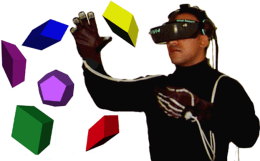 own life that you find so boring that you must venture out in search of Pokemon monsters to capture or wander about in some VR world? The creators of Pokemon Go state that they wanted to get gamers off the sofa and out in crowds where they could meet and interact with others. I suppose there is some of that, but it is hard to meet others when you are heads-down starting at your smartphone.
Perhaps if the game (and phone) sensed when other players were around and showed them on the near-by players’ screens they might look up and actually say hello. Maybe the game could even encourage cooperation among nearby players, so that ad hoc teams are formed on the fly. I’m relatively sure that the near-by players’ profiles could be easily shared with “teammates”. Who knows, some players might even look up long enough to say “Hi” or get to know other players. They’d bounce back and forth between real and virtual reality and even that little bit of real life is better than none at all. Perhaps  Pokemon Go dates could be arranged, first in AR space and then in real life. I’m sure that the game could be extended to include extra points or skills or credit for couples on Pokemon Go dates. What a concept!
The ultimate state of living in Virtual Reality was well imagined in the movie series The Matrix and follow-ons. In that imaginary world most of the “real people” existed in a trance like state while their lives played out in a Virtual Reality world that was really a huge computer program. That program was infected with the Mr. Smith virus, which did battle in the virtual world with the escaped real people who were trying to rescue the world from the controlling computer and its robots. For any who have had very realistic dreams (or nightmares) it is not all that hard to imagine living in such a dream-state virtual reality.
I can foresee useful avenues for entertainment and learning using AR and VR, but I also think that one has to get the “R” part down first, before venturing into augmented or  virtual space. People need to be able to deal with the reality of the life that they are living and not just trying to escape that life by jumping into a fantasy world. One must learn how to accept and cope and deal with real life in real situations, before taking on virtual challenges. Once you have mastered how to live in your real life, then you will be ready to take on the entertainment or learning of a new, virtual world. So, dip your toe into the realm of augmented or virtual reality, but do so from a firm foundation in the real world.
Here’s looking at you …I think.
Leave a Comment » | Inspiration, Pure fun | Tagged: #inspiration, Augmented Reality, life, Reality, Virtual Reality | Permalink
Posted by Norm Werner
You are currently browsing the archives for the Pure fun category.
 press was the new media of Luther’s day, and he was a savvy user. 500 years ago today Martin nailed 95 theses (sort of long tweets) to a church door stating why he thought the Catholic Church should change. The Catholic/Protestant split was underway. If you want to see what he posted,
  Long before the printing press was invented there were hand-scribed records of things and even books. Before even that time most of history was preserved in verbal stories and songs. The Psalms in the Bible likely existed for some time as songs before being written down. And, though longer than a Tweet, Jesus used short stories or parables to get his points across. These days they might have included #Jesus #Believe.
 NormsMilfordBlog