Saying goodbye to Ziggy Stardust, Major Tom and the Thin White Duke…

January 12, 2016

All of the press coverage of the death of David Bowie got me to thinking about the era’s that he spanned in my life. While many may have only known his later works, I was at least around during all of his performing years and witness to the various transformations that he made as a performer.

Young David BowieBowie was apparently classified originally as a folk and blues singer when he started in the mid-1960’s. He quickly morphed into what might be called an early version of fusion in the 1970’s during which he explored the combinations of a wide variety of emerging trends and sounds in his albums. That set the stage for the emergence of his Ziggy Stardust persona at the end of the 1970’s and into the 1980’s. Never one to stand pat with a character for too long, he then morphed through a number of new stage personas. There is a definitive web presentation of the 12 stages of Bowie’s stage life to be found at –  http://flavorwire.com/377128/a-journey-through-the-12-ages-of-david-bowie/3

Some of Bowie’s most creative work occurred in the 1970’s as he explored the fusion of Ziggy Stardustvarious music styles, some of which were just emerging at the time. Bowie himself was transitioning and maturing in his musical style. Near the end of that era he created the Ziggy Stardust persona and his career took off at a whole new level. Here are some of his works from the 1970’s –  http://ultimateclassicrock.com/david-bowie-70s-album-tracks/

The 1980’s were commercially successful for Bowie but his work during that era is considered to be of vary uneven quality. A compilation album of his best work from the era was releast late in the 1980’s – http://www.allmusic.com/album/best-of-david-bowie-1980-1987-mw0000577331

later bowieScott Parker did a good review of Bowie’s work during the 1990’s, an era when he tried to get back to his roots, with mixed success. Bowie was also an Internet pioneer and in 1998 launched Bowienet in an early attempt to reach out directly to his fans – a precursor to where the music industry ended up going. During this era Bowie took on the persona of the Thin White Duke and played in or collaborated with several bands. He also experimented with new sounds that presaged the alternative rock sound. Rolling stone has 20 of the songs of that era that, as they put it, only hardcore fans might know –  http://www.rollingstone.com/music/lists/20-insanely-great-david-bowie-songs-only-hardcore-fans-know-20140811/heathen-the-rays-20140811

There is a great deal of information about David Bowies life and performing career at the UK WikiPedia site – https://en.wikipedia.org/wiki/David_Bowie. It’s an interesting read and will probably give you a new appreciation for the longevity and influence that Bowie had in the music industry.

Before leaving Bowie had a long battle with cancer and had time to reflect on death and the afterlife, which are themes in his last album – Blackstar – which was released right before his death. The Lazarus track is considered to be his parting gift to his fans and to reflect how he was approaching his eminent death.

Whether you were a David Bowie fan or not, his influence was and will be felt on the music industry from some time to come. He was an innovator as well as a performer and led the way on several musical tends. He will be missed, but he will also be remembered.


Blogging Q & A

July 8, 2015

I get a lot of questions from friends or acquaintances about my blogging and blogging in general. These are usually from people who ask me how to get started or who tell me that they just don’t have the time or don’t feel confident that they could do it. Soooo, I decided to do this little post about blogging, in hopes that it answers a few questions and inspires a few more people to start blogging themselves. I guess this is my take on Blogging 101.

What the heck doe the word BLOG stand for anyway?

A few years back, when the internet was still fairly new, people began keeping and sharing web logs, which were initially just like keeping a public diary of what happened to them that day. From the Answeres.com web site comes this explanations of the origin of the word – The term ‘Blog’ is the evolved term coined by Peter Merholz in 1999. It’s not an acronym,…it’s a colloquialism. It comes from the conjoined terms web and log…as in weblog. Then it evolved into simply blog when Peter Merholz coined the term in 1999.

People keeping web logs discovered that others, sometimes many others would find and read their blogs about current events, such as coups in foreign lands or the doings of celebrities in the U.S. Software was developed to make creating these blogs easier and companies like WordPress and Blogspot began offering to host them for free. They provided what the internet and apparently the world was begging for – content. That really what blogs are – they are content; something for someone else to read. Blogs were added to web site all over as well as a means to provide easily updated content for those sites.

What good is a blog to me or my business?

The web has become the “go to” place for everything, with the latest trend being the movement of users off the desktop and onto mobile devices. People who need information about almost anything these days, just “Google it” and wait to see what comes back. What comes back is often dependent upon what they put into the Google inquiry to begin with. Google yourself and see what comes back. Now Google your business; not your company per se, but, just the line of business in which your company competes. What came back? Did your company show up? Now Google the problem or product category in which your company provides a solution or product. What showed up there? Was your company in the results? All of these example are things in which having a blog may help you gain position in the Google results that come back.

The other thing that posting regularly to a blog might do is to let people get to know you better and let them get comfortable with you as a person and not just a businessman. You can accomplish some of that on Facebook and I advertise all of my blog posts on Facebook, so that the people that I know there will see that I’m posting something that they may want to read. A blog can give you a little more formal setting in which to post things than a Facebook account might and can establish more of a professional reputation for you than most Social Media sites. I used the terms may and might above because your blog won’t do those things for you if you don’t faithfully post to it and make some effort to share it with others.

How do I get started?

You can jump right in by setting up your own blog on WordPress or one of the other free blogging sites and setting up an account. It’s relatively straightforward and the hardest part is probably choosing a theme (look) for your blog. There are lots of themes to choose from; but, start with something simple and don’t spend all of your time and effort on customizing your blog theme right away. You can go back later and change the theme if you want to. The important thing is to fill out your profile and get started with your first post. Another important step is to link yor blog in with your other social media sites – Facebook, Google+, LinkedIn and others, so that anytime that you post to your blog a post will also show up on those site alerting your friends there that there’s something new from you for them to read. After all the point of a blog is to share what you are posting. It’s not a secret diary that you keep locked away from the world. You hope that over time people will “like” what you post and sign up to “follow” your blog.

What should I look for in a blog hosting site?

Some blog sites have better editing tools than others, with ways to add more content, such as graphics and pictures and even video into the content. Some sites have fairly crude or simplistic editing tools. Find one that you feel comfortable using and one that supports the things that you may wish to add to your posts. Also look at the size of the blog hosting site/operation and the things that they do or the tools that they provide to promote the blogs that they host. There are a few larger blog hosting sites, like WordPress, Blogspot and Tumblr and tons of others. Here’s a link to a good read on the DearBlogger site about some of  the top blog hosting sites.

What does it cost to have a blog?

You can have a basic blog for nothing. If you desire to use your blog more like a web site and perhaps conduct business from it, you may need to pay to get some of the more advanced features that the free sites also sell. On the WordPress blog site you can also buy the rights to the domain for your blog (assuming that it is not already taken) for a relatively small annual fee. Owning the domain name makes it much easier for people (and Google) to find your blog. On WordPress my blog started out as https://normsmilfordblog.wordpress.com because it was a sub-domain of the WordPress site. That is a cumbersome URL name and one that Google may not have seen or bothered to index, so I bought the domain name http://normsmilfordblog.com and that is all that anyone has to enter now to get to my inspirational blog.

How long does a blog entry have to be?

It can be as long or as short as you wish it to be. I get a daily feed from a blog called Jack’s Winning Words, which is written by Jack Freed, the retired pastor of my church that is never more than one paragraph long. Jack starts each entry with a quote from someone or somewhere (maybe something he saw in a book, on a sign or on a poster) and adds a couple of sentences of his own thoughts about the quote. He normally challenges his readers at the end with a question about what it means to them. I use Jack’s little quotes all the time as the inspiration for my own blog. I usually write 4-5 paragraphs, sometime more. Which of these is the right length? Both are. There are no rules about length, except maybe not to bore your readers.

How often should I post new entries to my blog and how long will it take?

This is another question with no right or wrong answer. If you have the time and enjoy doing it, there is nothing wrong with posting to your blog every day; however, you can go a week or more between posts. Keep in mind that people may be visiting you blog more often to see if there is something new to read there. If you go too long between posts they may stop visiting. I recommend posting something at least once a week at a minimum. How much time it will take depends upon how long the post is and how fast you can think and write. I spend about 30 – 45 minutes (sometimes an hour) on each post (this one took longer). Some posts require more time because I may have to look up some things or confirm something that I think I know.

What about adding pictures or graphics to my blog?

writer-2Pictures and graphics do add to the appeal of a blog and can be an important part of the content. You should be careful not to use copywrited pictures or graphics without permission. There are sites like FreeDigitalPhotos.net to which you can go for free photos. I also use the clipart graphics out of MS Word or from free clip art web sites. Many people don’t use anything but words and that’s OK; but in our modern, Tweet-oriented world a lengthy blog with no pictures (like this one) will look to many like a “wall of words” and they will avoid them. You must balance off amusing the reader with educating them and I realize that you are not very amused by this post.

I’m not an expert on anything; what can I write about?

Blogs are not necessarily about rendering expert advice on things; although if you do have expertise on a particular subject that will give you lots of blog fodder. Rather blogs are about expressing your opinion on a topic, adding your insight to a subject or sometimes just getting things off your chest (be careful with that). Some bloggers try to act like reporters and post about the events going on in their lives or their areas of the world. Some like to render advice on life situations, sort of like a Web version of a Dear Abby column. Some just post whatever random thoughts they may have that day. The time is well passed when anyone cares what you had for breakfast, so give that approach a rest or move that important information about your life to Twitter or Facebook.

I advise peopled to write about things that interest them and write as if they were carrying upon a conversation with someone about that topic. One way to start is to sit down and think about your life – what you like or don’t like, what you do for a living, what you know about what you do for a living, what your hobbies are and what you know about those, what life experiences you’ve had that you might be able to share with others, places where you’ve been that you might give someone else some insight into or maybe opinions that you hold strongly and want to share with others. All of those things provide potential blog posts for you to explore and share, so make a list and save it as future blog topics.

So, what am I waiting for?

That’s a good final question. What are you waiting for, an invitation from the Pope? Jump in and get started writing. I can’t wait to see what you have to say.


In the Huron Valley area, why would you look anywhere else?

March 4, 2015

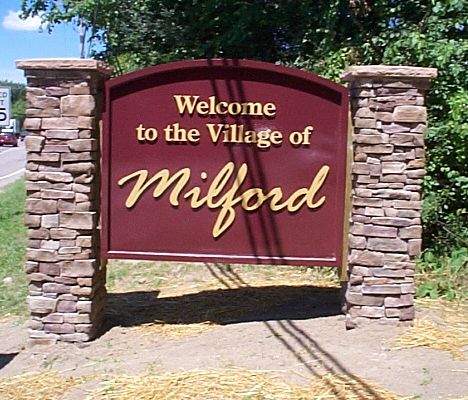
I created and maintain a web site called Move to Milford (www.movetomilford.com ). It is a web site with a mission to try to keep up with and share information about Welcome to the Village of Milford signwhat’s going on in the Huron Valley area – mainly Milford, Highland and White Lake, the Townships in the Huron Valley School District. In addition, because it is Milford Village centric, it contains an enormous amount of information about the Village and links to important sites from organizations that are located in the Village and immediate surrounding areas. If it’s information about Milford it’s probably there or there’s a link to the organization’s web site where it can be found on the Click on Milford page.

One of the features of the site is the poster wall. Did you ever notice while you were walking along in downtown Milford that many of the local stores have posters in theirposters in window windows? Well, I go get those posters from the various organizations, plus many that never make it to the windows downtown and post them on the “Poster Wall” at the Move to Milford site, right next to the calendar of ‘Things to do in the Valley”. That calendar has all of the events that I can find that are upcoming. If it’s not in that calendar column, there’s a good chance that it’s in one of the seasonal calendars or brochures that organizations like the “YMCA” or the Huron Valley Recreation and community Education program or the Milford Library put out. You’ll find all of those calendars, schedules and brochures there, too; along with a link to the Milford Cinema, so that you can see what’s currently showing there.   And where I could find them on web sites all of the calendars of the various organizations in the area are there, too.

Sometimes you just need the answer to questions like where would my children go to school, if I lived in the area. There’s a link to help answer that question and another to help you evaluate the schools in the area. Maybe you want to know if there are booksordinances about outbuildings in Village or Township – there’s a link there to all of the ordinances for both on the Click on Milford page. Maybe you’ve looking at moving into a home that is on a lake in the area and you’d like to know about that like, like how deep it is or how many acres it covers – there’s a link for that, too, on the Real Estate Readings page.

While we’re on real estate stuff, there’s a ton of great information available through this site, like what has sold in the area. I track eight townships that surround Milford and report on all of the sales above $20,000 (let’s face it, any less than that and the sale was for a tear-down house and mainly just to get the land). I don’t just report the sale prices, but also the percentage of sale price vs. asking price, the square footage ofsold sign the home, the number of bedrooms and baths, the days that it was on the market and the asking and sold price per square foot. For each of those eight areas I also calculate the average and median asking and sold prices, so that you get meaningful statistics about each area. I’ve been doing this for some time, so there is 5-7 years’ worth of data there and the data is updated every week. There are also capabilities there to search for homes in the area – I am a Realtor, after all – using various methods, including map-based searches.

If you do happen to be thinking of buying or selling a home, there’s a ton of great reading material about the real estate process – things that buyers and sellers need to know. Much of that I write myself, but there are also lots of great links to things that go beyond my real estate expertise, like mortgages and insurance. There’re links to the various programs for first time buyers, to help them get the assistance that they may need and links to sites that focus on short sales and foreclosures for homeowners who might be desperate for some help or advice.

As in any small town there are lots of local businesses and I maintain a business referral page for many of the local businesses  that I know and can recommend, It’s not Angie’s List, I guess it is Norm’s list, but more importantly it is a list of businesses and people that I trust. I feature a single business each month with a more detailed write up about it and the owner. If it’s not there, use the links to the Huron Valley Chamber of Commerce or the Highland-White Lake Business Association to search for other local businesses. We also have lots of great restaurants in Milford and they are all listed on the Restaurants page. Maybe what you are hungering for is spiritual, so there’s a page for area churches. Maybe you are interested in the history of Milford, well there’s a great article about Milford’s history and a link to the Milford Historical Society Web site. If you are interested in the arts I also track what’s going on at the Village Fine Arts Association in Milford and at the Huron Valley Council for the Arts in Highland. Both organizations have very active calendars of events and opportunities for artists and would-be artists.

Hopefully you get the picture that you can find almost anything that you might be searching for at this site. I search the Web so that you don’t have to. Spend some time exploring the site and I think you’ll want to bookmark it and use it as your go-to site for what’s going on in the Huron Valley. And if there’s something that you’d like to see there that I haven’t thought of, contact me on the About Us page and let me know.


Is walkability important to you?

February 26, 2015

How walkable is the area that you live in? Is walkability important to you in your choice of a new home? How do you find out how walkable a location is? I can’t answer the middle question, but I can help you find the answer to the first and last questions. There is a great site now owned by Redfin – https://www.redfin.com/how-walk-score-works – that rates neighborhoods all across the country. If you go there you can put in an address – either where you live now or where you are thinking about moving to – and find out its Walkscore.

walking manThe Walkscore web site gives grades on a scale of 1 to 100 for the walkability of the area surrounding the address that you provide. The site looks at a lot of different factors, but it all boils down to evaluating what you can walk to within a reasonable distance. Things that the site looks for are stores, restaurants, libraries or other cultural venues within walking distance and what that walk might involve. The Walkscore will be higher is there are sidewalks and a good layout, such as the grid structure that is found in most large cities vs. the lack of sidewalks and  winding streets with lots of cul de sacs that are found in  most modern subdivisions. You can go to the Walkscore site for a more complete explanation of the factors that they evaluate to come up with a Walkscore for any given area.

In the past (through the 1950’s at east) most cities and towns were laid out in grid patterns and had sidewalks. The advent of the suburban subdivision in the 1950’s changed all of that.  Many of the early subs still had sidewalks, but those eventually went away, too. People moved further out and became much more dependent upon getting into their cars and riving to get to anything. Subdivisions quickly evolved from any sibilance of a grid structure into free flowing curves and cul de sacs. The term “bedroom communities” was coined to refer to these developments where the only thing that one could do there was sleep; anything else meant getting into the car.

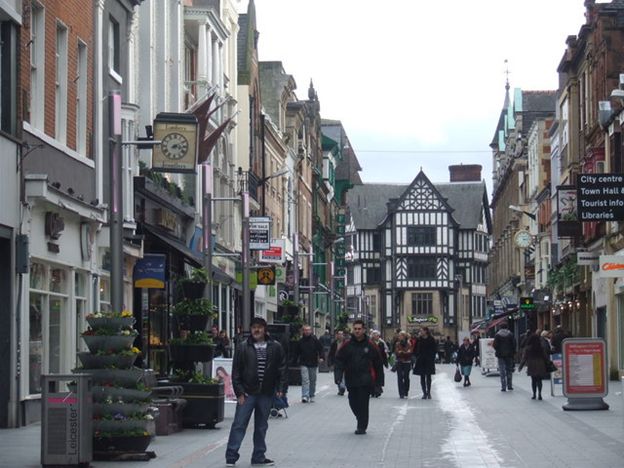
There are still great walkable cities like New York, Boston or Chicago available; wherecity street with people living quarters are interspersed with businesses, stores and amenities and where one can still walk to a great many things. Newer cities tended to be built mainly for business and seem to empty out at night, leaving little to walk to for those who might live there. It’s actually kind of eerie at night or on weekend in many of those cities – like being in a ghost town.

So, why is all of this of any importance? I suppose one could start by pointing out the obvious health benefits of getting out and walking to things; but there is also an environmental benefit – you’re not driving and creating pollution or using up fuel. There is also usually a social a side benefit. When you are out walking you will likely encounter others in the neighborhood doing the same and, because you are walking, it is easier to stop and say “hi” to them and maybe even have a conversation. Try that while driving your car.

You may be much more likely to make use of local libraries, museums or other cultural amenities if it’s a short walk, rather than a drive, to get to them. Walkable areas usually also have lots of neat little restaurants and locally owned shops. You may find that you don’t have to jump in the car and drive to the mall to get what you need. A side benefit is mostly psychological –  you don’t feel trapped in walkable areas, because you know that, even if you’re without a car, you can just walk to most things if you want to.

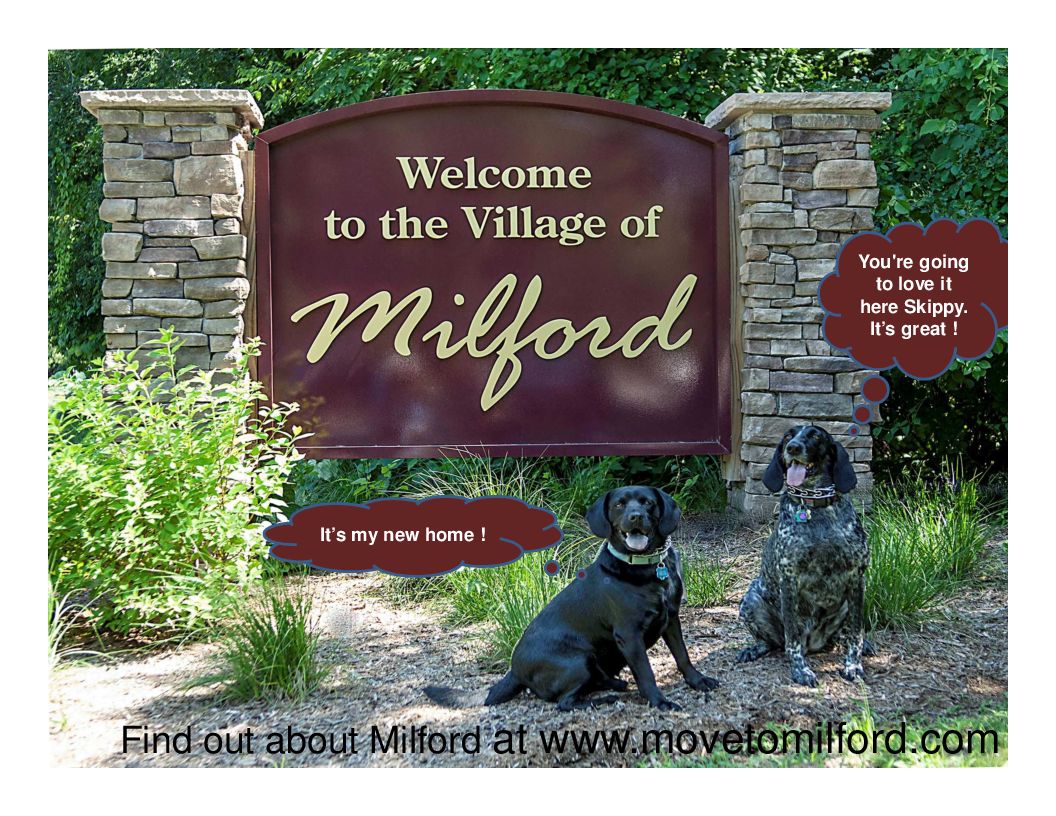
Skippy and Sadie for calendarI moved from one of those “bedroom communities” in the suburbs that had a Walkscore of 15 into Milford, Michigan, a small village where I’m just 2 blocks from downtown; and I see a Walkscore of 62 when I check it. I can literally walk to most that I need, with a few exceptions where I would have to get in the car and go to a mall or superstore. It’s great and we love it. Plugging in downtown addresses in neighborhoods in Boston, New York or Chicago might turn up Walkscores that are
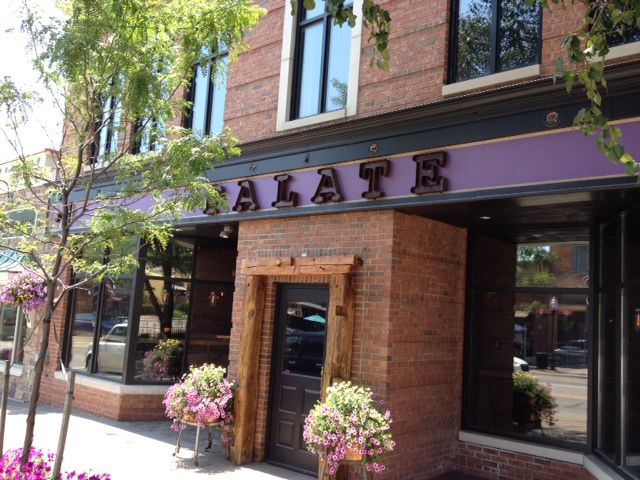
Front of Palatemuch higher than that. Try it and see what the Walkscore is for your current home’s location.

So, if you’re in the market for a new home, how important is the walkability of an area to you? If you have 3-4 areas that you are considering for a new home location, plug them in to the Walkscore.com site and see what their Walkscores come out to be. You don’t necessarily have to move back into an urban setting to get into a walkable, but it is more likely that small towns offer more walkable environments than most suburban subdivisions. If you happen to be looking in Southeastern Michigan, call me and I’ll help you find a great walkable area to live in.


Google – Have they become the bully in the room?

February 12, 2015

Recently I got an email that started off…

Hi Webmaster,

Due to Google’s algorithmic changes we reviewed XXXXXXXXX.com’s (the real URL is unimportant to this discussion) link profile for our client.  Our client has asked us to request removal of their content / specific links to their site.

The link(s) your site has to our client’s site are on the list of links needing to be removed.  We respectfully ask that you remove these links. Blah, blah, blah…

I’m a Realtor® and I own and maintain several web sites that are aimed at providing useful information to people who may be interested in the learning more about the real estate process or who may wish to buy or sell a house.  As part of the content of my real estate web sites, I have written a series of informational articles, which are available there and I have researched the Internet for other sites that have useful information about the real estate process or information on ancillary topics that I feel my customers might want.

I’m not an expert on many of the topics that might be helpful for my clients, so I established links to those web sites that have articles posted by people who are experts. Those topics might include things like advice for people getting divorces (real estate usually plays into that action), or people dealing with the estates of recently deceased family members, or people with tax questions about the sale of a property, or any number of other topical areas for which there are great web sites with meaningful reading for my clients. The link mentioned above was one such link. I also note that I have never asked any of those sites for as reciprocal link back to my sites and as far as I know none have ever placed links back to my sites.

Now, due to “Google’s algorithmic changes” more than one of the web sites that I have links to for my client’s benefit have sent me similar emails, asking that the links be removed. Google somehow ends up being happier (I guess) and the web sites that I remove the links to end up being less threatened by Google (I guess) and I know that my clients end up with less helpful information on those topics. It doesn’t make sense. It’s unfortunate that an algorithm, instead of a live person, makes those calls, since any reasonable person after looking at the page and links in question could have seen that they were not SEO-driven links meant to game the system, but rather an integral part of the service that I was trying to render to my clients through my site.

Let me hasten to add that I understand that the whole search environment has ended up being compromised and perverted by the SEO crowd who make their money trying to game the Google and Bing search algorithms and achieve a higher ranking for their clients (likely higher than the sites deserve, based upon their content and real value). Not a week goes by that I don’t get 3-4 calls from these helpful people, many of whom try to use high-pressure sales techniques to get me to sign up. I have never used an SEO company and never will; but I have witnessed the corruption of the original intent of the Internet and of search engines, because of the greed and lack of scruples of many of hose SEO companies. They have mostly succeeded in closing out the little guys who have honest, simple little web site and no money for SEO. I think that is what Google has been working to try to prevent, but in their quest to outsmart the SEO crowd they have ended up becoming the bully in the room and compromised their own motto of “do no harm” (or “do no evil”). Perhaps we little guy web sites have just become collateral damage in the constant war between Google and SEO’ers trying to game their system.

I even get emails directly from Google telling me how I have to change my web sites to be more “mobile friendly” or face the wrath of the Google algorithm and relegation to the search results hinterlands. I’m working on that, but it’s not always easy for a one-man show to keep up with the demands of Google. Somehow, Google has become much less like the friendly Wizard depicted in the movie The Wizard of Oz and much more like the sinister and controlling wizard of the play Wicked. Unfortunately, banishment from the favor of Google means far worse than banishment from Oz. It means you are relegated to page 20 or higher in the search results and your web site becomes invisible, a non-entity. Monkeys really will fly before anyone sees your site. That is really sad and not at all consistent with the original intent of search engines.

So; off I go to remove links on my web sites that lead to great content on other web sites for my clients; not because they still aren’t very good places to visit with meaningful content, but because they offend the great and powerful Oz, oops I meant Google Algorithm. Hopefully, you’ll still be able to find my websites; but you might have difficulty if you Google them, because I’ll probably be invisible there, somewhere down around page 40 or 50 in the search results, I suppose. I may end up so far down the Google results list that only Bing will be able to find my sites. Oh, the pain of it all! Oops, I hope that link was alright. Oh, that’s right, I forgot, Google owns YouTube, too. Now I’ll get emails from YouTube asking me to remove that link from this post. Sigh!


Final push day for voting…

January 23, 2015

I promise that this will be the last post about voting for the Huron Valley Historyvote graphic Initiative grant. You can go to the Clarke Library web site and Tweet from there or just Tweet or re-Tweet something from my earlier posts or from your own account.The Tweets need to have the hashtag #DigMilford in them to count as a vote. We are doing OK onthe Tweet voting, but Alpena has been right on our heals all along, so keep voting.

You can also vote by sending in a Michigan-themed postcard to – Clarke Library, Central Michigan University, Mount Pleasant, MI  48859. Remember that each postcard counts as 100 votes, so they are really helpful. Postcards need to sent so that they arrive before Jan. 30; so, they probably need to be mailed by Wednesday the 28th. The postcards also need to have the hashtag #DigMilford on them somewhere, to identify the grants finalist that you are voting for. The cards can pictures of anything to do with Michigan or just a map of the state. Some children have made homemade maps buy drawing mitten shapes around their left hands with crayons and labeling it “Michigan.”

You Tweets and cards will help us win a grant from Clark Library to digitize the back issues of the Milford Times that we currently have on microfilm, the earliest gong back to 1871. We plan to index and make the resulting database available on-line for research. Help us make that happen through your support. Thanks.

Tweet, re-Tweet and Tweet again; then, have a great weekend!


Day two of voting – keep on Tweeting

January 20, 2015

It is day two of the week-long voting for the finalists in the running for a grant from the Clark History Library of Central Michigan University.  Clarke Library has established a site where people can go to vote – Clarke Library Voting Site. The site has all five grant finalist shown, so remember to vote for the Milford project – hashtag #DigMilford. You can also just Tweet using that hashtag (#DigMilford) within your Tweet or re-Tweet a Tweet that contains the hashtag #DigMilford.

Your Tweets, using the hashtag #DigMilford, can help the Huron Valley History Initiative win a grant from the Clarke History Library at Central Michigan University. That grant will allow the groups that have united behind an effort to share the history of the Huron Valley. A key part of that effort is a project to digitize the back issue of The Milford Times that currently exist only on microfilm.

The Milford Times is a local, weekly newspaper that began publishing in 1871. The Milford Times has chronicled important events ever since in the Huron Valley area, which is made up of the Townships of Milford, Highland, Commerce and White Lake and the Village of Milford. Every issue that has been published since the beginning in 1871 is available on microfilm and the Milford Historical Museum and the Milford Library. The proposed project will digitize the entire microfilm library, index it and make it available on-line at all of the participating libraries and historical societies of the four Townships.

A key to making this digitization project  happen is a grant from the Clarke History Library, which is associated with Central Michigan University. Each year Clarke solicits grant applications for worthy projects concerning history. The Clarke staff narrows things down to five finalists and those five projects compete for the grant by proving that they support for their project from the local communities and elsewhere. That vote graphicproof comes on the form of post cards and Tweets. I want to focus upon the Tweets here, because I believe that there is great power in the Tweet, once unleashed. So, keep on Tweeting!

And if you can’t or just don’t Tweet or want to go to the Clarke Library web site to vote, remember that you can send a Michigan-themed postcard (a postcard with a picture of something or someplace  in Michigan or a map of Michigan on it)  to Clark Library, Central Michigan University, Mount Pleasant, MI  48859 and those postcards will each count as 100 votes.  The post card should have the hashtag #DigMilford written on it somewhere to be counted.


The polls are open – Tweet, re-Tweet and Tweet again…

January 19, 2015

We have all witnessed the power of a 144-character Tweet to change the course of vote graphichistory in recent events in the Middle East and in Eastern Europe. Now a Tweet has the power, not to change, but, to preserve history. Your Tweets, using the hashtag #DigMilford, can help the Huron Valley History Initiative win a grant from the Clarke History Library at Central Michigan University. That grant will allow the groups that have united behind this project to begin a project to digitize the back issue of The Milford Times that currently exist only on microfilm.

The Milford Times is a local, weekly newspaper that began publishing in 1871. The Milford Times has chronicled important events ever since in the Huron Valley area, which is made up of the Townships of Milford, Highland, Commerce and White Lake and the Village of Milford. Every issue that has been published since the beginning in 1871 is available on microfilm and the Milford Historical Museum and the Milford Library. That’s great, but the microfilm technology is very long in the tooth and does not allow sharing of the information, unless one is sitting in front of the microfilm reader. microfilm readerThe proposed project will digitize the entire microfilm library, index it and make it available on-line at all of the participating libraries and historical societies of the four Townships. Eventually it will be widely available on-line, along with other materials houses in each of the museums runs by the four Township historical societies.

A key to making this happen is a grant from the Clarke History Library, which is associated with Central Michigan University. Each year Clarke solicits grant applications for worthy projects concerning history. The Clarke staff narrows things down to five finalists and those five projects compete for the grant by proving that they support for their project from the local communities and elsewhere. That proof comes on the form of post cards and Tweets. I want to focus upon the Tweets here, because I believe that there is great power in the Tweet, once unleashed.

The voting will take place from Jan 19 until Jan 25. Clarke Library has established a site where people can go to vote – Clarke Library Voting Site. The site has all five grant finalist shown, so remember to vote for the Milford project – hashtag #DigMilford. You can also just Tweet using that hashtag (#DigMilford) within your Tweet or re-Tweet a Tweet that contains the hashtag #DigMilford. Did I mention that our hashtag is #DigMilford? I’ll be sending out a Tweet on Monday, Jan 19 with that hashtag in it, so that you can re-Tweet it, if you’d like.

Is this as important as a revolution playing out in Tahrir Square during the Arab Spring or the loyalist forces who are using Tweets to communicate about Russian troop movements in the Ukraine? Of course not; but it can demonstrate again the power of the Internet and of Twitter to influence history. We will be able to track the number of Tweet votes that come in for each of the finalists. Using the simple power of my Twitter followers list and then asking them to pass this on to their followers’ lists, I believe that we can get 10,000 or more Tweets during that week for our project. Together, let’s demonstrate the power of the Tweet. You can Tweet as many times as you wish during the voting period, just remember to use the hashtag #DigMilford. Let’s rock the world this week! I Dig Milford, do you?

postcardAnd if you can’t or just don’t Tweet or want to go to the Clarke Library web site to vote, remember that you can send a Michigan-themed postcard (a postcard with a picture of something or someplace  in Michigan or a map of Michigan on it)  to Clark Library, Central Michigan University, Mount Pleasant, MI  48859 and those postcards will each count as 100 votes.  The post card should have the hashtag #DigMilford written on it somewhere to be counted.


Get ready to vote…

January 17, 2015

The polls open at 8 AM Monday morning, Jan 19, for voting on the grants that the Huron Valley History Initiative is vying for against four other communities. Voting continues until 5 PM on Jan 25th. As they like to say in Chicago politics “vote early and vote often”, only in this case it is perfectly OK to vote and many times as you wish.

There will be multiple ways to vote. One way is by clicking on the graphic below, which will take you to the Clarke History Library web site and the voting station that they have set up.

vote graphic

The second way to vote on-line is to post a Tweet or to Re-Tween a post that has the hashtag #DigMilford in it. That’s our unique hashtag for this competition. I’ll be posting a tweet Monday morning with a link to another blog post about this contest and with the hashtag embedded; so, you could just Re-Tweet that post.

postcardThe third way to vote is to send a postcard in to the Clarke Library, Central Michigan University, Mount Pleasant, MI  48859. Postcards don’t necessarily have to come from within Michigan, but they do need to have a Michigan theme or picture on them and they should also have the hashtag #DigMilford written on them somewhere.  If you can’t find a Michigan-themed postcard, get a blank one and draw a left handed mitten on it and label it “Michigan”. That should work. Postcards count as 100 votes, so we’d love to get lots of them sent to Clarke Library.

As I’ve mentioned here before, the Huron Valley History Initiative is made up of about 8-9 museums, libraries and historical societies and groups. The goal is this group is to digitize and make available on–line the various collections of historic memorabilia that the historical societies and museums have collected. The project that will kick this off is the conversion of the microfilm libraries that the Milford Historical Museum and the Milford Library have of back issues of the Milford Times weekly newspaper. Those back issues go back to the beginning of the paper in 1871. The Clarke Library grant that we are vying for will facilitate that conversion from microfilm into a digital format and allow the indexing of the issues to create a searchable database.

Look for my kick-off post on Monday, but get ready to vote next week. Dig through your old boxes of pictures and stuff to see if you have an old postcard off something from Michigan that you could send; otherwise stand by to Tweet. Have a great weekend.


Not counting the money…

January 15, 2015

From the Jack’s Winning Words blog comes this post – “Without money we’d all be rich.”  (Unknown)  Squirrel pelts once served as money in Finland; copper crosses in the Congo; cheese in Italy; knives in China.  Workers in Greece were sometimes paid in salt.  The word, salary, comes from that. 

money paidMoney was invented s a convenience for all. After all, how many squirrel pelts or punds of salt can we stuff into our wallets? In the beginning money was used only as a means of facilitating the exchange for goods, not as a scorecard. These days with the advent of the credit card and now electronic ways to pay for things money has become almost more a concept than a physical thing. The ultimate conceptualization of money is the BitCoin, which really has no physical manifestation at all. One seldom gets to see reallymoney tumbling down big amounts of physical money; although, if you watch poker on TV at the end of every big tournament they have lovely ladies dump the grand prize money on the table in front of the final two contestants. – it’s quite impressive if the prize is over $1 Million.

Money is used more and more these days as a scorecard of success in life – how much you have demonstrates how successful and important you supposedly are. That has been true for quite some time, going back to the invention of the word Millionaire to describe someone with lots and lots of money. These days a Millionaire might be considered to be a piker in the Billionaires club. Once the numbers get that high it is impossible for most “normal’ to really grasp that amount of money. Of course, unless they pour it in the casket with him, no Millionaire has yet taken it with him when he dies.

Back to the little saying for the day; what would we have that would make us all rich without money as a scorecard of things? People without money often look around them and observe the riches of the land, the wonder of the birds in the air, the fish in the seas and natures abundance in the forests. These are usually people who are so far removed from “civilized societies” that they have yet to be corrupted by the concept of money. It cave manis easy to imagine that one could feel “rich” if one lived I an environment that supplied all that was needed to live close at hand, like the cave man. Hungry? Go pick that fruit over there or catch that fish out in the water. Need clothes? Use that animal skin or weave cloth from the fibers of that plant over there. That is a simple, subsistence way of life that thankfully we have moved beyond. As we did we also lost most of the ability to see the riches that are all around us. Perhaps that s part of what the saying for today is alluding to.

But, living a rich life means more than just taking care of one’s basic needs to survive; it means having one’s health and it means having meaningful and rewarding relationships with others. It means appreciating what you have and not coveting what someone else has. It means finding joy in the simple pleasure of peaceful moments alone and great happiness in those moments shared with others. It means stopping to smell the roses and to appreciate all of those things around you that add shape and color, or smells or tastes or sounds to your environment and make it vibrant and interesting. Mpuppyoney can’t buy the feelings that you get laying on your back in the grass on a warm day and starting up at the clouds as they float by. Money can’t buy the wonderful smell of puppy breath from your new puppy or the soft touch of the skin of a new-born baby in its mother’s arms.  Those are riches that have nothing to do with money.

So, take some time to think about and appreciate all of the things around you and in your life that money can’t buy – the things that Nature supplies and the loving relationships of which you are a part. Once you do, you will have identified the most valuable things in our life. We are all rich indeed, if we just know how to look at our lives and we don’t need money for that.