Advice from Ben Franklin…

February 18, 2020

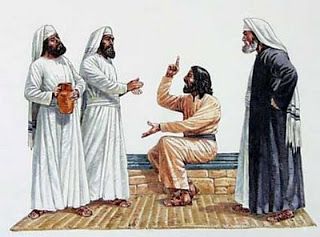
In today’s post to his blog, Jack’s Winning Words, Pastor Freed used this quote that is attributed to Benjamin Franklin – “Those who in quarrels interpose, must often wipe a bloody nose.” 

Franklin was probably referring to those who stick their nose in where it doesn’t belong, or to those who jump into arguments seeking to be peacemakers. It often happens that the anger that was being vented between the arguing parties becomes refocused onto the peacemaker. We sometimes see on the nightly news that some would-be peacemaker in a street argument ends up being shot or injured by one of the parties to the argument.

While being a peacemaker is sometimes dangerous or difficult, it is a role to which we have been called. “Blessed are the peacemakers, for they will be called children of God.” (Matthew 5:9)

Perhaps suffering the occasional bloody nose is the price that one must pay to be a peacemaker. Peacemakers are the “first responders” in life’s brouhaha’s . Defusing a disagreement that could get out of hand requires that one jump in, separate the parties and stop the progression of the situation. Once the escalation of emotions is halted; the peacemaker can determine a course of action by listening to the two sides. Often it is a misunderstanding of what has been said or the words that were used. Sometimes just helping one or both parties understand what it is that they are disagreeing upon is enough to calm things down. Sometimes not.

In some cases, the best that the peacemaker can achieve is détente, a pause that one hopes will lead to a more permanent understanding. Even that may be looked at as a win, since the situation was calmed to the point where it didn’t boil over into physical conflict. Perhaps  the bloody nose that the peacemaker might have suffered that provided the outlet for the anger that was driving the situation.

Whatever the situation, it is better to act, to interpose as Franklin put it; than to sit by and do nothing, even if there is an element of danger involved in acting. Why? Because you know, it is right to do so.

So whoever knows the right thing to do and fails to do it, for him it is sin. (James 4:17 )

And, what if you don’t act? Maybe Franklin would have put it this way –

Those who sit by and do not act, most often regret it after the fact.

Do the right thing! Be a peacemaker. Your nose will heal and you will be better for having acted.

Peace be with you.


What is your religion?

February 13, 2020

“When I do good, I feel good.  When I do bad, I feel bad.  That’s my religion.”  (A. Lincoln)

Those were the words of wisdom from today’s post to the Jack’s Winning Words blog. Jack went on to write that Lincoln was not a member of any organized religion, but he certainly did a lot more good in this world than many of his era that were church goers. Religion is sometimes defined as the practice of one’s faith, what one believes in. One would be hard presses to find a better example than Abe Lincoln of someone who practiced what they believed in.

So, the question, “What’s your religion”, really boils down to what do you believe and do you practice what you believe? Churches tend to build complex sets of rules and rituals for the practice of beliefs, turning them into dogma which cannot be challenged. Disagreements over that dogma has lead to the splintering of churches or religions, not matter what beliefs  they were originally based upon. That is why we have so many different faiths and denominations and sects within faiths. At their core, most are defined by a belief in a supreme being (God in whatever name is used). Once you get past that simple core belief, one begins to encounter the hand of man in the accepted practices of worshiping that God. Let the dogma begin. Most practitioners of religion eventually find a set of dogma that they can accept and settle into one of these groups, secure in their knowledge that they are practicing the one, true religion, while all others are doomed.

At least the religion that Abe Lincoln professed has very simple and straightforward rules – do good and feel good about it or do bad and feel bad about it. Jesus put it that we should love others as He has loved us and do unto others as we would have them do to us.  I suspect that you would end up doing good if you accepted that as your religion. Leave the dogma stuff to the people who are more concerned about perpetuating their institutions than about the faith that underpins their religions.

Perhaps you can reinforce your religion by saying a little prayer each morning asking God to help you practice what Jesus preached – love one another. Another of Jack’s posts came to mind as I am writing this. As much of a reach as it may be to see the connection here that quote from Emily Post was this –

“Manners are a sensitive awareness of the feelings of others.  If you have that awareness, you have good manners, no matter what fork you use.” 

If you are sensitively aware of the feelings and needs of others and do something to help (do good) you have good religion, no matter what church (Sect/group/denomination/etc.) you worship in. Just keep the faith and all else will take care of itself.

What is your religion?


Imagine success…

February 10, 2020

In a today’s installment of the Jack’s Winning Words blog, Pastor Jack Freed used this quote –

“Stop being afraid of what could go wrong, and start being excited about what could go right.”  (Tony Robbins)

I’ve also posted here a few times about not wasting your time worrying about all of the bad  things that might happen .

Robbins’ advice isn’t so much about not worrying as it is about completely refocusing your thoughts. Many professional athletes (especially pro golfers) use a technique called visualization to “see” the result that they desire before they even swing the club. They do not stand there worrying about how to get out of the sand trap next to the green. They have trained themselves to see and get excited about what could go right. In their mind’s eye the ball will gently land on the green and roll right into the cup. They imagine success, not disaster.

As you face a new day and a new week, there are probably challenges ahead that you already know about, at work or at home. You could spend your time fretting about what could go wrong or you can visualize how you are going to make things go right. Visualizing success does not completely discount any challenges that may be there, but it does “see” how you are going to handle and overcome them. It give you the confidence to face them, because you have already dealt with them in your mind and see the positive outcome.

Many events that you may be visualizing will have some unpleasant moments – moments of sadness or fear or anger. It is the fear of an unknown outcome that paralyzes many people. Visualizing how you will handle them and get through them allows you to “see” the desired outcome at the end of the event…it removes the unknown from the equation and allows you to imagine success.

Perhaps the best way to “see” success is to first visualize that God is there with you, giving you the advice and help that you need. Pro golfers have their caddies right there with them, helping them determine the right club to use and where to aim. You can visualize yourself walking into the situation ahead with God at your side to give you the strength and advice that you need to succeed. Start your day out with a quick prayer to ask for God to be with you throughout the day. Then visualize what the two of you can do together. Imagine what God can do to help you.

It’s going top be a great day and a great week ahead. Imagine success!


What makes you laugh?

February 5, 2020

A recent post to the Jack’s Winning Words blog got me to thinking about what makes me laugh. Jack posted this bit from Steven Wright – “Right now I’m having amnesia and deja vu at the same time… I think I’ve forgotten this before.”

I remember really liking Wright’s humor and his ability to deliver it deadpan. Here are examples of some of his best routines – https://www.youtube.com/watch?v=Z9ciHpT4WuM

I grew up on a different kind of humor, the monologues and routines of Milton Berle, Sid Caesar and Red Skelton come to mind. Of course there was also George Burns, who used deadpan delivery and Groucho Marks, who off-hand and sarcastic remarks I found funny. One of the earlier wordsmithing comics that I remember was George Carlen, who could take a single word or theme and turn it into a whole routine. George suffered through the period in TV where the sensors restricted what he could say or at least what we could see of what he said. Here’s some of his best routines.

 I especially like comedians who play with words or whose humor forces one to think about what was just said and consider why we thought that was funny.

Some people prefer physical comedy, with prat falls or other visual things that tickle our funny bone. All of the early, silent film humor was based upon visual humor, since we couldn’t hear any funny lines. The Three Stooges, Abbot and Costello,and Martin and Lewis were more modern comedic teams that still relied quite a bit on the visual aspect in their humor. On the Carol Burnet Show, the humor of Tim Conway really came through when he was portraying the little old man shuffling as fast as he could from place to place. He always broke up Harvey Korman with that routine. Me, too.

Here are some of Tim’s best routines from that show – https://www.youtube.com/watch?v=me-BOWwtm2Q

I think we all need a little humor in our lives. Being too serious all of the time is a sure formula for health problems. Laughter allows us to break the tension of everyday life and, just for those few moments, get back to the innocence that we had as children. So find something that makes you laugh and take some time each day to go there and let go – laugh.

What makes you laugh?


You can’t wrap your head around God…

January 24, 2020

In today’s post to his blog, Jack’s Winning Words, Jack used this quote, which appears to be his own thoughts – “They say that God is everywhere, yet we always think of him as somewhat of a recluse.”

Jack went on to relate a cute story about a child trying to understand the concept of God being everywhere.

The post and the story that he relates in it serve to illustrate one of man’s biggest challenges (and I might say failings) when it comes to God – the need to understand God within our limited abilities to define things. Our imaginations are so limited by our need to relate God to things that we can see, feel, touch or otherwise experience in the real world, that we are unable to find a place or category in which to put Him in our minds. We tend to use comparative phrases – “God is like…” – in order to try to get comfortable with the otherwise troubling concepts of God being everywhere, knowing everything, being all powerful and all of the other concepts and things that we have heard or read about Him during our lives. We are constantly trying to wrap our heads around the concept of God. But we can’t.

There is an argument t to be made that God sent His Son Jesus into our world as a physical embodiment that we might be better able to understand. We could see Jesus and touch Him and therefore we could believe in Him. Jesus made God real for us in terms that we can understand and made Jesus the route through which we could wrap our heads around God. Jesus even told us – “I am the way and the truth and the life. No one comes to the Father except through me.” (John 14:6)

Jesus knew the limitations of men’s minds to understand  God and the concept of life after death and heaven. He used parables when he was trying to teach his Disciples as a way to relate what he was saying  to everyday things that they could understand. Even his description of Heaven is couched in terms that they could understand from their everyday lives. – “In my Father’s house are many rooms. If it were not so, would I have told you that I go to prepare a place for you? “– (John 14:2).  

Faith is the only way to take the needed step beyond man’s limited ability to reason and understand. Instead of trying to wrap your head around God, by trying to understand God within your own limited intellectual context, one needs to shift from understanding to accepting, from being able to define God within the limitations of your own terms, to accepting God on His terms through faith.

We all have difficulty getting comfortable with the unknown and our imaginations can run wild trying to fill in the blanks. Sometimes fear takes hold and we imagine all sorts of terrible things. Sometimes cynicism overcomes us and we wander away from our beliefs and our faith. We can spend an inordinate amount of time wresting with potential explanations or definitions for God, but eventually it always circles back to faith – to our belief that the unknown that is God and the destination that is Heaven exist and that God will watch over us and Heaven awaits us, even if we don’t understand it.

We can’t wrap our heads around God; but, if we accept Jesus, we will start to experience, “The peace of God, which surpasses all understanding, will guard your hearts and your minds in Christ Jesus.” (Philippians 4:7)

Stop trying to wrap your head around God and just accept Jesus as your savior and your only route to eventually knowing God.

Peace be with you.


Don’t get spit out; get committed…

January 23, 2020

“There are only two options regarding commitment.  You’re either IN or you’re OUT.  There is nor such thing as life in between.”  (Pat Riley)

That was the quote in a recent installment of the Jack’s Winning Words blog. Riley was referring to being committed in basketball terms, but he was also referring to life in general. Many seem to think that being a spectator in life means the same as being committed. It does not. I am reminded of the old saying , “The chicken was involved in the breakfast meal, but the pig was committed.”

Later is his post, Jack used this short quote from Revelations 3:16 – “Because you are lukewarm, I will spit you out.” Apparently, God wants us to get committed or get left behind.

But, how does one get committed in their faith? Actually, we got fairly specific instructions on that in the Bible. Many passages instruct the followers of Christ to share the Good News.  Some of the faithful take that commitment to the extreme, preaching from a soap box on a street corner; but, for most, there is another way to be committed.  

Two verses from the Bible  that I particularly like are these –

“In the same way, let your light shine before others, so that they may see your good works and give glory to your Father who is in heaven.”  (Matthew 5:16) 

“But in your hearts honor Christ the Lord as holy, always being prepared to make a defense to anyone who asks you for a reason for the hope that is in you; yet do it with gentleness and respect,” (1 Peter 3:15)

It seems to me that these passages are saying that living one’s life in quiet confidence of salvation and doing what is right for others (good works) is a great way to let the light of Christ shine through you. Showing gentleness and respect while defending your faith is just being consistent with that confidence.

We need not spend or days overtly bringing up our faith and cajoling others about their faith; rather we need to live our lives such that our decisions and actions reflect our faith. Often that will involve making decisions to help others or to do the “right thing” when faced with tough decisions. We should be able to look back at the end of the day and be proud of the decisions that we made and not ashamed of them. Some use the little reminder bracelets with the initials WWJD on them, because they help one stop and think about the decision at hand within the context of one’s faith.  Not every decision involves one’s faith, but many decisions have a right or wrong component to them that can benefit from that pause. The right or wrong component usually involves the decision’s impact upon others.

I have written here before that a good little prayer to start your day my include this line – “Help me make good decisions today.”  That helps you get committed for the day. Don’t get spit out. Get committed. Let His light shine through you.


Don’t forget to forgive…

January 17, 2020

In today’s post to his blog, Jack’s Winning Words, Pastor Jack Freed used this quote –

“Not the power to remember, but the very opposite, the power to forget, is a necessary condition for our existence.”  (Sholem Asch)

That may well be good advice; however, it is the power to forgive that is a necessary condition for true peace. Forgiving others is a key point in the prayer that Jesus left with his disciples – The Lord’s Prayer.

I have posted here a few times about how amazing the nightly news stories are about people who have been the victims of injustice or sometimes even savage violence saying that they have forgiven the perpetrators. They didn’t forget, but they are able to move on with life because they were able to forgive. Not surprisingly, many of those stories involve church members who suffered some atrocity or wrong while at church.

The first step to forgiving is to put whatever it is into the perspective of time. In most cases, one can say, “It happened, but it is over.”  So, put it behind you in time and then focus upon dealing with your feeling of the need for retribution. We often her people say that they are seeking justice; when, in fact, they are seeking payback. They seem to think that they will find peace in the fact that someone goes to jail or in the payment of some amount of money. Neither really brings the closure or peace that forgiving brings to the situation.

All of us have the ability to forgive, even if we can’t forget. Not being able to forgive most often means that we hold on to not just the pain of the event, but the feeling of the need for retribution. We keep a score to settle in our minds. That sense of need for payback keeps open the wound of the original incident, rather than allowing the wound to heal. We see life as a zero-sum game in which we need to inflict some sort of pain back in order to cancel out (zero out) our own pain.

Perhaps a better way to keep score is to see our ability to forgive as the means to zero-out things. We need to be able to forgive ourselves as well as others in order to avoid living in a negative state of mind. The Lord’s Prayer tells us to ask for forgiveness for our trespasses (sins) as we forgive the trespasses (sins) of others towards us. If we can do that to zero out the bad things that we do to ourselves or the things that others do to us, then we are left with only the good things in life to remember. That is a much happier place to reside than the dark pit of despair and vengefulness into which not being able to forgive leads.

As you start out today, think about the trespasses of others against you that you may be holding onto and focus not upon retribution but on forgiveness. Maybe saying the Lord’s Prayer will put you in the right frame of mind. At least you will have the comfort of knowing that you have asked for forgiveness of your own transgressions, and that is a great start to any day.

Don’t forget to forgive.


Thinking about love…

January 16, 2020

Today’s post to the Jack’s Winning Words blog is one of those short little ditties that gets you thinking about all of the other things that you have seen about it or could say about it. The quote was  –

“The duty of love is to listen.”  (Paul Tillich)

Almost immediately, the famous movie line “Love is never having to say you’re sorry” popped into my mind. Then came a flood of thoughts that might be quotes of their own from someone..

The opportunity of love is to share.

The reward of love is reciprocation.

If the duty of love is to listen; then the requirement of love is to act.

The opposite of love is not hate; it is apathy.

Once you start thinking about love, you eventually come around to Jesus final commandment that we “Love one another as I have loved you”.

He went on to say in the next verse of John 15 – Greater love has no one than this, that someone lay down his life for his friends.

What do you think about when you read today’s quote? Hopefully those thoughts lead you down a happy path.

If you start down the path that Jesus laid out in John 15 it will lead you to a warm, secure and confident place where you know that you are loved.

Think about it.


But, you didn’t…

January 15, 2020

“You can’t regret making what you thought was the best decision at the time.”  (Carol Channing) – quote from the Jack’s Winning Words blog tody.

We call it second guessing and sometimes we do it to ourselves. You coulda (but, you didn’t). you  woulda (but, you didn’t), you shoulda (but, you didn’t). Spending time regretting things that are already over is a worse waste of time that spending time worrying about things that may happen in the future. One can rationalize time spent worrying about the future as being time spent in planning, and some of it may be just that. There is no way to rationalize the time that you spend in regret for decisions actions of the past. Spending some time to learn from a mistake or poor decision is alright, so long as you accept that it is over and there is no way to change whatever happened.

One side benefit that can come out of trying to learn from your mistakes is the opportunity to examine your decision making process. Are you basing your decisions on sound evidence and facts, or do you allow pre-conceived notions or prejudices to creep into the process? What are the beliefs that you base your decisions upon – what provides you with your moral compass?  Do you have the courage of your convictions; or, do you just find a way to go with the flow of the crowd, even if that direction is bad?

Every decision that you make has an alternative that you need to weigh, sometimes many alternatives. At a minimum, there is usually the “do nothing “alternative. Doing nothing, when you should have acted is probably the most regretted decision that people make. So, perhaps your first decision is that you will do something. We see stories all the time on the Nightly News about people who rush in to help someone out of a burning car or house. They made the quick decision to act, rather than just standing there pondering the alternatives. Of course, there are usually those who decide to take out their smartphones and capture the events on video rather than jump in and help. One has to wonder if they regret that later. If you remember the final episode of the Seinfeld TV series, you know, as they did, that it is wrong to be a voyeur in life.  

So, learn from your past decisions, but live for the future. Coulda, woulda, shoulda about the past is as big, if not bigger, waste of time than Fear, Uncertainty and Doubt is about the future. Perhaps you should start each day by putting the past behind you and focusing upon making good decisions today. One way to do that is to check your moral compass before you set out and asking God to help you make those good decisions. Saying a little prayer that asks for God’s help in your decision-making brings Him out of your subconscious and into the conscious process that you go through to make those decisions. The impact of that can be dramatic and certainly cuts down on the regrets that you might otherwise have later on.

Have a great day. Ask for God’s help. Make good decisions. Have no regrets.


Don’t pass by on the other side…

January 13, 2020

In his post today, Jack used this quote, which is apparently from a source (book?) titled 3Minutes a Day“What do Shakespeare, the Bible and The Rise of Skywalker have in common?”  You can read Jack’s answers at his blog – Jack’s Winning Words. Spoiler alert – all three involve mercy.

One dictionary defines being merciful as “bringing relief”.  Using that rather generic and all-encompassing definition, one is being merciful when they put a dollar in the Red Salvation Army Kettle at Christmas. While the definition above is pro-active in nature, mercy may also be shown by what one does not do – swerving or stopping to avoid hitting and animal in the street may be seen as an act of mercy.

All of us have multiple opportunities during any normal day to be merciful – to provide relief. Why then does so much need persist all around us? One reason may be that we have trained ourselves to not see the need, to avert our eyes when we encounter those is need, whether they be the homeless man sitting on the street corner or the co-worker whom we know is going through rough times. We look away because we “don’t want to get involved” or maybe, “I don’t have time for that right now.” How inconvenient of someone in need to impinge upon your life.

Of course, if the shoe was on your foot, instead of theirs, you might wonder how so many people could just ignore your plight and pass you by. It is easier to imagine and maybe accept the excuses that the travelers who encountered the man in Luke 10 had for passing him by. It might be harder to imagine how that man felt as they passed him by, until the Good Samaritan stopped to help. It’s really not that the others didn’t see the need. Indeed, they made a special effort to pass by on the other side of the road, so they must have seen him lying there. They didn’t want to get involved or they just didn’t have time to help.

The point is that we have as a society become more like those travelers who passed by on the other side and maybe worse. We have convinced ourselves that we don’t have time or don’t want to get involved. Maybe we have even become cynical. We may say, “I have my health care that I paid for; let them pay for their own” or maybe “ I don’t want them in my neighborhood because that may decrease my property value.” We find many ways to pass by on the other side and not show mercy- not provide any relief.

Perhaps you would react and provide relief, if only you saw the needs. It is all too easy to send school kids home for the weekend and not be concerned about the fact that they have nothing to eat until the next school day on Monday or to not think about that elderly neighbor that you so seldom see. They are all too often out of sight and out of mind. You don’t have to see them to know that the need is there. Groups like Blessings in a Backpack and Community Sharing know that they need help to make it through the weekends, so they have programs to provide healthy meals or run food pantries to provide assistance. The Meals-On-Wheels program does the same for seniors and shut-ins. You can support those programs or be an active participant in preparing or delivering those much-needed meals.

Of course you alone cannot solve the problems of homelessness or hunger in the world; but maybe you can help in your neighborhood or on your block. Those backpacks that are sent home to feed needy children over the weekend don’t just load themselves p and those meals that will be delivered to a grateful senior don’t just make themselves and then drive themselves to the homes. People just like you who decided not to pass by on the other side perform all of those tasks, and more, right in your neighborhood. Google and call Blessings in a Backpack or Meals on Wheels or any other volunteer group that you see is taking action to provide relief to those in need.

Show the mercy that is in your heart. Don’t pass by on the other side.

If you live in the Milford, Michigan area I’ll save you the effort of the Google searches –

The Huron Valley Blessings in a Backpack may be found on Facebook at – https://www.facebook.com/pg/BlessingsInaBackpackHuronValley/posts/

Livingston County and Western Oakland County  Meals on Wheel serves this area and may be reached  on Facebook at –

https://www.facebook.com/LivCountyMealsOnWheels/