It’s there if you look for it…

March 23, 2020

It is easy in these unsettling times to allow yourself to be dragged down into the doom and gloom that seem to be all around. Many find comfort and guidance in music and song. I found this classic performance by Judy Garland with a message of perseverance and hope. The words are simple and straightforward , set in the context of a housewife engaged in the daily drudge of washing dishes.

As I wash my dishes, I’ll be following a plan

Till I see the brightness in every pot and pan

I am sure this point of view will ease the daily grind

So I’ll keep repeating in my mind

Look for the silver lining

Whenever a cloud appears in the blue

Remember somewhere the sun is shining

And so the right thing to do is make it shine for you

A heart full of joy and gladness

Will always banish sadness and strife

So always look for the silver lining

And try to find the sunny side of life

In this time of unprecedented disruption in our daily lives, it is perhaps hard for some to see a silver lining or find he sunny side of life. Perhaps the key to finding the silver lining amidst the gloom that surrounds us is knowing where to look.  A good starting point is the Bible. The silver lining that is revealed in the Bible is not a sunny day, nor does the Bible promise that all of the troubles that you face will magically go away. What is does promise is relief from fear and anxiety for those who believe.

Belief in Jesus, and why He was sent to earth by God, takes away the fear of death. That doesn’t mean that you have license to do foolhardy things. It just means that you don’t have to waste your energy worrying about death, because you know what happens next. A strong belief frees you to do positive things with your life and not spend it hunkered down in fear.

You could choose to spend your time while you are sequestered at home  watching movies or reruns of TV shows or you could revisit your Bible and find the silver lining in the words that you will find there. Just Google “Bible verses dealing with adversity”, if you need help getting started.

The silver lining in this and all things is there if you know where to look.


What is your plan?

March 20, 2020
The choice is really up to you.

There is no way to change, control or sugar coat the crisis that we are all facing, only different ways to react to it. Your reaction is the only thing that you can fully control.

It is my belief that most people go through four phases when faced with situations like the current one we are facing with the Covid 19 pandemic.

The first phase I liken to the shock and awe that the U.S. caused when they initially attacked Iraq. The sudden impact is so unexpected and overwhelming that causes shock and inspires awe. The very rapid set of events that occurred during the first two weeks of this crisis was full of shock and awe – the cancellations of most sporting events, including the NCAA Tournament, was unprecedented and shocking. Weren’t you totally shocked by that?

The second phase, which most are in right now is the fear and anxiety phase. Much of this is caused by an overload of frightening and frightful news coming out on a daily basis and yet there is little information about what one can really do about the situation. The fear factor is exacerbated by the directions to isolate and hunker down. Not being able to share that fear or reassure each other increases it’s impact.

The third phase is just starting for some and yet to come for others – frustration and anger. Both frustration and anger are being expressed now on social media. Currently both are being aimed at the government and what is perceived to have been a slow start to dealing with the crisis. However, at he heart of that frustration and anger is a sense of helplessness and a need to strike out at something or someone without knowing what or who. Being cooped up inside for a while will increase that frustration and heighten the anger in many.

The fourth phase, which only a few have really gotten to yet is when one accepts the current situation (it is what it is) and begins formulating and acting upon plans to make the best of it – finding ways to get on with life. Life is not going to return to our old definition of normal, but one does not have to accept fear and despair as “the new normal”. Most of us will eventually get to this phase and will heed the advice of Winston Churchill to never give up. You will be surprised how creative and resourceful you can become in this phase. And, you will discover that Churchill was right. Business people are particularly going to have to crate new ways fo doing business in order to get through this crisis.

Some, however, will have sunken into despair and will need help to recover. Others might have never gotten past the fear phase and will need to be coaxed out of their shells. A part of the plans for moving forward for all of us must be a commitment to look around and find those who need help overcoming their fears or depression. It turns out that an important part of your own recovery process can be found in this willingness to help others – it is a rebuilding of our sense of community.

No matter which phase you are currently in with this crisis, it is important to get back on he path ahead and not get sidelined by fear or depression. It is OK to be a little mad about things. Use that energy to start fighting back. Take some time to ask for God’s help and than create a plan for yourself and those that you love who are in this boat with you. Start figuring out how to move forward. Look around and figure out how you can serve or help others.

We will all get through this and it is important that you be to look back upon what you did to get through it and be proud of yourself. Be safe during this crisis, but don’t become its captive. Be proactive – chart your own course.What’s your plan for getting through it? Have you asked God for help yet? Maybe that should be your step one.


Johnny had the right idea…

March 17, 2020

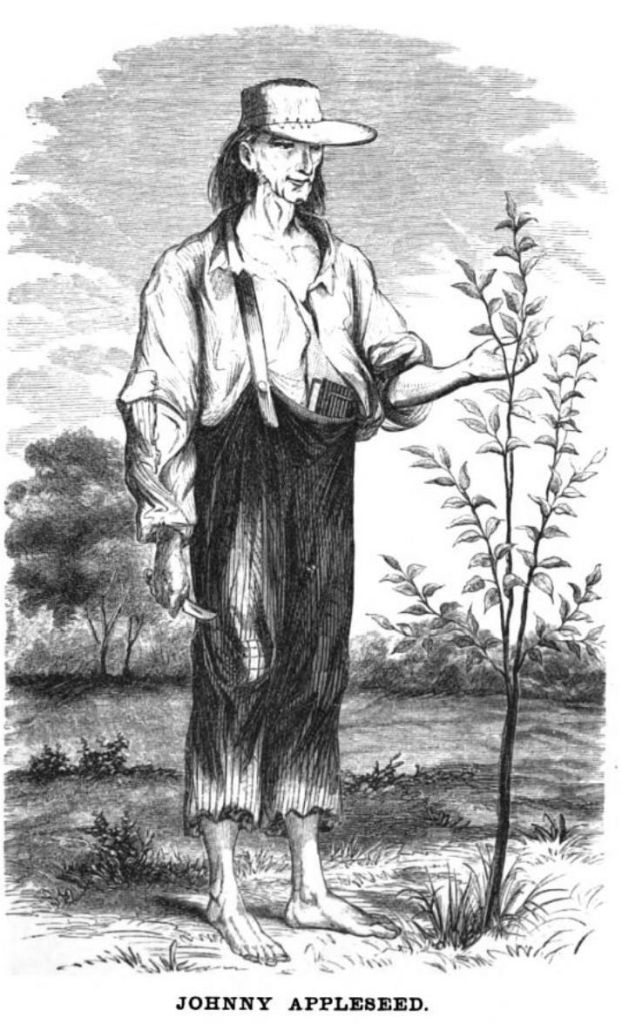
Some time ago, Jack used this quote in his Jack’s Winning Words blog – “Do not worry about being worried.  Difficult, but not impossible.”  (Johnny Appleseed)

Johnny probably wasn’t walking through a country in the midst of a pandemic when he said those words, but they have great applicability today. It is quite natural to be worried, especially about the unknowns and uncertainty that we face right now. So much has happened in such a short period of time that is can feel overwhelming. It is difficult not to be worried; however, it is what you do with and about that worry that is important.

Worries that are focused inward tend to circle back upon themselves become obsessions or lead to depression. People who allow that to happen might say that they see “no way out”. In many cases, they are so focused upon the cause of the worry that they fail to even look for solutions or alternate paths to follow. Perhaps it is key to understand that sometimes there may be no solution to the problem at hand, only alternate ways to react to the situation at hand.

Such is the case with our current worry over the Corona virus pandemic. There is no solution for us to find, no matter how much we worry about it. Time and medical science will eventually provide a way out, if not a solution. In the meantime, it is important to focus on our reactions personally, and as a society, to the crisis at hand. Those who have reacted badly to the crisis have stockpiled toilet paper and hoarded other essential supplies. They have focused inward and allowed their worries to drag them into panic and despair. So far, the fabric of our society has been stretched a bit by those who have panicked, but not torn asunder.

What is the alternate path in all of this? Perhaps it is to turn your worry from being inwardly focused and concerned only about yourself and your own well-being to an outward focus. These are certainly trying times for all of us, but consider how much more trying they are for those who entered into this crisis with little or nothing to begin with or with pre-existing conditions that make them the most vulnerable. Worry also about the “collateral damage” that is being caused by the steps that the government has taken to try to prevent the spread of the virus – the business shutdowns that have thrown millions out of work and threaten the very existence of most small businesses. Then, turn your worries into action, with plans to try to provide help.

By turning your worries into a commitment to be a part of the solution, instead of just another part of the problem, you will quickly find that you have no time left to worry about yourself. A good starting point for turning your worries around is to pray for God’s help – not for His relief from the circumstances that you are in; but, for the strength and faith to persevere and the vision to see a different path – a different purpose in the midst of the crisis.  There are just tons of things that need to be done for others that you can commit yourself to with various organizations in your community – meals to be packed and delivered, shut-ins to be check upon, children who need care while their parents work, the list goes on.

Is there a lot to be worried about? Sure. Is the answer to sit and stew in your personal worries?  No. God has other plans for you. Ask for His help and then go do what he needs you to do to help get everyone through this crisis. You can worry about things later. Right now, there is work to do. It’s God’s work and he needs your hands. Perhaps we should change the lyrics to the most famous Bobby McFerrin song to “Don’t worry, get busy!”


Hunkered Down in Milford…

March 15, 2020

Like most Americans right now, my wife and I are “hunkered down” in our home in Milford, Michigan. It is not that we are too afraid to go out. In fact, we went to dinner last night (in a mostly empty restaurant I might add) and we will be venturing out to do some shopping today. However, we did not go to church today; because church services were canceled, as a precaution against the spread of the Corona virus.

The governor of Michigan has now called for the cancelation of almost all events that would gather a group of people together, including school, church, sports and other spectator/participant events. The Oakland County government issued a directive yesterday instructing restaurants and bars to cut their occupancy capacity in half, as a way to insure sufficient space for “social distancing”.

All of this is both unprecedented and necessary to try to slow down the spread of the virus. None of it will stop that spread from occurring, but the hope is to slow the pace of the spread enough such that it does not overwhelm the American health care system. If the disease tacks along the same growth curve as has occurred in Italy, our hospitals would be quickly overcrowded and overwhelmed (or such is the theory).

I’m out of TP!

There have been alarming, if somewhat amusing, developments locally. The runs on toilet paper and hand sanitizer in our local stores have provided opportunities for very amusing Facebook posts. One can postulate that we make end up with lots of sick people locally who will have some of the cleanest rear ends in the nation.

News of the economics of this pandemic has mostly focused upon the highly visible impact on airlines, cruise lines and events (sports and conventions) businesses; however, it is the millions of small local businesses, like restaurants, retail shops and health and beauty businesses that stand to lose the most. Many will not make it through even a mild recession and the impact of this may be anything but mild.

The messages meant to calm the populous, which proclaim that we will get through this together, are certainly true. We got through other crises like 911 and the Great Recession and we will survive this one, too. What life looks like on the other side of all of this is still to be determined. Life after those earlier crises that I mentioned was nothing like it was before them. We will not “get back to normal”; rather we will have to get used to a “new normal”.

While all of this have interrupted the public practice of religion, I suspect that the underlying faith that is within most people is stronger for it  In times of crisis, one needs something to believe in that is bigger than the crisis itself. It does not get any bigger than a strong belief in God. Focus upon your faith and not your fears. Remember what the Bible tells us –  

“Do not be anxious about anything, but in everything by prayer and supplication with thanksgiving let your requests be made known to God. And the peace of God, which surpasses all understanding, will guard your hearts and your minds in Christ Jesus.”  (Philippians 4:6-7)

Your faith doesn’t give you permission to do whatever you want or prevent you from catching whatever it is that is threatening you; however, it does allow you to go on with life by giving you the assurance of your fate, should the worst occur. What happens now is a lot less scary if you believe in what happens next. So, hunker down wherever you are, keep the faith and ride this thing out.


Who is hiding inside you?

March 7, 2020

In a recent post to the Jack’s Winning Words blog, pastor Freed used this quote – “Whoever you become, whatever you make yourself into, that is who you always were.”  (Tara Westover) 

Sometimes it’s just about realizing your potential by working to educate yourself. However, sometimes it may be about freeing yourself from the you that others have assigned to you – the stereotype or the generalization that others have applied to you that you came  to believe were true. The limitations or categorization imposed by others that we accept for ourselves become the prison within which we dwell.

Sometimes our prisons are self-imposed, often caused by fears or doubts. We don’t try to go beyond the limits that we set for ourselves, because it is safer and more comfortable to stay within the confines of the world that we have imposed upon ourselves. We settle into the routine and “normal”, not so much content with our lot, but, rather, afraid of the consequences of failing at something new or different. We know that there is someone else hiding within us, but we keep them hidden away and suppressed.

Maybe that person is in a completely different profession or job than we have now. Maybe that person is happily married, unlike the shy and lonely single person that we now see in the mirror. Maybe that person is the inspiring leader that we always wanted to be. Perhaps that person is friendly and outgoing, with many friends, and not the withdrawn loner that we’ve become. If we heed the words of today’s quote, we know that the person that we often dream of becoming is in there already, just waiting to be turned loose.

So, how do you let out the person who is hiding inside you? It starts with admitting to yourself that you are not as happy with the person that you are today as you would like to be. That’s not saying that the person that you are is bad, just that it is not what you want to be or think you could be.

The University of Phoenix is running a commercial right now about a mighty dragon who never learned to fly (never reached its potential). The gist of the story in the ad is that the woman in the commercial is that dragon who has obviously sacrificed herself to the task of taking care of her young son. She seems to be trapped in a life that is much less than she could have been, working in a job that is less than she could have achieved. The ad points to an education through the University of Phoenix as her way out of this self-imposed prison. The imagery of the Phoenix bird rising from the ashes supports and reinforces the idea of releasing the person within.

Certainly, educating or re-educating oneself may be an important step in the process of realizing the potential of the person that is within. It is a break with the past and may be the key to the future. However, it is not the first step. The first step is taken when one resolves to make a change, to find that person within and do something about freeing them. It does not always involved making such dramatic life changes as pursuing a new career. It can be a change in attitude towards life. It may be a commitment to be a better husband or wife or maybe a better parent. In most cases, that will mean that the focus of your life changes from internal to external – caring more about others than about yourself.

The University of Phoenix ad asks and answers a question that will undoubtedly come up when considering a life change – who will take care of the obligations that I have now (the children, the bills and other day-to-day things)?  The answer in the commercial is both simplistic and true – you will.

 Perhaps, I should have included a step before step one – asking  for God’s help. Remember that we have been told in the Bible that God will not give us greater challenges than we can handle.

 “God is faithful, and he will not let you be tested beyond your strength but with your testing he will also provide the way out so that you may be able to endure it” (1 Corinthians 10:13)

Paul did not say that you would never fail, nor did he say that it would be easy. He said that God will give you the strength to endure the tests that you encounter and that there will always be a way out.

Maybe God was always in there, too; suppressed and hidden within you alongside the person that you could be. Let them both out and your life will change forever.

Who’s hiding inside of you? Ask God to help you let that person out to fly like a mighty dragon. It was in you all along.


See the opportunities…

February 25, 2020

Today, Pastor Freed used this quote in his Jack’s Winning Words blog – “If you believe it will work out, you’ll see opportunities.  If you believe it won’t, you will see obstacles.”  (Wayne Dyer)

There are lots of “don’t worry, be happy” sayings out there that don’t address the reality that there is a problem, an issue or a setback. Life is not such that we can just ignore what happens to us and be happy; however, we can control how we react to issues or setbacks. It becomes an issue of either believing that the situation has the best of you or that you’ll get the best of the situation – I got this vs. this has got me.  

Being able to see the opportunities in the face of adversity is not just about your own self-confidence; it is also about believing in something much higher than that. In the Bible we see this –

1 Corinthians 10:13 –

No temptation has overtaken you except what is common to mankind. And God is faithful; he will not let you be tempted beyond what you can bear. But when you are tempted, he will also provide a way out so that you can endure it.

Note: The Greek for temptation and tempted can also mean testing and tested.

Therefore, the opportunities that you see is God providing the way out, so you can endure it. Perhaps, when things are at their darkest, you need to ask God for a little help to see the opportunities – the way out.  It is not being able to see a way out that leads people into depression and some into suicide. If you believe in God, you will believe that things will work out and you will start looking for and seeing the opportunities.

Even if you are not in the midst of a crisis, it is a good idea to start each day with a little prayer asking God to stay with you and show you the opportunities, rather than the obstacles, throughout your day. I think you will find that your day goes a whole lot better if you spend it looking for the opportunities that God is providing you to deal with whatever you encounter.

Don’t worry, it will all work out. God is with you. You got this.


Blissfully ignorant or willfully tolerant?

February 20, 2020

In today’s post to his blog, Jack’s Winning Words, Pastor Freed used this quote – “I have a feeling that I’ve seen everything, but failed to notice the elephants.”  (Anton Chekhov)

The phrase “elephant in the room” is oft used to refer to something or someone that should be too big to be ignored. It may be an unspoken prejudice that causes someone or everyone discomfort. It might be the presence of someone unexpected or unappreciated or perhaps who stands out from the rest of the crowd. Perhaps it is the introduction of a controversial conversation topic into the room. Whatever it is, there is a difference between failing to notice the elephant and ignoring the elephant.

One may be forgiven for being so blissfully ignorant of the situation that they fail to see the elephant in the room; however, tolerance of the elephants of hate or prejudice or fear of those who might be different is a willful act that cannot be forgiven. If one wallows in the mud bath with those elephants, they too get muddy.

The thing is that if you recognize those elephants in the room that you just entered, you are no longer blissfully ignorant and have to make a choice on how you react. Silence in the face of those elephants is usually seen as acceptance or willful tolerance of the behavior and the elephant splashes mud on you. At a minimum, distancing yourself from that situation or those people at least removes the threat that you could be association with their behavior or opinions; however, that is a very passive way of protesting or showing your true feelings.

There is another common saying that actually speaks to the same subject; it is when you say that you are “treading on egg shells.”  What that saying refers to is someone who recognizes that the elephant is there but who wants to avoid discussing it or dealing with it. Perhaps it is avoiding talking with someone about a health or life situation that you know they are going through. You don’t want to bring it up, because you don’t want to acknowledge that elephant or get involved in helping the other person deal with it or perhaps just don’t feel like listening to their story. In that case, you are being willfully intolerant of their elephant.

What are we instructed to do about the elephants that we encounter?  Certainly not to willfully ignore them. Jesus did not ignore the elephants that he encountered. He healed the sick, raised the dead, ate with the sinners and spread the word of God. He also left us some simple advice –

 “Bear one another’s burdens, and so fulfill the law of Christ.” – (Galatians 6:2)

Do you see the elephants of hate, intolerance or fear around you in your everyday life? When you encounter life’s elephants in the room, you are called, not to ignore them; but to do what is right.

Have a great day and watch out for the elephants.


Advice from Ben Franklin…

February 18, 2020

In today’s post to his blog, Jack’s Winning Words, Pastor Freed used this quote that is attributed to Benjamin Franklin – “Those who in quarrels interpose, must often wipe a bloody nose.” 

Franklin was probably referring to those who stick their nose in where it doesn’t belong, or to those who jump into arguments seeking to be peacemakers. It often happens that the anger that was being vented between the arguing parties becomes refocused onto the peacemaker. We sometimes see on the nightly news that some would-be peacemaker in a street argument ends up being shot or injured by one of the parties to the argument.

While being a peacemaker is sometimes dangerous or difficult, it is a role to which we have been called. “Blessed are the peacemakers, for they will be called children of God.” (Matthew 5:9)

Perhaps suffering the occasional bloody nose is the price that one must pay to be a peacemaker. Peacemakers are the “first responders” in life’s brouhaha’s . Defusing a disagreement that could get out of hand requires that one jump in, separate the parties and stop the progression of the situation. Once the escalation of emotions is halted; the peacemaker can determine a course of action by listening to the two sides. Often it is a misunderstanding of what has been said or the words that were used. Sometimes just helping one or both parties understand what it is that they are disagreeing upon is enough to calm things down. Sometimes not.

In some cases, the best that the peacemaker can achieve is détente, a pause that one hopes will lead to a more permanent understanding. Even that may be looked at as a win, since the situation was calmed to the point where it didn’t boil over into physical conflict. Perhaps  the bloody nose that the peacemaker might have suffered that provided the outlet for the anger that was driving the situation.

Whatever the situation, it is better to act, to interpose as Franklin put it; than to sit by and do nothing, even if there is an element of danger involved in acting. Why? Because you know, it is right to do so.

So whoever knows the right thing to do and fails to do it, for him it is sin. (James 4:17 )

And, what if you don’t act? Maybe Franklin would have put it this way –

Those who sit by and do not act, most often regret it after the fact.

Do the right thing! Be a peacemaker. Your nose will heal and you will be better for having acted.

Peace be with you.


What is your religion?

February 13, 2020

“When I do good, I feel good.  When I do bad, I feel bad.  That’s my religion.”  (A. Lincoln)

Those were the words of wisdom from today’s post to the Jack’s Winning Words blog. Jack went on to write that Lincoln was not a member of any organized religion, but he certainly did a lot more good in this world than many of his era that were church goers. Religion is sometimes defined as the practice of one’s faith, what one believes in. One would be hard presses to find a better example than Abe Lincoln of someone who practiced what they believed in.

So, the question, “What’s your religion”, really boils down to what do you believe and do you practice what you believe? Churches tend to build complex sets of rules and rituals for the practice of beliefs, turning them into dogma which cannot be challenged. Disagreements over that dogma has lead to the splintering of churches or religions, not matter what beliefs  they were originally based upon. That is why we have so many different faiths and denominations and sects within faiths. At their core, most are defined by a belief in a supreme being (God in whatever name is used). Once you get past that simple core belief, one begins to encounter the hand of man in the accepted practices of worshiping that God. Let the dogma begin. Most practitioners of religion eventually find a set of dogma that they can accept and settle into one of these groups, secure in their knowledge that they are practicing the one, true religion, while all others are doomed.

At least the religion that Abe Lincoln professed has very simple and straightforward rules – do good and feel good about it or do bad and feel bad about it. Jesus put it that we should love others as He has loved us and do unto others as we would have them do to us.  I suspect that you would end up doing good if you accepted that as your religion. Leave the dogma stuff to the people who are more concerned about perpetuating their institutions than about the faith that underpins their religions.

Perhaps you can reinforce your religion by saying a little prayer each morning asking God to help you practice what Jesus preached – love one another. Another of Jack’s posts came to mind as I am writing this. As much of a reach as it may be to see the connection here that quote from Emily Post was this –

“Manners are a sensitive awareness of the feelings of others.  If you have that awareness, you have good manners, no matter what fork you use.” 

If you are sensitively aware of the feelings and needs of others and do something to help (do good) you have good religion, no matter what church (Sect/group/denomination/etc.) you worship in. Just keep the faith and all else will take care of itself.

What is your religion?


Imagine success…

February 10, 2020

In a today’s installment of the Jack’s Winning Words blog, Pastor Jack Freed used this quote –

“Stop being afraid of what could go wrong, and start being excited about what could go right.”  (Tony Robbins)

I’ve also posted here a few times about not wasting your time worrying about all of the bad  things that might happen .

Robbins’ advice isn’t so much about not worrying as it is about completely refocusing your thoughts. Many professional athletes (especially pro golfers) use a technique called visualization to “see” the result that they desire before they even swing the club. They do not stand there worrying about how to get out of the sand trap next to the green. They have trained themselves to see and get excited about what could go right. In their mind’s eye the ball will gently land on the green and roll right into the cup. They imagine success, not disaster.

As you face a new day and a new week, there are probably challenges ahead that you already know about, at work or at home. You could spend your time fretting about what could go wrong or you can visualize how you are going to make things go right. Visualizing success does not completely discount any challenges that may be there, but it does “see” how you are going to handle and overcome them. It give you the confidence to face them, because you have already dealt with them in your mind and see the positive outcome.

Many events that you may be visualizing will have some unpleasant moments – moments of sadness or fear or anger. It is the fear of an unknown outcome that paralyzes many people. Visualizing how you will handle them and get through them allows you to “see” the desired outcome at the end of the event…it removes the unknown from the equation and allows you to imagine success.

Perhaps the best way to “see” success is to first visualize that God is there with you, giving you the advice and help that you need. Pro golfers have their caddies right there with them, helping them determine the right club to use and where to aim. You can visualize yourself walking into the situation ahead with God at your side to give you the strength and advice that you need to succeed. Start your day out with a quick prayer to ask for God to be with you throughout the day. Then visualize what the two of you can do together. Imagine what God can do to help you.

It’s going top be a great day and a great week ahead. Imagine success!