Don’t dwell…Do something…

September 5, 2020

One of the quotes that I saved from the Jack’s Winning Words blog some time back seemed appropriate to comment on this morning –

“Don’t dwell on went wrong.  Instead, focus on what to do next.”  (Denis Waitley)

The word dwell caught my attention. As I often do when wondering about a word, I Googles it and one of the results that came back was this…

5 Ways to Stop Dwelling on Negative Thoughts

  • Go Shopping in Your Mind. One distraction trick is to visualize yourself in the grocery store.
  • Keep Positive Company. If you can’t get troublesome feelings out of your mind, it may have something to do with your social circle.
  • Physically Throw Them Away. (I guess one could write them down on a piece of paper and then throw that paper in the trash)
  • Have a Cup of Tea.
  • Reframe Your Situation. (One example of reframing is redefining a problem as a challenge. Such a redefinition activates a different way of being. Problem has a heavy quality to it, while the notion of a challenge is enlivening.)

I think I get most of the advice, except maybe the cup of tea. Perhaps that advice was posted by someone in England. In America that might have read “Have a glass of wine”.

Most of the advice is really how to force (or trick) yourself to stop thinking about whatever it is, which would then allow you to refocus on the “what’s next” part. In that part of the quote, where the word “do” is the important word. The thinking involved in dwelling on a failure or a disappointment actually does nothing to resolve the situation in which you find yourself. It is in the doing that you are able to move ahead with life.

Sometimes you may start doing something to resolve the situation and realize that you are going in the wrong direction; but, at least you started doing instead of just dwelling on it and you can change direction and keep going. Your mind will be focused on the proposed solution or the new direction and not on the past.

The year 2020 will go down as one that gave us plenty of opportunities to dwell on failures or disappointments. With all of the things that have been canceled or delayed, it is easy to dwell in a stupor of disappointment and disgust. Blaming government leaders for what they did or didn’t do is a wasteful pastime of little real help – it is just dwelling upon the past. We must focus upon what to do next. A part of that is doing the things that are advised by our health-care professionals to contain the spread of the virus while we await a vaccine. Every time you put on your mask, think of it as “doing “ your part to help contain the virus.

A big and more positive thing to do about 2020 is to plan the rescheduling of the things that have been delayed. One must continue to believe that there will be a future and that events that have been delayed will take place in that future. Perhaps the song Tomorrow from the movie Annie would help. There will be a tomorrow.

Rather than dwell in the dumps about things that didn’t go as you had hoped they would in 2020, spend your time planning and doing things about making 2021 a great year. It will be remembered as the year that we all unmasked and got on with life.

Don’t dwell, do something.


Don’t play the mime…

September 4, 2020

I’ve had a quote of my own bouncing around in the back of my mind for some time – “Don’t try to confine God to the tiny box of your own imagination” (Norm Werner)

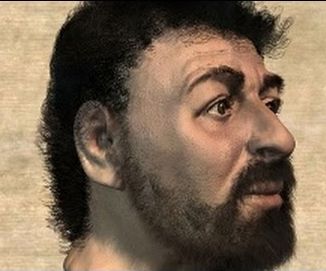
That thought always conjures up the image of a mime pretending to be trapped in a glass box. We’ve probably all seen that mime retune played out somewhere. Yet we all play the mime when we pretend that God can somehow be confined to the tiny box that is our own imagination. Most of us have grown up seeing pictures of paintings of Jesus and God that were created by artists. Somehow, the son of a Jewish carpenter in the middle east turned out to be an blonde Anglo-Saxon man, at least as imagined by those artists who created those great Renaissance paintings.

National Geographic did a story with pictures of what a typical Jewish man of that era and location might have looked like and it is nothing like the images that we have in mind. How many have ever seen the image that they paint of what Jesus might have looked like hanging on a wall?

That is just one example of the mistakes that we make when we try to imagine God and even Jesus, because are trapped in the mime box of our own imaginations. It is the ultimate act of human hubris that we imagine God in our own image. We take that limited imagination further when we try to imagine life after death and what heaven will be like. Almost all religions have some sort of definition of the afterlife or the next life, some description of what awaits us after death. Most of those descriptions are constrained by the glass box imaginations of those trying to define what they will be like. They all start off, “It will be like…” and then start describing things here on earth that they can relate to in this life.

The bible give us hints that God and his power is well beyond our limited ability to understand or even to image.

Do not be anxious about anything, but in every situation, by prayer and petition, with thanksgiving, present your requests to God.  And the peace of God, which transcends all understanding, will guard your hearts and your minds in Christ Jesus. (Phillipians 4: 6-7)

Trust in the Lord with all your heart, and do not lean on your own understanding.  (Proverbs 3:5)

For as the heavens are higher than the earth, so are my ways higher than your ways and my thoughts than your thoughts.  (Isaiah 55:9)

What we must lean upon is faith, not understanding. Our view of the afterlife must be based upon the belief that, “I don’t know what it will be like, but I believe that it will be great.” We are not called to understand but to believe. We are called to have faith.

Also, don’t be a mime in your faith; don’t become trapped in the small glass box of your own imagination. God and heaven is so much more than we can ever imagine. There is much joy to be found in exploring the realms beyond your own imagination. Get out of your glass boxes and let your mind soar through the realm of faith.

Have faith and the rest will take care of itself.


What’s next for you?

September 2, 2020

In today’s post to his blog, Jack’s Winning Words, pastor Freed used this quote from Denis Waitley –

“Don’t dwell on went wrong.  Instead, focus on what to do next.” 

He recounted how Waitley’s advice is often paraphrased as “Get over it” and explained that in that context the word over is actually a contraction of the word “recover”.

So, when things go wrong, we are to recover and move on. Many people have a tough time with the recovery part, much less moving on. They allow themselves to become trapped in the panic, anger  or grief of the moment of a setback or loss and end up lashing out blindly in response or wallowing in self-pity instead of moving on.

It takes a conscious effort to recover from a traumatic event in one’s life and make no mistake, many events are traumatic. The dictionary defines traumatic as an adjective meaning “emotionally disturbing or distressing.” Things like a rejection of affections or being passed over for a promotion or the death of a loved one can have as large of a traumatic impact upon us and a physical injury event. Such traumas often cause physical responses as well as physiological ones. The traumatized person may look flushed, their blood pressure may rise and they may even faint.

What is one to do to stop the trauma and begin recovery? The word “stop” is the key. One must be able to come to a complete stop mentally and step back from the thoughts and emotions that are driving the trauma. That is not easy, but making it an overt and conscious effort helps. Imagine mentally screaming STOP in your mind (maybe even say it out oud if you are alone). If you can stop the stream of thoughts that were consuming you, then you can take the next step and admit to yourself that it happened, it’s over and there is nothing that you can do to change the past. That will allow you to refocus upon the future – the what’s next step.

For Christians there is an important middle step that comes after the STOP and before the next step. It is the step where they ask for God’s help. They have just stopped thinking about the past and may be unsure of the future, but they reach out through their faith to the one sure thing in their lives – the undying love of God for them – and seek His help. Whether you use the little prayer “not my will but thy will be done” or maybe use a sports phrase “little help here, God” the important things is that you made the call to God and He will answer. He will give you the strength to carry on and recover. He will show you what’s next.

We see interesting stories quite often in the news about people who have suffered traumatic losses of loved ones – a parent, a spouse or a child – going on to found movements or charitable organizations to help others going through the same thing or perhaps to avoid a repeat of that trauma. The Mothers Against Drunk Driving organization started that way, as did organizations like AA and NA. For the founders of those organizations the “What’s next” was a call to action to work against that type of trauma.

Most of us will probably not go on to found and lead a non-profit organization, but we can join organizations that already exist in our community and find some solace in working to help others facing the same issues. We can learn how to share the experience that traumatized us in such a way that it helps others avoid the mistakes that we may have made. Being able to verbalize both the trauma and our own recovery helps them and us.

If one is on fire the advice is “stop, drop and roll”. For the “fire “of a trauma in our lives, perhaps the advice should be “stop, pray, recover.” Let’s put that on a T-shirt and wear it for others to see.

What’s next for you? Ask God. He’s got something in mind for you.


What do you worship?

September 1, 2020

Today Pastor Freed commented upon making money your focus with this quote in his Jack’s Winning Words blog  – “Make money your god, and it will plague you like the devil.”  (Henry Fielding) 

The same could be said about power as a focus, or anything else that is of this world. The devil uses the appeal of gaining things of this world to temp humankind away from God. Remember how the devil tried to use that same approach to tempt Jesus in the dessert –

Again, the devil took Him to a very high mountain and showed Him all the kingdoms of the world and their glory;  and he said to Him, “All these things I will give You, if You fall down and worship me.” Then Jesus said to him, “Go, Satan! For it is written, ‘YOU SHALL WORSHIP THE LORD YOUR GOD, AND SERVE HIM ONLY.’”  – Matthew 4: 8-10

The devil has refined his approach and made it much more subtle, but it is still the same pitch to turn away from God and towards the devil by becoming focused (worshiping) things of this world – money, power, success, etc.

It is easy to convince yourself that you are only doing what is necessary to provide for the needs of your family and to rationalize that nothing could be wrong with that. But, those who worship the acquisition of material things and power don’t stop at fulfilling the needs of their family because they become addicted to the allure of more – More Money, More Power, more Glory. For them more is the goal and they believe that only by achieving more will they be happy; but more never seems to be enough. There always seems to be something missing.

That something that is missing in their lives is God. A side-effect of worshiping the things that the devil offers is a sense of loneliness and of being incomplete.  The devil never said “I am with you always”, only God said that through Jesus. So, one can sit there like the old cartoon of Scrooge McDuck, in a vault full of money, or surrounded by all of the things that one has bought, and realize that they are alone. One can sit atop a business or government empire and feel the sense of loneliness that power brings.

At the other end of those same spectrums of human achievement are the poor and powerless who are nonetheless happy because they have a profound relationship with God. You see them in newscasts as the people who have just lost everything to some disaster but who are nonetheless thankful to God just to be alive. You see them as the powerless protesters who continue to march for justice. You see them in stories about members of families who have suffered a death at the hands of a violent person forgiving that person and saying that they will pray for them.

How can those people possibly be happy or forgiving? They have focused upon something other than things of this world. They have God in their lives and for them that is enough. They worship God and not things that the devil offers. They never feel alone.

What do you worship?


Listen up…

August 31, 2020

Today’s post to the Jack’s Winning Words blog used this quote – “We win more friends with our ears than with our lips.”  (Pastor Bob’s Bulletin)

Pastor Freed and I have both posted many times about the importance of listening, but many were too busy talking to see those posts. Perhaps you know someone who is always too busy talking to let you “get a word in edgewise”. My wife and I once had dinner with a woman (and her husband) who absolutely could not stop talking, mainly about herself. Her long-suffering husband just sat there eating and listening, as did we. At the end of the meal for the rest of us, she had not stopped talking long enough to take a bite of her meal, so she got it boxed to go. That was certainly an extreme case, but similar thigs often happen with others who would rather talk than listen. I know several people who apparently cannot stand the sound of silence, so they fill it with blather.

Listening well, sometimes called “deep listening” is a skill and discipline that most do not develop. It takes concentration and a focus that is away from oneself and onto the other person. Rather than being focus on what you want to say next, you must focus upon what is currently being said by the other party and process that information. Your thoughts should be on how you can best respond to the information that the other person is sharing – how can you help them or how can you share their concerns or joys.

I’ll bet that you know someone who starts to talk after you have finished and then interrupts themselves to ask, “Wait, what did you just say?” They realize that they didn’t really listen to what you said, but somewhere is the back of their mind a flag went up that tells them that they should have been listening. They were focusing upon what they were going to say next. They heard you speaking but they didn’t really hear what you said.

You can start to be a better listener and a better friend, by forcing yourself to focus your attention upon the words of the other person. Don’t just hear them. Process them. Figure out what the person is saying or trying to say. Read (or hear) between the lines. Is this a call for help? Is this just a sharing of happiness? How should you react to this information? If you force yourself to concentrate and answer questions like that in your mind during the conversation, you may find that you are getting a lot more out of the conversation and are able to put a lot more back into it. There will be time to think about what you are going to say next when they have stopped talking.

Another tip to be a better listener is to focus visually on the speaker. Don’t let your eyes dart around to other things or people. See how they are speaking and well as hearing their words. Look for body language signs of distress or happiness. Look for openness and gestures or signs of trust that should give you a cue that your advice or your help is truly being sought. Sometimes the signs that a hug is needed are obvious or that a kind and supportive word will go a long way to help. Sometimes you will notice that they cannot seem to focus upon you, to look you in the eye. That is normally a sign that they don’t yet feel comfortable (or trusting) with what they are sharing with you and words of reassurance and encouragement may be needed.

So, maybe the best starting point to becoming a better listener is to keep reminding yourself that this is your role at the moment. Say to yourself, “They are talking and I am listening; how can I do the best job as a listener?” If you are more aware of your role as the listener, you will do a better job at it. Once you can do that, you’ll also do a better job and a friend.

So, listen up!


What sermon will you be preaching today?

August 29, 2020

In a post this past week, Pastor Freed used this quote in his Jack’s Winning Words blog – “The older I get the less I listen to what people say and the more I look at what they do.”  (Andrew Carnegie)

Later in that same post Jack quoted Edgar Guest, a poet from Detroit’s past , who wrote, “I’d rather see a sermon than hear one any day.”

In this “high season” of political ads, we are certainly hearing many sermons from both sides. Since many, if not most, of the ads are negative in nature, if one only listened to them it would appear that no matter who we elect all is lost. The sermons being aired by both sides would tell us that both have put up a bunch of incompetent, unscrupulous scallywags for the offices that are up for votes. It is perhaps most important this year to look back at what the candidates have done and not just listen to the sermons in their ads..

But, what of our own lives? Certainly, people hear what we say. Nevertheless, do our actions match our words? What sermons do we deliver with what they see us doing each day? They may hear us saying, “I am not a racist”, but do they see that in the diversity of our friends and acquaintances and our actions towards people of color? Do they see an accepting and empathetic supporter of correcting racial injustices or can they see a frightened person of privilege trying to hold on to the advantages that they enjoy. Do your actions speak of acceptance of people of differing sexual orientation or of unfounded fears and loathing? What sermon about your concern for the welfare of others does your choice to not wear a mask in pubic or to not social distance say about you? You are preaching a sermon each day you are alive. What sermon will you be preaching today?

We have all been admonished that how we live our lives tells the world who we are and we have been given clear guidance in the Bible.

Put on then, as God’s chosen ones, holy and beloved, compassionate hearts, kindness, humility, meekness, and patience, bearing with one another and, if one has a complaint against another, forgiving each other; as the Lord has forgiven you, so you also must forgive. And above all these put on love, which binds everything together in perfect harmony. And let the peace of Christ rule in your hearts, to which indeed you were called in one body. And be thankful. Let the word of Christ dwell in you richly, teaching and admonishing one another in all wisdom, singing psalms and hymns and spiritual songs, with thankfulness in your hearts to God. … (Colossians 3:12-17)

And again in Ephesians 4: 29-32 –

Let no corrupting talk come out of your mouths, but only such as is good for building up, as fits the occasion, that it may give grace to those who hear. And do not grieve the Holy Spirit of God, by whom you were sealed for the day of redemption. Let all bitterness and wrath and anger and clamor and slander be put away from you, along with all malice. Be kind to one another, tenderhearted, forgiving one another, as God in Christ forgave you.

What kind of sermon would your life be if you lived by those words? Wouldn’t you rather that the sermon of your life be judged because of its adherence to those pieces of advice in your actions and the choices that you make? If the sermon of your life is not being based upon advice from the Bible, what book are you using for a script? Think about what people will see you doing today. What sermon will you be preaching?

Have a great weekend. We’ll be watching your sermon.


Don’t ask…just enjoy the beauty.

August 28, 2020

In today’s post to his blog, Jack’s Winning Words, Pastor Freed used this quote –“I do not ask for the meaning of the song of a bird or the rising of the sun on a misty morning.  They are, and they are beautiful.”  (Joe Hamill) He later referenced another quote, that “beauty is in the eye of the beholder”

Too many of us lose sight of the beauty all around us by focusing our attention on the how and why of things. There is no how or why to the perception of beauty; there is only an acceptance and appreciation of it. One could sit in an empty room and appreciate the beauty of life itself. Many search all of their lives for its meaning and fail to take the time to enjoy the beauty of life itself.

By his very nature, man is an inquisitive being, always seeking answers to the what, why and how of things. Eventually he/she turns that inquiring mind inward, to try to understand him/herself and to discern a meaning to life. Many eventually encounter a blank wall where their logic and the limitations of their mind stop them from proceeding towards understanding their existence and purpose. For those people, life can be frustrating and perplexing, an existence ruled by fear of the unknown.

For Christians that wall is just the separation point between them and God and they know what is on the other side. They also know that they have been granted a reservation through the death of Jesus to cross over and join God on the other side of that wall. It is that assurance of life after death that removes the fear and questions about this life and allows them to enjoy the beauty of the world around them.

Therefore, the next time you find yourself asking how or why something looks beautiful to you, stop and instead say a little prayer of thanks to God. They just are and He made them that way. Thank Him for that and for allowing you to experience that beauty. See beyond the wall and see the face of God in that beauty.

Have a great and beautiful day!


Beware the Fool’s Gold…

August 27, 2020

In his blog, Jack’s Winning Words, yesterday, Pastor Freed used this quote – “All that glitters is not gold.”  (Shakespeare) He went on to warn about the widespread and fraudulent scams that we are constantly exposed to these days.

I call those scam emails and offers, Fool’s Gold. The scammers put a lot of glitter on their messages, all designed to get you to click on a link or expose your personal data. If you click on their links it usually results in some form of malware being installed onto your computer and they get access to all sorts of data and passwords and other things that are useful to them.

There are usually obvious clues to the nefarious nature of these messages to be found in the email address of the sender or the grammar of the scammer. I get a lot of scam messages from an email address that contains com@cast in the email address for the sender. Apparently, they think that the recipients of their emails won’t take the time to look at who sent the message. Always look at the sender’s email address and if it looks strange or has nothing to do with the company that it is supposedly coming from just delete it. The scammers are quite good at creating fake email addresses that look legit at a glance, but none can stand up to scrutiny.

Another tip-off is the opening salutation. Not many companies really send out messages that open with Dear (your name here) or Dear Customer.  The subject line in these scam messages are designed to get you to open them, either out of fear or greed. The subject line may tell you that your account at some bank has been frozen or that suspicious activity has been detected. In many cases the messages that I receive reference banks that I don’t do business with at all, so that is an easy tip-off. Another favorite is the “You’ve won…” or maybe “ Click here to receive your free…” Subject lines or opening lines like that should immediately raise red flags.

Bad grammar is another tip-off. Most of these scam messages originate in countries where English is not the primary language. Some are actually composed in whatever the native language is and then translated on the fly. The sentence structures and grammar that result are laughable and obvious.  In other cases, you have to read it to see that this was not composed by someone for whom English is the primary language. So look at the structure and word usage in the message and it if doesn’t make sense to you or looks funny, it is probably a scam.

Other favorite scams involve sending emails that look like that are from government agencies, usually with some sort of scary threat of legal actions against you or maybe the appeal that you are owed some money from the government, if only you click on the included link. These have apparently replaced the emails that I used to get from the ex-Finance Minister of Botswana in Africa asking me to help with getting his fortune out of the country. Maybe he finally found that help and is now living the life of leisure in Palm Beach.  

Not all of the Fool’s Gold is delivered by email. I still get calls every day from Google and some company trying to sell me an extended warranty on a car I no longer own. Google uses the scare tactic that my business will not be seen by people searching for it because I haven’t signed up to pay Google for a business listing . In both cases I wait until the end of the robocall and make the choice to be removed from their call list, but the next day I get the calls again. I wish that there were an app that would let me forward those calls to the Michigan Attorney General’s office each time I get them. I suspect that our Attorney General  would get tired of them and take some action to stop them.

So, beware most of what glitters or sounds glittery (or scary); most of the messages are Fool’s Gold. Don’t be the fool who reaches for that gold. It will bite you.

Stop and think before you click on any link or respond to any email. You may think you just hit the jackpot, but perhaps what you are looking at is Fool’s Gold. Don’t play the fool!


How will you pay your rent?

August 25, 2020

Pastor Freed used this quote from Albert Einstein this morning in his Jack’s Winning Ways blog –

“Those who have the privilege to know, have the duty to act.”  (Albert Einstein) 

Reading that quote brought to mind this oft used line from Luke 12:48 – “Everyone to whom much was given, of him much will be required, and from him to whom they entrusted much, they will demand the more.”

But it was in further researching the idea of privilege and responsibility that I found this quote –

“I was taught that the world had a lot of problems; that I could struggle and change them; that intellectual and material gifts brought the privilege and responsibility of sharing with others less fortunate; and that service is the rent each of us pays for living – the very purpose of life and not something you do in your spare time or after you have reached your personal goals.” Marian Wright Edelman

I like Edelman’s vision that serving others is the “rent” that we pay for being alive, for we are all “renters” of life here on earth. Acts of empathy and concern, as well as taking action to serve the needs of others is the rent that we pay for that time here. There will always be rent scofflaws, those who are so self-centered that they dismiss the needs of others – they skip out on their rent. Theirs is not a happy life here in earth, even though many appear to be successful. In their constant pursuit of more – money, power, possessions -they seldom feel the fulfilling joy of accomplishment that those who serve others feel in their successes.

Marian Edelman says she “was taught” her values. She does not say by whom. One can assume that she got those values from her parents, her teachers and her church. Perhaps she read Luke growing up or listened to sermons about caring and sharing. No matter how she learned, she came to the correct conclusion that those responsibilities that went along with the privileges that she enjoyed were also her purpose in life.

Many people go through life without consciously thinking about what their purpose in life is. They focus on things like meeting their immediate needs or perhaps on racking up accomplishments and garnering honors. However, to what purpose? Collecting more and more money or possessions is not a purpose. It is interesting that many people who achieved incredible wealth finally found their purpose in giving that wealth away to help others – think Bill Gates, for instance. Others, like Mother Theresa, never accumulated wealth and possessions but lived most of their lives with great purpose by helping others.

One does not have to be a Bill Gates or a Mother Theresa to be aware of their privileges and God’s gifts in their life and be dedicated to a purpose of sharing with and helping others. Nor is that sharing and helping limited to giving money. One’s time is really the most valuable possession of all and dedicating some of that time towards helping others, by volunteering at organizations like Meal on Wheels or Community Sharing Centers, is a greater gift than just throwing some money in a collection bucket.

Most of us have enjoyed the rewards of privilege, and now our rent is due. What are you doing to pay your rent?


Don’t worry about it…

August 24, 2020

The world of comics again crossed paths with the advice from the Jack’s Winning Words blog. Today, Pastor Freed used this quote – “There is only one way to happiness and that is to cease worrying about things which are beyond the power of our will.”  (Epictetus)

On today’s installment of Pearls Before Swine  the character Rat tells Goat that the key to life is not to worry about things that are outside his power to control. As Goat is about to congratulate Rat on his new philosophy, Rat blurts out that he is instead going to focus on amassing more power so that he will be able to control everything. It is unfortunate that the philosophy that Rat was espousing is what drives so many today.

I’ve opined here a few time about offloading the worries that one cannot really change by giving them to God and saying “not my will, but thy will be done.”  To some, who are more closely aligned with the philosophy of Rat that may sound like a cop-out or surrender – an admission of failure. However, to those who “get it” it is actually an acceptance of God’s role in our lives and His dominion over the events that we will live through. It is also the first, and critical step that one must take before asking for God’s help with those events.

Some may be tempted to ask God to make the situation go away, but that’s not it works. Ask instead that God give you the bravery, patience, intelligence, and perseverance to resolve the problem and the faith and wisdom to accept the outcome.

So spend your time and energy on planning and executing things that are within you power to do and stop worrying about things over which you never will have control. Leave those things to God.

Don’t worry, He’ got your back.