Those with no boat at all…

October 12, 2020

“Although we are in different boats, you in your boat and we in our canoe, we share the same river of life.”  (Chief Oren Lyons)

That was the quote from a Native American in today’s post to the Jack’s Winning Words blog. It is easy to conjure up mental images of boats of all type, sizes and color floating or motoring along the vast river of life. One can even imagine clusters of people floating along on inner tubes (perhaps those are the retirees). But it’s harder to imagine being swept along by the river with nothing, no canoe or boat, not even an inner tube; but, that is the fate of the homeless. They are still there, in the river that the rest of us are on, but with no support at all. Perhaps they are just floating on the surface or maybe frantically dog paddling to keep afloat.

There is a tendency to try to ignore those people, lumping them in with the debris that we may also see floating in the river; however, we really can’t ignore the fact that, “there but for the grace of God go I.” They are other human beings; members of our tribe of humans who need and deserve our help. We cannot sweep them under the rug or pretend that they are not there, in the river with us. There may not be room in your boat for another rider; but perhaps there is a spare life vest in your boat that you could toss to them to help. If you look, you may find that there are programs already in place in your area to provide some assistance and help to the homeless. If so, maybe you can volunteer in those programs or at least contribute to them.

There are others floating along the river of life in vessels that are sinking. They may be depressed or suffering other mental issues or perhaps trapped in abusive relationships. Perhaps they have sent up flares of distress for other to see. Again, it is easy to try to look the other way, ignore their calls for help and by-pass their sinking boat, but it is not the right things to do. Hold out your hand and pull them back up as they sink. Sometimes just encouraging them to abandon that abusive, sinking ship is enough

The river of life that we are all on is not always a calm, peaceful stream. It has rough patches, like the rapids in real rivers. There are dangerous rocks and even waterfalls that we must navigate from time to time. Those times test our boats and us. If we have a boat with a strong keel, we have a better chance at survival. The best keel of all for life’s boats is a strong faith in God. That faith will not only keep our boat afloat, but it will also provide us with a rudder of compassion that will guide us to help those that we see along the way who don’t even have a boat.

In the Bible we read – But if anyone has the world’s goods and sees his brother in need, yet closes his heart against him, how does God’s love abide in him? (1 John 3:17). Therefore, the message is to thank God for the strong boat that he has provided for you in order to enjoy life’s ride down life’s river and to be ready to offer help to others whose boat may be sinking or who don’t even have a boat.

We maybe be all ON the river of life, but there are those who are IN the river and need our help. Be ready to throw a lifeline.


Quietly strong…

October 11, 2020

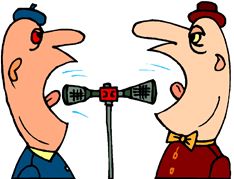
“The loudest one in the room is the weakest one in the room.”  (Denzel Washington) That was the quote used in a recent post to the Jack’s Winning Words blog. I think we all know someone like that, a loud, brash person who is, in fact, extremely insecure and fragile. Many bullies are that way and most will back off when confronted by someone who refuses to be intimidated by their boorish behavior.

There is an old Zen saying, “Be afraid of the quiet ones. They are the ones who actually think.”

Why should you be afraid of those who actually think? Because that thinking is sometimes turned into planning and then into action. The men planning to kidnap Michigan’s Governor are an example, although they weren’t the brightest bulbs on the tree. The quiet thinkers take the time to consider alternative courses of action and choose one most likely to assure success. They also plot a cover for their actions in an attempt to escape blame; especially should their actions fail to achieve the goal. Many times the loud take action without thinking and their unplanned actions oft go awry.

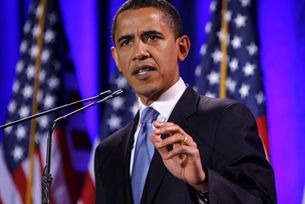
But, enough about the bad people. What about those who are quiet, but not bad. Taking the time to quietly think before acting or before speaking strengthens that person in the eyes of others. They may become known for being well spoken because they think about their words before they speak or they may be considered to be level headed because they do not rush into action before thinking. If you watched how former President Barack Obama spoke, especially when answering a question; you could tell that he was thinking about both the answer and the correct words to use. He did not speak in Tweets.

People who think before acting or speaking may become a touchstone for others seeking the benefit of their quiet wisdom. Their opinion is often considered to be the strongest in the room, all because they quietly took the time to think. A passage from the Bible about quiet wisdom seems especially appropriate for our current political environment – “The words of the wise heard in quiet are better than the shouting of a ruler among fools.” (Ecclesiastes 9:17)

So, don’t worry if you aren’t the loudest in the room, especially when in a room full of loud fools. Quietly hold your own counsel, think and then speak softly, so that the listeners will have to lean in to hear your thoughts. Be quietly strong.


Mother nature and the face of God…

October 10, 2020

A quote from the Jack’s Winning Words blog from some time ago has been hanging around in my “future topics” list for too long – “And forget not that the earth delights to feel your bare feet and the winds long to play with your hair.”  (Kahlil Gibran)

We often hear (and sometimes use) references to Mother Nature, as if the totality of the naturally occurring things around us, including the weather somehow have a personality – personality that can sometime turn very violent. If the earth can delight in feeling our bare feet and the wind play in our hair, then the earth can also shake violently, knocking us off our feet and the winds howl as they knock down the offensive structures that we have built. We say that Mother Nature is angry in those times. Perhaps she is angry because of the damage that we have inflicted upon her through our careless use of the resources that she has provided. If our sin is pollution and the resulting global warming, then perhaps, her response are the hurricanes, tornados, drought and fires, rising seas and other indications of her displeasure.

Man has always fantasized about nature and the things around him, often assigning to those things human characteristics. Native Americans developed what amounted to a religion by ascribing human attributes to the flora and fauna around them to go along with their notion of a Great Spirit (often depicted as a female) and the forces of nature – wind, rain, fire and other things that they could not explain or control. Their beliefs seemed to be based upon finding ways to live in harmony with all of those things, rather than trying futilely to control them. Their beliefs and practices actually align well with what we find in the Bible –

“But ask the beasts, and they will teach you; the birds of the heavens, and they will tell you; or the bushes of the earth, and they will teach you; and the fish of the sea will declare to you. Who among all these does not know that the hand of the Lord has done this? In his hand is the life of every living thing and the breath of all mankind.” (Job 12:7-10)

Perhaps, if we started using the name God, instead of Mother Nature, we might be closer to understanding the truth of what is all around us. The forces of nature and all of the things that are within nature were, and are, created by God. We cannot control them. We can only harm them. Instead of fighting against nature, and thus against God, perhaps we should adapt the ways of the Native Americans and try to find ways to live in harmony with what God has created. Maybe if we stopped doing harm to what God has created, He will stop doing harm to the things that we have created. Albert Einstein understood when he said – “Look!  Look!  Look deep into nature and you will understand everything.”

Man’s arrogance is what fails him the most. Man is forever holding up something that he has created – a wheel or a machine – and saying to God, “Look what I made.” Henry Beston shared good insight into that flaw when he said – “If there is one thing clear about the centuries dominated by the factory and the wheel, it is that although the machine can make everything from a spoon to a landing-craft, a natural joy in earthly living is something it never has and never will be able to manufacture.”

God, in the form of nature is the great healer. Anne Frank put it well when she said – “The best remedy for those who are afraid, lonely, or unhappy is to go outside, somewhere where they can be quite alone with the heavens, nature and God. Because only then does one feel that all is as it should be and that God wishes to see people happy amidst the simple beauty of nature. …I firmly believe that nature brings solace in all troubles.”

So, turn to nature in times of trouble, for in looking closely at nature you will see the face of God.


Say what..?

October 6, 2020

“The most important thing in communication is to hear what isn’t being said.”  (Peter Drucker) That quote is from the Jack’s Winning Words blog.

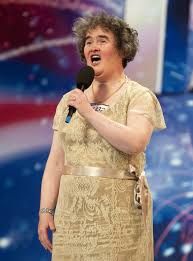
Most of us look for signs when communicating, to try to discern what is really being said. We may look at the eyes of the speaker or how they are holding themselves. We also listen to the tempo and timber of their voice, looking for signs of distress, fear or anger. We are searching for those non-verbal clues that help us understand what we are hearing. One of the fascinating things about the TV show The Voice is that the four stars who are listening and choosing singers for their teams don’t get to see them until they turn their chairs. Quite often, they are surprised when they turn around. They are judging the singers purely on the sound of their voice. I also recall the look of total shock on the faces of the judges when Susan Boyle started to sing on America’s Got Talent. They had all prejudged her based on her appearance and speaking voice. Many of us fall into that trap when we prejudge people on their appearance, especially when we let race creep into our judgements.

Sometimes, when the person speaking is trying to hide their emotions, it is difficult to “hear” the cries for help that are being transmitted. Stoic people can be especially hard to “read”. Sometimes one needs to focus upon the context of the conversation to gain insight into the situation. A person may try to very matter-of-factly drop something into a conversation, as if it doesn’t really matter, when they are, in fact, asking for help. Other times you may hear some sad news, but it is delivered in such a way that you know the speaker is all right. Perhaps just a commiserating reply is sufficient in those cases. Offering the support of understanding and friendship is all that may be needed.

There are all sorts of books and articles about “body language” and how to look for and recognize the signs that are there in a person’s mannerisms and how they are holding themselves during the conversation. Books like Lean In: Women, Work, and the Will to Lead by Nell Scovell and Sheryl Sandberg, offer advice on some of the non-verbal cues that can affect success in the business world. The important thing is to be aware of the many non-verbal things that are going on in any encounter.

Being a good listener means not only listening to the words that are being said, but also taking into consideration all that is not being said and adding those factors into the experience and into your responses. Are you a good listener? Many people are so wrapped up in what they are going to say next that they miss both the verbal and non-verbal context of the conversation. Force yourself to really listen to what is being said and to look closely at what is not being said. You will get more out of the conversation and you will be able to contribute more to meeting the needs of the other person, whether they say they have needs or not.

You don’t have to be a great speaker to be a great communicator, but you do have to know that what is being said is only a part of the communications that is going on. Great communicator’s pickup on all that is being said (verbal and non-verbal) and react to the whole message. What do you see when you’re talking to someone? Say what?


Free to be me…

October 5, 2020

In today’s post to his blog, Jack’s Winning Words, Pastor Freed used this quote – “The last great freedom of man is the freedom to choose his attitude under any given set of circumstances.”  (Victor Frankl)

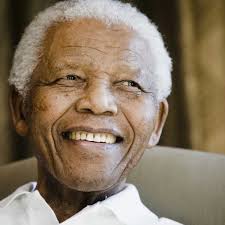
Nelson Mandela

Nelson Mandela wrote of his indomitable will during his long incarceration. He refused to give in to depression and maintained a positive mental attitude, which served him well during that period and afterwards. None of us controls what might happen in life, but all of us have the power to control how we react to those things. Some react rather badly, indicating that they are not really in control of themselves either. Some maintain a calm during a crisis at which we might marvel. Both had the freedom to choose their attitude. What was the difference?

We often heard the term “moral compass” these days, used to describe an internal sense of right and wrong that is seemingly lacking in some. I prefer to think of this innate ability to discern that right thing to do to be based more upon a solid foundation of faith. One must have the solid footing of faith to stand upon or else be constantly out of balance on the shifting sands of fear, uncertainty and doubt. If one starts from that solid foundation of faith, then choosing the attitude with which to face challenges in life becomes much easier. A person of faith starts with the phrase in mind from Romans 8:31 –  “If God is for us, who could be against us?” One can easily see how that is a solid foundation from which to build a positive attitude.

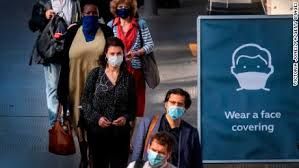
So, at the moment, we are not free to move about in public without wearing an mask, or to join large crowds in celebration of something or even to hug our friends or relatives. We are still free to find the good in all of these temporary restrictions and to develop a positive and supportive attitude about coming together to defeat this unseen enemy. Turn your frustration and anger not on the people who have imposed these restrictions in an effort to contain this pandemic, but, rather, against the cause of the problem and do your part to help defeat the virus.  

Let us all use this crisis to touch base with our faith once again and build the attitudes that we need to get through this together. You are free to choose your attitude during this time of great stress – choose wisely.


Do we really do better?

October 2, 2020

In today’s post to his blog, Jack’s Winning Words, Pastor Freed used this quote – “When we know better, we do better.”  (Maya Angelou)

I don’t think it is just cynicism when I say that maybe the quote should have been – When we know better, We OUGHT to do better.  There are just so many examples in everyday life where we do know better, but don’t do better.

The whole Black Lives Matter movement is a demonstration of that thought. We know that prejudices and brutality exist within police departments across the country, yet we have not been able to correct that and do better. Stories about local hate crimes against families of color or against members of the LBGTQ community are also examples. We know better, but we don’t do better. Even stories about the impact of climate change are examples of a problem that is well documented and that we know is causing harm, yet too many of us continue practices that further pollute our air and promote those changes. We know better and we ought to do better.

What are we to do? How can we affect change and do better? I think the first step in making any change is to stop and consider what you are about to do. Think about it before you act. Do not let yourself succumb to a knee-jerk reaction that is driven by fear, preconceived notions or misinformation. Start your day with a prayer for the will and patience to stop and think before you act. You know better; now do netter.

Systemic racism in our society is nurtured and reinforced by people who know better but who don’t do better. Predispositions like racism and homophobia cannot stand the light of reason because they have no reasonable foundation upon which to be based. Rumors, conspiracy theories and outright lies are not the things upon which we should; base decisions; yet they are all that is underlying those examples. All of those “reasons” are based upon fear. We know better and we ought to do better.

Much of the fear that drives these issues in our society is fear that somehow something will be taken from us and given to others. People rail against providing healthcare to others through programs like Medicaid or care for refugees seeking asylum in America because they believe that it is taking something away from them. Their attitude is, “I got mine, you get your own!” Yet our country has been successful largely because we welcomed immigrants who later contributed to the economic growth that we all benefit from today. Was there an initial cost to welcome those new members of our society? Yes, there always was and there always will be a “startup cost” to getting any immigrant of to a new life in America; however, history has shown us that those costs are repaid many times over by the contributions that most of these new members later make to our society. We know better and we ought to do a better job of welcoming immigrants to America, not build walls to keep them out.

Of late, our challenge has concerned how to act within the context of a worldwide pandemic. Our statistics as a country show that while we know better, we have not done better. It certainly isn’t that we haven’t been given enough information or warnings about what needs to be done to slow down the spread of this virus. It’s really that so many have ignored the warnings and advice and chosen instead to selfishly (or foolhardily) keep spreading the disease to others. They knew better and decided not to do better. Wear a mask in public – you know better, now do better.

So, our challenge is to take the “ought to” out of my revision of the Angelou‘s quote and just do better. You know that we know better.

Today, let’s all just do better.


Cease and desist…believe

October 1, 2020

There are many things that one can do in pursuit of happiness; however, there are also t some things that one can stop doing that will help with that pursuit. Pastor Jack Freed used some advice from the ancients in his blog, Jack’s Winning Words, today – “There is only one way to happiness and that is to cease worrying about things which are beyond the power of our will.”  (Epictetus)

Image From WikiPedia

Epictetus was an ex-slave, a philosopher and one of the leading proponents of Stoicism in his day. There is much good information available about the rise and fall of stoicism as a philosophy of life. Stoicism fell out of favor as a philosophy, although it has enjoyed somewhat of a revival lately as people wrestle with our current political situation. It’s failure is that it stops at the edge of reason and does not make the leap to belief that faith allows.

It is relatively easy to advise that one cease worrying about things that they cannot control; however, it is much more difficult to heed that advice. The key to that difficulty can be found in the word “will” in Epictetus’s quote.  When you substitute the word “ego” for the word “will”, you begin to see the root of the problem. Our hubris gets in our way.A stoic sees and approaches all problems as things for which solution can be found, a way out, a fix; but many problems have no such solution. There is nothing that we can do about certain things, such as the current Corona Virus pandemic. No amount of personal effort or thinking will result in a solution or a way back to what we think of as normal. There are many other things in life – challenges, situations or happenstances – that present similar conundrums.   

What are we to do? Is there a better way to live than to heed the advice of Epictetus?

The answer is found in turning to our faith. Faith lies just beyond reason, just out of our control. Acknowledging our faith reaffirms our acceptance of something that we don’t understand but believe. If you can get yourself in that faith frame of mind, the next step is easy and one that I have posted about many times in this blog.  That step involves a simple prayer to God – “Not my will, but thy will be done.” How simple is that? Yet how powerful. It is at that point that you let go of the unsolvable problem and things that are beyond your control. You have put them in God’s hands and have accepted that His will be done.

The answer to the conundrum of worry about things that we cannot control, then, is not stoicism, but faith. When the problem at hand goes beyond your ability to control or resolve, you must take that step beyond reason, into the world of belief and give it to God. You are free to cease worrying about them and move on with life. You will leave that prayer session with the feeling that a great weight has been lifted from your shoulders.

Cease. Desist. Believe.