What world Booker T think about today’s world?

March 4, 2024

The Best of Jack’s Winning Words 3/4/24 – reprints of blog posts from the late Pastor Jack Freed.
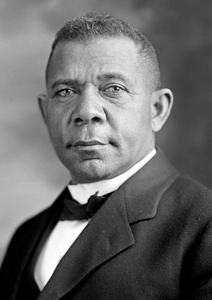
“A lie doesn’t become truth, wrong doesn’t become right and evil doesn’t become good just because it’s accepted by a majority.” (Booker T. Washington)

Booker T. was born during the Civil War and grew up to be a respected educator, businessman and advisor to presidents. As I reread his quote, I sense that he’d be more than distressed at what has become of truth and the moral life. Truth is truth and right is right! Stand up for the truth, because if you don’t, who will? 😉 Jack

We certainly live in an era where the concept of truth has become muddled, if not for the majority at least for a large minority. Misinformation, disinformation and conspiracy theories have replaced the truth for many, especially those in politics.
But what is truth?
truth
/tro͞oTH/
noun
the quality or state of being true.

that which is true or in accordance with fact or reality.
noun: the truth
“tell me the truth”

a fact or belief that is accepted as true.
plural noun: truths
“the emergence of scientific truths”

It seems that as a society we have moved from the first definition of the truth being in accordance with fact or reality onto the looser part of the second definition – a belief that is accepted as true. Many have accepted conspiracy theories as truths, without any substantial or verifiable proof.

Once one’s view of the world becomes perverted by being based upon lies or false beliefs, it is a short jump to the rest of Booker T’s observation that wrong suddenly appears to be right and evil starts to look like good.

Booker T grew up in a world that was not that long removed from the belief that slave ownership was right, based upon the perverted belief that the slaves were somehow less human than their owners and thus had less rights and could be treated as property. That belief still exists in many parts of the country and has now morphed into a belief that the slaves should have been happy that they were rescued by their owners and taught valuable job skills. That new belief still sees the slaves and their descendants as somehow less human than their masters and thus less deserving of basic human rights.

Booker T would not have been happy with the assault against truth, what is right, and good that is taking place in places like Florida and Texas. Instead of stating that Florida is the place where “woke” goes to die, perhaps Booker T would have said that Florida is the place where the truth goes to die.

Jack’s admonition that we must each stand up for the truth has never been more important. Elections are being won based upon lies. Laws are being written based upon lies. Freedoms are being stripped away, based upon lies. The insanity of gun-related deaths is being protected based upon lies. As a popular TV show used to say in its tag line – “The truth is out there”. It is incumbent upon each of us to find it and to defend it.

There are elections coming up which once again give us the opportunity to vote for people who will base their power to govern on the truth and not just on beliefs or lies. At a minimum you must voted based upon the truth. At best you will work with others to insure that the candidates espousing the truth will win.

The truth is out there. Vote for the truth.


The search for truth…

May 14, 2015

From the Jack’s Winning Words blog – “Most people really don’t want the truth.  They just want constant reassurance that what they believe is the truth.”  (Collective Evolution)  Jack went on to write – Plato (428 BCE), seek-truthfamous philosopher and teacher, was also a funny guy.  He’s the one who said, “I’m trying to think.  Don’t confuse me with the facts.”  He was joking, of course.  In life, we are continually asked to test the sources for our beliefs.  Don’t be afraid to examine the “facts” during your search for truth.    😉  Jack

That saying goes well with another that I also picked off Jack’s blog – “If you would be a real seeker after truth, it is necessary that at least once in your life you doubt.”  (Rene Descartes)

The dictionary defines truth as:

– the quality or state of being true.

“he had to accept the truth of her accusation”

– that which is true or in accordance with fact or reality.

noun: the truth

“tell me the truth”

-a fact or belief that is accepted as true.

plural noun: truths

“the emergence of scientific truths”

So it looks like the opening statement was the true after all – it’s all about what people want to believe. Some peoplesearching believe that all of what they saw and heard during the moon landing in 1969 is the truth, but others believe that it was all a giant hoax and that the men never left the earth. Both groups embrace their views as “the truth.” It’s interesting, too, that all of the definitions rely on using the word true to define the truth; and some of the definitions for true also point back to beliefs.

In our everyday lives I think most people believe much of what they hear from others and accept it as the truth; however, all of us have probably known people that we just didn’t believe. Maybe they earned that distrust by repeatedly lying about things or maybe they just came across as being a bit shady, so we took everything that they said with a grain of salt. Whichever is the initial case, most people search for the truth. They are not content with just not knowing or not being sure. Maybe they are not searching for the truth so much as for that confirmation of their beliefs that we started with.

doubtBut what of Descartes’ advice? Was he advising that we doubt or beliefs in the search for truth? Yes and no. I think he was saying that one cannot go through life never questioning or doubting things that we might have been told are truths. If truth is based upon belief, then there are many truths in life than cannot be tested or proven; they just must be believed. Certainly religions have always relied on the continued acceptance and belief in things that cannot be proven.

The doubts that have cause schisms within religions seldom had to do with doubts about the basic beliefs, but rather about the dogma imposed over the top of those beliefs by men in power within the church. None of Martin Luther’s 95 theses called the faith that was the basis of the Catholic Church into question; rather he questioned the authority claimed by the Pope and the practices of the church of that day concerning the forgiveness of sins – the selling of indulgences

So the key to Descartes thought is to properly direct that doubt and not to let it degrade into cynicism. Use doubts to doubt your doubtsdiscard old ideas and beliefs that cannot stand inspection and to reinforce those that prove to be true after a closer look. Doubt not your faith, but perhaps those people and institutions that have codified and legislated the practice of that faith into dogma to meet their own needs.

Do you seek the truth in life or just go through life believing everything that you’ve been told is true? How do you act upon your doubts? Do you just let them gnaw away in the back of your mind or do you take some action to prove or disprove those feelings of doubt? Are your religious beliefs based upon a faith strong enough to be classified as a truth in your life? If so, do you share that truth with others through your words and deeds? Do they see that truth in you? If you live your faith then another saying will apply – “you will know the truth, and the truth will make you free.”