Jack Freed had a post that is so good today on his blog Jack’s Winning Words that I need to re-post the whole thing before I add any comments.
“We’d forgive most things if we knew the facts.” (Graham Greene) Being prejudiced means to judge before knowing all of the facts. RLS wrote: “I have a little shadow that goes in and out with me…” and that shadow, at times, can be the tendency to form opinions based on partial knowledge. Racism, sexism, homophobia, xenophobia, nationalism…these are more than words. Leaning, left or right…we daily have to examine “our little shadow” of pre-judging. – Jack
It’s interesting that this tendency to pre-judge, to be prejudiced, comes from the shadows,  from a dark place – a place in our hearts and minds where the sun doesn’t reach or perhaps where the Son doesn’t reach. Just as these preconceived notions, most born in ignorance and fear, could not stand the light of the truth, they also could not stand having the light of Christianity shined upon them. The fact that many words of hate and prejudice are hurled from the shadows by people thumping Bibles and loudly
  proclaiming to be Christians just shows the power of the Devil in their lives. They have allowed fear and hate to overcome the love and acceptance that Jesus taught.
Get out of the shadows…
What “little shadows” do you allow in your life? Is it a fear or prejudice against of people of color? Is it disgust or disdain at hearing others speak a foreign language in a store? Is it the ignorance and loathing of homophobia? Is it just the discomfort that you feel being around people who are “different”? Perhaps you sneer at  a women wearing the Habib or those who look or dress differently. Perhaps you have allowed yourself to become a snob about some things and tend to discount the tastes of others who do not share you appreciation for that thing. Maybe your little shadow is just the indifference to your fellow man that allows you to turn away from the homeless beggar in the street, rather than reach out to try to help.
Get out of the shadows…
Whatever your personal little shadow is, you need to get out from under it. Shine the light of Jesus teachings on those fears and prejudices. Get yourself one of those little  WWJD bracelets and start wearing it. When you find yourself in a situation where the shadow of pre-conceived notions is starting to darken your judgement, take the time to look at the bracelet and ask yourself that question. If you take the time to ask yourself What Would Jesus Do in those situations, you will find that the shadows go away. They cannot stand the light of the Son.
Get out of the shadows…
Have a great day walking in the light of the Son.


 Posted by Norm Werner
  thought that praying for something in particular, or some outcome to an upcoming event, forces one to visualize the steps necessary to achieve that outcome. Visualization is a well-known technique for success in athletics and other pursuits in life.
 the brains of those who fervently pray and they feel better (perhaps even invincible) as they tackle the challenge that they prayed about.
 and forces us to deal directly with them. The feeling that, through our prayers, we have God on our side in dealing with those fears provides the strength and courage to take the first steps towards overcoming them. Prayer often provides that little push that we need to get started.
 might be going on in our lives. In my prayers, I often use the little phrase “not my will, but Thy will be done”. For me, that is the quickest and easiest way to let go of things that I have no control over anyway and put my trust back into the coincidences that God makes happen in our lives.
 Unfortunately, we live in a world where snap judgments based upon shaky and unproven “facts” are the norm. Just saying “my bad” later, when your rush to judgement has been proven to be baseless, does not repair the damage that might have been done to someone else and certainly not to the damage that it has done to your own reputation. Once you become known to others as someone who makes hasty decision or acts upon unproven rumors or allegations, you will likely be labeled as
  someone who is untrustworthy, and that’s not a good thing
 be corroborated and substantiated. It is that validation that you are seeking when you seek the truth and it is usually the absence of validation that causes you to doubt those who purport to know the truth.
 I’ve posted her a few times about not ending up with a bad case of the “coulda, woulda, shoulda’s” in your life. Most of those posts concerned making good decisions in life. Most of those decisions involve being able to distinguish good from bad, right from wrong or maybe constructive vs. destructive behavior.
 it rather starkly when he said – “you either believe or you don’t believe, there ain’t no in between.”
 So it is in life; you either walk with God or you walk alone. You may both turn to God for help with your decisions, and trust in the direction that He takes you; or you have nothing to turn to for help and find no happiness in your decisions, no matter how things turn out. In the end, will you be looking back and saying, “I wish I had found God in my life”, or will you be saying “I’m glad that I had God in my life to guide me?”
 Of course, Goodall was speaking about her life-long work with chimpanzees. Over time Goodall became recognized as the “voice of the chimpanzees”, speaking on their behalf to try to get them protections and better treatment.
 knows…” In those cases, the speaker has actually usurped and perhaps distorted the thoughts and opinions of other. That happens a loty in politics these days as various speakers loudly proclaim toe be “speaking for all of us”.
 matter. Ask them what statistics they have (and from what source) to back up their assertion that their statement represents the sentiments of some portion (large or small) of the sentiments of the general population. Don’t accept the “I saw it on the Internet, so it must be true” defense of the stupid statements that you may hear. Recent news has shown that unscrupulous actors trying to influence you towards some belief may plant much of what you may see on the Internet there. Certainly almost nothing on the Internet has been subjected to verification of any level of rigor.
 have your own opinion, based upon your own moral values and don’t just go along with the party line when it doesn’t fit those values.
 So, resolve to speak for yourself and not to let others usurp that role. If you don’t, you might as well sit over in the corner and eat your banana.
 we begin to question. Do they look different than me? Do they dress different than me? Do they speak different from me? Do they act different from me? Do they have opinions that are different from mine? Do they sin differently than me?
 means.
 you? Why does their accent when they speak bother you? What possible difference does it make to you if they have tattoos or nose rings or other things that you might not have? Unless they have a weapon and are aggressively approaching you, why do you feel threatened or uneasy with their presence? In what way does their sexual orientation or preferences impact you directly?
 Why does that make me uneasy? Why am I offended by something that they have done or maybe not done? Why am I irritated by their accent with which they speak? Why does the color of their skin immediately make a difference to me? Why do I immediately fear them or hate them, when I don’t even know them?
 what they are. It also give you the opportunity to adjust your attitude before you act. It allows you to use the shiny mirror of judgement for some quick self-examination. Maybe it will allow you to put a smile on the face that you see there to replace the scowl that was there.
 bad things are or how bad you are for doing what you do is the stepping off point for depression. Compunction helps you identify the things that you should and could be doing differently in order to change your life. Taking actions on those insights is what causes the changes to happen.
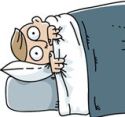 So, if compunction is keeping you awake at night; do something about it. Change your life. Get up in the morning with the resolve to take actions to stop going in the direction that is causing you the anxiety or remorse that keeps you awake at night. Many times that only requires small changes in your life; how you act towards and react to others; how you prioritize the use of your time; or maybe just doing the things that you’ve known all along that you should be doing, but just didn’t have the time.
 earliest tribal clans, which may be viewed as proto societies within themselves, the various religions that sprang up among the tribes probably formed the first societies.
 them from different regions of the world. Society has always initially resisted those changes; but, the society eventually found a way to accommodate and subsume those differences.
 there is often just as much tolerance required of others to put up with us as there is of us to accept them.
 actions are trespasses that many of us commit every day, without giving it any thought until later (if at all). Sometimes, it is yourself that you have to pardon, maybe for your thoughts or actions. Getting down on yourself really doesn’t help, but that pardon should also come with a resolution not to make that same mistake again, whether it was an act of prejudice or just one of insensitivity or neglect. Pardoning yourself is the first step to bettering yourself.
 baggage. Do not let their actions change the course of your life. Pardon their trespasses and get on with life. They probably don’t even realize their trespass and they certainly don’t understand that you’ve forgiven them; but you do and that sets you free from those trespasses.
 to things and events. Trying to maintain the delusion that we are in control just causes frustration, anger and self-destructive depression.
 always go the way that God intended. Sometimes we have to step back from things and try to discern the lesson or good that can come from the outcome.
 painful if you turn to him early. It’s not really that God misses lots of opportunities to be early, it’s usually that we don’t turn to Him until it’s almost too late. So, pray early and pray often. God is standing by to answer.
 NormsMilfordBlog