“Imprisonment of the body is bitter; imprisonment of the mind is worse.” (Thornton Wilder – The Ides of March) – from the Jack’s Winning Words blog. Jack went on to write – I once had a tour of Jackson State Prison. After that experience I realized what a severe penalty it is to be sentenced to “life in prison.” But worse than “life”, is the locking-up of one’s mind. “The mind is a terrible thing to waste.” Society needs to address the problem of mind-robbing sub-par schools and the problem of mind-robbing diseases.
I have written here before about the ability of the mind to soar, even if the body is imprisoned or it is trapped in a dysfunctional body – see post. I agree with Jack that the sub-par school systems that some are relegated to in our society wastes the minds that flow through them by limiting the training and support that allow those minds to grow, experience and learn about the world. At the other end of life the mind-robbing diseases like Alzheimer’s seem more like a cage that is getting smaller and smaller as more and more of the memories that make up one’s knowledge base drift away, until one is left in the child-like state of a newborn. I agree that more research and more work is needed on both of those issues.
Another issue that I’ve also written about here before seems to me to also be a 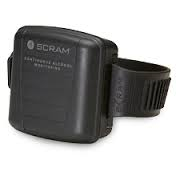 rather large threat to imprison the mind or perhaps the better analogy would be to put the mind on a tether. In Michigan the police use what is called a DUI Tether or SCRAM bracelet, which is as device that is worn usually around the ankle and which can detect any use of alcohol by the wearer. Click here to read an article about how it works and is used. The threat that I’m referring to is our smartphones. Many people have become tethered to their smartphones to such an extent that they actually feel phantom vibrations even when not carrying the phone and suffer a form of separation anxiety if they somehow forget their phone. Even worse, in my mind and admittedly in my case, is how slavishly we react to any call or message or other demand that our phone might make upon us.
The whole texting while driving issue is just one indicator of that inexplicable need to respond to anything that happens on our phone. I often stop and think, “Does it really matter that I respond right now to that text message, in the middle  of whatever I’m doing, or can it wait a few minutes?” Does the fact that my phone just buzzed in my pocket, indicating that a new eMail has arrived mean that I must put it out, even while trying to navigate through rush-hour traffic, to try to see what it’s all about? Is that call from some number that I don’t have in my contacts list really likely to be important enough to answer in the middle of dinner? The answer to all of those is obviously No; however the reality all to often is that I do it anyway. I have become tethered to my phone (or by my phone). My mind, in a manner of speaking, has been imprisoned by this beast.
The use of, and your devoted service to, your cell phone can be compared to an addiction. Like any other addiction, it is hard to break. I suspect that a scientific  study of the problem would discover that some endorphin of some sort is released in our brains when we respond to the phone ad that we get used to and actually start craving that endorphin. Maybe it has something to do with wanting to feel connected somehow to other human beings. I’ve seen people spend their entire time at the gym, cycling through various machines and the treadmill, and never get off the phone. I’ve witnessed (in exasperation because it happened right I front of me) a person take a phone call in the middle of a wedding ceremony and actually spend time talking while the preacher was reading through the wedding vows. And I’ve almost been hit a few times by motorists who ran a stop sign at a corner because they were on their phone texting and didn’t see the sign or me. Those were people who had lost control of their own minds to their phones – they were tethered to their phones.
So, now, when I go to church on Sunday morning I leave my phone in the car. I suffer the anxiety of being separated from it for a few moments and I still look at it the instant that I get back into the car to see what I might have missed (never anything important it seems); but I no longer respond to a buzz in my pocket in the midst of the sermon (although, I’ll admit that I’ve experienced phantom buzzes in the midst of the service from time to tome) . It’s a start and an admission that I’ve made to myself that I had become tethered to my phone. I still have work to do on that.
How about you? Are you tethered to your phone? Do you feel those phantom vibrations every now and then? Do you still check to see what it is that just came in, even in the midst of driving? If you forget your phone at home, do you turn around to go get it or just tell yourself that you’ll check it when you get home? Have you ever spent a hour of more talking on the phone while you were doing other things? There aren’t Phone Tethered Anonymous groups; but, perhaps there should be. It’s something to think about over the weekend. Maybe you could put down your phone and get outside for a while without it. After all, that’s what voice mail is for. Have a great weekend.


 Posted by Norm Werner


 NormsMilfordBlog