“What’s important is to keep learning, to enjoy challenge, and to tolerate ambiguity. In the end there are no certain answers.” (Martina Horner) – as seen in a recent post to the Jack’s Winning Ways blog. Jack went on to write – Neuroscientists say that the brain does not like ambiguity… People, in general, want “yes or no” answers. No equivocation. But life’s not like that.
 In my real estate world there many cases where the answer to a question starts with “it depends…” Lawyers tend to answer questions like that, too, because they know that so much in the law is open to interpretation. Much what has been said lately by #POTUS, #Tweeter-in-Chief seems initially to be straightforward, until one starts to think about how the simplistic answers that fit into 140 characters will actually be implemented. The devil is in the ambiguity of the details.
One consequence of the brain not liking ambiguity is that we waste a lot of time trying to solve problems for which there are no real, unambiguous answers. It is possible to answer a child’s question, ‘Why is the sky blue?” with an unambiguous and scientifically verifiable answer. But let that same child ask, “What is love?” and see if you can come up with a complete answer to that. We also tend to wrestle with things that we pose to ourselves as questions, when in fact they are conundrums with ambiguous answers.
A very important word in today’s quote is “tolerate”. It is saying that while we are not  giving in to ambiguity, we have come to the conclusion that we will not let it ruin our lives, that we will acknowledge it and choose to live with the fact that some things are unresolved and unresolvable. The catch phrase “it is what it is”, was probably invented by someone who had just accepted some ambiguity in their life.
Once you accept that there are no certain answers to some things, you can let go of them and focus instead on the things that you are sure of or the things in your life that can be solved or resolved. You can spend more time focused upon those who love you and accept your and less time trying to figure out why some people reject you or hate you (or so you think).
At the end of today’s quote is also an important little phrase – “In the end there are no certain answers.” I made the point earlier that certain things were scientifically provable and thus not ambiguities; but are they? A huge majority of the world’s best scientists have signed on in support of the theories surrounding man’s impact as the primary cause of Global Warming, yet our #Tweeter-in-Chief and his appointee to the critical post of EPA Chief don’t believe the evidence that these scientists have collected and the case that they make. So, in the end, there are no certain answers in the minds of those men.
Perhaps Anton Chekhov was right when he said – “Man is what he believes.”
 Since we live in a world that surrounds us with many ambiguous situations and we are now under a leadership that now supplies us with “alternative facts” to almost any situation, I suppose Chekhov’s insight is now more important than ever – we are what we believe. Perhaps #POTUS has discovered a new way to deal with ambiguity – just believe something and it becomes true, it becomes an alternative fact upon which we can build the rest of our lives.
I still have trouble with that concept, perhaps because I bring some beliefs about right and wrong into the mix along with some historical perspective of the facts. I struggle to understand that way of thinking, the same way that Chuck Todd (#chucktodd) did in his TV interview with Kellyanne Conway, when she introduced the term “alternative facts” in response to a question about something that the White House Press Secretary had said. Todd was nonplussed by that term and how to differentiate an “alternative fact’ from a lie. Maybe Chuck and I just don’t see the ambiguity that is hidden in the term  “fact”. Obviously, for some, it is not a fact if you don’t believe it is a fact; and, even less so if you choose to believe an “alternative fact”.
So maybe we don’t have to worry about accepting ambiguity, but just get used to tolerating alternative facts for the next four years. I for one am having a hard time with that. How about you?


 Posted by Norm Werner
  garded as America’s finest hour when the goodness that is in people found a common cause in the fight for what is right and just and compassionate in the battle against the insensitivity and the self-serving, closed-mindedness of the current political regime in our nation’s capital. Have no doubt about it, this is not a one-man problem, but a systemic assault being waged on the very values that the country was founded upon by a group of frightened politicians who are fighting the inevitable tide of change and diversity that the country is undergoing.
 nation out of the morass that is now finds itself in. I don’t know who that will be, but I would not be surprised if it another strong woman. It is well past time for that to happen and perhaps the country has never needed the difference in approach to governing that a woman could bring to bear than now (or four years from now).
 nical mechanics of the last election were such that they allowed the minority to win. That can and will be overcome with the proper effort and commitment on the part of the majority. There is absolutely no need for this to be anything more than a short–term anomaly for our country and perhaps a one-term Presidency.
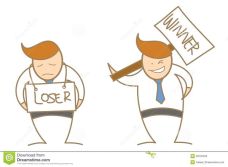 campaigning for their candidate started. They had several much better choices at the beginning, but those candidates allowed themselves to be bullied out of the way. The Democratic Party seemed to believe that it was entitled to win and chose a candidate that allowed herself to believe that, too. After all, how could she lose to that Republican candidate? The Democrats discarded the only candidate that might have defeated that Republican’s choice when they conspired to block the one candidate who was not beholding to the party elite. What a hoot that Presidential campaign would have been to witness.
 the right and left litmus tests that the parties try to apply to their candidates. Perhaps it will be another populist, but one this time who espouses diversity, inclusiveness, compassion and a more centrist approach to things. I’m old enough to remember when moderate Republicans were allowed in that party and when there were fiscally conservative Democrats. Both have joined the Dodo bird in the Smithsonian display of extinct species.
 howed us how effective having a majority in Congress can be to blocking everything that the President wants to do. It’s the game that both parties would rather play than focusing on getting the people’s work done. You have two years to be ready to effect change. Don’t waste that time lamenting what went wrong this year, focus on what you can help go right the next time and the time after that. It all starts with me. That’s what good can come out of this.
 if you choose to use upbeat and positive words to describe the things and people around you it will reinforce your positive attitude about life. If your words are harsh or critical, things will look a lot darker around you. People might start avoiding you, because they don’t want to be dragged down by your words or they may approach you in an argumentative way, because they find your words to be offensive or hurtful.
 Using the right words requires attention and concentration. One of the aspects that I most admired about outgoing President Barrack Obama is his very measured, thoughtful and precise use of the language. You can tell by watching him speak that he is carefully choosing the words that he uses to make sure that they get his points across in an unambiguous manner. Let’s all hope that the incoming Tweeter-in-Chief can indeed “act Presidential” as he claimed during his campaign and do a better job of communicating his thoughts when he has to use more than 140 characters.
 the sad donkey in Winnie the Pooh or as the happy, dancing Snoopy in the Peanuts comic. Which would you rather be perceived to be?
 spaceship or serve as a politician, but class is rare—something lacking in this crassest of American eras.” (Ted Rall in Forbes) Jack went on to write – John Glenn was classy! He was humble, well-mannered, intelligent, who never tried to build oneself up by tearing others down.
 worlds it seems the second definition is getting harder to find. George Clooney is often mentioned as a modern classy actor, although the ultimate classy Hollywood actors will always be Carey Grant and Gregory Peck; and actress Meryl Streep might be called classy today, though not on the level that we used to think of Katherine Hepburn.
 You see them in the local newspapers doing good deeds and helping out in their communities. They run or work at non-profit volunteer organizations, like Community Sharing or the Village Fine Arts Association. They support local civic projects. Many are leaders in youth organizations like the boy or girl scouts or in organizations focused upon youth, like the Optimists Clubs. Without these “classy” people our local communities would be dreary places indeed.
 difference. It’s not enough to just send in a check. No one ever said, “what a classy giver his is”. They appreciate the donations of money, but they see real class in the donation of time and effort.
 interesting story about the sign on Truman’s office and the origin of that phrase at the
 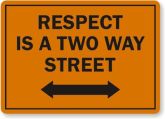 thought that it really isn’t just about the buck stopping here, with me (or you); but, also the fact that the different behavior that is needed to combat that lack of respect and civility must start with me, too. It starts with me showing respect for the opinions of others, even if I don’t agree with their option or point of view on things. There are ways to respectfully disagree without resorting to screaming or name calling. Rather than waste my time and yours trying to denigrate you and your position, I need to focus upon doing a better job trying to understand your position and searching for some common ground upon which we might be able to find compromise.
 cheek. (Where have we heard that before?) Maybe, instead of just blurting back, “You’re wrong”, we could say instead, “I see that we have different opinions on this; is there anything about it that we can agree upon?” There may not initially be any apparent common ground; but, just changing the situation from a confrontation into a conversation may defuse what otherwise might escalate into something that you both regret later. We can start by respecting that we have differences and being civil about it. See how that works..
 have happened in our everyday lives, especially in the aspects that deal with politics.
 own opinions by looking through the lenses that are held up by others or by choosing our own lens and view of things. If we really need an external lens to look through, we might do better by looking through the lens of the Bible and the “truths” that we will find there, rather than the “truths” that we see in a political ad or a tweet.
 would be enough “I’s” being respectful; and civil to others that it would turn us into “we” and then everything would be better. “We” would be living in a more respectful and civil world. I like that; and it starts with me.
 In the current loud and fractious political environment in the United States, respect and good behavior seemed to have been trampled under the heavy boots of partisan politics. As the gulf has widened between the major political groups, they have lost the ability to even hear the other’s side of the story, much less respect the differences. Both sides seem to have reached the “my way or the highway” position on their opinions and disdain has replaced disrespect in the conversations. In fact the conversations themselves have devolved into shouting matches.
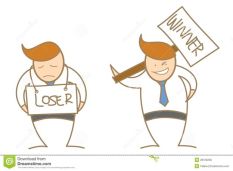 social, racial and economic justice” on the other. One side fears that “those people” are taking things away from us; while the other side fears that “those people” are preventing us from having equal opportunity. Both sides fear the other and see the other side’s success as taking something away from their side. Both sides view the world as a zero-sum game in which the outcome must be a winner and a loser. The position taken by both sides is “I’m right and you’re wrong”. There is no respect in this game.
 called conservative and liberal factions within government. In days long gone the crack that divided the two groups was just that – a crack. It was a gap in thinking and approach to government that could be easily bridged or crossed. There were many politicians on both sides who crossed back and forth on issues, based on what they perceived to be for the good of the county. Due in many ways to the recent (relatively speaking) focus on social issues by our politicians, that crack or gap has now widened into a chasm which politicians on either side find to be too politically dangerous to cross. So they stand on
  each side of the divide hurling insults at each other across the chasm. No attempt is even made to build bridges between the opposing ideologies. They totally lack respect for each other.
 helping where we can to make them right. This new party could start by showing respect to the people and the real problems at hand.
 what this will mean to them. Many went to bed not knowing the outcome; some did not go to bed at all. And then the sun came up.
 themselves for their common good and the good of the world. We print the foundation of our beliefs as a people on our money – In God we Trust.
 Pivoting is the term de jure in business and political vernacular this year. Literally it is used to mean making a change in direction or opinion about something, but is used to make the speaker seem somehow more businesslike or serious. In politics pivoting allows a candidate to change directions without seeming to be wishy-washy on something. The candidate can say that, “I didn’t change my mind on that, I pivoted.” Whatever, it is still a change of direction or mind.
 events that are happening, rather than being labeled as old fashion or accused of fighting a rear guard action against the inevitable demographic changes that are happening in our society. They have realized that they can join the movement or be by-passed by it, if they are hunkered down in their foxholes trying to resist the changes. In U.S. politics those foxhole resisters are the ones gerrymandering political districts to try to avoid being overrun by the demographic changes. Those “safe districts” are their foxholes and they are hunkered down in them.
 Events around the world and the massive movement of people throughout the world constantly force the reexamination of the characterization of people using the terms “Us” and “Them”. More and more of “Them” are joining the ranks of “Us”, such that the “Us” population is rapidly growing while the “Them” population is becoming smaller and less relevant. The sooner we get to an understanding that it all of “Us” that have to learn to live together the better.
 the word inclusiveness; but, also to start living inclusive lives. Just keep an eye out for the foxholes dwellers. There are some really frightened and angry people living in those holes. The challenge for Us is to figure out a way, not to by-pass Them, but to include them, too. Sometimes it ain’t easy being inclusive, but in all times that is better than the alternative. Let’s keep expanding “Us” until there is no more “Them”.
 On this Martin Luther King day, America and the world are still struggling with many wrongs that need righting, many injustices that beg for justice and many old prejudices that seem to refuse to die. People still take to the streets, as they did in King’s day seeking redress of the wrongs, although many times not as peacefully as he would have liked. Too often there is still a lack of recognition between the right and wrong positions in many of the areas that still cause division and pain. There is too much of a mentality of “them vs. us”; rather than searching for a solution that involves “we”.
 their righteousness in their “defense of American Family values.” Apparently they think it is OK to discriminate so long as they also proclaim themselves to be evangelicals who are mounting a Bible-based defense of American life as they define it. What’s that old saying about two wrongs not making a right? That’s apparently not in their Bible.
 political power. He also found new adversaries to try to hold in check – those who were different from him in almost any way. For quite some time this new strategy worked well by employing tactics such as direct political contributions, Political Action Committees and gerrymandering to maintain political power. That political power allowed the structuring of laws that stripped away what power the masses has accumulated through the tort process or via organized labor. Rather rapidly, in terms of history, those in power amassed most of the wealth of the country, too. Now the top 1% of the world’s people control 99% of the wealth of the entire world, and with that wealth they can buy all of the power that they need to maintain their positions.
 is full of instances of the people eventually getting fed up with existing on the crumbs that fall off the tables of the rich rulers and rising up against them.
 certainly exposed the carnage that rabid partisanship has wrecked upon both parties. The huge philosophical divide between the parties and the lack of interest in any compromise has left the entire middle of the political spectrum abandoned and ripe for a third party effort. Unfortunately, the only way that anyone can mount a campaign effort for President these days is to first acquire a billion dollars or more.
 sound bites and personal attacks along the candidates; however, I did recently watch the reruns of the last republican “debate”. It was obvious that the closer to the center of the stage a candidate was placed measured not only his current polling strength, but also his adherence to the tea party conservative line. The only candidates who made statements that seemed to both thoughtful and reasonable in a political environment that is begging for compromise were the politicians relegated to the far ends of the stage. Of course they spent most of the evening off camera.
 it. At least it is somewhat like a modern TV comedy, filled with ridiculous characters sparing with each other with words rather than swords. Like a TV show, or a movie, it requires that you suspend your disbelief for a period and just enjoy it, laugh along and don’t think about the horrible consequences of any of these clowns actually get elected. It’s only a hoot if you don’t stop to cry.
 NormsMilfordBlog