This morning I read a story posted by an American Ex-pat who currently lives in France (see Do Americans Understand How Badly They’re Doing?). The story was focused upon the difference between the coordinated, national-level measures that European Countries have taken to control and contain the Corona Virus vs. the chaotic and rudderless efforts in the United States. The U.S. ranks with Brazil in the out-of-control spread of the pandemic – see chart.
By The New York Times | Source: Johns Hopkins University
I posted about that last week – see How Embarrassing. One phrase that the author used that seems to apply to the response to both the pandemic and to the lack of national leadership that is contributing to the unfolding disaster is “self-inflicted wound”. Indeed POTUS could easily switch out his MAGA logo on his red baseball caps with Self-Inflicted Wound and they would immediately become much more meaningful and accurate.
Several states that rushed to reopen have also discovered that they have caused self-inflicted wounds upon their populations. The southern and western states that reopened everything are now having to backtrack and take measures that were obvious from the get-go – closing venues where large, unruly crowns might gather and requiring masks in enclosed spaces. It is only a matter of time until regulation or common sense causes the airlines that decided to fully pack their planes to back off that decision. No one in his or her right mind would get onto a fully loaded plane.
I also posted here last week about the lack of will that American have displayed in dealing with this crisis – see Felled by a lack of patience and resolve. What I did not state strongly enough was the devastating impact of not only a lack of leadership sat the national level, but indeed a leadership that seems to be only concerned with political survival. This is a self-inflicted wound on America; but, it is one that we can correct in November. We need only hope that our Tweeter-in-Chief’s self-aggrandizing and delusional leadership is kept somewhat in check until then. One can also hope that his Senate toady Mitch McConnell stands proudly at attention saluting and goes down with that ship.
Until November we will all have to watch the embarrassment unfold on the nightly news as POTUS keeps claiming what a great job he is dong and the successful countries of the world keep their borders closed to Americans. I guess it is good in one way that we can’t ravel to those countries, since we would be subjected to their laughter and derision about our self-inflicted wound.
A recent post to the Jack’s Winning Words blog used this quote – “I want to meet myself from someone else’s point of view.” (Converse shoe ad)
It is very difficult for anyone to take an objective look at himself or herself. Every now and then, I’ll see a picture that someone else took of me and maybe posted on social media and it always surprises me that I look like the picture. I know it is m;, but, it is not how I picture myself in my mind. I’m not sure what veil of ego or deception I pull over my eyes when I look in a mirror, but somehow I don’t quite see what the camera saw.
Of more importance than our physical appearance to others, it is the “person” that others see that would be most interesting to understand. Do they see the thoughtful, honest and kind person that I think I am; or, do they see someone different? Do vestiges of prejudice or racism somehow show through the façade that I may think I am displaying? Do the overt actions that I am taking sufficiently cover the nagging fears or uncertainties that persist in the recesses of my mind? What would I “see” if I could see me from the viewpoint of others?
An interesting observation that I have shared here before is that most people don’t realize how uninviting or even threatening their “at rest” facial appears can be to others. When we are not overtly trying to smile or even to frown, our faces settle into a relaxed or “at rest” state. Our face sags a bit and our lips droop, sometimes turning into a frown. For many it just looks like we are being serious about something, but for some, our continence takes on a look of anger or disgust. To find to what your at rest face looks like have someone take pictures of you when you are not expecting it and not doing anything in particular. You may be surprised.
Physical appearances aside, the person that others “see” is heavily influenced by things like what you say and how you talk, as well as the thing that you actually do. How differently do you see (judge) people who use good English and can talk in complete sentences verses those who punctuate their conversation with vapid verbal fillers, such as “like” or “you know”. How much more attention do you pay to the words of a person who is able to express themselves well verses those who couch everything they say in slang or vulgarity. What would I see if I were able to listen to myself as others do? Would I be likely to believe what I am hearing, at least accept it as a reasonable, albeit different point of view, or just dismiss it as the ravings of an ignorant person?
While it is impossible to really see yourself as others see you, there is value in pausing every now and then to examine one’s position on matters that are occurring in our lives. We are seldom self-aware enough to really understand what is motivating our actions and decisions unless we take that pause and think about it. As I have opined here in the past, we use a prayer for forgiveness in our church service that asks God for forgiveness for the things that we have done and those that we have left undone. We may be more aware of why we do the things that we do, but less aware of the things that we leave undone for reasons that we just don’t think about. The man begging on the street that I did not stop to help sees the things that I left undone, not the many good things that I may have done.
As you pause and try to understand what is motivating your actions and reactions, you may catch glimpses of what others “see” in you. If you don’t like what you see, it’s time to make changes. See the post, “What to change to make real change”.
On last night’s national news it was reported that the United States has been listed as a travel banned country by the European Union, due to our inability to bring the Corona Virus under control in our country. How embarrassing is that? To be lumped in with Russia and Brazil as countries without the political will, resolve or discipline within their populations to stop the spread of this pandemic. You really can’t blame them. See my post from yesterday – Felled by a lack of patience…
The American traveling public earned the nickname “Ugly Americans” from the title of a 1958 book by authors William Lederer and Eugene Burdick, due to their arrogant and entitled behavior when traveling abroad. Now, perhaps the “Contagious Americans” or “Stupid Americans” might better fit. The news report said that Europeans are appalled by the scenes that they see on their news shows of Americans ignoring all health rules and congregating in public. Our skyrocketing infection rate and climbing death rate are proof to them of our selfish disregard for the well-being of others.
Probably as strange to them is the total lack of national leadership on this issue from our Tweeter-in-Chief and his band of clowns in Washington. No other country in the world, including many developing nations that are well ahead of us on this issue, has as vapid a group of so-called leaders at the top of their governments. And, the response from fearless leader was “So I told them to slow down the testing.”
Now, we find ourselves banned from travel to countries that have taken effective, if sometimes painful, steps to contain the pandemic. While in the Wild, Wild West of America, POTUS worries about how he looks in a mask and frets that people are wearing them just to slight him. How pathetic is that? Instead of a slogan built upon the initials MAGA, perhaps we should use SEA – Stop Embarrassing America. The good news is that we will have the opportunity to make a SEA change in November.
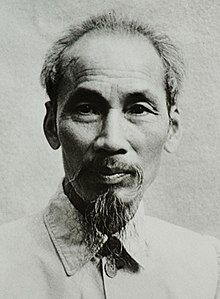
Americans have a well known history of impatience and a lack of resolve when faced with a patient and persistent enemy. Ho Chi Minh knew that if he kept the war in Viet Nam going long enough that America would eventually loose its resolve and abandon the fight and the country. The Taliban leaders are probably counting on the same thing in Afghanistan. Now, we are seeing the consequences of that lack of patience and resolve in the fight against the Corona Virus, especially among the young for whom patience was never a virtue.
The resurgences of COVID-19 infections and hospitalizations we are witnessing in the South and West are a direct consequence of people, many of them young people, becoming inpatient and ignoring the advice to socially distance themselves and wear masks. A recent hot spot outbreak in southeastern Michigan has been traced to a big college campus party at a bar that had just reopened. Event though he bar owners and staff took all of the precautions that they could, the crowd that gathered did not heed the warnings and advice and many did not wear masks. A couple of weeks after r the party, a large number of people reported being COVID positive and had spread the disease to others who weren’t even there when they went back home.
The Corona Virus isn’t aware of the lack of patience. It is just a very opportunistic organism with a single focus upon replicating itself. The fact that it sometimes kills its host just means that it must continue to jump from host to host as quickly as possible. It is convenient for it that many of the potential hosts choose not to protect themselves from infection.
In interview after interview that we see on the nightly news there are people (mostly young white people) who profess to be unconcerned about the pandemic. Many seem to be repeating the words of our MAGA-maniac that this is all somehow a big hoax or no worse that the regular flu. Of course, they usually aren’t wearing masks because their fearless leader doesn’t wear one. To them, it is all fake news.
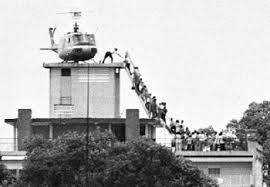
We could dismiss that lunatic fringe were it not for the fact that they are joined by a large number of people who have just grown wearing of this battle and are ready to walk away from doing the things that are required to win. There will be no dramatic pictures of helicopters loading those who seek to escape from this battle, like there were from the the roof of the American Embassy in Viet Nam. There have already been claims of victory over this pandemic from the fearless leader that ring as hollow as the claims of victory over the Taliban. Like the Taliban, the Corona virus may hide in the shadows for a while, but it is not vanquished. It is just waiting for our patience and resolve to wane. The recent resurgence or second wave (call it what you will) has proven that strategy to be valid, as has the acceptance of the Taliban in so-called “peace talks” in Afghanistan.
The science of the situation has not changed; however, the economic damage and political pressures have increased to the point of overruling the best advice of our health professionals. The T-shirts worn by those protesting the restrictions that were imposed which used to say “Live Free or Die” would now be more correct in stating “Live Free and Die”. If it were simply that only the person unwilling to take precautions would be impacted, it might be OK to let that pass. Bu t it is not that simple.
So, now, five months into this pandemic, it is gut-check time for our resolve as a nation. Do we declare victory and walk away from the fight, knowing that thousands more will die; or, do we renew our resolve to take on this enemy and defeat it with the only real weapons that we have – avoiding crowds, practicing social distancing, washing our hands frequently and wearing a face mask? Eventually, our scientists will develop and give us a better weapon – a vaccine. Until then we must fight with what we have.
The Corona virus is incapable of smiling or snickering at us, but it has to be happy to see the waning resolve and lack of patience that its target hosts are displaying. Perhaps it will take a change in leadership at the national level (or one might say just leadership at all) to rally Americans against this enemy. We can win this battle. We cannot yet defeat the virus, but we can work to make sure that it does not defeat us.
Stay safe. Wear a mask in public. Practice social distancing. Wash your hands often. Be patient and persistent. Let’s defeat this enemy!
I saw a quote while searching for something on-line that I had to save, because it rang so true.
“Your beliefs don’t make you a better person, your behavior does.” (Sukhraj S. Dhillon)
A hallmark of the younger generations seems to be putting their beliefs into practice, at least for many who turn out in the streets to protest things that they believe are wrong. While their elders (which includes my generation) may share many of the same beliefs, they have not been labeled “the silent majority” for no reason. Their actions and behaviors do not reflect those beliefs. Why is that?
While the term “politically correct” was coined more recently, most of us who are older grew up in a society where standing out or being noticed for your actions in support of yor beliefs was discouraged from a very young age. The old phrased “children should be seen but not heard” dates back to the late nineteenth century (and maybe earlier), but it was still the rule in the Twentieth Century. Most in the older generations were raised in an environment that encouraged “going along to get along”. That same environment encouraged us to look the other way when we saw racial injustices by the police or anyone and to tolerate the bigotry against gays and others who were “different”. Anyone showing empathy for the plight of any of those groups was immediately labeled a “bleeding heart liberal”, which was the precursor to today’s conservative hate label – “socialist”.
But, what of us, as individuals?
Events too large to ignore, like the Corona Virus Pandemic and the public outrage over recent police brutality against people of color test our beliefs and our behavior. Recent news stories about people congregating in bars and on beaches without regard to safety measures for themselves and others point to a society that is self-centered and bereft of societal concerns or obligations. This is a reflection of the “I got mine, you go get your own” mentality that drives us much of the time. And, the protest marches over recent police killings of people of color have yet to drive meaningful action or reform in Washington or at many State and local levels.
You may be tempted to say, “What can I do about that?” You can start by wearing a mask in public and practicing social distancing. That is not an act of selfishness; it is an act of regard for the well-being of those around you. Perhaps you are not the type to take to the streets to protest, but you can take to the ballot box to vote. Maybe you don’t feel comfortable shouting slogans at a rally; but, you can put a sign in your yard in support of a candidate or an idea. You may not take the megaphone to shout for justice; but you can talk to your friends and express your concerns and opinions. You can at least put your beliefs into some form of behavior that shows the world the beliefs you hold. If you get really brave, you can volunteer at a local food bank or shelter – actually doing something about the hunger that exists in every community, instead of just being concerned about it.
Beliefs that are hidden away or suppressed are like faith that is not acted upon. The Bible tells us –
“What good is it, my brothers, if someone says he has faith but does not have works? Can that faith save him? If a brother or sister is poorly clothed and lacking in daily food, and one of you says to them, “Go in peace, be warmed and filled,” without giving them the things needed for the body, what good is that? So also faith by itself, if it does not have works, is dead. But someone will say, “You have faith and I have works.” Show me your faith apart from your works, and I will show you my faith by my works. …” (James 2:14-26)
I have a sign on my front lawn right now that shows a quote from Martin Luther King, Jr – “Our lives begin to end the day we become silent about things that matter.”
What matters to you? If you believe in something, show the world through your works as well as your words. Change your behavior to reflect your beliefs.
There is much in the news about demands for change and an end to discrimination of all types and the inequities that exist in our society. As I look back over quotes that I save from the Jack‘s Winning Words blog, two stood out as seeming to go together to provide a good starting point for accomplishing the needed changes.
“If you were to change the world, start with yourself.” (Gandhi)
AND –
“If you don’t like something, change it. If you can’t change it, change the way you think about it.” (Mary Engelbreit)
People almost never look in the mirror and honestly say to themselves – “You are a part of the problem.” It is always “they” or “them” who are at fault – the bigots and haters that we see on the news. Yet it is those who remain silent and let things go on that facilitate that bigotry or wrong behavior. The bully who goes unchallenged by his/her peers that continues to bully others. The bigot who refuses to perform a service for, or sell a product to, a gay couple will continue to discriminate. The police who treat people of color differently will continue to harass and kill with impunity. If we see it and don’t say or do something, then we are a part of the problem and not of the solution.
In our prayers for forgiveness at church we pray that God will forgive us for the things that we have done and the things left undone. It is in those things left undone that we become part of the problem. Today’s quotes direct us to spend more time in reflection on our own thoughts and actions (or inaction). A good start is to examine how the nightly news stories about the demonstrations against police brutality make you feel.
Most white viewers likely have little frame of reference for empathy with the black demonstrators, unless they have been stopped and perhaps roughly treated by the police sometime in their past. For the most part, white people don’t view a stop by the police as a life-threatening event – it’s just an inconvenience. Compare that to the interviews that you see on the news about how blacks view interactions with the police. Their fears are palpable.
Perhaps then, your lack of empathy or even your indifference to the obvious issues that exist for people of color is a part of the problem- part of the things left undone. If you feel like you can’t, by yourself, change the problem, then take Mary Engelbreit’s advice and change the way that you think about it. Let that change in thinking also drive changes in your life. Not everyone can join in the marches and demonstrations; however, everyone can vote and elect new officials who will affect the changes that are needed. Everyone can change the way that they interact with people who are different from them. Often, it is just that interaction itself which makes the difference.
Heeding Gandhi’s advice means starting by recognizing where you are today and giving yourself the goals to be someplace else tomorrow. What can you change about yourself to make you the person that you’d really like to be? What can you do to get yourself out of the safe comfort zone of indifference to the plight of others? Start by changing the way that you think about it.
In today’s post to his blog, Jack’s Winning Words, Pastor Freed used this quote – “It is during our darkest moments that we must focus to see the light.” (Aristotle)
I have a feeling that for many the current COVID pandemic is their darkest moment, especially for those sickened by the virus. I have posted here in the past about hope and the four candles (or points of light) in our lives – Peace, Faith, Love and Hope (see Where there is hope there can never be complete darkness).
In that post I talked about a YouTube video that showed Hope being the last candle left burning when all others have faded in us; however, it has always bothered me that it was hope and not faith that was shown as the last candle burning in that video. I my mind, faith is what supports hope. If we have faith in God, we can continue to have hope that everything will be all right or at least that what happens is God’s will.
Therefore, in order to focus upon, and see, the light of hope during dark times; we must first clear our minds and vision through faith. We attain that focus through prayer. It is in prayer that we are able to set aside our fears and uncertainty and appeal to God for His help getting through the crisis. It is in prayer that we are reassured that God will never leave us. In prayer, we rediscover that He will give us the strength to get through whatever challenges we face. Prayer allows us to focus upon and see the light of hope in that darkest hour.
Let us all take Aritotle’s advice and focus upon the light. In this case, let’s focus upon the light of faith, from which the lights of hope, love and peace will be relit in our lives. We can achieve that focus through prayer.
In the Bible, we are told – “Do not be anxious about anything, but in everything, by prayer and petition, with thanksgiving, present your request to God.” (Philippians 4:6,7)
-AND-
“This is the confidence we have in approaching God: that if we ask anything according to his will, he hears us.” (1 John 5:14)
It is that second to last part of the quote from John that we often don’t get – “ according to His will”. Too often, we see things only from our own perspective. We may say, I prayed that I wouldn’t get sick, but I did anyway. Alternatively, perhaps, I prayed that my dad, spouse, child wouldn’t die, but they did anyway. Don’t let the lights of faith and hope go out in your life. What happened was God’s will. You can’t understand it, so don’t try. Just accept it and move on with your life.
Let your faith be the light from which the other candles of hope, love and peace are kept burning in your life.
Focus through prayer to see the light of faith in your life.
A recent post to the Jack’s Winning Words blog used this quote from a COVID-19 survivor – “Doc, thank you so much for not giving up on me.” (Lung transplant survivor)
The lungs of the young lady who is quoted were so badly damaged by the virus that her only chance of survival was a double lung transplant, which the doctors at her hospital performed. She survived and left the hospital with a new life ahead of her.
In our lives we are seldom faced with such a crisis, but we do face the realities of the bad things that happen to us or the bad things that we might have done. In the Lord ’s Prayer, we ask for forgiveness for those “trespasses” and promise to forgive those who trespass against us. Sometimes the hardest part is that part about forgiving those who we believe (or know) have wronged us in some way.
In our church service a week ago, we remembered the Emanuel Nine – the nine South Carolina church members killed in the Emanuel African Methodist Episcopal Church five year ago by Dylann Roof. Possibly the most amazing part of the entire story have been the reports of the surviving church members who have come forward to say that they have forgiven Root.
As we think about our own lives and the trespasses that we might have committed or those that were committed against us (real or imagined) it is important that we not only pray for the forgiveness of our trespasses , but that we also pray for help forgiving those who we believe wronged us somehow. Only by letting go of the pain and anger that we hold for those people and forgiving them will we be truly free to move forward in our own lives. It starts by acknowledging that God is with us in our lives, through the good and the bad. The Bible tells us…
Romans 8:38-39 “For I am sure that neither death nor life, nor angels nor rulers, nor things present nor things to come, nor powers, nor height nor depth, nor anything else in all creation, will be able to separate us from the love of God in Christ Jesus our Lord.”
I wrote recently about things left undone (see https://normsmilfordblog.com/2020/06/13/things-left-undone/). Forgiving those who trespass against us is often a very large thing left undone. We need God’s help with that. Don’t give up on God, because He is not giving up on you.
Until we can get to that state of mind of forgiving our trespassers, perhaps we should add a modified version of that young woman’s thank you to her doctors to the end of our prayer s – God, thank you so much for not giving up on me.
From a recent post to the Jack’s Winning Words blog comes this Charlie Brown quote – “Worrying won’t stop the bad stuff from happening; It just stops you from enjoying the good.”
Charles Schultz shared quite a bit of wisdom through his Peanuts comic strip of the years, as have other creators of great comic strips – the strip Calvin comes to mind. Today’s quote reminds us that worrying not only wastes time, but solves nothing and may actually cause harm by preventing one from seeing and enjoying the good things in life.
Worrying is certainly different from planning. One can look at some future event and do good planning for it – formulate a strategy for approaching it, what things to be aware of or to avoid and such. Planning is good. Worrying, however, is more about imagining all of the bad things that might happen, most of which are out of your control, and trying to think up solutions for them, too. Why worry about the weather, for instance, since you cannot control it. One may plan for bad weather by packing an umbrella or a jacket , in case it get cold; but spending time worrying about how it might change thins does not good.
At the root of our worries is something that I’ve opined her about in the past – our need to solve the unsolvable. Our minds are always trying to find the answer, to solve the problem, to see a way out of the situation. In many cases there is no solution, things just have to happen. In those cases, the “solution” is to let go and stop trying to find the solution. The prayer phrase, “Not my will, but Thy will be done” is the solution in those situations. Putting your trust in God’s hands and accepting that whatever happens He will be there with you to get you through it is the key to stopping the worrying.
Many times our worries are about upcoming interpersonal interactions – how will my date go or how will this person react to what I have to tell them. We are concerned (worried) about how we will be perceived by the other person or how the other person will react to the event. Maybe we are even afraid of the reaction the other person, and so we worry about it. None of that worry will have any effect on the situation, other than to consume us and prevent us from enjoying other things in the interim.
Once you have given your worries to God, you are free to turn your attention to those good things that are going on in your life. You may be surprised how much that is good was going on around you while your attention was focused upon worrying. Maybe the Bobby McFerrin song “Don’t worry, be happy” will start playing in your mind.
There’s a new week ahead. Don’t worry, God’s got your back.
As we all watched (or participated in) the Black lives matter protests of the last two weeks over the killing of George Floyd, a simple answer began to show up on signs in cities across the country – Defund the Police. The slogan showed up because it is simple and fits easily on a protest sign or can be easily painted on a street. But, is it a real answer to a very complex and deep-seated problem within our American society? Probably not.
Even within the various protest groups, there is little agreement about what the phrase Defund the Police actually means. For most it includes reducing the militarization of the police and changing policing tactics away from the use of chock holds and the use of deadly force; however, from there the changes demanded are all over the map. That is because the problem itself is too complex to be reduced to a simple answer that fits within a slogan.
Like many approaches in healthcare, the Defund the Police seeks to mitigate one of the symptoms of the problem, rather than seeking to make changes that will have a preventative effect on the root causes. From well before the emancipation of the slaves there has existed a mentality of “Them” vs. “Us”, where the easy way to know which was which was by appearance (mainly the color of their skin).
The freeing of the slaves changed the equation from owner and slave model into a model based upon “owners of everything else” and “the ex-slaves”. The oppression of ownership slavery became the oppression of economic slavery. The hardships of the freed black people shifted from their white masters using whips and chains to control them to the use of economics and laws (and the police to enforce those laws) designed to keep them in their place.
While America had no official Apartheid laws as such, we did have our Jim Crow laws at the states level, which were overlooked for far too long and which had great influence on shaping our society’s thoughts about race. As a nation, we maintained (and still maintain) a “Them vs. “Us” mentality based largely on identifying the members of those groups by skin color.
That mentality greatly affected everything from education to job opportunities to law enforcement. It led to the simplistic approach of building more prisons to house “them”, as opposed to figuring out how to change things to provide more opportunity; so that some many of “them” wouldn’t end up committing crimes and filling those prisons. It also facilitated looking the other way when so many of “them” received poor and often fatal treatment by the police. After all, the police were protecting “Us” from “Them”.
We always knew that the situation was wrong and not sustainable, but it was easier to look that other way, so long as our police kept things under control (even if they had to keep their methods under wraps, too). That all exploded when outrage over the death of George Floyd tipped things beyond the ability of the police to control. All of a sudden, the root cause problems could no longer be swept under r the rug. The problems were exposed for all to see on the nightly news and the search for answers begun.
Thus popped up the simple answer – Defund the Police. There’s not room on protest signs for the more complete thoughts underlying that phrase – to defund the police as it exists today in its aggressive and militarist form and shift the responsibilities and funds to groups that are more focused upon defusing and resolving problems than just on physical control and incarceration. The idea of Neighborhood Policing is often mentioned, with only a vague idea of what that means given. Stories have pointed to several successes in American cities of that shift, as proof that a different approach works.
Sharing successful alternatives to the current police environment is a start, but it really only focuses on one small aspect of the bigger, systemic racism problem in our society that is the real problem. We seem to have more success as a nation when we are facing an “It” problem vs. facing a ”Them” problem. “Us” vs. Smoking was a big success. “Us” vs. Cancer has had wide support. More recently the fight of “Us” vs. Corona Virus was almost universally supported (at least for a while). Maybe we need to refocus upon “Us” vs. Racism.
Like with the recent Corona Virus response, there will always be those who are so self-centered and selfish that they will rail against anything that they feels impinges upon their personal freedom. They are the ones who refuse to wear a mask in public places or to maintain social distancing. There will be those who refuse to admit to racism, but who continue to discriminate in their words or deeds, with the claim that they somehow have a Constitutional right to speech and actions that cause pain or harm to others. Until we get to the herd mentality that racism is fundamentally bad and harmful for our society and make it uncomfortable for people to exhibit racism, we will be providing cover for the racists and allowing their laws and behaviors to continue.
There are no simple answers to this problem, but there is a simple starting point – it starts with you and me. If we say and act like racism is wrong and bad, and we change our ways; we will begin influencing others to say and act like it, too. If enough of Us do it together then It will fade away. Quite frankly, it feels better to be part of that “Us” group against racism than to be a part of the “them” in this battle.


 Posted by Norm Werner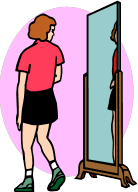













 NormsMilfordBlog