Today (Dec 10) is International Human Rights Day. From the International Human Rights Day site, here is a little background –
Human Rights Day is observed every year on 10 December. It commemorates the day on which, in 1948, the United Nations General Assembly adopted the Universal Declaration of Human Rights. In 1950, the Assembly passed resolution 423 (V), inviting all States and interested organizations to observe 10 December of each year as Human Rights Day.
This year, Human Rights Day calls on everyone to stand up for someone’s rights! Disrespect for basic human rights continues to be wide-spread in all parts of the globe. Extremist movements subject people to horrific violence. Messages of intolerance and hatred prey on our fears. Humane values are under attack.
We must reaffirm our common humanity. Wherever we are, we can make a real difference. In the street, in school, at work, in public transport; in the voting booth, on social media.
The concept of human rights often gets misinterpreted, because it is often misunderstood.
According to the International Human Rights Day site –
 Rights are often considered fundamental to civilization, being regarded as established pillars of society and culture, and the history of social conflicts can be found in the history of each right and its development. According to the Stanford Encyclopedia of Philosophy, “rights structure the form of governments, the content of laws, and the shape of morality as it is currently perceived.”
From the Wikipedia site comes this definition of Human Rights –
Rights are legal, social, or ethical principles of freedom or entitlement; that is, rights are the fundamental normative rules about what is allowed of people or owed to people, according to some legal system, social convention, or ethical theory. Rights are of essential importance in such disciplines as law and ethics, especially theories of justice and deontology.
So, rights are not intrinsic to human life, but exist because as humans we feel the need to define how we expect (or hope) to live and how we expect to interact with others within a society. They are really expectations that we codify into laws.
Do you actually know what your “rights” are within the society that you live? Few of us do. Here are links to some of the “rights” that various levels of societies have declared.
The United Nations has declared a set of Internationals Human Rights, which the United States as a member is supposed to follow. Your right as defined by the U.N. are defined in the Universal Declaration of Human Rights.
In addition, at the most fundamental level of rights as a U.S. citizen, the Constitution’s Bill of Rights defines a basic set of rights that we all enjoy.
The concept of U.S. Law includes the definition of additional rights under various laws that are passed by our governmental bodies at all levels. Most of these are lumped under the umbrella term Civil Rights. Civil Rights exist at both the national and local level. Example may be found at http://civilrights.findlaw.com/ and for Michigan at http://www.michigan.gov/mdcr/0,4613,7-138-69583—,00.html.
All of these “rights” are things that we grant each other as members of the societies that we live in. These rights help set our expectations for how things will work and what things we can count upon; however, even the most basic of these rights are not guaranteed, unless the system of government that we happen to be under at the moment agrees to extend them to us. In the world in which we live, slavery and human trafficking still exist in almost every country on earth. Poverty exists and robs people of their rights. A lack of health care (affordable or otherwise) still robs people of their health and well-being. People are still being killed for their religious beliefs and people are being shunned for their lifestyles. Racism and prejudices continue to hold sway over opportunity and access to jobs, housing and other basic needs/rights.
To truly understand and appreciate the societal nature of what we calls our “rights”, one could watch an episode or two of the TV Reality show Alone. One can make the argument that the person depicted in that show has all of the same “rights” there in the wilderness that he has back in society; however, the society is not there with him to provide for those rights. He can stand there all day shouting that he has a basic human right to certain things, but it will do him no good.
So, we have “rights” because others in society that we live in agree to extend to us those  rights. The same society that grants us those rights usually imposes some restrictions or rules on the exercise of those rights and in many cases agree to pay (usually in the form of taxes) to make sure that they and you can exercise those rights. It has become somewhat normal to hear people claiming all sorts of “rights”, when in reality they are talking about needs or desires. Needs and even desires may eventually turn into “rights” if enough people in the society agree that everyone should have them and give the extension of those needs or desires the weight of law. That is especially true in those things that we classify as our civil rights.
Today, we celebrate the progress that mankind and our societies have achieved in recognizing and agreeing upon the many “rights” that we enjoy. None of those rights should be taken for granted, because none of them are guaranteed by anything more than the will of the majority in our society. All must be defended or they might be lost. Vigilance must also be kept to insure that the rules governing the extension on of those rights do not become so onerous as to render the rights moot.
Care must also be taken to insure that the rights of minorities in our society are not trampled upon by the majority. There is no group in our society, whether ethic, or racial or
gender or political or as measured by any other metric, that is not in some way a minority; when viewed from the perspective of the total of all people not in their group. The power of temporary associations of groups to make up a majority is fleeting, as is any power to extend rights or change our rights or the rules that govern them. That power must be used wisely, lest members of the majority on one “right” find themselves in the minority on another “right”. It is in our best self-interests overall to be kind and sensitive and  inclusive as we extend rights and the rules that govern them.
So, go read about our human rights as citizens of the world and our rights as citizens of a country and a state. Celebrate the fact that we have evolved enough as a human race to understand the need to extend these basic rights to all of our citizens. Be glad that you are not Alone. You have rights. Celebrate!


 Posted by Norm Werner
  Sometimes having a good cry is the best immediate response to something that has happened in our lives, both sad and happy things. Letting go for that moment and allowing yourself to weep provides a needed release from the unnatural control that we are all taught as we grow up. That same need for self-control also dulls the joy that we might otherwise feel from good things in our life. As Golda Meir once said – “Those who do not know how to weep with their whole heart don’t know how to laugh either.”
 torment of tears into perspective within their life. Tears caused by pain, loss or sorrow most often involved another person and our memories of them. Perhaps the pain was caused by a snub or by bullying or by someone making a harsh or unfeeling remark to your or about you. In any case, life goes on and you must, too. “There is an ancient tribal proverb I once heard in India. It says that before we can see properly we must first shed our tears to clear the way.” – Libba Bray
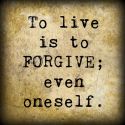 almost always something or someone to forgive, even if you realize that it is yourself. I have witnessed people crying in anger at a deceased life partner because they felt like they left them here alone. They later have to forgive themselves for that selfish display. Perhaps the term forgive should include the thought of healing, too.
 to make the best of that future.
 So, go ahead and have that good cry; whether it be in sadness or in joy, forgive and then realize in the words of John Vance Cheney that – “The soul would have no rainbow had the eyes no tears.” Find the rainbow after the tears and move on. God will keep track of those tears for you and makes the rainbow to show you the way forward.
 like..” posts to blogs. My point in both was that it is very difficult, and perhaps even a little disingenuous, to say things like “I know how you feel” or even “I can imagine how you must feel” to someone suffering through bad days with either of those conditions. They may mutter something like, “thanks for being understanding”, while all the while thinking, “No, you don’t understand at all.”
 The support that you might imagine yourself needing does not come from pity or from some false sense of “understanding” how you feel. Rather it comes from them accepting you as you are and offering to help in any way they can. It comes from admitting that, “I have no idea how you feel; but, I’m here to help you find and get to a better place, if that is what you want.” Sometimes the best thing that you can do is just to be there, to listen and to support, not to judge or feel that you must intervene. Sometimes what people need is just a friend to talk to and not a savior (they already have one of those).
 judgement that you make based upon what you think you might have done. Making those right or wrong judgments is in no way helpful and actually gets in the way of you providing the support that is really needed.
 friend who is ready to be there when needed and to back off when necessary; ready to lend a shoulder to cry on, without pity; and ready to listen when they talk without judging. Be the person that you imagine that you would need if you were experiencing life as they are living it. Don’t worry about understanding them; you won’t ever; so, don’t judge, just be there for them.
 is new and different. In fact it is often used preemptively, before the idea is even discussed to try to shut down new ideas or suggestions of change before they even get a hearing. If can be very frustrating, especially if I believe that the changes or new idea are necessary to keep the group viable in the community.
 In life in general the same thing is true. If you never get out of your comfort zone and venture into new relationships with people, you may never meet the person that becomes your BFF or even your life partner. If you shun those who are not like you, you will never get to understand their point of view on things and miss out on the new colors that they could add to the pallet of colors through which you see and experience life. You will never have that “Aha” moment when you understand why they do or say the things that they do, because of their completely different frame of reference for life. If you just go with what you know and who you know, life can become very boring indeed.
 to be having a better time than those pressed back against the walls in fear of trying anything new.
 conversation. They won’t bite you and standing there talking with them is not going to give you some horrible disease. Being open to them doesn’t mean that you are joining or even agreeing with whatever movement or lifestyle they are pursuing; it just means that you accept that there are differences and hopefully that you welcome the opportunity to try to see things from their different perspective.
 is grateful for. Being grateful is a realization and acknowledgement that the things that happen to us, the experiences that we have and the successes that we experience in life are not totally within our control. Other powers, or other people, have a causal effect on our lives. When you can acknowledge that, the veil of feeling alone in this world is lifted and your gratitude improves your attitude, dude.
 Beyond acknowledging and being grateful for the help of others, there is the awareness that a higher power is at work in the world and does not ignore you. You may call out for help in prayer to God or you may thank God for saving your bacon today; in either case you are stepping back from your own ego and acknowledging God and showing gratitude for His presence in your life. A secondary benefit of thanking God in prayer for what he has already done for you is the comforting feeling that you’ll get that the future will be OK too, because He will be with you then, too. Gratitude improves your attitude, dude.
 Bethlehem. Every Christmas story ends with a group hug and cheerful attitudes as the characters acknowledge and are grateful for the birth of Jesus and His lasting impact on their lives. What are you grateful for this year? Think about it and then say it our loud. It will make you feel better to do that, because gratitude improve your attitude, dude.
 they don’t know enough to handle customer situations. They quite correctly surmise that the training that was required to pass the real estate licensing test is pretty much useless for the day-to-day job of actually being a Realtor®. Real Estate One does provide them with additional training (marketing classes and in-office training on the details of the real estate process); however, they quickly see that there is a ton more to know and the fear of not knowing everything becomes a major roadblock to even trying. Some never overcome that fear and drop out because no business came to them and they were afraid to go after any new business. They feared looking like a fool in front of customers, instead of developing the ability to say, “I don’t know, but I’ll find out”, as they really learned the business.
 adventure and the self confidence that they will be able to tackle any challenges that come along. If they fail, they fail; and they are OK with that because they will view it as a learning experience. The examples that Clear uses also show that they don’t let temporary setbacks stop them. They find a way to recover and move ahead. Some successful people have said later in life, “I was too dumb to know that it couldn’t be done, so I just did it.” They weren’t dumb; they just weren’t afraid to just get started.
 Instead of focusing upon the things that you don’t know and the things you fear that someone may ask of you, focus instead of doing the best that you can, being as honest as you can and being unafraid of saying, ”I don’t know, but I know how to find out.” Just get started and take the rest as it comes. Successful people tend to be good problem solvers, but the problems that need to be solved, in order to reach success, will never occur, if you don’t get started.

 one of them has a story, some of them quite extraordinary. Each of those stories allows us to escape the capsule of personal experiences that we live within and imagine new and different experiences, many of them extraordinary indeed.
 food and shelter for all in need, but where you don’t understand the language or customs. What an extraordinary journey.
 be learned. So, stop and meet the people and fill your life with the extraordinary pleasures found in sharing life experiences with others. Making that effort will certainly result in expanding your thinking and may even make you a better person for having listened to, and hopefully considered, that other persons point of view.
 and deformity or obesity are bad. By implication, the image that we see in the mirror of our physical appearance predisposes us to draw conclusions about the character and worth of the person that is there. Yet, stare as hard as you might, you will never actually see the traits like honesty, integrity, humility, kindness or a loving and giving heart that really makes up who you see in that mirror.
 Teresa in India, and not known who she was, would have just seen a squat, homely looking old lady in a nun’s habit and not realized that they were seeing someone who would one day become a Saint. Many who met Lech Walesa in his early years as an activist in Poland might have just seen a somewhat angry little Polish electrician who could be dismissed, rather than the future leader of Poland and a Nobel Peace Prize winner. And, how about Detroit activist Rosa Parks? She was certainly not a lady trading on her looks when she decided not to move to the back of the bus, adding fuel the civil rights movement locally. Do you think that any of these people were concerned about what they saw when they looked in the mirror? I suspect that they were much more satisfied with who they saw there, and not the least concerned with what they saw.
 never even noticed themselves in those looking glasses, because they were too busy “doing” to spend time looking.
 bigger than one person can accomplish by themselves? Do you see yourself stopping to ask the homeless man what he needs and how you can help? Do you see yourself getting your hands dirty on a weekend helping to build a new home for someone? Do you see yourself standing in the middle of a street with a collection bucket doing what you can to help people that you will never meet? Do you see yourself serving a Thanksgiving meal at a shelter? Do you see yourself visiting a shut-in in a local retirement home? Do you see yourself reaching out to help someone who is experiencing a tough time in their life and just need a friend to talk with?
 ness, charity or love towards others when you look into the mirror; then you are seeing who you are, not what you look like and that’s a beautiful thing. If all you see in the mirror that you hold up
 Every person who lives somewhere along that spectrum is different and must be accepted with those differences.
 I did decide that, from time to time, I would pursue the approach of looking at posted articles that deal with or focus upon how a particular condition or illness makes one feel. The reason is that I believe that gaining an understanding what is causing a person to act or react the way they are is an important first step towards accepting them as they are and helping them, if they wish to be helped. It is just as important in learning when and how to back off and let the person have the space and time to deal with what is going on in their life. A recurring theme that one sees in the writings of people struggling with some of these issues is how annoying the bumbling efforts to help from well-meaning, but ill informed, “friends” can be. I am not a fan of the “intervention” approach to this topic.
 believe that I went through an episode (or bout) of depression in my own life a decade or so ago. For me it was just an episode and not a recurring or continuous thing. Many who suffer from depression cannot say that and must seek help in order to live a “normal” life. So, I set out to find an article on-line about what depression feels like, and found the site –
  So, what does reading through this article this do for you? It gives you yet another “frame of reference” with which to better equip you to accept the person in your life who may be suffering through depression, whether episodic or on-going. It may help you recognize the symptoms that are manifested when one is depressed and perhaps better understand why they do certain things. Perhaps it will help you to not make the mistake of writing off that person or ignoring their actions in hopes that they will just “snap out of it”. If you have a friend or loved one in your family who may be suffering with depression, you may find this article at the same site to be helpful –
 Rather than getting down on someone for being a “wet blanket” during the holidays, take the time to think about how they feel and find a way to help them feel more accepted and comfortable within a setting that is perhaps frightening and overwhelming to them. Sitting quietly with them in front of a fire and giving them a hug, may be the best present that you can give this Holiday season.
 understand something for which I have absolutely no frame of reference. It is a common mistake when we try to understand things like this from our own frame of reference, our own life experiences and knowledge base. Lori’s descriptions of her sensory perceptions of the world are so far removed from my own that I had trouble even imagining what that must be like, yet it was trying to imagine it that helped me understand how little that I really understand. It also helped expand my thinking about how I react, or might react to others; especially those who might be far removed from my own frame of reference. I intend to follow up by reading more of the posts at the
  and point of view of people self-identifying in those categories. I read a rather scholarly article on the T part of that, which I found on the site
  understand things from our own frame of reference, rather than opening our minds to an entirely different frame of reference and an entirely different way of looking at things. Maybe others, like Lori, have an entirely different way of processing sensory inputs and experiences or a different way of making choices – a different frame of reference.
 upbringing and experiences, my education and knowledge base, my beliefs and my fears and misconceptions. That judgement of others starts with the presumption that whatever I feel or think must be “right” and anyone else that I encounter who deviates from that definition of “right”, must somehow be “wrong”. Different must be wrong. Not acting, and reacting, as I do must be wrong. Not being like me must be wrong. Apparently, not being me is wrong. How wrong is that?
 others? Well, there’re still a lot of options left. One could start with acceptance. Accepting the person as you find them and not immediately judging them or rushing in to try to change them is a good first step. You could continue by striving for some level of empathy with that other person’s perspective on life. That requires other things, such as patience, sympathy, sharing, openness, kindness, perseverance and a willingness to learn, among others. One may end up quite often saying, “Wow, I never looked at things that way”’; and that’s a good thing. That’s a step towards understanding and so much better than just deciding that the other person’s point of view is wrong, just because it is not the same as yours.
 stop myself early enough, before I have caused the damage to the relationship that a judgement can cause; then I still have the option to accept that other person. Perhaps I will never get all the way to understanding that other person’s frame of reference for life, but maybe I can get to the point of accepting and appreciating them for who they are and trying to learn something from their different perspective on life. Who knows; maybe I can make a friend of someone, if I take the time not to make an enemy. Who am I to judge?
 NormsMilfordBlog