I appreciate the wisdom often found in the comics. The cartoonists often find ways to say things that I might have thought about but not found the words to express. Such is today’s quote.
Calvin: They say the world is a stage. But obviously the play is unrehearsed and everybody is ad-libbing his lines.
Hobbes: Maybe that’s why it’s hard to tell if we’re living in a tragedy or a farce.
Calvin: We need more special effects and dance numbers.
— Calvin and Hobbes, from “Calvin & Hobbes,” on the tragicomedy of life
Yes, life is unrehearsed, and we are all ad-libbing as we go along. Most of us aren’t living in either a tragedy or a farce; although, if one pays attention there is much in life that one can find amusing, even farcical.
Life seldom swings to the extremes of tragedy or farce and it can seem a little tame or boring at times. Nature often supplies the special effects these days, usually with tragic results. What we really need are more dance numbers – things that make us happy and inclined to dance.
I have opined here a few times on letting go of the things that trouble us by taking them to God in prayer. I recommend adding to your prayers the simple little line, “not my will but thy will be done.” Why? Because that simple thought frees us from the self-imposed burden of solving every problem or concern that besets us. It allows us to accept what may have already happened and face what is yet to be with a confident sense of God’s presence in our lives. We are not alone. We do not have to try to solve every problem by ourselves. God is with us.
Once you have lifted that burden off your shoulders, you can cue the band and enjoy a dance number. God does not want you to be unhappy. Instead, He wants you to celebrate life and be happy. We read in Ecclesiastes 2:26 – “To the person who pleases Him, God gives wisdom, knowledge and happiness…”
OK, so it doesn’t say anything about dance numbers. You be happy your way and I’ll continue to happily dance away. Life needs more of that.
I get a daily feed of graphics that are supposed to be used in my real estate business and most usually end up in posted to my Facebook real estate business page.
This morning I got a graphic that just begged to be posted here. I mean, how true is this?
If you wake up in the morning grateful that God has given you another day, it will be a great day. If, on the other hand, you wake up in dread of facing another day, it will probably end up being a dreadful day.
Be thankful to God for another opportunity to do some good while you are alive and dedicate yourself to making the most of the day. That doesn’t mean that you need to run around doing good deeds all day; however, it does mean that you need to do the best that you can all day, whether at work, at home or at play.
Probably the most important thing that you can do today to be your best comes from the post to the Jack’s Winning Words blog today – “The main thing is to care. Care very hard, even it is only a game you are playing.” (tennis great Billie Jean King)
You must care about life. You must care what you are doing and how you are spending your time here on earth. You must care about others, your feelings for them and their feelings about you. You must care about your impact on the environment and the world around you. You must become more aware and you must care for the things that you become aware of. If you care about these things, you will be grateful that you have another day to enjoy them and to be the best that you can be. Not to care is to cease to exist, even if you ae still alive.
Once you care about the people and things, you become grateful that God has given you another day and it becomes easy and natural to want to do better, to care more and not to waste the day. Perhaps one of the principles of the medical profession could serve as a good starting point for caring – to do no harm. It is easy to move from that principle to caring about doing good.
So, in your morning prayers, start with being grateful to God for giving you another day. Ask God for the courage, the strength and the perseverance to make the most of the day. Ask God to help you care about others and about what goes on during the day. Once you refocus from caring only about yourself onto caring about others and the world around you, your life becomes rich with meaning, and you will find even more things to be grateful for tomorrow.
Are you grateful this morning? Do you care?
Have a grateful and caring week ahead. You’ll have a greater life.
Many of the cartoons that we read in the newspapers or elsewhere carry more than just entertainment value with them. Cartoonists can be philosophers in their own right and many use their cartoons to deliver great life messages and advice. I recently stumbled upon a site with quotes derived from cartoons and saved a few of them for this blog. One that focused upon attitude from the cartoon “Ziggy” caught my attention –
“Just remember… if things look hopeless, maybe you’re facing the wrong direction!”— Ziggy
How true is that! Hopelessness means that you have turned away from your dreams and ambitions and are staring in the direction of despair. Hopelessness is a sense of abandonment, which means that even God is not there with you. But how can that be? In Matthew 28:20 Jesus said, “I will be with you always, to the end of the age.” If you cannot see Jesus there with you, maybe you are facing the wrong direction.
So, if Jesus is with us, how can we be hopeless? Perhaps we have turned away from Jesus and looked for solutions to our problems within ourselves. When the problems that we face are too large for us to resolve, what are we to do? Maybe you are facing the wrong direction.
The truth is that things are going to happen in life that we have no control over. What we do have control over is how we react to those things. Do we let the situations of life overcome us or do we find a way to go on with life? Maybe we are facing the wrong direction.
We do not have to understand why things happen nor is it up to us to find solutions for every problem that we face. Sometimes the only “solution” is to accept that something happened that you cannot control and move on. Maybe you are facing the wrong direction.
What are we to do about all these things? We can find the answer in the Bible – “Do not be anxious about anything, but in everything by prayer and supplication with thanksgiving let your requests be made known to God. And the peace of God, which surpasses all understanding, will guard your hearts and your minds in Christ Jesus.” – Philippians 4:6-7
Is the peace that surpasses all understanding the answer or solution to all of life’s problems? No. But, it is the answer to how we react to those problems. That peace allows us to accept and deal with whatever life throws at us. If you find that you cannot be at peace and deal with life, perhaps you are facing the wrong direction.
Do not stare into the abyss of hopelessness and despair. Turn back to God in prayer and turn your life around. You’ve just been facing the wrong direction.
I like finding quotes that seem to naturally go together, even if it takes a little thought to make the connection. Today’s quotes come from wildly different sources, but just seemed to make sense to me when put together.
“I’m not afraid of storms, for I’m learning how to sail my ship.” – Louisa May Alcott
AND
I learned that courage was not the absence of fear, but the triumph over it. The brave man is not he who does not feel afraid, but he who conquers that fear.– Nelson Mandela
As we sail through life we my encounter many storms, some much scarier than others. Fear is a natural reaction for many, especially to a storm that we have not encountered before. When we are young every storm is a crisis; however, as we grow older, whether we realize it or not, we become less fearful of new storms, because they usually have aspects that we have encountered and weathered before – we have learned how to sail our ships through them. Perhaps that is the secret to conquering fears that Mandela was referring to in his quote.
Fears of things unknown may involve a fear of “looking stupid” or just a fear of failing at something. Many times, it involves the fear of what others may think of us if we do, or don’t do, something, or fail at it. Sometimes we fear rejection and the humiliation of being turned down. Really big fears usually boil down to fear of suffering pain or death if one fails. In almost every case, we let our imaginations run wild with improbable scenarios of the consequences of failure.
Real ships are sailed using a ship’s compass as the primary way to navigate through the gloom of night and through storms. In life we need and depend upon a moral compass to get us through dark times and crisis. Real sea captains always check and reset their compass’s before setting out to sea. We can check and reset our moral compasses before setting out each day by taking a moment to reconnect with God through prayer. Perhaps you know that this will be a rough day, at work or for personal reasons. Ask God for a little extra help and guidance to get your through this storm. Let God be your compass as you learn to sail your ship.
Once we get through whatever the event was that we feared, we can look back at the course that we steered and see where we might have taken a different tack and sailed through the event better. We are learning to sail our ship with God as our compass. The longer we live and learn and the more we put our trust in God as our compass, the better that we get at it, until we can state as William Ernest Henley did – “I am the master of my fate; I am the captain of my soul.”
Set sail today with God as your compass. You can overcome your fears by taking your directions from God. Be not afraid…learn to sail your ship.
Two recent quotes from the Jack’s Winning Words blog seemed to fit together this morning –
“The game of life is the game of boomerangs. Our thoughts, deeds and words return to us sooner or later…with astounding accuracy.” (Florence Shinn)
-AND-
“The beginning of compunction is the beginning of a new life.” (George Eliot)
When I read the first quote I thought immediately of the 1961 song by Charlie Drake, “My Boomerang Won’t Comeback.” When looking up who sang the song, in almost every mention of it in the search results, it was labeled as a racist song. I never thought if it that way, but maybe that is one of my boomerangs returning to cause me compunction.
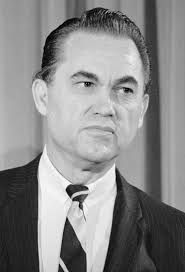
We see this boomerang effect quite often as we watch politicians or other “public figures” squirm and backpedal on TV as they are confronted by their past statements or actions. Some have developed compunction about those events and statements, but many still defend them. I recall the miraculous “conversion” of George Wallace from avid racist during his days as Governor of Alabama to the inclusive, anti-racist candidate for President. He could not duck fast enough to avoid those boomerangs.
I suspect that we all have boomerang moments in our lives when we said something or did something that later returned to us and perhaps some of them, we now have compunction about. We are becoming more and more aware of and perhaps having regrets for things that we might have said or done that contributed to what we now understand is systemic racism or homophobia. Most of it is because we allowed some of the bad “everybody knows” thinking and statements about those topics to seep into our thoughts and control our actions and reactions. We didn’t stop and think about who “everybody” is or to question or challenge the presumptions upon which the statements were based. We just accepted them and went on with life, thereby joining into the problem rather than seeking the truth.
The quote about compunction is the key to dealing with these boomerangs in our life. The fact is that we change over time. That change is usually driven by an increase in our knowledge of things that we may have just accepted without question earlier in our lives – the everybody knows things. We learn the truth behind some oof those assumptions and develop compunction about having been duped into a false conclusion. We regret having said things or done things that now seem unwise at best and hateful or harmful in many cases – we develop compunction.
How about you? Do you look back over your life and see things that you said or did that you are now regretful for having said or done? If you recognize them as such you are off to a good start at correcting them in the future. You can’t take back what you said or did 10-15-20 years ago, but you can recognize that they were wrong and have enough remorse and understanding of what would have been right to avoid a repeat of those mistakes in the future – you can have compunction.
One way to close the loop on the regrets that you might have is to lay them out to God in prayer and ask for His help to change you so that you do not do those things again. This is a form of “getting it off your chest”. You could seek out the person that you might have hurt with your remarks, but that is often impractical. You could stand on a street corner confessing your past misdeeds and statements, but that seems a bit dramatic. Just admitting it to the highest authority (God) out loud or in your thoughts as you pray has a cleansing effect. Then you can say, yes, your boomerangs came back, but you caught them and dealt with them the best way possible. You can accept God’s forgiveness and forgive yourself.
Now get out there and throw boomerangs that you will be proud of when they come back.
“There is a wall between you and what you want and you got to leap it.” – Bob Dylan
I’ve had that quote laying around in my quote file for some time. Lots of people have dreams or desires that they never realize because they aren’t willing or ready to make the leap over the wall that separates them from that goal. Most often that wall is a mental one created out of Fear, Uncertainty and Doubt (FUD).
The wall of FUD often keeps people confined to their “comfort zone”, that warm, safe-feeling little mental prison in which we often confine ourselves. FUD prevents people from even trying, much less achieving their dreams. The wall that they build in their mind becomes insurmountable and their imagination creates failure scenarios before they even take the first step. Often these people sabotage themselves and their own efforts. Their imagined failures become self-fulfilling prophecies.
But, let’s assume for the moment that you are not one of those people and that you truly want to succeed and reach your goal. How do you get over the walls that stand in your way? Some may try the brute force approach, bulling their way forward and trying to overpower whatever (or whoever) is blocking their way. This is the win-lose method. When that something is another person, this approach may brush them aside or brusquely climb over them. It is not a method that results in friendships or loyalty being built with those who seem to be in the way. It is much better in the long run to find a win-win way to achieve the goal and keep those who you must pass happy, too.
The main ingredients in overcoming fear, uncertainty and doubts are knowledge, planning and self-confidence. Knowledge allows you to truly understand the challenge ahead, rather than just imagining all of the possibilities for failure. One builds that knowledge through careful study of the situation at hand. By increasing your knowledge of the problem, you develop an understanding of the challenges that allows you to plan approaches to overcome them.
Taking time to plan also allows (maybe forces) you to prioritize the steps in your plan. Getting ahead of yourself is one of the primary causes of failure when the brute force method is used. Finally, by increasing your knowledge of the problems ahead and having a plan to approach overcoming them, you build self-confidence. Doing those first two steps help remove many of the unknows that always cause anxiety and doubts.
When you can say to yourself, I understand the problem and I know what I’m going to do to resolve it you are already well on your way to leaping over the walls that stand between you and what you want. You’ve got the knowledge and you’ve got a plan. You’ve got this. Then, just do it. Take the leap and execute your plan.
Pastor Freed has used this quote before in his blog, Jack’s Winning Words, and I think I also wrote something about it then, but it’s a good one to think about – “Life is not waiting for the storm to pass but learning to dance in the rain.” (Vivian Green)
It’s all about your attitude and what you do when some adversity besets you. We all are just now coming out of the year+ long storm of the COVID-19 pandemic. Many spent that year grumbling under their umbrellas (masks); but many also adapted and learned how to dance in the midst of that storm. What did you do? Did you rail against the storm and complain about having to social distance and wear a mask? Were you defiant when others asked you to put on a mask in public? Did you believe through it all that it was big hoax and that the doctors and scientists didn’t know what they were talking about. Did anyone that you know die from the disease? Ranting in the rain is not the same as dancing in the rain.
The people who were dancing in the rain did not let the challenges of the pandemic bring them down. They found a way to remain happy with just being alive. Perhaps they even gave thanks to God each day that they were given. They embraced the Zoom calls as a new way to stay in touch. The wore their masks as a demonstration of their care and concern for others. Many probably volunteered in their local communities with groups like Meals on Wheels to deliver food and a little human contact to those most vulnerable during the pandemic. They found joy in their service and concern for others.
Now we are coming out of that terrible time, at least those of us who are not resisting getting vaccinated. We can take that time to reflect on how we reacted to this crisis and think about how we might react to others in the future. How did you cope with the last year? Did you learn how to dance in the rain during the pandemic or did you spend it grousing to all who would listen? What good lesson can you take from your experience going forward or what changes do you now see that you need to make in your life to better deal with adversity?
As Vivian Green points out in her quote, dancing in the rain is a learned response. Our instinctive response to any threat is usually fight or flight. Neither addresses coping with the fear or threat. There was certainly no way to fight COVID, until the vaccine was developed, so flight into isolation and behind masks was the only valid response. We then had to learn what dances worked in this rain.
Many tried to ignore the threat and quite a few of them ended up sick with some only realizing their mistake as they were dying. Now the defiant have shifted their focus to resisting getting the vaccine and the rapidly increasing numbers of the unvaccinated sick and dying attest to the folly of that strategy. Cursing and shaking a fist in the rain is not the same as dancing.
Learning to dance in the rain starts by asking a simple question in the face of adversity – How can I make something positive out of this? It may be that the only positive to come out of a setback is to learn from the mistakes that were made, so that they are not repeated. Many times, there actually were some “wins” that came out of what was an overall defeat. Maybe you won a few battles but lost the war. Celebrate and remember the wins as you prepare your next attempt.
The dance of working from home during the pandemic wasn’t an easy one for some to learn, but most who were forced to learn that dance now like it and the time that it affords with family. The Zoom dance was another one that took a while to get used to, but for most it was better than the constant Conference Room meetings and Powerpoint slide decks that they endured at work, before things changed. Once they discovered how to put a beach scene behind them in the Zoom calls it was even a bit of fun.
So far, we have weathered the COVID storm and learned how to dance in its rain. We need to take that lesson and apply it to the other bad things that happen in our lives and learn how to dance through them, too. Maybe imagining that you have on a “I survived the COVID-19 pandemic” T-shirt would help with a new crisis. After all, how bad can it be compared to a year-long battle with COVID-19? Put a smile on your face and ask God to put a song in your heart, then you can dance your way through the rain of that new crisis.
For this Sunday’s sermon our Pastor used the Scripture reading from Mark 6:7-13 on which to base his remarks. That passage concerns the instructions that Jesus gave his Disciples when he sent them out to preach to the world. Basically, Jesus told the Disciples to take nothing with them, to leave everything behind, to take no baggage with them and to depend upon the kindness of strangers for their food and shelter.
Pastor Matlack opined that we all have baggage, not just physical baggage in the form of stuff, but mental baggage in the form of fears, regrets and prejudices. He suggested that we need to leave our baggage behind in order to be able to go out in the world and share the good news of Jesus. We need to check our baggage so that we are left with nothing weighing us down. Check your baggage.
Some of our baggage, especially prejudices, may be hard to let go of, almost like a favorite possession. Many may have been with us a very long time and we find comfort in just letting them dictate our actions and reactions, rather than having to stop and really think about things. They have become our “everybody knows” safe havens for our quick decisions and bad behavior. Check your baggage.
Pastor Matlack used the analogy of going through the TSA checkpoint at the airport. We are no longer allowed to get on the plane with anything dangerous on our person or in our carryon baggage– guns, knives (box cutters) explosives, or liquids. When you think about it, airplanes before the TSA were a dangerous place to be since fellow passengers might have been carrying any or all of those items. Now, with modern TSA body scanners and luggage scanners it is impossible to hide those items and get on the plane with them., Check your baggage.
There is no TSA checkpoint or scanner for the mental baggage that you might be carrying around, especially the unfounded fears and prejudices about other people. Instead, we must use the scanning power of prayer to search deep within ourselves to expose those fears and preconceived notions. Once you have brought them out into the light of reason, you must make the decision on what to do with them. Pastor Matlack suggested that we check those fears and prejudices with God; that we not continue to carry them around. Check your baggage.
Checking your baggage with God is as Easy as curb-side baggage check at the airport. One only has to admit that they have that baggage and then hand them over to God. We are told in several places in the Bible that if we confess our sins (and prejudice is certainly a sin) we will be forgiven and the burden (the baggage) of those sins will be taken away from us. Take nothing with you when you leave home for the day today – no unfounded fears, no uncertainty about people and no doubts or regrets about your actions. Check in with God before your travels today and check your baggage.
Have a great week ahead unencumbered by all your baggage.
Pastor Freed used this quote recently in his blog, Jack’s Winning Words – “We have no right to ask when sorrow comes, ‘Why did this happen to me?’ unless we ask the same question for every moment of happiness that comes our way.” (Unknown)
There is a concept that many people believe in called “karma”. The thought is that people get what they deserve to get. Similar thoughts lead to sayings like “things come around that go around” or “He/she had it coming to them.” Karma.
But, today’s quote actually begs a different response or point of view. It may be couched in religious terms by changing it to read, “We have no right to ask God, ‘Why did you let this happen to me?’ when bd things happen unless we also thank God for every moment of happiness that comes our way.” It is not karma, it’s God’s will.
For the longest time in my life I was one of those who only turned to God in the bad times, the times that I needed His help. I seldom thanked God for the good things that happened in my life or even recognize the things that didn’t happen because He is with me. It did occur to me to be thankful for the bigger things, perhaps the things that I had prayed fort help with, but the little things, especially the little things that didn’t happen just escaped my notice or thanks.
I don’t recall exactly when I became more aware of those little things, aware enough to thank God for once again saving my bacon, but I do now think more often about the events of the day and how something (karma or God) went right or didn’t happen, when it easily could have gone the other way. I chose to believe that God was with me and watching over me during those events or non-events.
We were told in the Bible – “I am with you and will watch over you wherever you go…” (Genesis 28:15) We were also given free will, which allows us to do both good and evil things. The devil often throws temptation in our path and many succumb to those temptations and wander away from God. But God is always with us, living the back of our minds in what we call our conscience. That small voice that tells us what is right from what is wrong is the voice of God quietly providing guidance.
So, it is really not karma that got us through the events of the day – good or bad – but rather God watching over us. That is why I now look back over each day and see the times when God was there to make something good happen or to save me from something bad by making it not happen. I spend as much time thanking Him for the good as praying for His help with the bad.
What about you? Do you thank God for the good things that happen in your life or the bad things that He saved you from? Do you wait until you are in trouble and need His help? Do you get what you deserve? It is not karma.
I save a couple of quotes on kindness at different times but they just seem to need to be used together.
“The way to get kindness with(in) yourself is spending time being nice to yourself, spending time getting to know and (dare I say it!) getting to love yourself… Loving yourself helps you love other people.”— Jeffrey Marsh, American writer, activist, and social media personality
“No act of kindness, no matter how small, is ever wasted.” Aesop
I’ve posted here a few time about loving yourself and how important it is to get comfortable with yourself and love who you are before you can love others. I’ve also posted about forgiving yourself (maybe being kind to yourself) when you realize that you have done something wrong, rather than beating yourself up. Perhaps that was what Marsh was alluding to in his quote.
We go through life giving and receiving small acts of kindness – maybe it’s opening a door for someone or having someone hold the door open so that you can go though. Perhaps it is just a warm greeting to someone that you don’t know. Did you ever stop and notice how just that small act of kindness can make you feel better, not matter whether you were hold the door open or it was being held open for you. That good feeling is one great benefit of kindness whether given or received.
Kindness is usually exchanged between people and therein may lie its greatest benefit – it requires and encourages social interaction. Man is not naturally a solitary being. Even the most private of us still have a desire to “fit in”, to belong to a group or tribe or whatever we call our social circle. Kindness toward others is a way that we reach out to give a little piece of ourselves, our time or efforts, for the benefit of others – to make them feel good. In the process we can also feel good about ourselves.
In wild animals one can see kindness with social groups by watching the members groom each other or perform other acts of kindness between members. Within the human species, kindness is expressed in al of those little things that we do for each other, even for perfect strangers. Something as simple as a smile as a friendly greeting to someone that you don’t know, makes their day a little better. As Aesop said, that small act of kindness is not wasted.
So, start your day by being kind to yourself, forgive yourself for what ever happened yesterday and resolve to be a better person today by gong out and being kind to others that you may encounter. Maybe, as you say a little prayer in the morning, you will remember the line from the Lord’s Prayer that asks to be forgiven for your trespasses and entreats you to forgive the trespasses of others. Then you can add in this line into your prayers – “Lord, let me love others today as you have loved me.”


 Posted by Norm Werner















 NormsMilfordBlog