What’s left, after the new wears off?

January 8, 2014

“After a while, the newness wears off.”  (Kellie Lee) –  from my favorite daily blog, Jack’s Winning Words.

That statement is certainly true of most things in life. Sometimes we strive for things andyoung couple when we get them they are new and shiny and satisfying…for a while. Then the newness wears off and we lose interest. What wanes is the passion and commitment that was there initially. The same can sometimes happen in relationships and marriages. It takes commitment to keep those relationships from becoming stale.

An example that may make sense in this car-crazy area is to look at the car collector/enthusiast and the difference in how he treats the object of that particular passion. Collectible cars in the hands of these people never grow old or boring; the newness never wears off, because they work at it all the time. They spend hours cleaning and polishing and maintaining their treasured cars. Even cars that might have once been considered cast-offs or ugly can be beautiful in the eyes of the right car fanatic. The difference is in the commitment that they make to the car. They find many things beyond the newness of it to satisfy them and justify their commitment of time and effort.

The same is true of relationships and marriages. Many relationships and not a few marriages likely stared in the heat of passion and sexual attraction. For some that was literally all that there ever was to the relationship; and when that cools, there is nothing left upon which to base the relationship. For many couples the changes that occur in those passion-based relationships when the first child is born are enough to tear apart the bonds. It’s sad, but all too many times divorces follow on the heels of the births of children.  There is just not enough beyond the physical attraction to hold things together. Once a wife becomes a mother, too; many husbands cannot deal with no longer being the center of her universe. The newness has worn off and there may not be enough other than that to sustain the relationship.

Obviously, the car collector analogy breaks down over the concept of ownership vs. relationship. A relationship is not based upon one partner owning the other. The concept of ownership in relationships translates into possessiveness, which is usually a road to failure. Relationships are equal partnerships, with both parties expected to make commitments and put in work on the maintenance of the relationship.

That relationship commitment starts with an effort to recognize the needs of the other partner and a desire to work to meet those needs. There are tons of little things that are there every day to be recognized and done – opportunities to keep the newness in the relationship by surprising your partner with a little gesture, a loving kiss, doing a little chore without being asked or just knowing when to back off and give them the space that they may need.

fiftith annivarsaryOne thing that is fairly consistent in successful, long-term relationships is constant feedback of love and commitment between the partners. It is important to both sides to continue to hear “I love you” from the other side. Implicit in that statement is the commitment that “I’ll be here for you when you need me.” No one wants to be alone, especially in times of need.

So, what is left in a successful relationship or marriage, after the newness wears off? I would say love and commitment. After all, if one keeps polishing and maintaining the relationship it will never grow old.

(Editors disclosure – celebrating 48 years of marriage in 2014 and still discovering new things about her to love.)


Problem solving ability and turning experiences into knowledge

January 6, 2014

“Experience is something you don’t get until just after you need it.” – Steven Wright

I like that little saying that I saw on a blog somewhere. A corollary might well be, “Knowledge is something that you don’t get until after an experience.”   In real estate this is particularly true. The barrier to entry into the real estate business is relatively low. Just about anyone with a few hundred bucks and the ability to learn and be tested can get a real estate license. That and a few bucks more will get you a coffee at Starbucks, but you still won’t be a Realtor®.

Realtors work within a proven system. The most important component of the system is the brokerage, which is responsible for taking the newly minted real estate agent and turning him/her into a Realtor.  Of course there is also the local Multi-List Service, the local Realtor Association, perhaps a state association and the National Association of Realtors. All of these groups provide bits and pieces of the system that the Realtor must learn to work within. That is a part of the experience that the beginner gets, which hopefully starts the process of the accumulating knowledgeaccumulation of knowledge.

Good brokerages will have extensive training programs and perhaps a mentoring program that pairs the newbie with an experienced agent. The broker himself (or more likely the local office manager in larger, multi-office brokerages) will be responsible for the training of the new agent and for monitoring his/her work through their first few real estate transactions. The broker (or manager) serves as both a manager and counselor during this start-up phase. Most brokers and managers have years and years of experience and tons of knowledge about the real estate process.

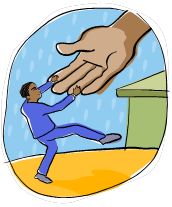
One can often tell very quickly how successful the new agent will be by watching how he/she uses this important resource. Those who fail and leave the business are most often those who try to go it on their ownhelping hand and don’t leverage the resources of their office to help them over the start-up hump. Many of them get into deep trouble by not asking for help. Conversely, those who cling too tightly to this help and are afraid to try things on their own are also doomed to failure or a career of mediocrity. One must be able to wean oneself from the security of never making a decision on one’s own. A real estate agent is an independent contra

A key to turning the experiences that one has into knowledge is the ability to stop and look back over the experience to see what one can learn from it. Maybe the knowledge gleaned is “I’ll never do that again” or perhaps it is. “OK, I see what I did wrong and how to avoid that problem in the future or work around it if I hit it again.” Both are correct, but the latter is more valuable knowledge because it contains the thought process of learning from the experience and not just avoiding similar situations.ctor, after all, and must eventually become independent.

There is something to be said for seeking out an experienced Realtor, but if you happened to encounter a relatively new agent that you otherwise think is a nice person; ask them how they get help within their office and perhaps ask to meet with their manager or broker. Let that manager know that you expect that they will be assisting the new agent with any issues that come up during your client relationship and see what they say. A new agent will be eager to please you and probably work very hard; you just need to be sure that they understand how to work within the support system that they have around them to get help when they need it.

knowledge funnelA final note is that time on the job alone does not assure that the person putting in the time has gained the knowledge that they should have from the experiences that they’ve had. I’ve met way too many “experienced” agents who still did not fully understand the process or have the ability to work through issues. Many times, one agent or the other in the normal scenario where there are two agents involved (a seller’s agent and a buyer’s agent) will have to take on tasks for both sides in order to get the deal closed; even if both sides are represented by “experienced agents.” Just because an agent can say, “I’ve been in the business for 10-15-20 years”, doesn’t necessarily mean that they’ve accumulated a lot of knowledge during that time or that they can handle situations that may come up well.

Unfortunately there isn’t any easy way that you can really test the knowledge base and problem solving ability of agents whom you might interview before signing up with them. An in-depth interview that focuses more on how they do business than just how long they’ve been in the business or how many transactions they closed last year is probably the best thing. Asking to talk to 1-2 past clients might also help (assuming that you aren’t the first client) or reading their reviews from past clients, if the company does that sort of thing. You can also ask questions like; “What was your toughest sale/client and how did you handle that?” You should then listen for their problem solving approach and their honesty about the situation and how they handled it. They should be sharing the knowledge that they gleaned from that experience.


Let the child out to play again…

January 3, 2014

“Another belief of mine is that everyone else my age is an adult, whereas I am merely in disguise.”  (Margaret Atwood), from the Jack’s Winning Words blog.

The thing about getting older is that you really don’t age, at least in your mind. Your body may start to betray the years of wear and tear, but in your mind you can still be young, with even a little of the child in you.

I’ve oft written about retaining the ability to be playful or imaginative or just plain silly – things usually associated with youth. I think it’s important to retain that ability to get back in touch with the inner child – the child of innocence and hope and fun. I’m reminded of another saying that I’ve used before by George Bernard Shaw – “We don’t stop playing because we get old, we get old because we stop playing.”

I suspect that Shaw was right. We tend to become way too serious as adults, too concerned about what others will think of us and too focused upon achievement of material things.  Even in the times that we call “play” as adults – sports of various kids or perhaps hobbies – many focus too much upon achievement and make winning or being the best at whatever it is than just relaxing and enjoying the moment. If you’ve ever played golf with one of these overachievers, you know what I mean.

I also am coming to the conclusion that, if it were measured and charted, this serious bent would take on the look of the standard Bell Curve – very low at the beginning of life and again decreasing as we near the end. At both ends of life, many are much less serious and less constrained by rules of being an adult than we are in the middle. There is more fun at both ends of the curve.

the child within chart

At the beginning of life it’s probably because we are still innocent and have not yet been “conditioned” by the systems that we all exist within as we go through life – schools, work environments and polite society.  At the end we may become less serious because we have learned that it really isn’t all that important after all and maybe because we just don’t care to be any more. At the start such behavior may be forgiven as just being childish and at the end one may be overlooked for being an eccentric old fool.  In either case it is the one who is being childish or eccentric who has the smile on their face.

Not everyone who reaches the far end of the curve is allowed to actually enjoy that release from the need to be so serious. In order for the far end of the curve to look and feel like the beginning, another factor must also be in place – security. When we are young, most of us were probably still in the protective care of family, with our basic needs of food and shelter and security being met by the adults around them.  We are free to be children. There are many places in the world that we see on the nightly news where young people who should be acting as children are forced out on the streets trying to survive among adults as adults.

At the other end of the spectrum is supposed to be the concept of retirement, which for many now seems to be out of reach. For those fortunate enough to have planned well and saved for that day, retirement can also mean release – release from the need to continue to struggle for food, shelter and other basic needs. People who can actually get to retire are also free to be children again, if they can allow themselves to be. All too many of the elderly end up homeless or alone and barely surviving on small social security or welfare payments. The luckier ones may end up back in extended family settings, now being cared for by those that they once took care of. At lease they may have that chance, as the live-in grandparents, to find a way back to some childish releases.

As I reach the far end of the Bell Curve myself, I find more and more opportunity to let the child come out and play again and I’m happy about that. He was hiding in there for far too long as the serious business of life took control. Maybe it’s time for the disguise to come off. Now, maybe I can be the grandpa who plays with the grandchildren while the adults in the other room have their serious discussions. I’m almost there. It’s time to play again. Now where did I leave my squirt gun?